
What Does It Mean to Summarize?

Summarize what does it mean? To summarize means to restate the main idea and most important supporting points of a text, source, article, story, poem, lecture, or recording in a shorter form. A good summary does not copy every detail. It helps a reader understand the core meaning quickly, without losing the source's central message.
Quick Takeaway: What Does It Mean to Summarize?
To summarize means to make something shorter while keeping its essential meaning. You remove repeated details, side examples, minor descriptions, and anything that is not necessary for understanding the main point. The result should be clear enough that someone who has not read the full source can still understand what it is mainly about.
A summary is not the same as a rewrite of every sentence. It is also not a personal reaction, a review, or a random list of interesting facts. When teachers ask what does it mean to summarize, they usually want you to identify the main idea, choose the most important details, and explain them in your own words.
What Does It Mean to Summarize a Text?
What does it mean to summarize a text? It means reading the full passage, finding the main claim or central idea, and condensing the supporting information into a shorter version. The summary should preserve the original meaning while using fewer words.
For example, if a five-page article explains how sleep affects memory, a summary might mention the main argument, the evidence about sleep cycles, and the practical conclusion. It would not include every statistic, quote, example, or paragraph transition. The purpose is to help someone understand the source without rereading the entire text.
What Does It Mean to Summarize Something?
What does it mean to summarize something outside of school? In everyday life, it usually means giving the short version of what happened, what was said, or what matters most. You might summarize a meeting, a podcast, a movie, a conversation, or a set of research notes.
The goal is usefulness. A strong summary helps people make decisions, remember key information, or move quickly into the next task. If the listener needs every detail, then you are probably explaining or retelling, not summarizing.

Why Summarizing Matters for Learning
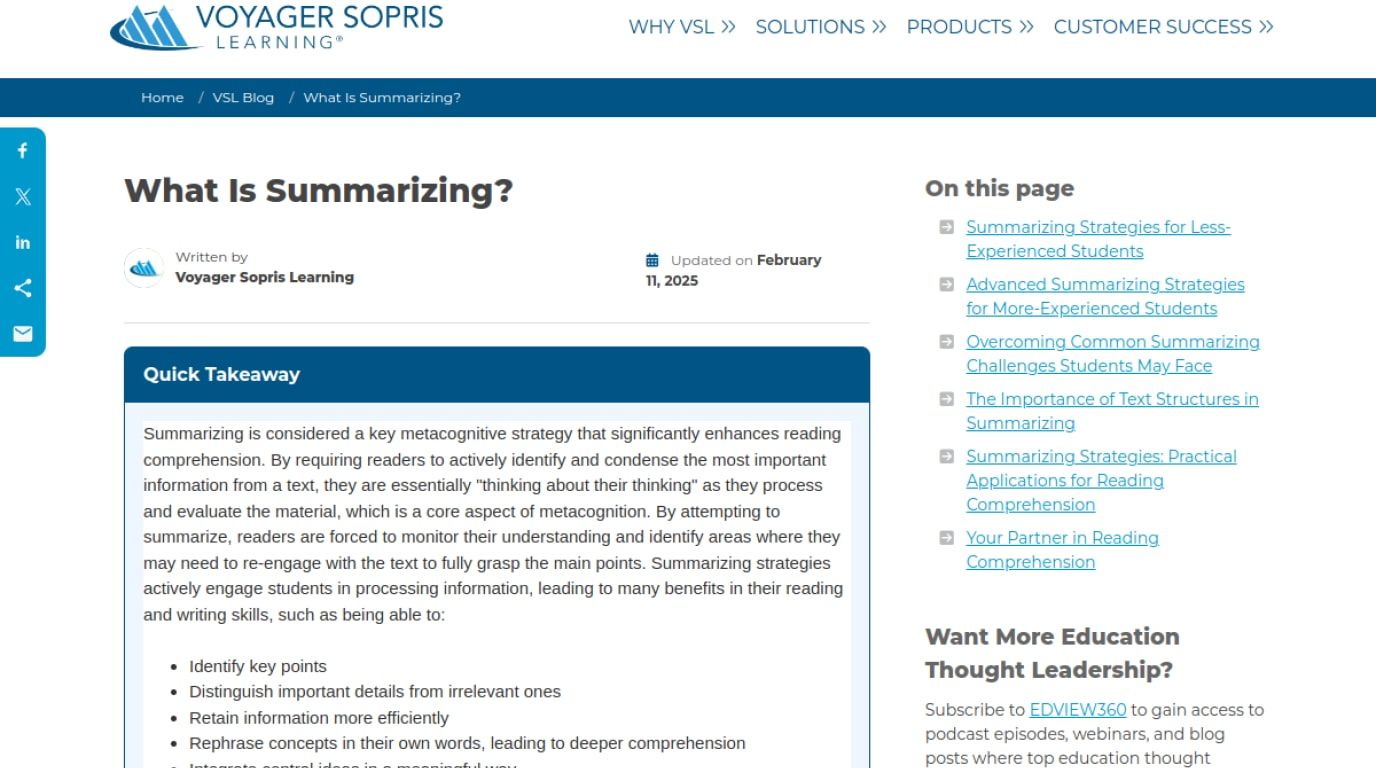
Summarizing helps you process information instead of just copying it. When you summarize, you have to decide which ideas are central and which details are extra. That decision-making is what turns passive reading into active learning.
This is why summaries are common in reading lessons, college courses, research work, and workplace briefings. A student may summarize a chapter before a test. A manager may summarize a report before a meeting. A creator may summarize a source before turning it into a script, newsletter, or outline.
What Does It Mean to Summarize a Reading Passage?
What does it mean to summarize a reading passage? It means identifying the passage's main idea, then selecting only the details that explain or prove that idea. Short passages often have one clear main point, so the summary should be direct.
A useful method is to ask three questions: What is this mostly about? What does the author want me to understand? Which details are necessary for that understanding? If a sentence does not answer one of those questions, it may not belong in the summary.
What Does It Mean to Summarize an Article?
What does it mean to summarize an article? It means reducing the article to its argument, evidence, and conclusion. For news, that may include who, what, when, where, why, and how. For educational articles, it may include the concept, explanation, examples, and takeaway.
Article summaries are especially useful when you are collecting sources. Instead of saving ten links and forgetting why they mattered, you can summarize each article in a few sentences. Later, those summaries help you compare ideas, build an outline, or decide which source is worth reading again.
What Does It Mean to Summarize a Source?
What does it mean to summarize a source? It means explaining the source's main contribution without pretending the ideas are your own. This matters in research because summaries help you track what each source says before you quote, paraphrase, or analyze it.
A source summary should include the author's main point, the relevant evidence, and the context that makes the source useful. It should avoid your personal opinion unless the assignment asks for evaluation. You can add your response later, but the summary itself should stay focused on the source.
What Does It Mean to Summarize Information From a Source?
What does it mean to summarize information from a source? It means selecting the information that directly supports your purpose and presenting it in a condensed form. You are not summarizing everything the source contains; you are summarizing the part that matters for your task.
For example, a science article may include background, methods, results, limitations, and future research. If your assignment is about the result, your summary should focus on that section. If your assignment is about research design, your summary may need to focus on the methods instead.
What Does It Mean to Summarize a Story?
What does it mean to summarize a story? It means explaining the main characters, conflict, important events, and resolution in a shorter version. A story summary should follow the plot without retelling every scene.
For fiction, be careful not to turn the summary into a review. Saying that a character is interesting is an opinion. Saying that a character changes after a major event is summary, especially if that change drives the story's meaning.
What Does It Mean to Summarize a Poem?
What does it mean to summarize a poem? It means describing what the poem is about in plain language while respecting its central emotion, speaker, image, or idea. Poems are often short, but they can be dense, so summarizing them requires careful attention.
A poem summary should not flatten the poem into a single literal sentence if the poem uses symbolism. Instead, identify the situation, speaker, tone, and main idea. If the poem describes a storm as a symbol for grief, the summary should mention both the image and the emotional meaning.
Beginner Summarizing Strategies
Start by reading the source once for general understanding. Do not highlight everything on the first pass. Instead, write one sentence that answers what the text is mostly about.
Next, find the supporting details that make that sentence true. Look for repeated ideas, section headings, topic sentences, and conclusion paragraphs. These are usually stronger clues than isolated facts.
Finally, write the summary without looking at the source sentence by sentence. This helps you avoid accidental copying. Afterward, compare your summary to the source to make sure the meaning is accurate.
Advanced Summarizing Strategies
For longer sources, group related ideas before writing. A long lecture, report, or article may have several sections, so summarizing it as one block can become messy. Instead, summarize each section first, then combine the section summaries into a clean final version.
For research projects, separate summary from analysis. A summary says what the source argues. Analysis explains how strong, relevant, surprising, or limited that source is. Keeping those two tasks separate makes your notes easier to use later.
Common Summarizing Mistakes
One common mistake is including too much detail. If your summary is almost as long as the original, it is probably a retelling. A summary should be shorter because it filters information.
Another mistake is changing the meaning. Summarizing does not mean making the source say what you wish it said. You can simplify the language, but the central claim and important context should stay intact.
A third mistake is adding personal opinion too early. Phrases like "I think" or "this was boring" usually belong in reflection or evaluation, not in the summary. Keep the summary neutral unless the assignment asks for a response.
Summarizing vs. Retelling, Paraphrasing, and Synthesizing
Summarizing overlaps with other reading and writing skills, but it has its own purpose. Retelling keeps many events or details in order. Paraphrasing restates a smaller section in new words. Synthesizing combines ideas from multiple sources into a new understanding.
| Skill | Main Purpose | Typical Length | Best Use |
|---|---|---|---|
| Summarizing | Shorten the main idea and key points | Much shorter than source | Notes, study, briefings |
| Retelling | Recount events or details | Similar or moderately shorter | Stories, oral recall |
| Paraphrasing | Restate a specific passage | Similar length to original | Clarifying one idea |
| Synthesizing | Combine multiple sources | Varies | Research and argument building |
This distinction matters because assignments often use these words carefully. If a teacher asks for a summary, they usually do not want a full retelling. If a researcher asks for synthesis, they expect more than one source.
How Lynote AI Summarizer Helps
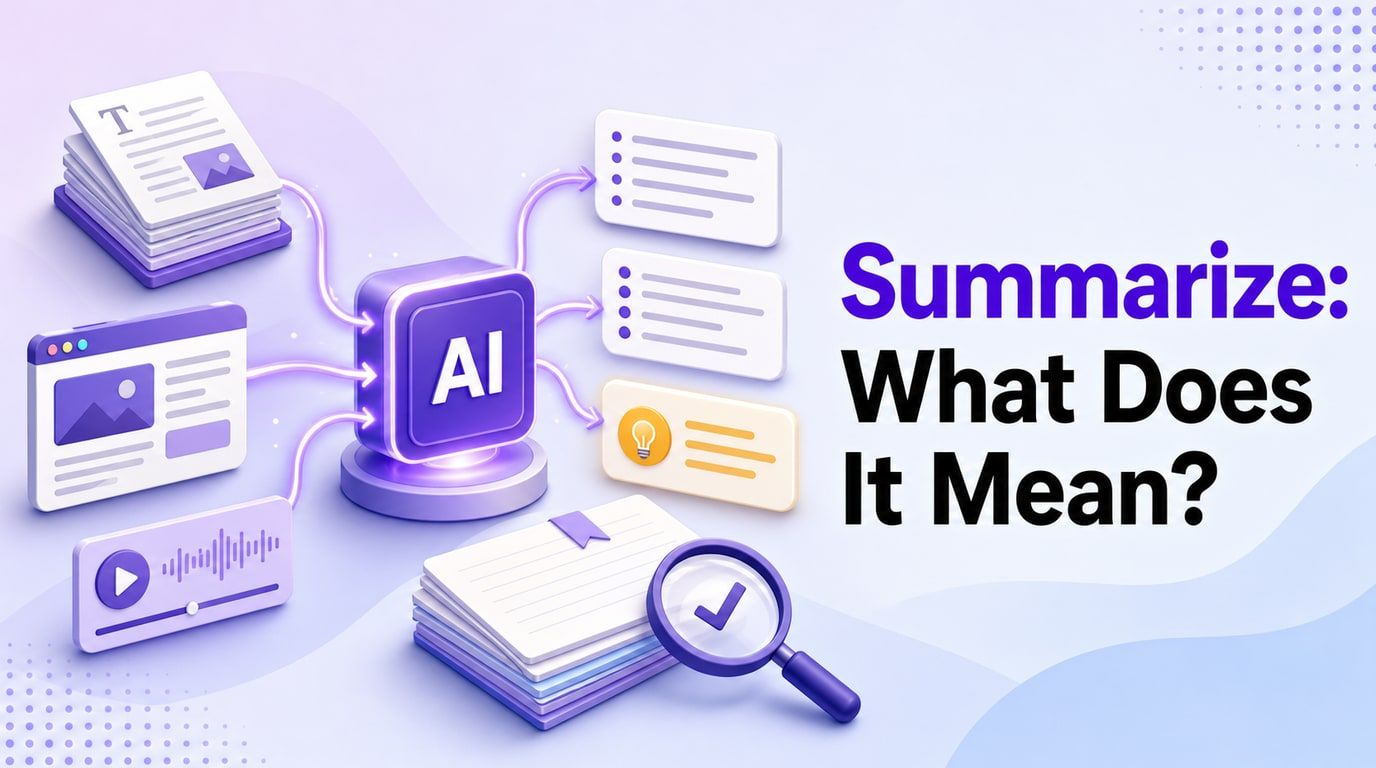
Lynote AI Summarizer helps when you need to summarize source content faster and keep the output organized. It can summarize supported sources such as documents, images, audio, video, webpages, and YouTube links into structured notes with headings and bullet points. That makes it useful when you need the main ideas before reading, reviewing, studying, or drafting.
The benefit is not just speed. Lynote can help turn scattered material into a cleaner learning workflow. You can review the summary, ask follow-up questions, compare sources, and reuse the output for study notes, briefings, or content planning.
How to Summarize With Lynote AI Summarizer
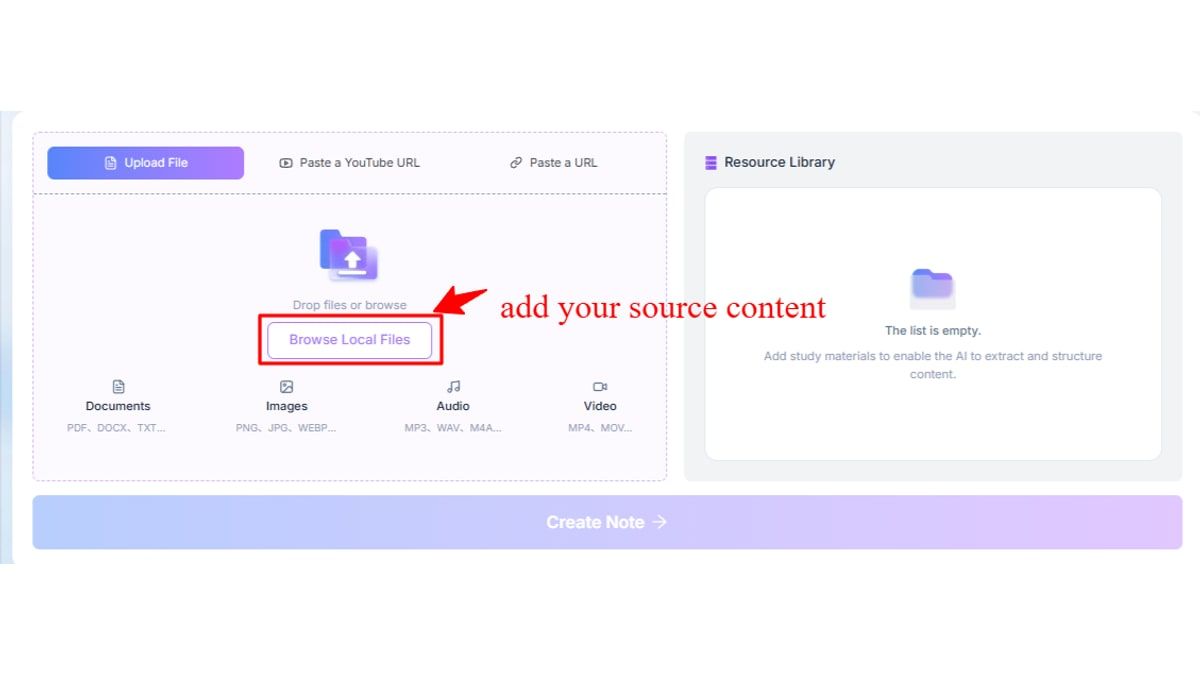
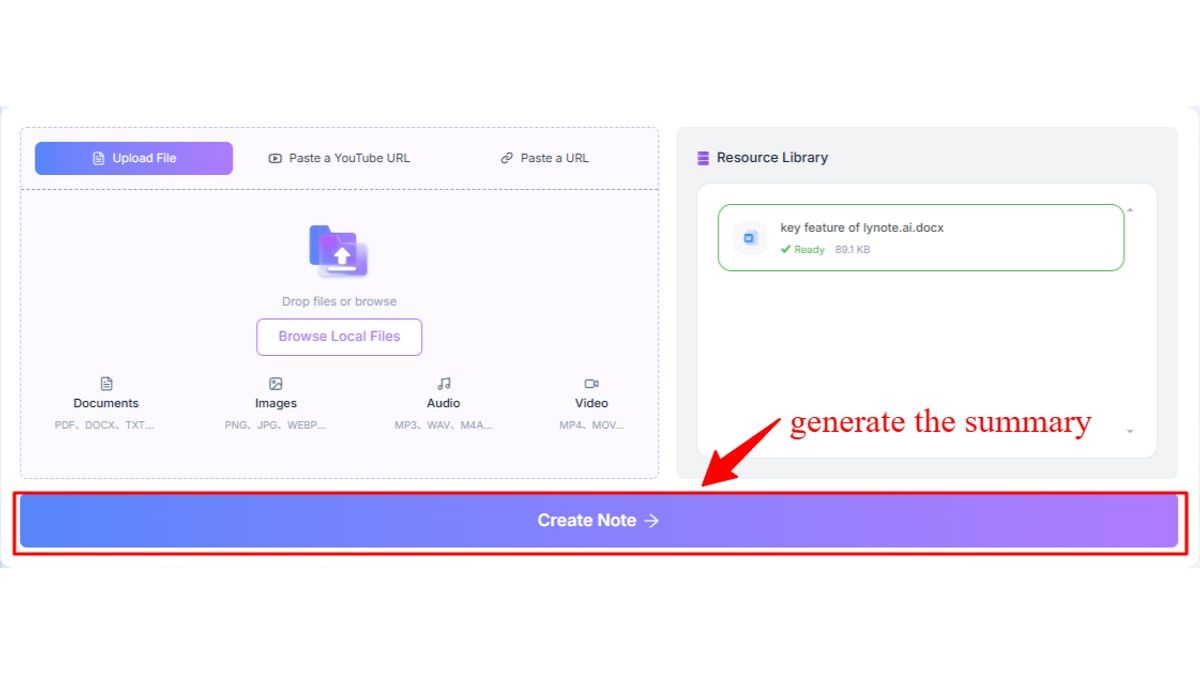
Step 1. Add Your Source
Start by adding the source you want to summarize. You can upload supported files or paste a URL, depending on what you are working with. If you are using a web or video link, make sure the source is accessible before generating the summary.
Step 2. Generate a Structured Summary
After your source is ready, use the summary workflow to generate a shorter version of the material. Lynote turns the content into organized points instead of leaving you with a single dense paragraph. This is helpful when the source is long, mixed-format, or hard to scan.
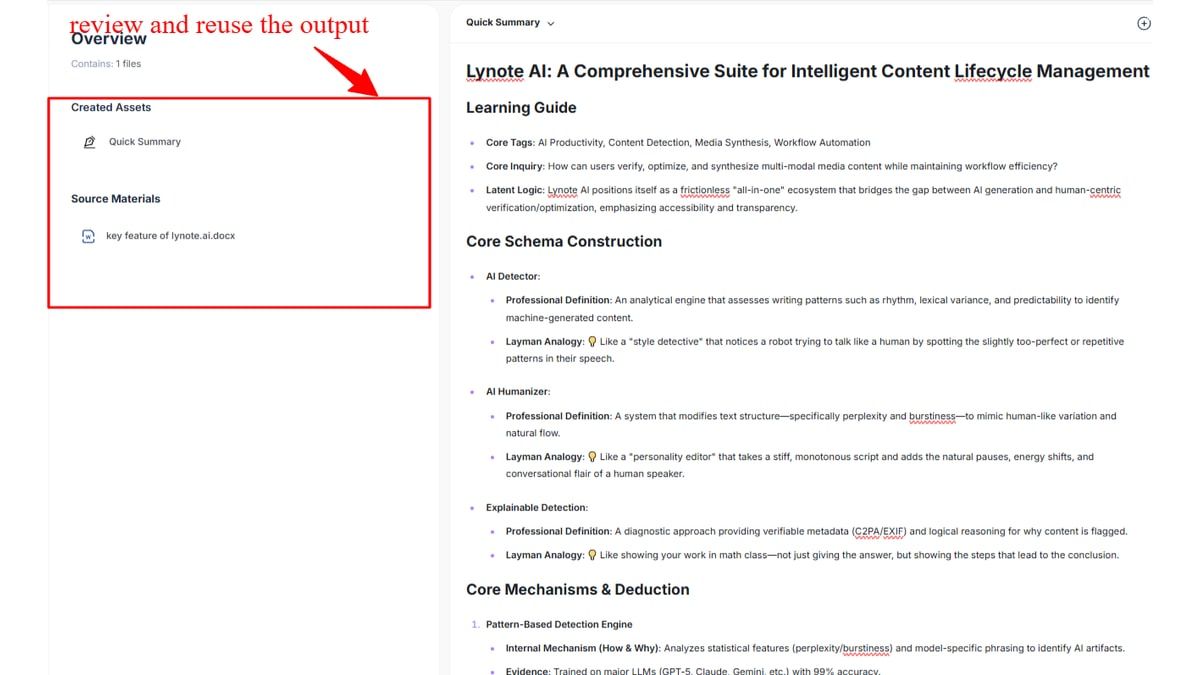
Step 3. Review, Edit, and Reuse
Read the summary and compare important details with the original source. Check names, numbers, technical terms, dates, and any idea that could change the meaning if misunderstood. Then reuse the output as notes, a study guide, a briefing, or a starting point for deeper research.
Practical Uses for Summarizing
Students can summarize textbook sections, AP readings, lecture recordings, and research articles. This helps them prepare for quizzes, organize class notes, and review before exams. A summary is easier to revisit than a long source that has not been processed.
Teachers can use summaries to check comprehension. If a student can explain the main idea and key details in their own words, they likely understand the material. If the summary misses the central point, that reveals where instruction may need to slow down.
Professionals can summarize meeting recordings, reports, customer interviews, and long documents. The shorter version helps teams find action items and decisions quickly. It also reduces the need to reread or replay the same material.
FAQs About What It Means to Summarize
What does it mean to summarize?
To summarize means to give a shorter version of a source while keeping the main idea and key supporting details. A summary should be accurate, concise, and written in your own words. It should help someone understand the source without reading or listening to all of it.
What does it mean to summarize a text?
To summarize a text means to identify what the text is mostly about and condense the important information. The summary should include the central idea and the details needed to understand it. It should leave out repeated examples, minor descriptions, and unrelated points.
What does it mean to summarize a source?
To summarize a source means to explain the source's main point and relevant evidence in a shorter form. In research, this helps you understand what a source contributes before you quote, paraphrase, or analyze it. You should still cite the source when using its ideas.
What does it mean to summarize a story?
To summarize a story means to describe the main characters, conflict, important plot events, and resolution. You should not retell every scene or include every line of dialogue. The summary should show the story's basic movement and meaning.
What does it mean to summarize a poem?
To summarize a poem means to explain its main situation, speaker, emotion, and idea in simpler language. Because poems often use imagery and symbolism, the summary may need to mention both literal details and deeper meaning. Avoid replacing the poem's complexity with an oversimplified claim.
Can AI help summarize information from a source?
Yes, AI can help create a first summary from supported source material. You should still review the output for accuracy, context, and important details. Tools like Lynote AI Summarizer are most useful when you treat the summary as a structured starting point, not a substitute for judgment.
Conclusion
Summarize what does it mean? It means turning a larger source into a shorter, accurate version that preserves the main idea and essential details. Whether you are working with a text, article, story, poem, source, recording, or webpage, summarizing helps you understand faster and remember better. Try Lynote AI Summarizer when you want source material turned into clear notes you can review, edit, and reuse.

Written by Kristen I.
Content Strategist
Kristen focuses on content structure, editorial planning, readability, and creating useful experiences for readers. View all articles →