
Summarizing vs. Paraphrasing: What’s the Difference?

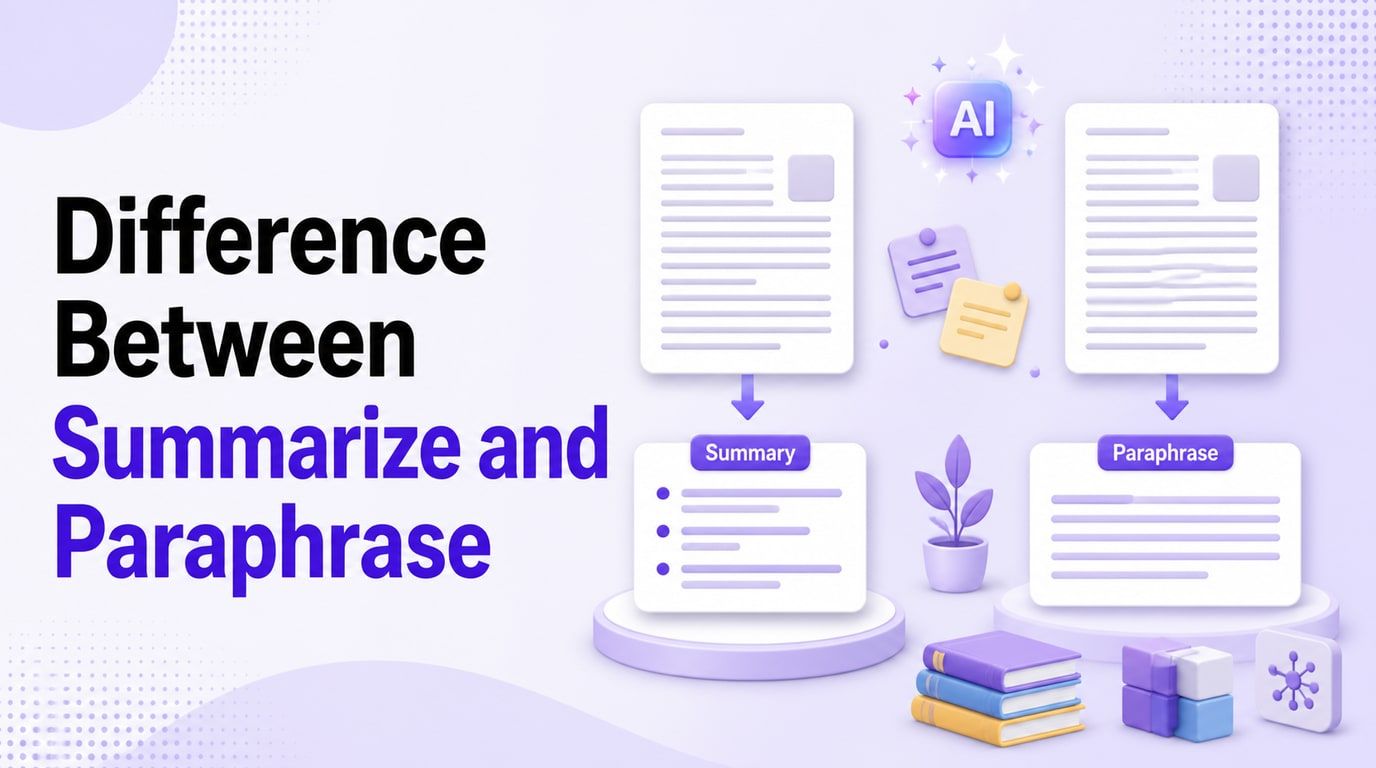
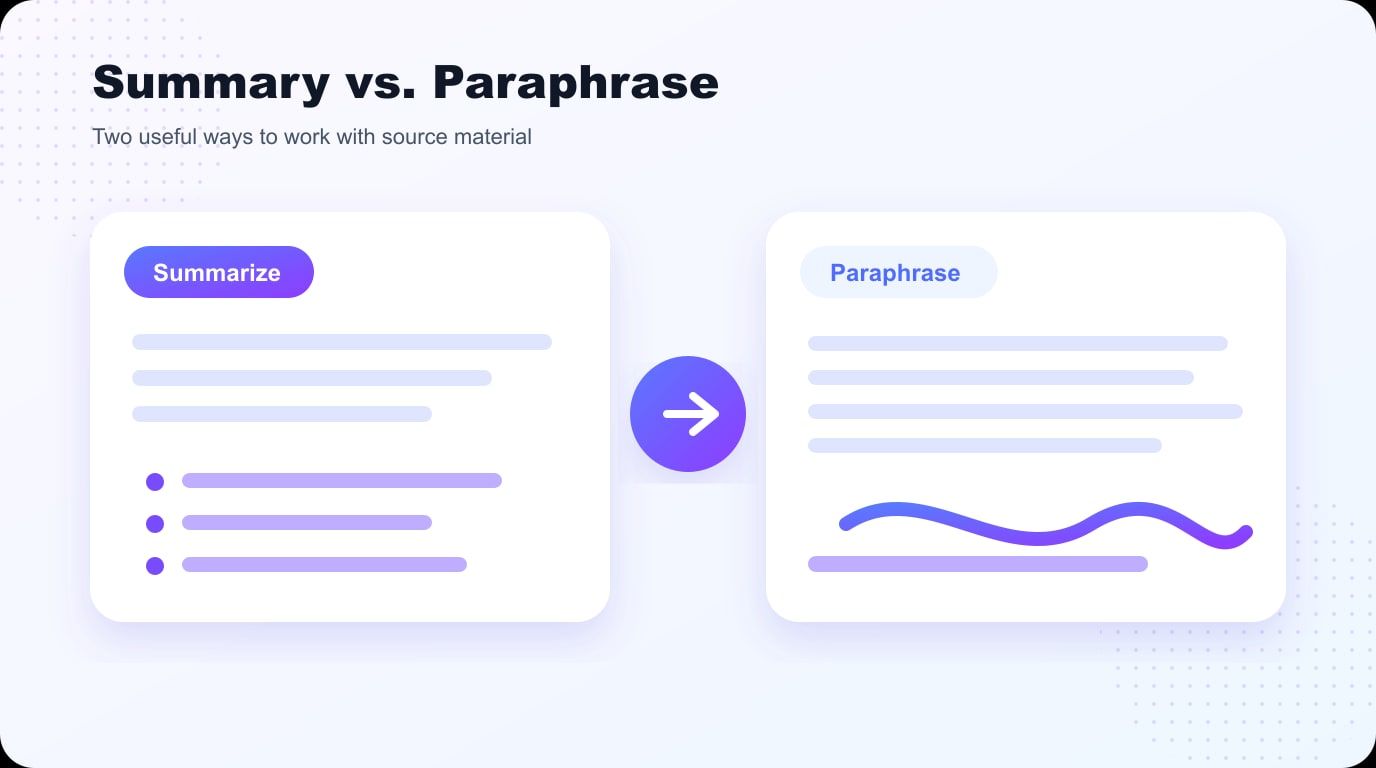
The difference between summarize and paraphrase is mainly about scope. A paraphrase restates a specific sentence, paragraph, or idea in new wording, while a summary reduces a longer source into its main points. Both help you use source material responsibly, but they solve different writing and study problems.
If you are reading a lecture transcript, article, PDF, report, or research source, knowing when to summarize and when to paraphrase can save time. It also helps you avoid copying too closely from the original. With Lynote AI Summarizer, you can turn long content into structured summaries, then review the key ideas before writing in your own words.
What Is the Difference Between Paraphrasing and Summarizing?
The simplest answer is this: paraphrasing keeps the original idea at a similar level of detail, while summarizing makes the source shorter. A paraphrase usually stays close to one section of content. A summary pulls the larger message from a longer source.
For example, if you rewrite one paragraph from a textbook in your own words, you are paraphrasing. If you reduce an entire chapter into five bullet points, you are summarizing. That is the core difference between a paraphrase and a summary.
Both techniques require understanding the original content. You should not simply swap words with synonyms. You need to understand the meaning, then restate it clearly for your purpose.
What Is Paraphrasing?
Paraphrasing means rewriting someone else's idea in your own words while keeping the meaning intact. It is useful when the original source contains a specific point you want to explain, cite, or discuss. A good paraphrase changes the wording and sentence structure without changing the message.
Paraphrasing is common in essays, research papers, reports, and study notes. It lets you use an important idea without relying too heavily on direct quotes. You still need to cite the source when the idea is not your own.
A weak paraphrase only changes a few words. A strong paraphrase shows that you understand the idea well enough to explain it naturally. This is why paraphrasing is about comprehension, not just rewriting.
What Is Summarizing?
Summarizing means reducing a longer source into its most important ideas. A summary leaves out minor examples, repeated points, and extra details. It gives the reader the big picture without requiring them to read the full source.
Summaries are helpful when you need to understand long material quickly. You might summarize a lecture, YouTube video, PDF, article, research paper, or meeting transcript. The goal is to capture the main message, not every sentence.
This is where Lynote AI Summarizer can be useful. Instead of manually scanning long content, you can upload or paste source material and generate a structured summary with headings and key points. You still review the result, but you start from an organized draft.
Difference Between a Summary and a Paraphrase
The difference between a summary and a paraphrase becomes clearer when you compare length, purpose, and detail. A paraphrase usually focuses on a small part of the source. A summary covers the whole source or a larger section.
| Point of Comparison | Paraphrase | Summary |
|---|---|---|
| Scope | One idea, sentence, or paragraph | A full text, section, video, lecture, or document |
| Length | Similar to the original section | Much shorter than the source |
| Detail | Keeps specific details | Keeps only main ideas |
| Purpose | Explain a point in new wording | Give a quick overview |
| Best for | Evidence, close reading, citations | Notes, study guides, briefings, reviews |
If you are asking what is the difference between a summary and a paraphrase, think about the reader's need. Do they need the exact idea explained differently, or do they need the whole source condensed? That answer tells you which method to use.
Difference Between Summary and Paraphrase Example
Here is a simple example.
Original idea: A long lecture explains that students remember information better when they review it several times, test themselves, and connect new ideas to what they already know.
Paraphrase: Students often learn more effectively when they revisit material, practice recall, and connect new information to prior knowledge.
Summary: The lecture explains that active review improves learning.
The paraphrase keeps most of the original meaning and detail. The summary makes the idea shorter and broader. This example shows the difference between summarize and paraphrase in a practical way.
Summarizing and Paraphrasing Similarities
Summarizing and paraphrasing are different, but they also have similarities. Both require you to understand the source before rewriting it. Both should use your own wording instead of copying the original too closely.
Both are also useful for academic and professional work. Students use them for essays and study notes. Professionals use them for reports, meeting summaries, research briefs, and content planning.
Another similarity is that both should preserve meaning. A paraphrase should not distort the original point. A summary should not remove the central idea so aggressively that the source becomes misleading.
When Should You Paraphrase?
You should paraphrase when a specific detail matters. If one sentence or paragraph contains a useful claim, definition, argument, or statistic, paraphrasing can help you include it smoothly in your own writing. It works well when you need precision.
Paraphrasing is also useful when the original wording is too complex. You can restate the idea in simpler language for your notes or audience. This makes difficult material easier to understand without losing the original meaning.
Use paraphrasing when you want to stay close to a source but avoid overusing direct quotes. It gives your writing a more natural flow. Just remember that paraphrased ideas still need proper citation in academic work.
When Should You Summarize?
You should summarize when the source is long and your reader only needs the main points. This is common with lectures, research papers, videos, articles, meeting recordings, or textbook chapters. A summary helps you move from too much information to a clear overview.
Summarizing is especially useful for studying. Instead of rereading an entire chapter, you can review the core ideas. This helps you prepare for exams, discussions, or writing assignments faster.
Lynote AI Summarizer is built for this kind of workflow. You can add source content and turn it into a structured summary, then reuse the result as notes, study material, or a writing outline.
How Lynote Helps You Summarize Content Faster
Lynote AI Summarizer helps when you have too much source material and need a clear starting point. It can summarize documents, videos, audio, images, webpages, and YouTube links into organized notes. This is useful when the source is too long to process manually.
The workflow is simple. Add your source, generate the summary, then review the output. You can use the summary to understand the main points before deciding whether any section needs paraphrasing.
This is an important distinction. Lynote does not replace your judgment. It helps you move from raw content to a readable structure so you can think, revise, cite, and write more effectively.
How to Use Lynote AI Summarizer
Step 1. Add Your Source Content
Open Lynote AI Summarizer and add the content you want to summarize. You can use supported files, pasted text, webpages, videos, audio, or YouTube links depending on your source. Choose the input method that matches the material you are working with.
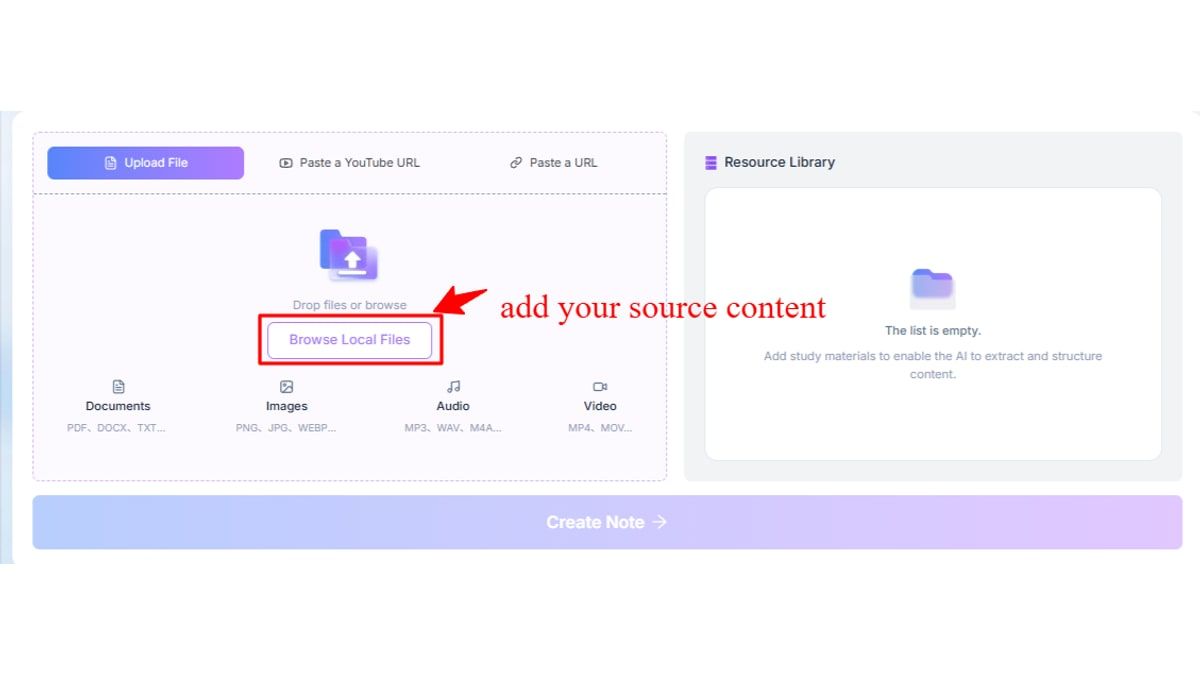
This step is useful when your content is scattered across formats. A student might use a lecture recording. A researcher might use a PDF. A creator might use a YouTube video or article.
Step 2. Generate the Summary
After adding the source, generate the summary. Lynote turns the material into structured output with headings, key ideas, and concise points. This gives you a clearer view of the content before you start writing.
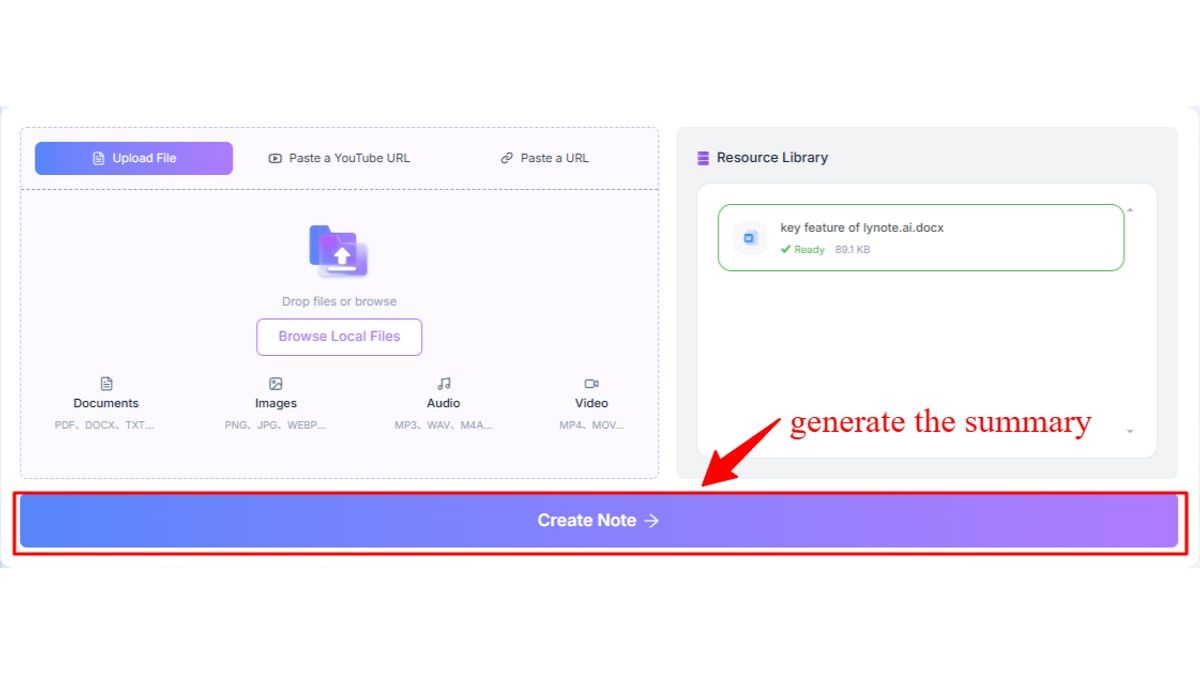
For long sources, this is much faster than manually highlighting every paragraph. You can quickly see what the source is mostly about. Then you can decide what needs deeper review.
Step 3. Review and Reuse the Output
Read the summary carefully and compare important points against the source when accuracy matters. You can use the summary as study notes, a research outline, a meeting brief, or a starting point for writing. If one section needs more precise wording, paraphrase that section separately.
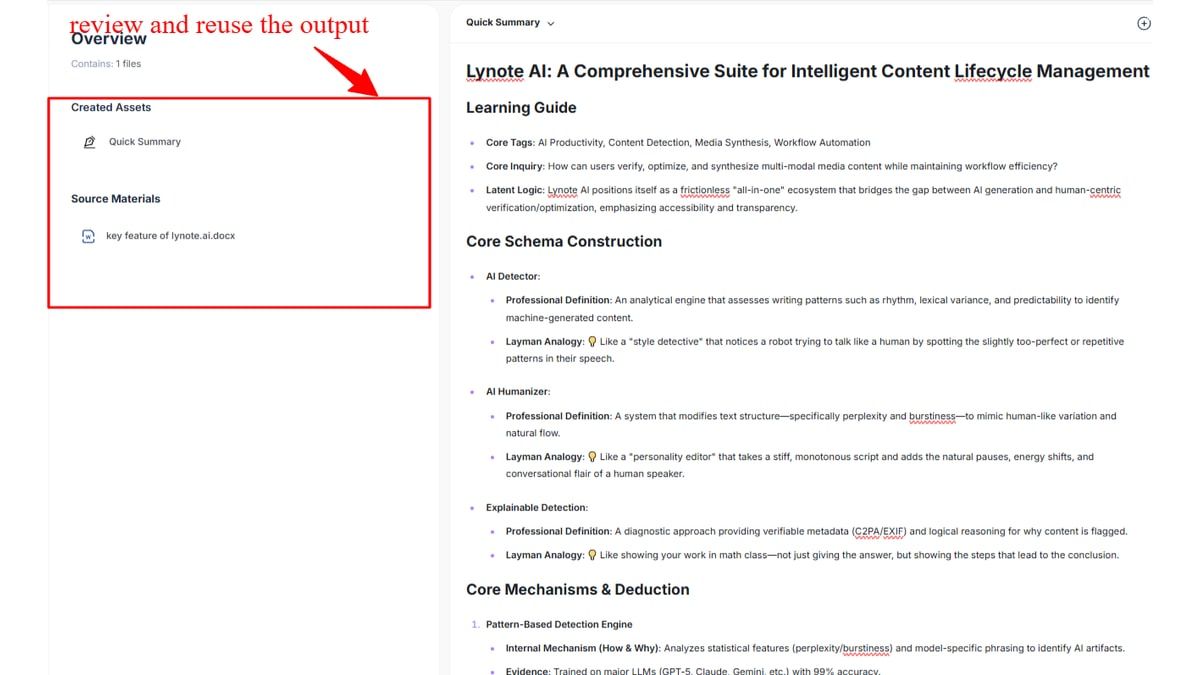
This is where understanding the difference between a summary and a paraphrase becomes practical. Summarize to capture the big picture. Paraphrase when a specific point needs to be restated in your own voice.
Paraphrasing vs. Summarizing for Students
Students often need both techniques. When reading a textbook chapter, summarizing helps identify the core themes. When writing an essay, paraphrasing helps explain specific ideas from the source.
For example, AP students may summarize a historical chapter into causes, events, and consequences. Then they may paraphrase one scholar's argument in an essay paragraph. The two techniques support different stages of learning.
Lynote can help with the summary stage by turning long study material into organized notes. Students can then use those notes to decide what deserves closer paraphrasing, citation, or review.
Paraphrasing vs. Summarizing for Work
At work, summaries are useful for meetings, reports, research calls, and long documents. A summary helps teammates understand the main decisions without reading everything. It is ideal for updates and briefings.
Paraphrasing is more useful when wording matters. You may paraphrase a client request, policy statement, research finding, or product requirement so it fits a report. The meaning stays the same, but the language becomes clearer for your audience.
If your team often works with long sources, Lynote AI Summarizer can help create the first version of the summary. From there, you can refine the language, add context, and paraphrase important details manually.
What About Quoting?
Quoting is different from both summarizing and paraphrasing. A quote repeats the exact words from the source. It should be used when the original wording is especially important, memorable, or authoritative.
You should not quote everything. Too many quotes can make your writing feel stitched together from other people's words. Paraphrasing and summarizing usually create a smoother reading experience.
A good workflow is simple. Quote only when the exact wording matters. Paraphrase when a specific idea matters. Summarize when the overall message matters.
FAQs About the Difference Between Summarizing and Paraphrasing
What is the difference between paraphrasing and summarizing?
Paraphrasing restates a specific idea in new words, usually at a similar level of detail. Summarizing reduces a longer source into its main points. The main difference is scope and length.
What is the difference between a paraphrase and a summary?
A paraphrase focuses on one sentence, paragraph, or narrow idea. A summary focuses on the broader message of a longer source. A paraphrase keeps more detail, while a summary removes detail.
What is the difference between quoting, paraphrasing, and summarizing?
Quoting copies exact wording from the source. Paraphrasing rewrites a specific idea in your own words. Summarizing condenses the main ideas of a longer source.
Can Lynote paraphrase content?
Lynote AI Summarizer is mainly designed to summarize source content into structured notes. If you need rewriting, use a dedicated rewriting or humanizing workflow. For this article's topic, Lynote is best for the summary stage.
Is summarizing better than paraphrasing?
Neither is always better. Summarizing is better for long sources and quick understanding. Paraphrasing is better when you need to explain a specific idea with more detail.
Conclusion
The difference between summarize and paraphrase is simple once you focus on purpose. Summarizing makes long content shorter, while paraphrasing restates a specific idea in new wording. If you need to process lectures, PDFs, videos, or articles faster, try Lynote AI Summarizer to turn source material into clear, reusable notes.

Written by Kristen I.
Content Strategist
Kristen focuses on content structure, editorial planning, readability, and creating useful experiences for readers. View all articles →