

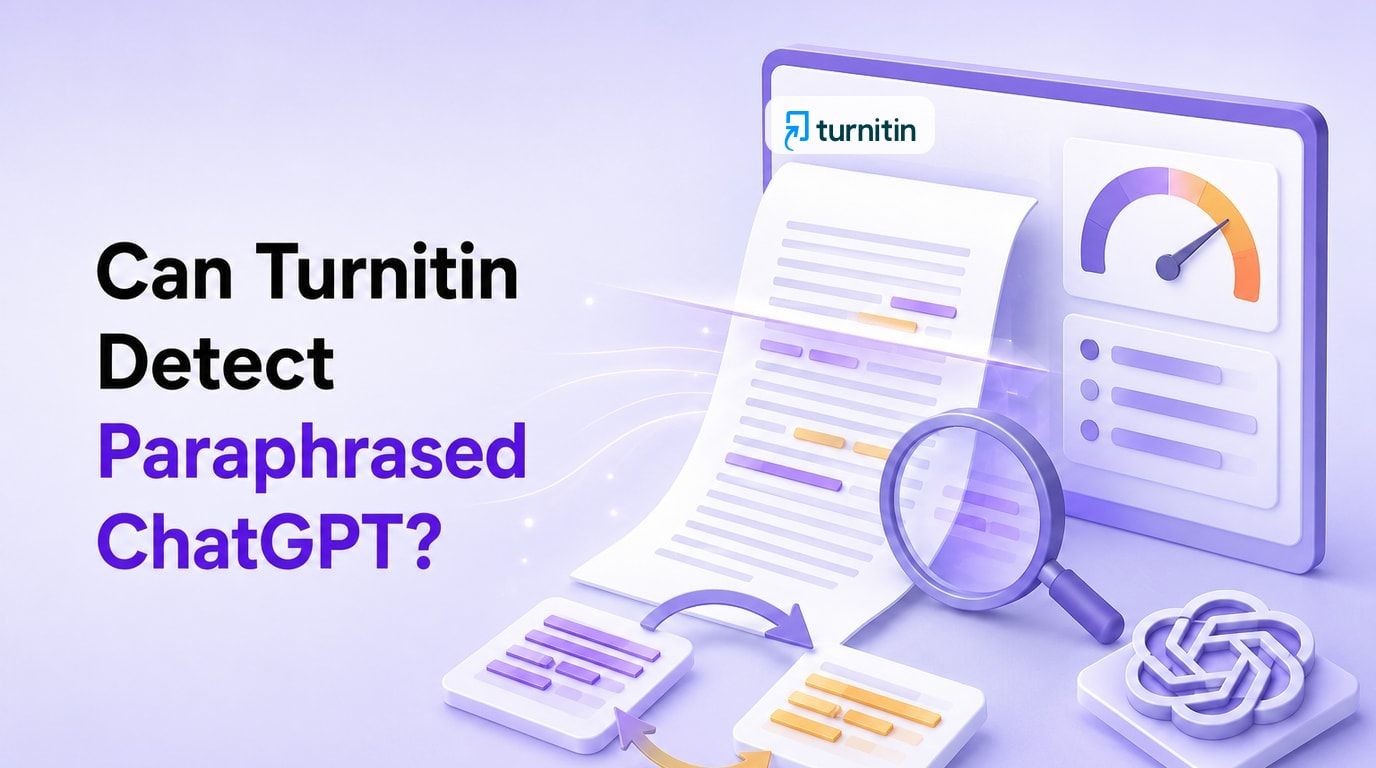
If you use AI to brainstorm or draft an essay, you might wonder can Turnitin detect ChatGPT after paraphrasing? The short answer is that changing a few words does not ensure your work will pass undetected. Turnitin and other AI detectors look for structural patterns, not just specific vocabulary choices.
Quick Answer: Can Turnitin Detect ChatGPT After Paraphrasing?
Paraphrasing AI-generated text does not guarantee that Turnitin will classify it as human-written. Turnitin’s current AI Writing Report can identify qualifying text that it determines may be AI-generated. For English submissions, its current capability also includes text that may have been further modified by AI paraphrasing or bypasser tools. The exact detection model is proprietary, so claims about specific internal signals should be avoided.
What Turnitin Actually Publishes
Turnitin describes its AI Writing Report as a model-based estimate of qualifying prose. Its current English-language reporting can include AI-generated text and text the model determines may have been modified by an AI paraphraser or bypasser tool. Turnitin also emphasizes that results can be inaccurate and should not be the sole basis for adverse action.

Why Simple Paraphrasing May Not Be Enough
Many students assume that replacing words with synonyms will hide AI assistance. However, this approach leaves the core argument skeleton and logical flow exactly the same. Detectors are trained to recognize these generic, highly balanced paragraph structures regardless of the specific adjectives used.
Furthermore, simply shuffling sentences around does not introduce the natural variability found in human writing. Without unique insights or varied pacing, the text will still read as highly predictable to an algorithm.
Can Turnitin Detect QuillBot or Other Rewriters?
No rewriter can guarantee a particular Turnitin result. Turnitin’s English AI Writing Report can include qualifying text it determines may be AI-generated and then modified by an AI paraphraser or bypasser tool. The practical issue is not the brand name alone: students still need to follow course policy, verify sources, and ensure the final reasoning is genuinely their own.

What Makes Paraphrased ChatGPT Still Look AI-Written?
Paraphrased AI text typically relies on generic examples rather than specific course materials. It also tends to use overly balanced claims and flat transitions that lack a strong personal voice. When a paper is missing unique insights or specific source evidence, it often reads as AI-generated even after manual editing.
Additionally, AI tends to summarize rather than critically analyze. If your paraphrasing only changes the summary's wording without adding your own critical thought, it will retain that recognizable AI tone.
Another common issue is that paraphrased ChatGPT keeps the same paragraph purpose in the same order. The introduction still makes a broad claim, the middle paragraphs still list balanced points, and the conclusion still repeats the premise. Even when the vocabulary changes, the draft can feel like the same machine-generated argument wearing different words.
Light Paraphrasing vs Structural Rewriting
| Edit type | What it changes | Academic value |
|---|---|---|
| Synonym replacement | Surface wording | Low; the reasoning is unchanged |
| Sentence reshuffling | Order and local flow | Limited unless the argument improves |
| Evidence insertion | Sources and specificity | High when the evidence is accurate and relevant |
| Thesis refinement | The central claim and reasoning | High; it makes the paper more genuinely argued |
| Voice restoration | Vocabulary, pacing, and explanation | High when it reflects the actual writer |
What Changes Actually Matter?
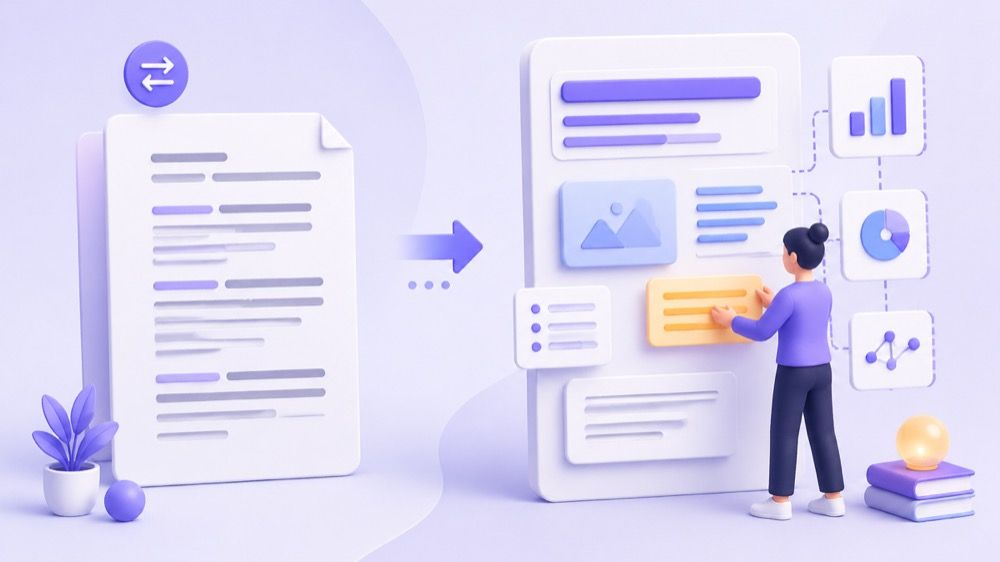
Not every edit has the same value. A strong revision changes the reasoning, evidence, and flow of the paper, not just the wording. Use the table below to decide whether your paraphrasing is meaningful or superficial.
| Edit Type | Example of the Change | Detection Impact | Academic Value |
|---|---|---|---|
| Synonym replacement | "Important" becomes "significant." | Usually weak because structure remains the same. | Low; does not improve the argument. |
| Sentence reshuffling | Two sentences switch order. | Limited because paragraph logic often stays predictable. | Low to medium; may improve flow but not substance. |
| Evidence insertion | Adds a course reading, quote, or case example. | Stronger because the text becomes more specific. | High; supports the thesis with real material. |
| Thesis refinement | Narrows a broad AI claim into a debatable position. | Stronger because the argument becomes less generic. | High; improves the paper's intellectual direction. |
| Voice restoration | Rewrites claims in your normal vocabulary and pacing. | Stronger because rhythm becomes more natural. | High; makes the work sound like the actual author. |
How to Rewrite From Your Own Understanding
The safest way to revise an AI-assisted draft is to put the original text away and rewrite from your own notes. Focus on integrating specific evidence, course concepts, and your own reasoning into the structure. This approach naturally introduces human variability and ensures your final submission reflects genuine academic effort.
Always verify that your claims are supported by real citations from your syllabus. Writing that connects directly to class lectures is incredibly difficult for an AI to replicate authentically.
Here is a practical revision sequence:
- Read the AI-assisted paragraph once, then close it.
- Write a one-sentence claim from memory.
- Add one source, lecture point, or example that supports the claim.
- Explain why that evidence matters in your own words.
- Compare your new paragraph with the original only after the rewrite is complete.
This process prevents the original AI structure from quietly controlling your final draft.
Use Lynote to Review, Not Predict Turnitin
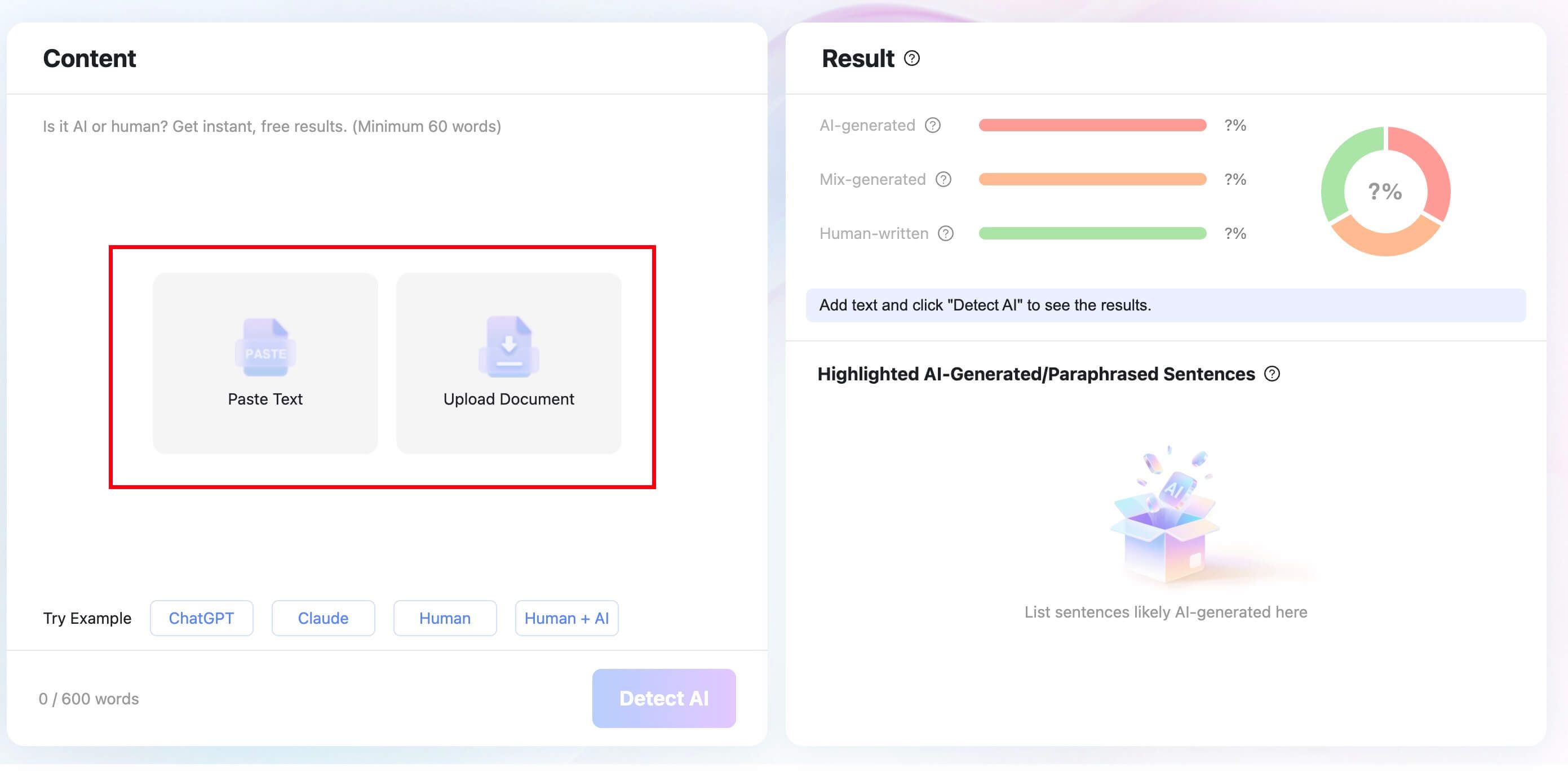
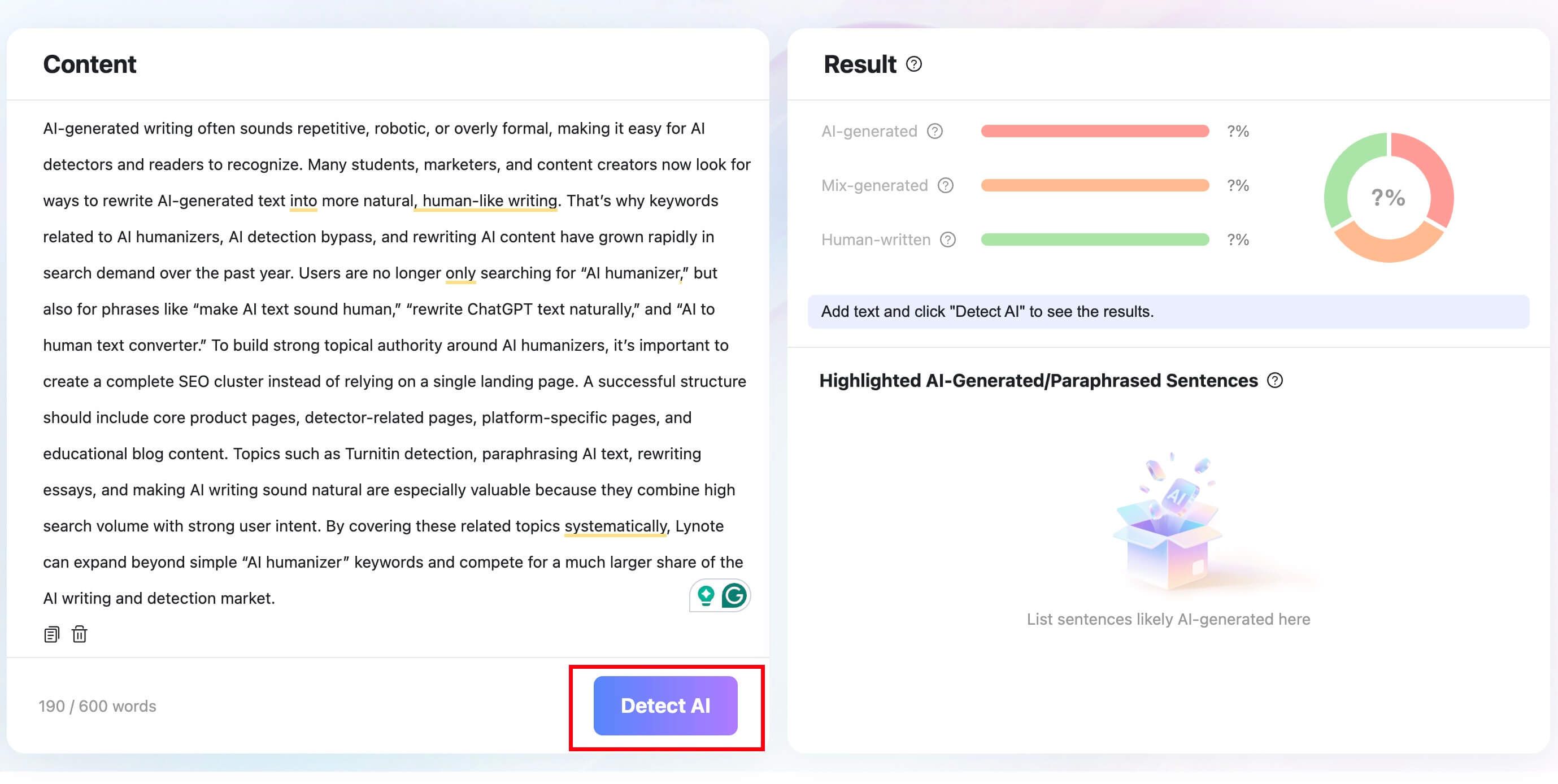
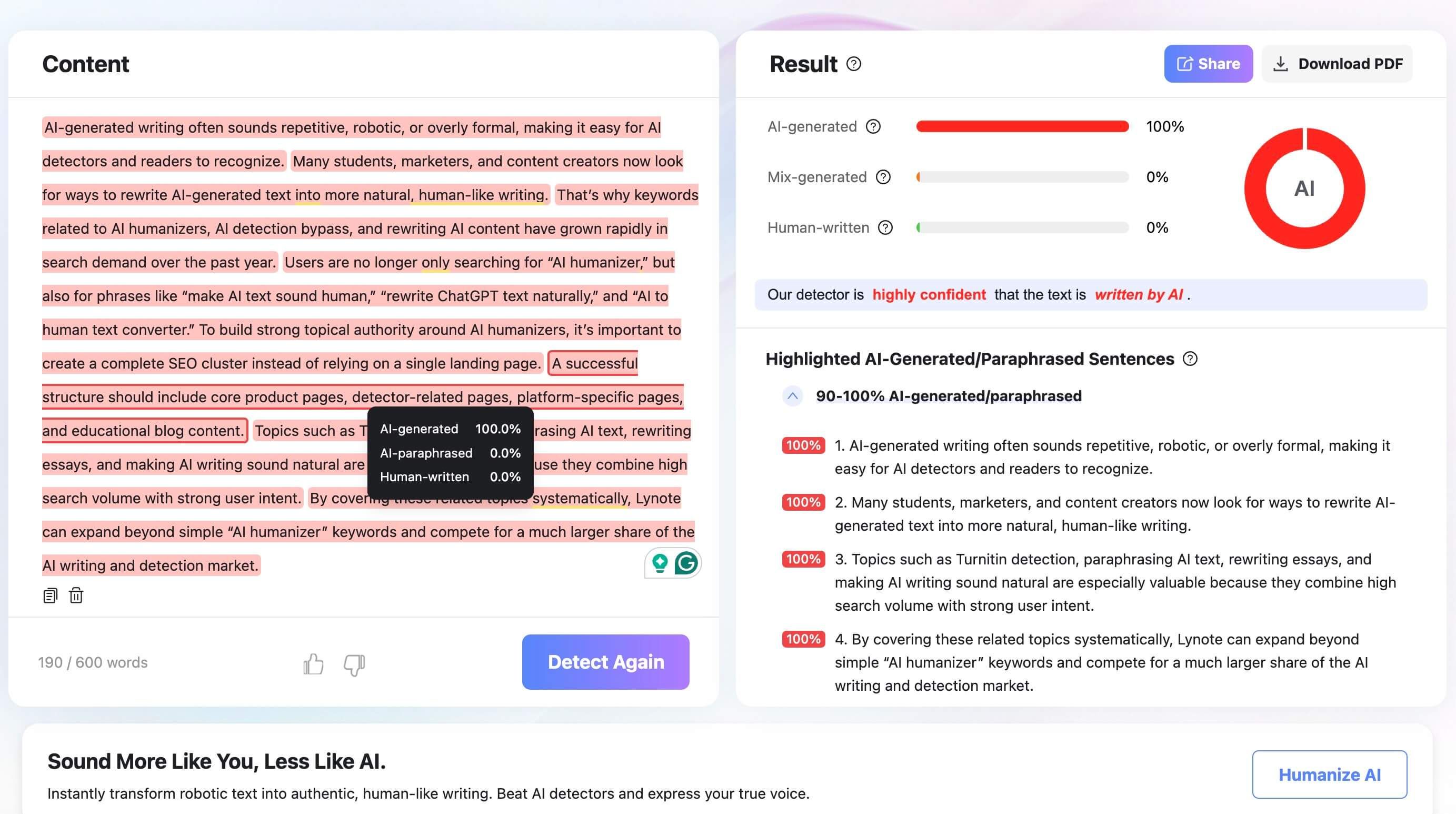
Use Lynote’s detector to identify passages worth reviewing and the Humanizer to improve awkward or repetitive wording when permitted. Lynote cannot reproduce Turnitin’s private model or guarantee a lower score. Check the final draft against course policy, facts, citations, and your own reasoning before submission.
- Review the draft with Lynote AI Detector
- Refine awkward AI-assisted wording with Lynote AI Humanizer
FAQs About Turnitin and Paraphrased ChatGPT
Can paraphrasing make AI text impossible to detect?
No. It can change detector output, but there is no guarantee.
Does Turnitin publish its full algorithm?
No. Public guidance explains report behavior and limitations, not the full model architecture.
What should students do if AI use is allowed?
Follow the course policy, verify facts and citations, preserve drafts, and make sure the final reasoning is genuinely understood.
Sources
Related Reading
Final Verdict
Paraphrasing alone is not a reliable strategy for avoiding AI detection. Instead of trying to trick the system with synonym swaps, focus on transparent writing and original reasoning. By integrating your own insights and using tools responsibly for review, you can produce high-quality work that truly reflects your understanding.

Written by Janet L. Harris
AI Writing Specialist
Janet reviews AI detectors and humanization tools, with a focus on accuracy, limitations, and responsible use. View all articles →