

How to Build AP American History Notes That Help You Study

AP American history notes work best when they help you connect events, causes, evidence, and exam skills instead of copying every paragraph from a textbook. A strong note system should make APUSH readings, lectures, primary sources, and review videos easier to turn into DBQ evidence, LEQ outlines, and flashcards.
If your history notes are too long, you may read them once and never return. If they are too short, they may not help when you need examples under exam pressure. This guide explains how to build useful AP history notes and how Lynote AI Note Generator can turn source material into structured study notes faster.
Why AP American History Notes Need a Better System
APUSH covers centuries of political change, social conflict, economic growth, foreign policy, reform movements, and cultural shifts. That makes it easy for AP American history notes to become a pile of dates without a clear study purpose. The real challenge is not collecting information; it is turning information into arguments you can use.
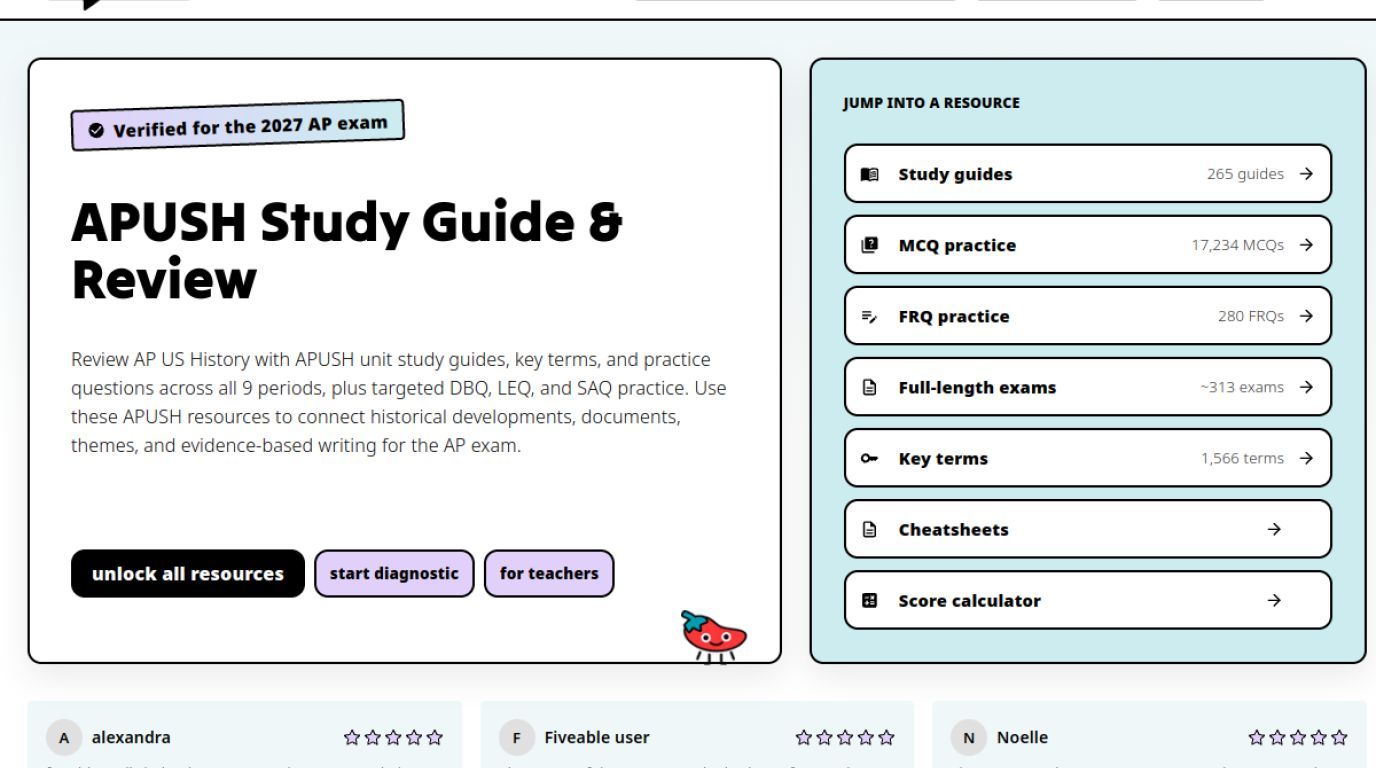
Good notes help you see patterns across periods. For example, westward expansion, industrial growth, immigration, and reform all connect to broader themes about power, labor, identity, and government. When your AP notes show those relationships, review becomes less about memorization and more about historical reasoning.
What Strong APUSH Notes Should Include
Strong APUSH notes usually include a period label, key terms, major events, causes, effects, and a few pieces of evidence for writing. You do not need every sentence from the textbook. You need enough structure to remember what happened, why it mattered, and how it connects to a possible thesis.
For each topic, add one sentence that explains the big idea. Then add two or three pieces of specific evidence, such as a law, court case, reformer, movement, conflict, or economic trend. This makes your AP American history notes easier to turn into essays.
| Note Element | Why It Matters | Example |
|---|---|---|
| Period | Keeps content organized by APUSH era | Period 4, 1800-1848 |
| Main idea | Prevents fact lists from becoming random | Market Revolution changed work and mobility |
| Evidence | Gives you material for essays | Erie Canal, Lowell mills, cotton gin |
| Historical skill | Connects notes to exam tasks | Causation or continuity and change |
AP American History Notes vs. General History Notes
General history notes often focus on what happened. AP American history notes need to go further because the exam asks students to explain relationships. You need to know the event, but you also need to explain cause, effect, comparison, continuity, change, and context.
This is why APUSH students often struggle with notes that look pretty but do not support writing. Pretty aesthetic history notes can be motivating, but they should still carry usable evidence. A clean timeline, color-coded terms, and short source summaries are helpful only when they improve review.
How to Organize AP American History Notes by Period
The APUSH course is commonly organized by historical periods, which makes period-based notes practical. Instead of keeping one giant notebook, create a repeatable structure for each period. That structure should include major themes, timeline anchors, evidence, and likely exam connections.
For example, Period 5 might include sectional conflict, slavery, reform, westward expansion, the Mexican-American War, the Compromise of 1850, Kansas-Nebraska Act, Dred Scott, and the Civil War. Your notes should not simply list those topics. They should explain how each one increased conflict over slavery and federal power.
A Simple Template for AP History Notes
Use a template so every class, chapter, or review video produces notes in the same shape. Consistency makes review much easier during the final weeks before the exam. It also helps you compare topics across time periods.
Try this template for AP history notes:
| Section | What to Write |
|---|---|
| Topic | The chapter, lecture, video, or source title |
| Period | APUSH period and approximate dates |
| Big idea | One clear sentence explaining the core point |
| Key evidence | Names, events, documents, policies, and movements |
| Skill connection | Causation, comparison, continuity, change, or context |
| Essay use | One way this topic could support a DBQ or LEQ |
How Lynote Helps Create AP American History Notes
Students often collect AP content from many places: class slides, textbook chapters, teacher handouts, YouTube review videos, PDF packets, and web pages. Lynote AI Note Generator can help by turning those materials into structured notes with headings, bullets, and source-linked sections. That gives you a cleaner starting point than copying everything manually.
The useful part is that Lynote keeps the workflow focused on learning output. You can generate notes, edit them, ask follow-up questions, and turn important sections into flashcards. It is still your job to verify facts and add your teacher's emphasis, but Lynote can reduce the time spent formatting notes from scratch.
How to Use Lynote for APUSH Study
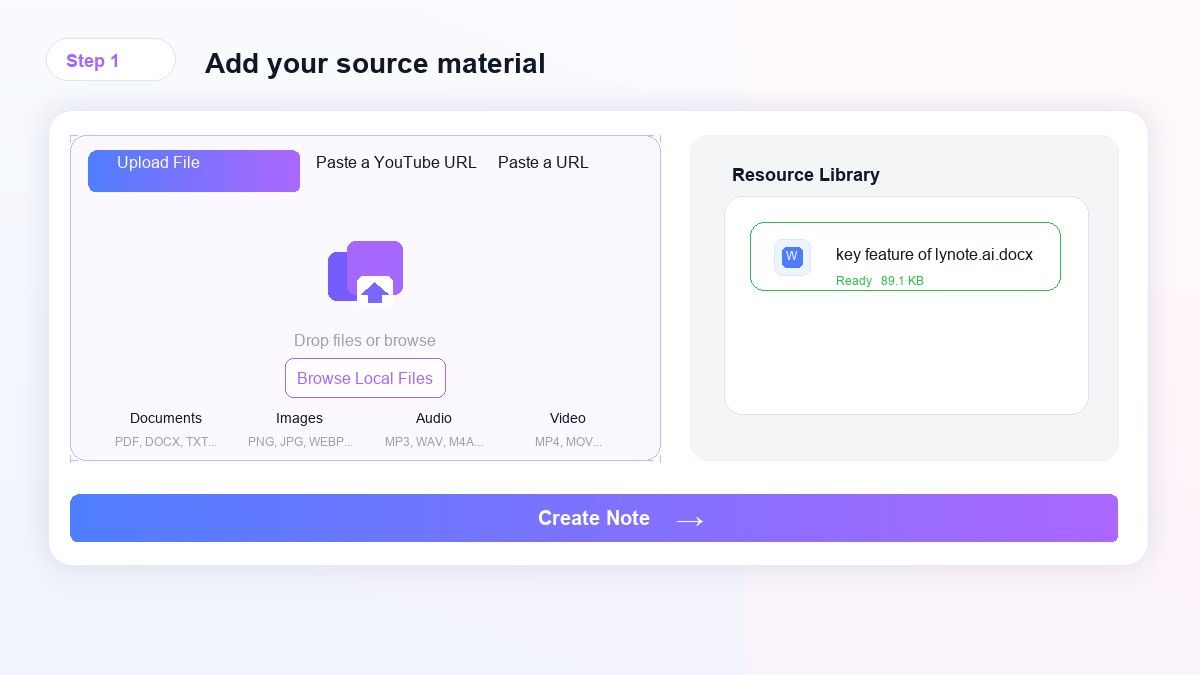
Step 1. Add Your AP Source Material
Start with one source at a time, such as a lecture recording, APUSH review video, PDF chapter, image, web page, or class handout. Add the material to Lynote and make sure it is the right source before creating the note. This keeps your AP American history notes focused and easier to verify.
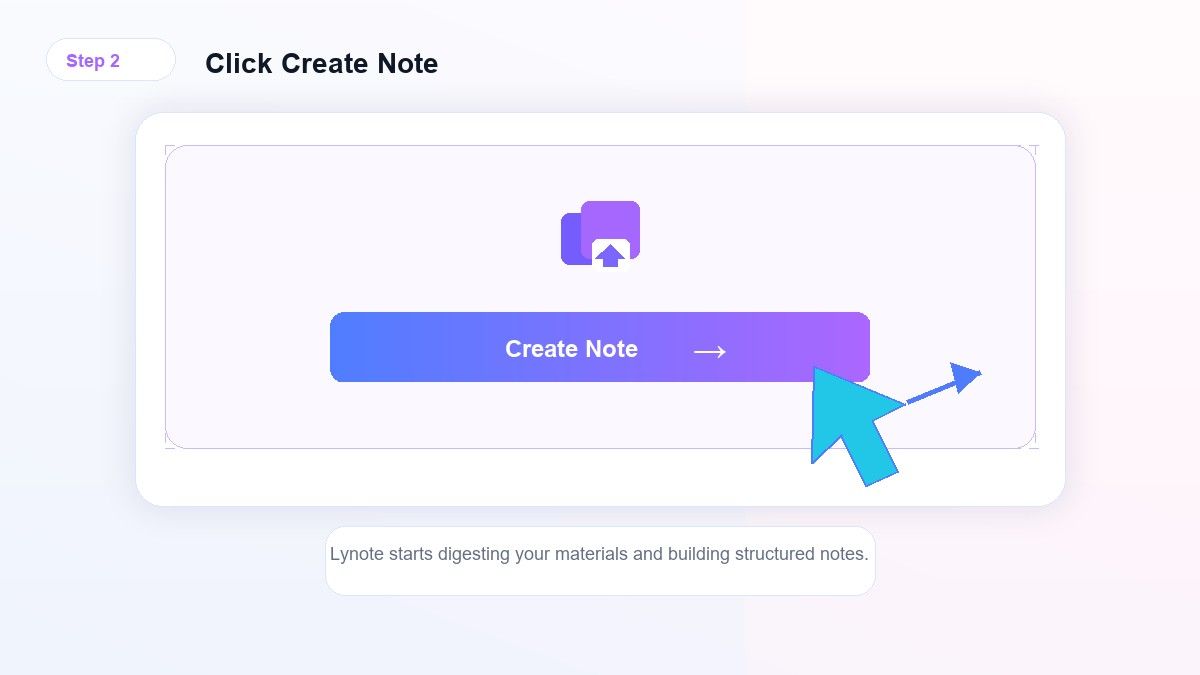
Step 2. Generate Structured AI Notes
Create the note and let Lynote organize the content into readable sections. For APUSH, look for headings, key concepts, definitions, examples, and logical relationships. The goal is not to accept every line automatically, but to get a strong first draft that you can improve.
Step 3. Edit and Turn Notes Into Review Material
After the note is generated, review dates, names, laws, court cases, and source details. Add class-specific context and mark evidence that could help in a DBQ or LEQ. Then reuse the best sections as flashcards, quick summaries, timelines, or exam review sheets.

Build a DBQ Evidence Bank From Your Notes
DBQs are easier when your notes already include usable evidence. For every major period, create a small evidence bank with events, documents, reform movements, and historical actors. Add a short explanation of how each piece of evidence could support an argument.
For example, if your topic is Progressive Era reform, your evidence bank might include muckrakers, trust-busting, settlement houses, the Pure Food and Drug Act, women's suffrage, and conservation. The point is not to memorize a giant list. The point is to know how evidence connects to reform, federal power, and social change.
Use Notes to Practice LEQ Thinking
LEQ writing depends on thesis development, context, evidence, and reasoning. Your AP American history notes should help you practice those pieces before test day. After each unit, write one possible LEQ prompt and outline a response using your notes.
This can be simple. Choose a question about causes, effects, comparison, or change over time. Then pull three pieces of evidence from your notes and write one sentence explaining how each supports the argument.
Turn APUSH Notes Into Flashcards
Flashcards are most helpful when they test meaning, not just spelling. Instead of making a card that says "What was the Homestead Act?", make one that asks how the Homestead Act connects to western migration, federal land policy, and conflict with Native nations. That type of question trains historical thinking.
Lynote can help you move from notes to flashcards when you want active recall. Use generated notes as the source, then choose the terms, people, policies, and cause-and-effect links that matter. This helps your study system move from passive reading to recall practice.
Pretty Aesthetic History Notes Without Wasting Time
Pretty aesthetic history notes can make studying feel more organized, but decoration should not consume the whole session. Use color for a purpose: one color for laws, another for court cases, another for conflicts, and another for themes. Keep the design simple enough that you can maintain it during a busy week.
If you like visual notes, use timelines, cause-and-effect arrows, and evidence boxes. Those visuals support the exam because they make relationships visible. The best-looking AP American history notes are the ones you can still use when you are tired and reviewing quickly.
AP World History Notes and APUSH Notes: What Carries Over
AP world history notes and APUSH notes share several study habits. Both benefit from timelines, comparison charts, causation notes, and concise evidence banks. Both also require you to explain change over time instead of memorizing isolated facts.
The difference is scope. AP World often moves across regions, empires, trade networks, and global themes, while APUSH focuses closely on the United States and its development. If you already have a strong system for advanced placement world history notes, adapt the same structure for APUSH with more attention to U.S. documents, laws, and debates.
A Weekly AP Notes Workflow
A weekly workflow keeps AP history notes from becoming a last-minute scramble. After each class, clean up messy notes within 24 hours. At the end of the week, turn your strongest evidence into flashcards or a short review sheet.
During the month before the exam, shift from collecting notes to using them. Practice DBQ document grouping, LEQ outlines, and quick evidence recall. Your notes should become a training tool, not just a storage place.
Common Mistakes in AP American History Notes
One common mistake is writing too much. If every paragraph becomes a full-page summary, review becomes exhausting. Condense each topic into a main idea, key evidence, and exam connection.
Another mistake is separating dates from meaning. Dates matter, but they are not enough. Always add why the event mattered and what larger theme it connects to.
A third mistake is relying only on someone else's notes. Shared APUSH notes can be helpful, but your teacher's lectures, assigned readings, and class discussions may emphasize different details. Use outside notes as support, not as your entire system.
Quick Checklist for Better APUSH Notes
Before you finish a unit, check whether your notes can answer five questions. What happened? Why did it happen? What changed? What stayed the same? Which evidence could support an essay?
If you can answer those questions, your notes are likely useful. If you cannot, add context and evidence before moving on. A few minutes of cleanup now can save hours before the AP exam.
FAQs About AP American History Notes
What Should AP American History Notes Include?
AP American history notes should include period dates, big ideas, key events, people, laws, court cases, movements, and essay-ready evidence. They should also explain cause, effect, comparison, and change over time. A short explanation is often more useful than a long copied paragraph.
Are US History AP Notes the Same as APUSH Notes?
Yes, many students use US history AP notes and APUSH notes to mean the same thing. APUSH stands for AP United States History. The best notes focus on both content and exam skills.
How Can I Make Pretty Aesthetic History Notes Useful?
Use visual design to organize meaning. Color-code laws, people, conflicts, themes, and documents. Avoid spending so much time decorating that you forget to add evidence and explanations.
Can Lynote Make AP History Notes From Videos?
Lynote AI Note Generator can help turn supported source materials, including video or YouTube content, into structured notes. For APUSH review videos, this can help you capture key terms and concepts faster. Always review the output against your class materials before using it for study.
How Often Should I Review APUSH Notes?
Review APUSH notes weekly during the course and more frequently before exams. Short, repeated review works better than one long cram session. Use flashcards, timelines, and essay outlines to make the notes active.
Conclusion
The best AP American history notes are clear, organized, and useful for writing, not just memorizing. Build notes around periods, themes, evidence, and exam skills, then use Lynote AI Note Generator when you want a faster way to turn source material into structured review content. With the right workflow, APUSH notes become a practical study system instead of a pile of pages.

Written by Janet L. Harris
AI Writing Specialist
Janet reviews AI detectors and humanization tools, with a focus on accuracy, limitations, and responsible use. View all articles →