

World Cup 2026 Format: Why 48 Teams Change Everything
The world cup 2026 format is the biggest tournament reset in a generation: 48 teams, 12 groups, 104 matches, and a new Round of 32. If you are asking how many teams in world cup 2026, the answer is 48, up from the 32-team version used from 1998 through 2022. That one number changes how fans watch, explain, and remember the tournament.
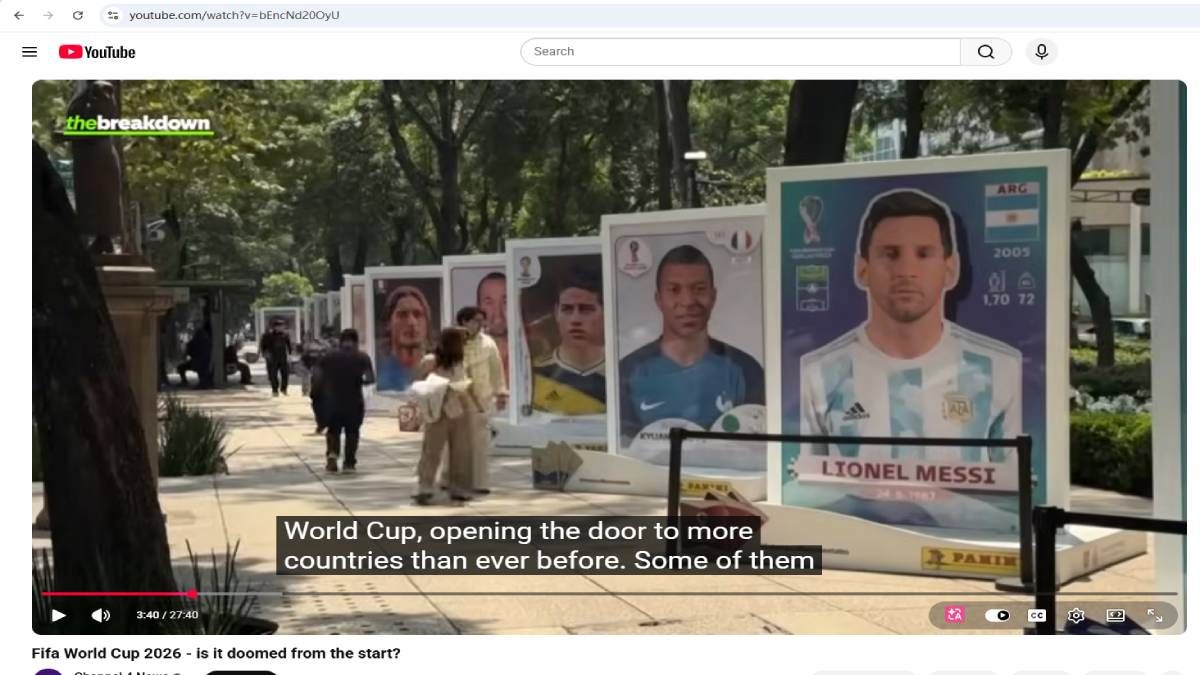
This guide breaks the new structure into a fan-friendly map. You will see why FIFA expanded the field, how third-place teams can still survive, and why the tournament will feel more like a live puzzle than a simple bracket. You will also see how Lynote can help fans turn the chaos into structured notes and active-recall flashcards.
The Format in One Breath
The world cup 2026 format puts 48 national teams into 12 groups of four. Each team plays three group-stage matches, and the top two teams from every group advance automatically. The eight best third-placed teams also move into the knockout stage.
That creates a 32-team bracket before the familiar Round of 16. From there, the tournament moves through the Round of 32, Round of 16, quarterfinals, semifinals, third-place match, and final. The expanded event is hosted by Canada, Mexico, and the United States across 16 host cities.
For quick summaries, the world cup 2026 format can be read as a bigger opening act followed by a longer elimination phase. That is why a simple table is useful before you start comparing teams. It keeps the major changes visible without making the rules feel heavier than the football.
| Feature | 2022 World Cup | 2026 World Cup |
|---|---|---|
| Teams | 32 | 48 |
| Groups | 8 groups of 4 | 12 groups of 4 |
| Knockout teams | 16 | 32 |
| Total matches | 64 | 104 |
| Hosts | 1 country | 3 countries |
Why Did FIFA Choose 48 Teams?
The simplest reason is access. The world cup 2026 format gives more countries a chance to play on football's biggest stage, especially nations that often finish just outside qualification. More places also mean more fan bases, more flags, and more stories from regions that deserve a larger spotlight.
That is the public-facing promise of the world cup 2026 format. The world cup 2026 format makes the World Cup feel more global before a ball is kicked. More countries can bring their football culture into the same conversation.
There is a business reason too. More teams create more matches, more broadcast windows, more tickets, and more global attention. That commercial layer does not erase the sporting argument, but it explains why the 48-team model became attractive to FIFA.
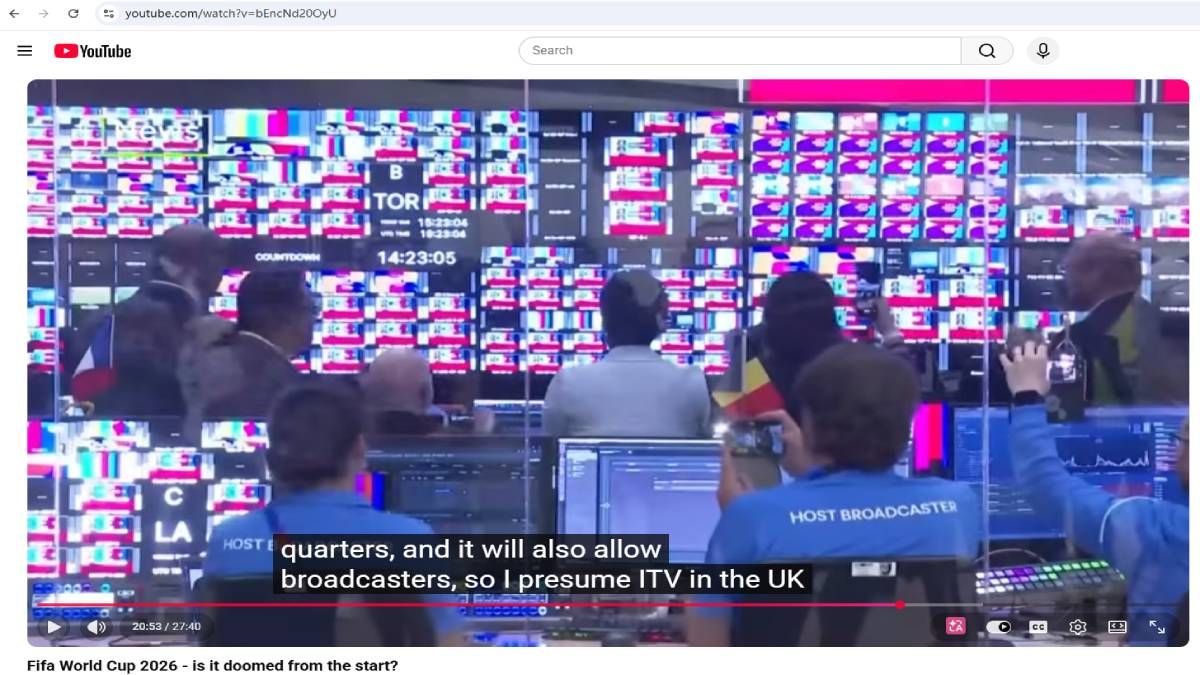
The final structure also matters. FIFA once considered 16 groups of three, but the approved world cup 2026 format uses 12 groups of four. That keeps the familiar three-match group rhythm and reduces some fairness concerns around final group games.
For most viewers, that choice makes the world cup 2026 format easier to accept. The tournament gets bigger without removing the group-stage pattern fans already know. Expansion feels less strange when the basic weekly rhythm still makes sense.
How Many Teams in World Cup 2026?
There are 48 teams in the 2026 World Cup. When people search how many teams in world cup 2026, they usually want more than a number. They want to know what those extra 16 teams actually change.
The answer is that the world cup 2026 format widens the door and lengthens the route. More teams enter, more teams reach the knockouts, and every serious contender may need to survive an extra elimination match. The tournament becomes bigger, but also harder to summarize from memory.
For fans, the difference will show up quickly. There will be more groups to scan, more third-place scenarios to calculate, and more underdog paths to follow. A team can finish third and still survive, which makes the final group matches more unpredictable.
That is the hidden challenge of the world cup 2026 format. It is easy to remember "48 teams," but harder to remember how those teams move through the tournament. The format rewards fans who understand both the headline number and the survival rules.
The 48-to-12-to-32 Memory Trick
The easiest way to remember the world cup 2026 format is 48 to 12 to 32. That means 48 teams enter, 12 groups organize the first stage, and 32 teams reach the knockout round. If you remember only one line, remember that.
The second line is 2 plus 8. The top two teams from each of the 12 groups make 24 automatic qualifiers, and the eight best third-placed teams complete the bracket. This is the bridge that explains why a third-place finish may still be enough.
The third line is 104 matches. That number explains why the tournament will feel larger on TV, in classrooms, on social media, and in fan conversations. The world cup 2026 format is not just a bigger bracket; it is a bigger information event.
That is why the world cup 2026 format needs more than a quick graphic. Fans will need reminders, examples, and repeatable explanations. The format is simple at the top level, but detailed once matches begin.
The Third-Place Twist
The third-place rule is where the world cup 2026 format becomes a live logic game. In the old 32-team setup, finishing third in the group meant going home. In 2026, eight third-placed teams continue if their overall records beat enough other third-placed sides.
That changes match psychology. A late goal may matter even if it does not change the group ranking, because goal difference can decide the wider third-place table. A draw may be useful for one team, risky for another, and confusing for fans who only look at one group.
To follow it well, track three things: group rank, points, and goal difference. Then compare third-placed teams across the tournament. This is exactly where structured notes are more useful than scattered screenshots.
The world cup 2026 format turns that comparison into part of the viewing experience. Fans who understand it will read the group stage with more context. Every late goal can change more than one team's mood.
What Changes for Underdogs?
The world cup 2026 format gives underdogs more ways to stay alive. A team that loses one match can still recover with a win, a draw, or a strong goal difference. That keeps more nations emotionally connected deep into the group stage.
It may also change tactics. Some teams will defend carefully in one match, then attack more aggressively once they understand the wider third-place table. Coaches will not only manage their own group; they will watch the entire tournament board.
For fans, this creates more "are they still alive?" moments. A country sitting third after three matches may need results from later groups before knowing its fate. The suspense can stretch beyond the final whistle.
In that sense, the world cup 2026 format gives smaller nations more time in the global conversation. Even when a team is not leading its group, its story may continue through the third-place table. That makes the middle of the tournament more emotionally layered.
What Changes for Favorites?
Favorites should still benefit from deeper squads and better depth. But the world cup 2026 format gives even elite teams another obstacle because the champion may need to play up to eight matches. One extra knockout round means one extra night where a favorite can be upset.
That makes rotation, injury management, and tactical scouting more important. The expanded tournament rewards teams that can adapt quickly instead of relying on one starting lineup. It also gives strong third-place qualifiers a chance to become dangerous bracket opponents.
For viewers, this means the tournament story may shift faster. A favorite can cruise through its group, then suddenly face a difficult Round of 32 matchup. The world cup 2026 format adds more room for surprise before the traditional heavyweight rounds begin.
It also makes the world cup 2026 format harder to predict with old assumptions. Finishing first is still valuable, but the expanded knockout map can create unusual routes. A clean group stage will matter, yet adaptation may matter even more.
How Lynote Turns the Format Into Clear Notes
The world cup 2026 format is exciting, but it creates a lot of information to process. A single match can involve team news, tactical notes, group-table implications, player context, and knockout scenarios. Across 104 matches, normal bookmarks and screenshots can become messy fast.
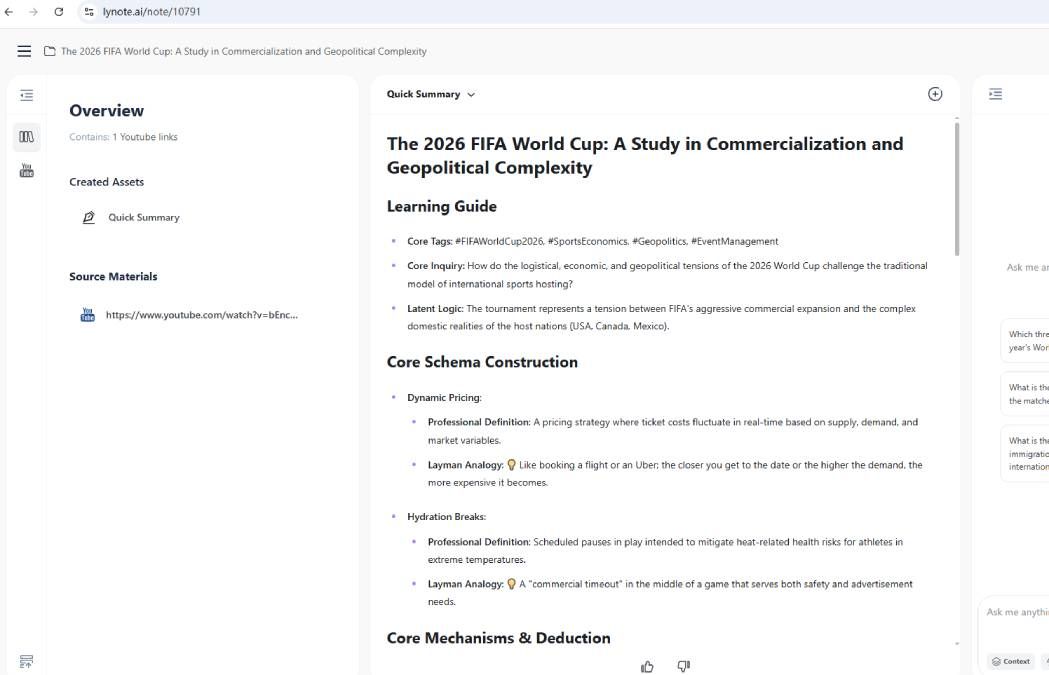
With Lynote AI Note Generator, fans can turn source material into structured notes. You can upload or paste supported content, then organize rules, match previews, team profiles, and post-match analysis into clear sections. It is especially useful when you want one clean notebook instead of ten open tabs.
A practical workflow is simple. Create one note for the tournament format, one for group-stage scenarios, and one for teams you follow closely. Review the generated notes, add your own observations, and keep the source-based structure easy to revisit.
This makes the world cup 2026 format easier to explain to someone else. Instead of repeating loose facts, you can open a note with the rule, example, and match context already organized. That is helpful for creators, teachers, and fans who like clarity.
Turn World Cup Rules Into Flashcards
If you want to remember the world cup 2026 format, flashcards are better than rereading. The new structure is full of numbers, rules, and cause-and-effect questions. That makes it perfect for active recall.
With Lynote AI Flashcard Generator, you can turn notes, PDFs, videos, audio, webpages, and links into question-and-answer cards. A card might ask, "How many teams in World Cup 2026?" Another might ask, "How many third-placed teams advance in the world cup 2026 format?"
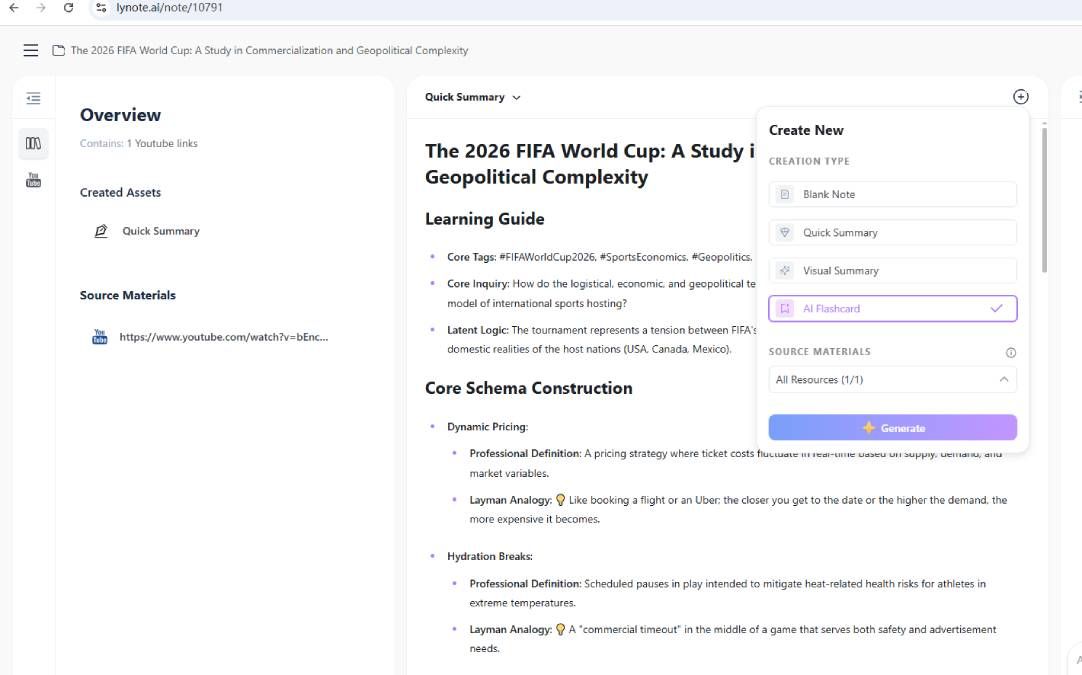
This is useful beyond trivia. Teachers can build a class activity around geography, sports media, and tournament math. Creators can prepare explainers, and fans can quiz themselves before matches instead of trying to memorize the bracket in one sitting.
For active recall, the world cup 2026 format works especially well because the facts connect to real scenarios. A flashcard can test a number, then another card can test what that number means in a match situation. That helps fans remember rules as usable knowledge, not isolated facts.
| Flashcard Question | Answer |
|---|---|
| How many teams are in World Cup 2026? | 48 teams. |
| How many groups are in the world cup 2026 format? | 12 groups of four. |
| How many teams advance automatically from each group? | The top two teams. |
| How many third-placed teams advance? | Eight. |
| What new knockout round appears? | The Round of 32. |
| How many total matches are scheduled? | 104 matches. |
A Better Way to Follow the Tournament
The world cup 2026 format will reward fans who organize what they learn. You can watch casually and still enjoy the spectacle, but the deeper stories will belong to people who track patterns. Which third-place teams are safe, which groups are volatile, and which favorites have the easiest route all become moving questions.
This is where Lynote's two-product workflow feels natural. Use Lynote AI Note Generator to collect and organize the tournament's rules, team context, and match analysis. Then use Lynote AI Flashcard Generator to turn the most important facts into cards you can test yourself on.
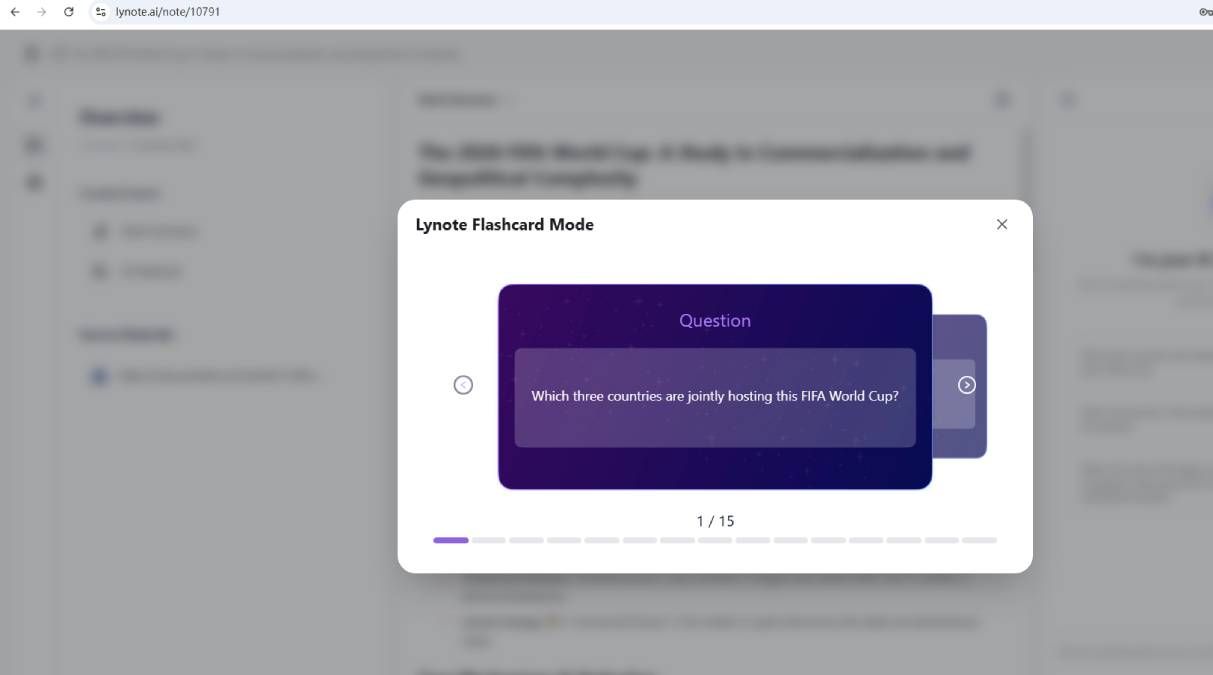
That workflow works for students, teachers, journalists, creators, and serious fans. It turns a noisy global event into a study system. The result is not just knowing who won, but understanding why each match mattered.
In short, the world cup 2026 format is a perfect test case for learning from live events. It mixes rules, geography, tactics, and memory. Lynote helps turn that mix into something you can actually reuse.
FAQs About World Cup 2026 Format
How many teams in World Cup 2026?
There are 48 teams in World Cup 2026. This is an increase from the 32-team format used in recent men's World Cups. The world cup 2026 format is the first men's World Cup format with 48 teams.
How many groups are in the 2026 World Cup?
There are 12 groups in the 2026 World Cup. Each group has four teams, and each team plays three group-stage matches. The top two teams from every group advance automatically.
Do third-place teams advance in 2026?
Yes. The eight best third-placed teams advance to the Round of 32. This is one of the most important changes in the world cup 2026 format because it keeps more teams alive after the group stage.
How many matches are in the 2026 World Cup?
The 2026 World Cup has 104 matches. That is a major jump from the 64-match structure used in 2022. More matches mean more football, but also more information for fans to track.
Can Lynote help me explain the format?
Yes. Lynote AI Note Generator can help turn source content into structured notes, while Lynote AI Flashcard Generator can turn those notes into Q&A cards. For a complex topic like the world cup 2026 format, that makes learning and explaining the rules easier.
Final Verdict
The world cup 2026 format matters because it turns the tournament into a 48-team global maze with more teams, more matches, and more survival paths. Remember 48 to 12 to 32, then use Lynote to turn the rules into notes and flashcards. Once the matches begin, the fans who understand the world cup 2026 format will see more of the story.