
How to Learn French Fast Without Getting Stuck in Textbooks

To learn French fast, connect what you hear with phrases you can actually use: practice pronunciation with audio, learn nouns with their gender, retrieve useful sentence patterns and speak before every detail feels comfortable. Work on a small communication goal each day, then check whether you can handle a changed question or reply. Faster progress is a useful target; a fixed deadline for fluency is not.
The frustrating part of French is often the gap between recognizing a sentence on a page and understanding it in conversation. You may know every written word yet miss the message when someone says it naturally.
This guide is for beginners and returning learners who want to close that gap. You will still use grammar and vocabulary, but every study session should eventually lead to something you can understand or say without the answer in front of you.
What Should You Learn First? Match Your French to Your Goal
Before choosing another app or textbook, choose an interaction. Ordering food, describing your work and following a classroom instruction require overlapping skills, but they do not demand identical practice on day one.
Use the table to give your first few weeks a clear direction.
| Your goal | Your first priority | A useful practice task | Evidence of progress |
|---|---|---|---|
| Travel | Requests, numbers and likely replies | Ask for an item and respond to a changed price | You can continue after the other person answers |
| Everyday conversation | Questions, descriptions and follow-ups | Discuss a familiar topic without a full script | You can answer one unexpected follow-up |
| Work or study | Vocabulary and instructions relevant to your task | Explain a routine or summarize a short message | The listener understands the main point |
| Exam preparation | The actual exam's skills and task formats | Complete an appropriate practice task | Your performance meets the task criteria, not just a word-count goal |
Choose one main course with reliable audio and a sequence you can follow. Keep extra resources for specific gaps instead of starting several beginner courses at once.
Also consider who you expect to speak with. French is used in many regions; learn from materials relevant to your setting without treating one accent as the only legitimate form of the language.
10 Practical Ways to Learn French Faster
1. Build a Small Set of Conversations You Actually Need
A phrase list can help you begin an exchange, but it may not prepare you for the answer. If you learn how to ask where something is, also practice recognizing a simple direction and asking for clarification.
Choose three situations for the coming week. For each, collect a verified model for your opening, two likely replies and one way to keep the interaction going.
For a cafe task, the useful unit is not just the name of a drink. It is a short exchange involving a request, a quantity, a follow-up question and a response.
Practice the exchange once with support, then change a detail. Ask for a different item, change the quantity or have your partner answer in a different order.
Check: can you communicate the new information, or can you only repeat the original dialogue? Both are steps forward, but they are different skills.
2. Learn How French Sounds Before Trusting Its Spelling
English reading habits can lead you astray when you approach French entirely through text. Written endings, vowel combinations and nasal vowels need to be connected to recordings rather than guessed from familiar-looking letters.
Start with a short recording and its transcript. Listen first, locate the word in the text, then notice which letters correspond to audible sounds and which do not in that example.
Do not turn one observation into a universal rule. Many final consonants are silent in particular contexts, but "never pronounce the last consonant" will produce mistakes.
If two sounds are difficult to distinguish, practice hearing the difference before repeatedly recording yourself. Use clear examples from a course or teacher, then alternate identification and imitation.
Your goal is understandable speech, not an impression of someone else's voice. Ask for feedback on one specific sound or word rather than trying to correct your entire accent at once.
3. Practice Connected Speech in Complete Phrases
French does not arrive in neatly separated dictionary entries. Word boundaries can be difficult to hear, especially when a normally silent final consonant becomes audible in a liaison before a following vowel sound.
Not every possible link is appropriate: some liaisons are required, some optional and some forbidden. Liaison is also different from linking a consonant that is already pronounced, so avoid treating every connection as the same rule.
Use short, verified phrases as your practice unit. Listen to the whole phrase, mark where you expected a boundary and compare that expectation with the recording.
Then repeat the phrase without inserting a pause between every word. Keep the pace slow enough to follow the sound pattern, and build speed only when the phrase remains understandable.
Check: listen to the phrase again without reading. If you still need to see the words to identify them, keep working on sound-to-word recognition rather than adding more phrases immediately.
4. Learn Every New Noun With Its Gender and Context
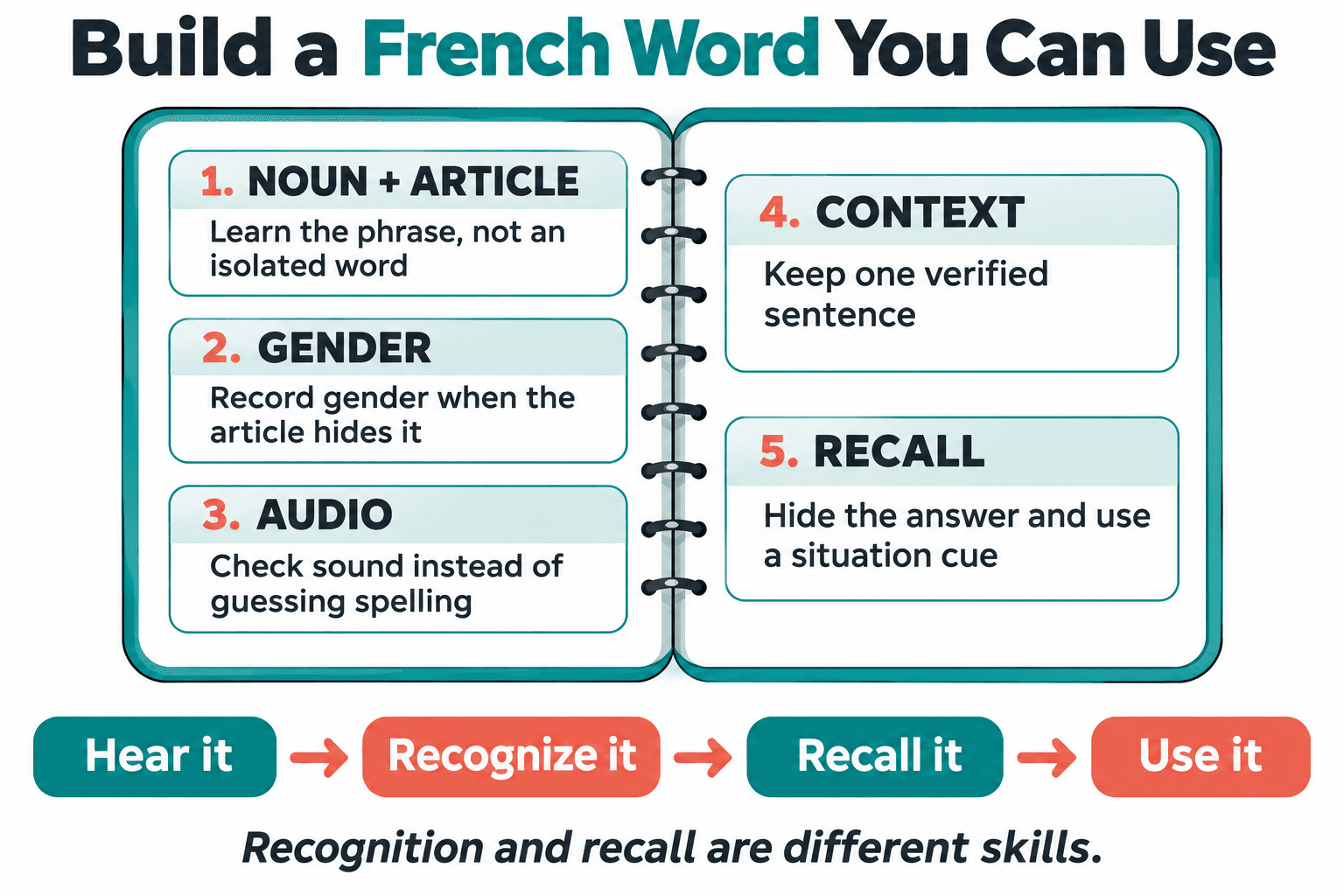
Learning an isolated noun and adding gender later creates a second memory task. Store the noun with an appropriate article, its pronunciation and one short context from the start.
An article is not always enough to make the gender visible. When the article is elided before a vowel sound, keep an explicit masculine or feminine label in your note as well.
Word endings can offer clues, but they are not a substitute for checking uncertain nouns. Treat a pattern as a useful tendency rather than a rule with no exceptions.
A vocabulary card should help you produce the word, not merely recognize its English translation. Try this structure:
| Card element | What it helps you remember |
|---|---|
| Noun with article | The word as part of a usable phrase |
| Explicit gender when needed | Information an elided article may hide |
| Audio reference | Pronunciation rather than guessed spelling |
| One short context | Meaning and typical use |
| A recall question | Whether you can retrieve the phrase without seeing it |
Review the card in both directions. Identify meaning from sound, then use a situation cue to produce the phrase; noticing the answer is easier than recalling it.
5. Learn Verb Patterns You Can Use Today
Conjugation matters, but memorizing every form before attempting a conversation can leave you with knowledge you cannot retrieve quickly. Begin with patterns that help you request something, describe a routine, ask a question or discuss a near-future plan.
Take a reliable sentence from your course and change one element. Change the person, the activity or the time, checking whether that change also requires a different verb form.
Do not assume that swapping an English word produces a correct French sentence. Some expressions require different constructions, so use the original model and feedback to guide the variation.
Add grammar when it solves a communication problem. If you keep needing to talk about yesterday, that is a reason to study common past-event patterns rather than continuing to collect present-tense vocabulary.
Check: answer a new prompt using the pattern. If you can complete a written exercise but cannot answer aloud, include short spoken retrieval in the next session.
6. Use English Similarities Without Falling for False Friends
Similar-looking words can make French vocabulary less intimidating for English speakers. They can also encourage confident guesses that miss the meaning or sound unnatural in context.
Before adding a familiar-looking word to your active vocabulary, check three things: what it means in this sentence, how it is pronounced and whether the expression fits the situation.
A dictionary entry and a reliable example can help separate genuine similarities from misleading ones. Do not assume that a matching spelling guarantees the same everyday meaning, grammatical behavior or level of formality.
Keep a small list of words you personally confuse. A correction tied to a sentence you misunderstood is more useful than an enormous list of traps you have not encountered.
Check: explain the sentence in your own words before looking at its translation. If the familiar word pushed you toward the wrong meaning, record that specific contrast.
7. Turn One Short Dialogue Into Several Exercises
A short dialogue can support more focused work than a long video you mostly follow through English subtitles. Choose material with enough familiar language that you can investigate the difficult parts without looking up every word.
Use the same recording for several different questions:
- Listen for the situation. Who is speaking, and what are they trying to do?
- Listen for a detail. What time, item or place is mentioned?
- Check the transcript. Find the exact phrase you missed.
- Replay without reading. Connect the known words to their sound.
- Respond or retell. Answer a question, summarize the message or change one detail.
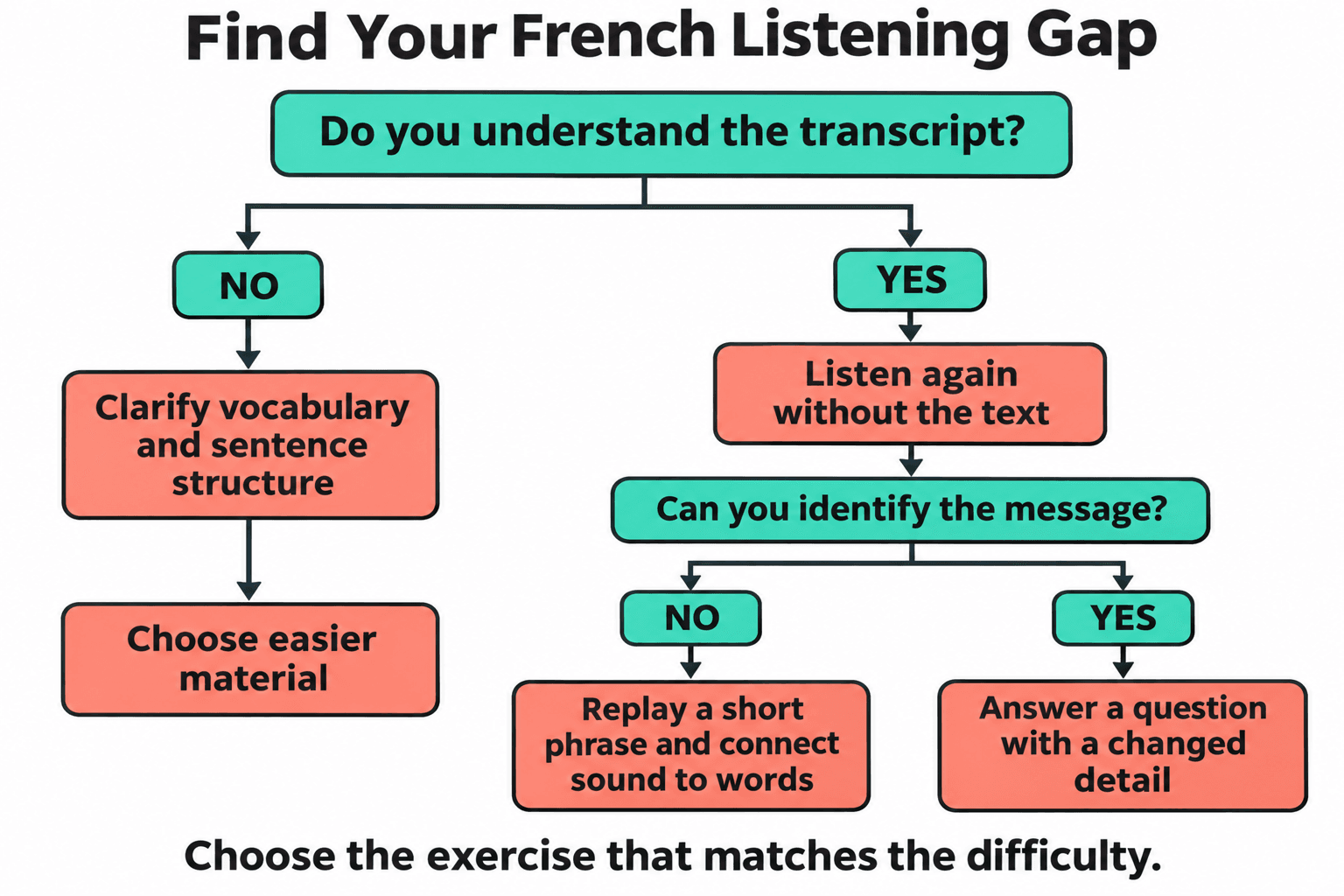
The transcript helps diagnose the problem. If the written sentence is unfamiliar too, clarify its vocabulary or grammar; if it is immediately clear, focus on recognizing that language in speech.
Shadowing can be useful once you understand the material. Repeating a sound sequence you do not understand may improve your ability to imitate that sequence without helping you use it in conversation.
Choose recordings you are willing to revisit. Repetition is easier to sustain when the task changes each time, instead of being another attempt to watch the same clip passively.
8. Keep a Correction Notebook, Not a Copy of the Lesson
A notebook becomes useful when it changes your next attempt. Instead of copying every explanation, keep the error, a verified correction and a question that makes you use the correction later.
If lessons are spread across PDFs, recordings and links, Lynote AI Note Generator can help organize the source material into editable notes. Use it to reduce sorting work, then decide what deserves practice yourself.
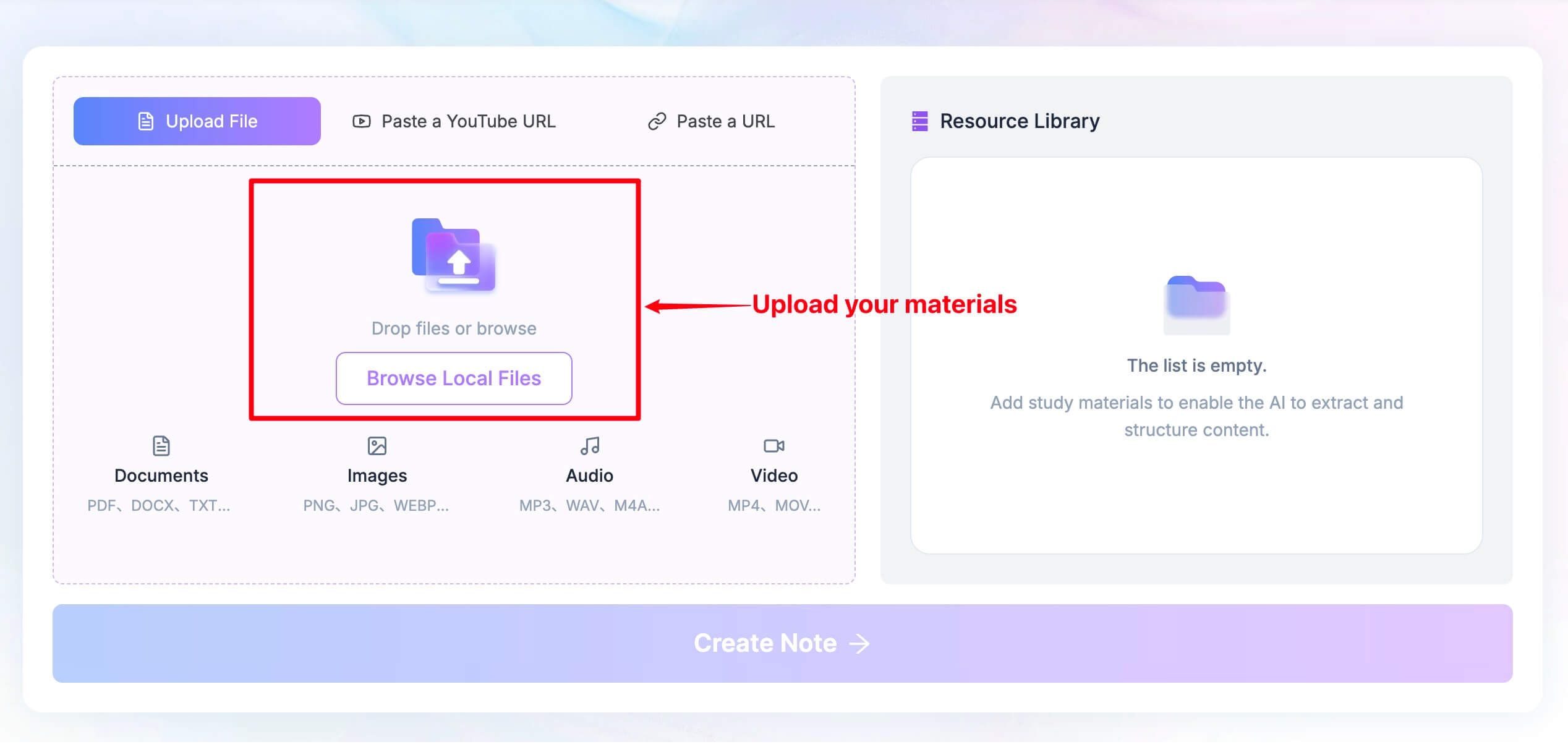
- Add your lesson file or a supported source URL. Select Parse for a pasted URL; direct uploads do not need that step.
- Select Create Note once the source is ready.
- Review the notes against the lesson, correct uncertain details and turn the most useful points into recall questions.
A compact correction entry can have four fields: the situation, what went wrong, the verified model and the next practice prompt. Keep the source or audio location so you can check it again.
For example, a note about asking a question should end with a new question for you to formulate, not just a copied explanation of question formation. Close the note before answering, then reopen it to compare.
Generated notes are not a substitute for pronunciation feedback or a teacher's judgment about natural phrasing. Use the original audio for sound and verify language details before committing them to memory.
9. Use Translation to Check a Guess, Then Remove It
Translation is useful when you need to check a passage, but it can quietly replace the effort of understanding. Give yourself a short attempt before opening the answer.
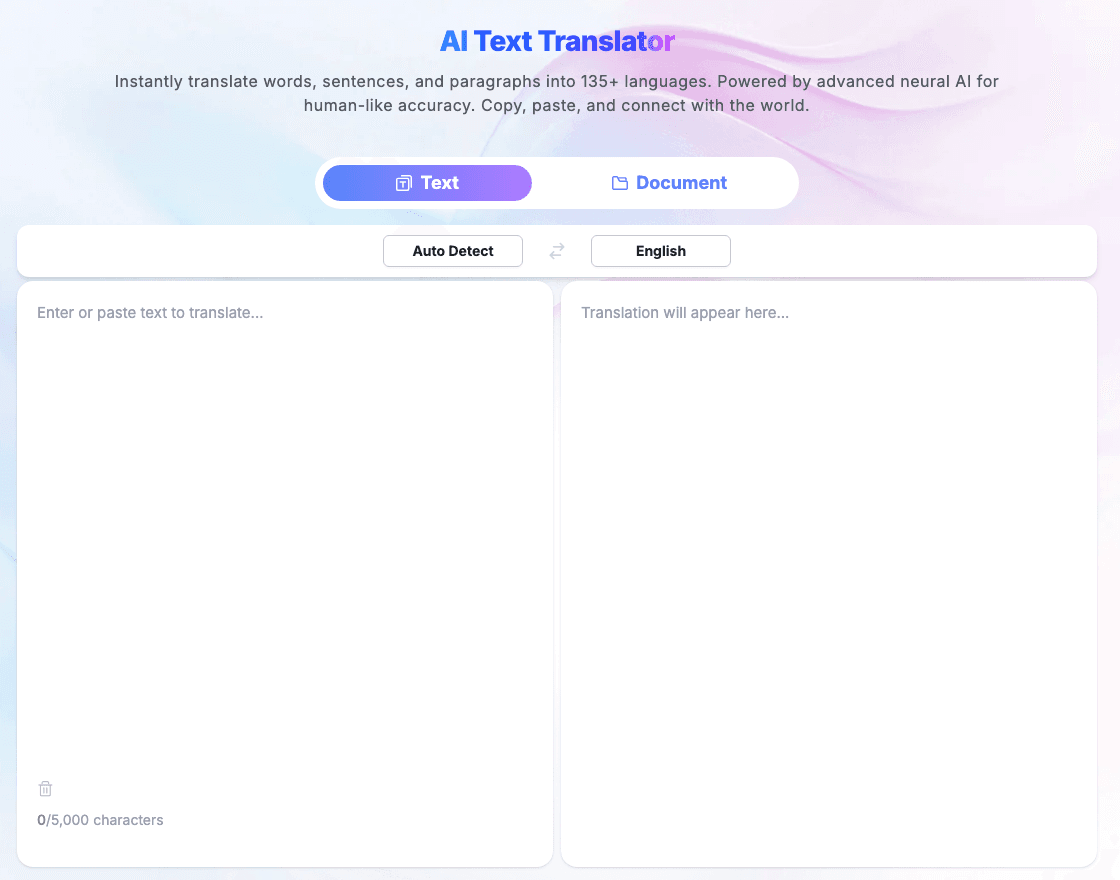
For a few difficult sentences, Lynote AI Text Translator offers a straightforward meaning check. Paste the text, confirm the detected source language and select English as the target language.
The tool accepts up to 5,000 characters per request, but shorter passages are usually easier to learn from. Compare the translation with your original guess, identify the part that changed your understanding and then hide the English output.
Try explaining the passage again without the translation. If you can only repeat the English answer, return to the original sentence and locate the words carrying the meaning.
Treat translations as context-sensitive suggestions rather than final rulings on formality or intended meaning. Ask a teacher or consult a reliable reference when the interpretation matters or the result seems inconsistent with the surrounding passage.
This workflow checks meaning; it does not test whether you can understand a spoken reply. Keep listening practice separate enough that translation cannot answer the question for you.
10. Practice Repairing a Conversation, Not Just Starting One
Real conversations become easier when you know what to do after missing something. Practice asking for repetition, slower speech, clarification or confirmation using expressions from your course.
Give a partner permission to change a detail or ask an unprepared question. Your task is to keep the exchange going, even if you need to pause and clarify.
Do not measure success only by speed. A slower exchange in which you clarify correctly can be more useful than a fast, memorized speech that collapses at the first reply.
After the conversation, choose one correction to revisit. Repeat the task with different information so the improvement is not limited to the exact sentence you rehearsed.
If you are studying alone, record answers to changing prompts and arrange occasional feedback when possible. Recording is useful rehearsal, but it cannot fully reproduce a partner's unpredictable responses.
A 30-Minute French Routine Built Around One Dialogue
You do not need a different resource for every skill. One short dialogue with reliable audio and a transcript can anchor a session that includes memory, listening, pronunciation and speaking.
The schedule below is a planning example, not an experimentally established optimum. Change the balance when one stage is clearly causing difficulty.
| Time | Task | What to produce |
|---|---|---|
| 5 minutes | Recall earlier phrases before reviewing | A few answers without looking |
| 8 minutes | Listen for meaning and check missed details | An explanation of the dialogue's situation |
| 5 minutes | Practice a difficult sound or connected phrase | A focused attempt to compare with the model |
| 8 minutes | Change details and respond aloud | A short variation rather than a recitation |
| 4 minutes | Record one correction and tomorrow's prompt | A clear next practice task |
At 30 minutes a day, seven days provide 3.5 hours and 30 days provide 15 hours. Those totals describe time allocated, not a proficiency level earned.
For a busy day, use a ten-minute fallback: three minutes recalling familiar phrases, four replaying a short segment and three answering aloud. Keeping an achievable routine is more practical than repeatedly planning sessions you cannot fit in.
Check Transfer, Not Just Repetition
At the end of the week, return to a familiar task with one change. Use a different item, question order or speaker so you can see whether the language transfers beyond the original recording.
Keep a simple record of the support you needed: no support, a small cue or the complete model. This is a personal practice log, not a standardized language assessment.
Separate comprehension from production. Understanding a question, choosing a response from options and producing your own answer are different achievements, even when all three involve the same vocabulary.
If an exercise becomes easy only when the answers appear in a familiar order, change that order. The aim is to retrieve meaning, not memorize the layout of the activity.
Why Your French Feels Stuck: Diagnose the Actual Gap
"Study harder" is not a useful diagnosis. Before adding more minutes, identify the point at which the task breaks down.
| What happens | A small test | A better next exercise |
|---|---|---|
| You understand the transcript but miss the recording | Read the missed phrase, then replay it without text | Sound-to-word recognition with short familiar clips |
| Both the audio and transcript are difficult | Explain the written sentence with a dictionary available | Easier material and targeted vocabulary or grammar work |
| You know words but cannot assemble a reply | Answer a situation cue without seeing a sentence | Retrieval of a complete useful pattern |
| You repeatedly forget noun gender | Produce the noun with its article before revealing the answer | Gender-aware recall rather than isolated word recognition |
| You translate every word before speaking | Respond to a familiar task with a short prepared pattern | Gradually vary the pattern without building from English each time |
| You freeze at follow-up questions | Have a partner change one detail | Clarification and conversation-repair practice |
Change one part of the routine for several sessions before replacing everything. Otherwise, it is difficult to tell whether the improvement came from easier material, better feedback or simply more familiarity.
Avoid Three Common Time Sinks
Collecting resources instead of using them: keep one main sequence and add a resource only when you can name the gap it addresses. A new interface does not necessarily solve a listening or recall problem.
Treating difficult native media as the main beginner lesson: entertainment can motivate you, but constant confusion offers little guidance about what to fix. Use a manageable excerpt or graded material for focused practice.
Polishing notes without testing memory: organizing information can help, but it should lead to a closed-note attempt. If your notebook keeps expanding while your spoken responses remain unchanged, reduce copying and increase retrieval.
How Long Does It Take to Learn French? Define the Finish Line
There is no single timeline because "learn French" can mean ordering lunch, managing everyday exchanges, studying in French or discussing unfamiliar professional topics. Those goals involve different ranges of vocabulary and different demands on listening and speaking.
Your starting point matters too. A returning learner, someone who already knows a related language and a complete beginner may need different amounts of practice even with the same daily schedule.
Judge progress through tasks you can perform with less support. Can you understand a new reply, ask a follow-up question or explain something familiar without reading a script?
Do not convert a full-time professional training estimate into a promise for casual study. Likewise, completing a month of app lessons does not by itself establish an official language level.
If an exam is your goal, consult its current requirements and practice the actual task types. For everyday communication, use real interactions as well as exercises so your study results are not limited to multiple-choice recognition.
FAQs About Learning French Faster
Can I Learn French in 30 Days?
You can use 30 days to build a routine and practice a limited set of situations. That is different from broad fluency. Choose a specific task, record your starting point and check whether you can complete a variation with less help at the end.
Can I Learn French on My Own?
You can study vocabulary, grammar, reading and listening independently with reliable materials. Speaking practice and occasional feedback help reveal problems that self-study may miss, especially pronunciation and natural phrasing.
Is 30 Minutes a Day Enough?
It is a workable starting budget, provided you use it consistently and match the exercises to your goals. It does not establish how quickly you will reach a particular level. Adjust the routine according to the skills that remain difficult.
Should I Learn Grammar or Vocabulary First?
Learn them together through useful phrases. Vocabulary gives you content, while grammar helps you combine it meaningfully; neither needs to be completed before you start practicing simple communication.
Can I Learn French Without Living in France?
Yes. You can create regular contact with French through recordings, reading and conversation partners. The important challenge is making that contact active and understandable, not simply having French play in the background.
Can I Learn French for Free?
Free lessons, library materials and language exchanges can form a useful starting toolkit. Check that you have a coherent sequence and reliable audio. Paid feedback can address a specific gap, but you do not need to purchase several tools before beginning.
Start With One Conversation, Then Make It Less Predictable
Choose one situation you expect to face, find a reliable model and practice both sides of the exchange. Then change a detail and try again without the script.
That small change matters: it asks you to use French rather than recognize a lesson you have already seen. Repeat the process, keep the corrections that help and let your next difficulty guide tomorrow's practice.

Written by Danny
Product Marketing Manager
Danny explains how Lynote features fit real workflows, from everyday productivity to product-led writing use cases. View all articles →