


AI-generated writing is fast, convenient, and everywhere. But even strong AI drafts still tend to sound too polished, too predictable, or too structurally clean. That is exactly why AI humanizer tools have become so popular.
One of the biggest names in this space is Undetectable AI.
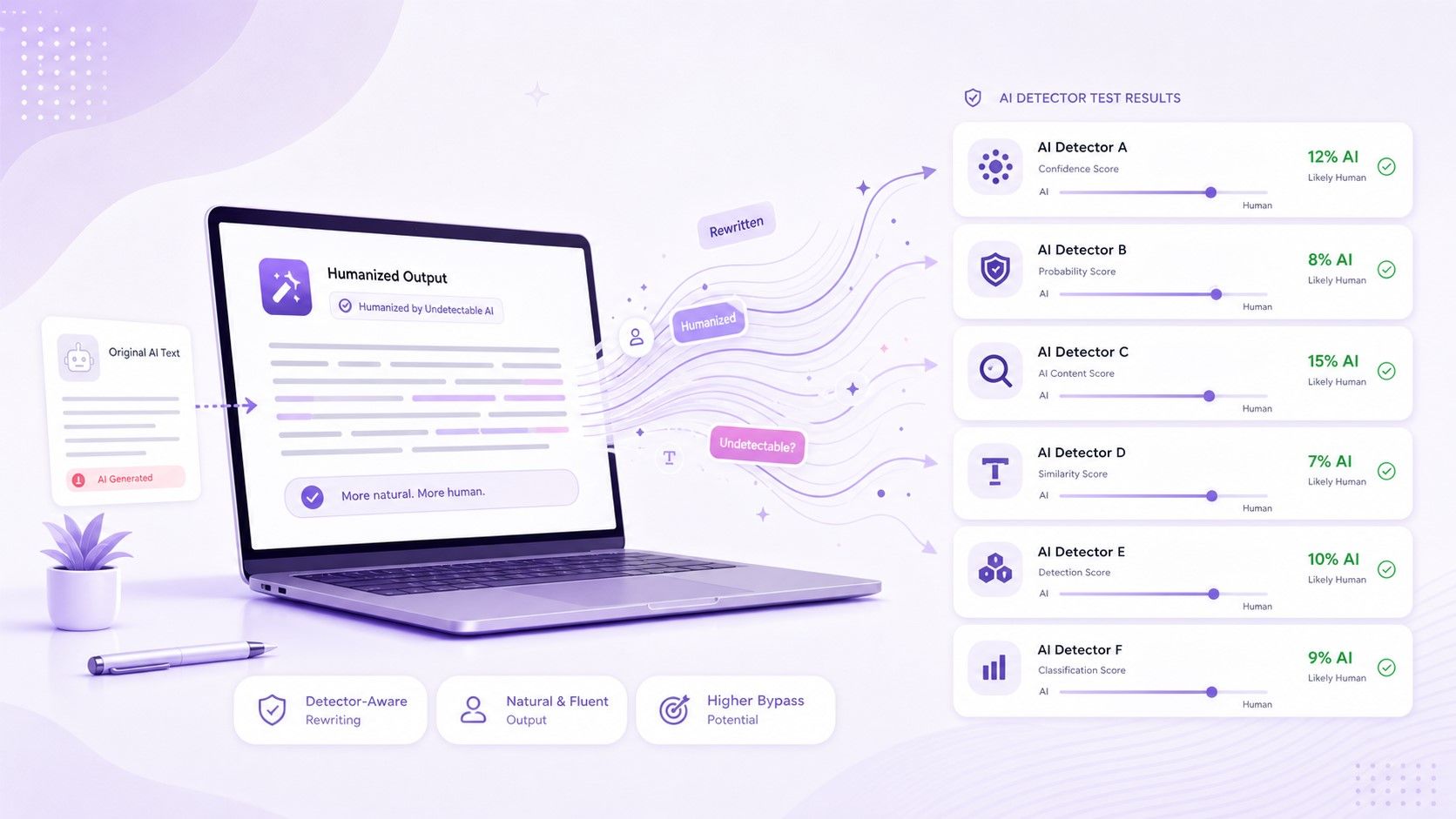
Undetectable does not position itself as a simple paraphrasing tool. It markets its AI humanizer as a detector-aware rewriting system designed to make ChatGPT-style content sound more natural while reducing the risk of being flagged by AI detectors.
That is a strong promise.
But does Undetectable AI Humanizer actually deliver?
This review takes a practical look at what Undetectable AI Humanizer does, where it stands out, where its claims deserve caution, and whether it is the best choice for users who want deeper humanization and more reliable AI detector-aware rewriting.
Undetectable AI Humanizer Overview: Features, Positioning, and Core Use Cases
Undetectable AI Humanizer is a rewriting tool designed to transform AI-generated text into writing that sounds more natural, more human, and less obviously machine-produced.
Based on Undetectable AI’s public product pages and help documentation, the tool is built to:
- humanize AI-generated text
- reduce common patterns AI detectors may look for
- preserve the original meaning
- improve readability and flow
- help users produce content that appears more human-written
Undetectable also offers a built-in AI detector workflow, browser extension support, API access, business solutions, and multilingual coverage.
That positioning matters.
Undetectable AI is not just promising cleaner wording. It is explicitly promising AI detection-aware rewriting.
Inside Undetectable AI Humanizer: How the Rewrite System Works
Based on Undetectable AI’s public messaging, the humanizer appears to focus on more than light synonym replacement. It is positioned as a system that rewrites AI content in ways that reduce the structural signals detectors often associate with machine-generated writing.
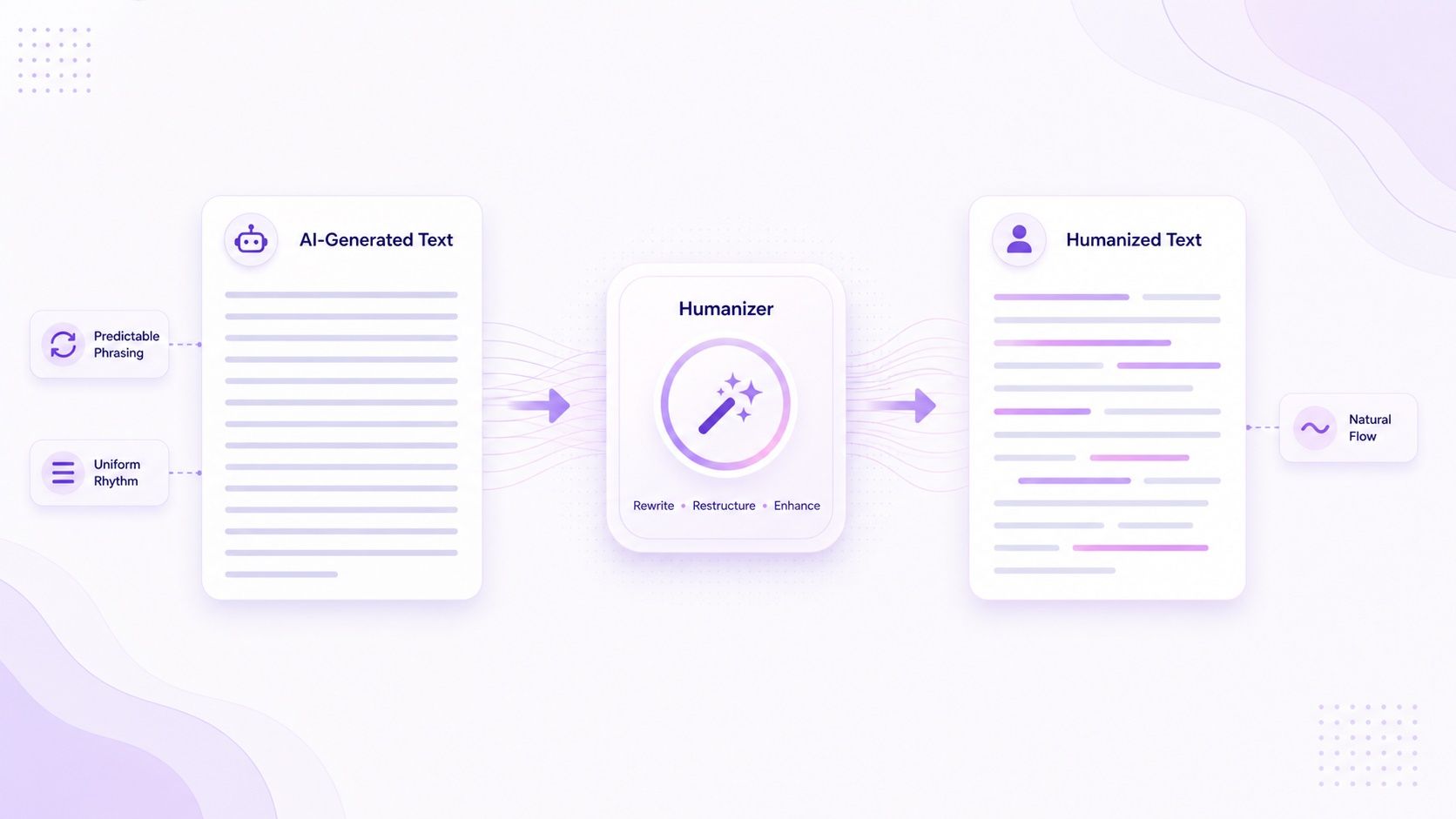
Those signals may include:
- predictable word choice
- uniform sentence length
- repetitive phrasing
- robotic transitions
- overly smooth rhythm
- low variation in cadence and paragraph movement
In practical terms, that means Undetectable AI Humanizer is likely trying to improve AI text in several ways.
1. It rewrites robotic phrasing
AI writing often sounds clean but formulaic. Undetectable AI Humanizer appears to address this by reshaping sentence structure and reducing repetitive transitions.
2. It varies rhythm and sentence flow
One of the easiest ways AI text gets noticed is through overly even pacing. Undetectable’s product positioning suggests it tries to break that pattern by introducing more natural sentence variation.
3. It preserves meaning while changing structure
Like most AI humanizer tools, Undetectable claims to keep the original message intact while making the writing feel less synthetic.
4. It combines humanization with built-in detection
One of Undetectable’s clearer advantages is that it is not only a rewriting tool. It also includes an integrated AI detection workflow, making the process more convenient for users who want quick rewrite-and-check cycles.
5. It supports broader workflow scaling
Undetectable AI also offers API access, browser-based tools, and business-facing integrations. That makes it feel more operationally serious than many lightweight consumer-only humanizer tools.
So in simple terms, Undetectable AI Humanizer is positioned as a rewrite-plus-detect system built specifically for detector-sensitive writing.
Undetectable AI Humanizer Pros and Cons
Undetectable AI Humanizer has several real strengths, especially compared with basic rewriting tools. But its claims still require careful interpretation.
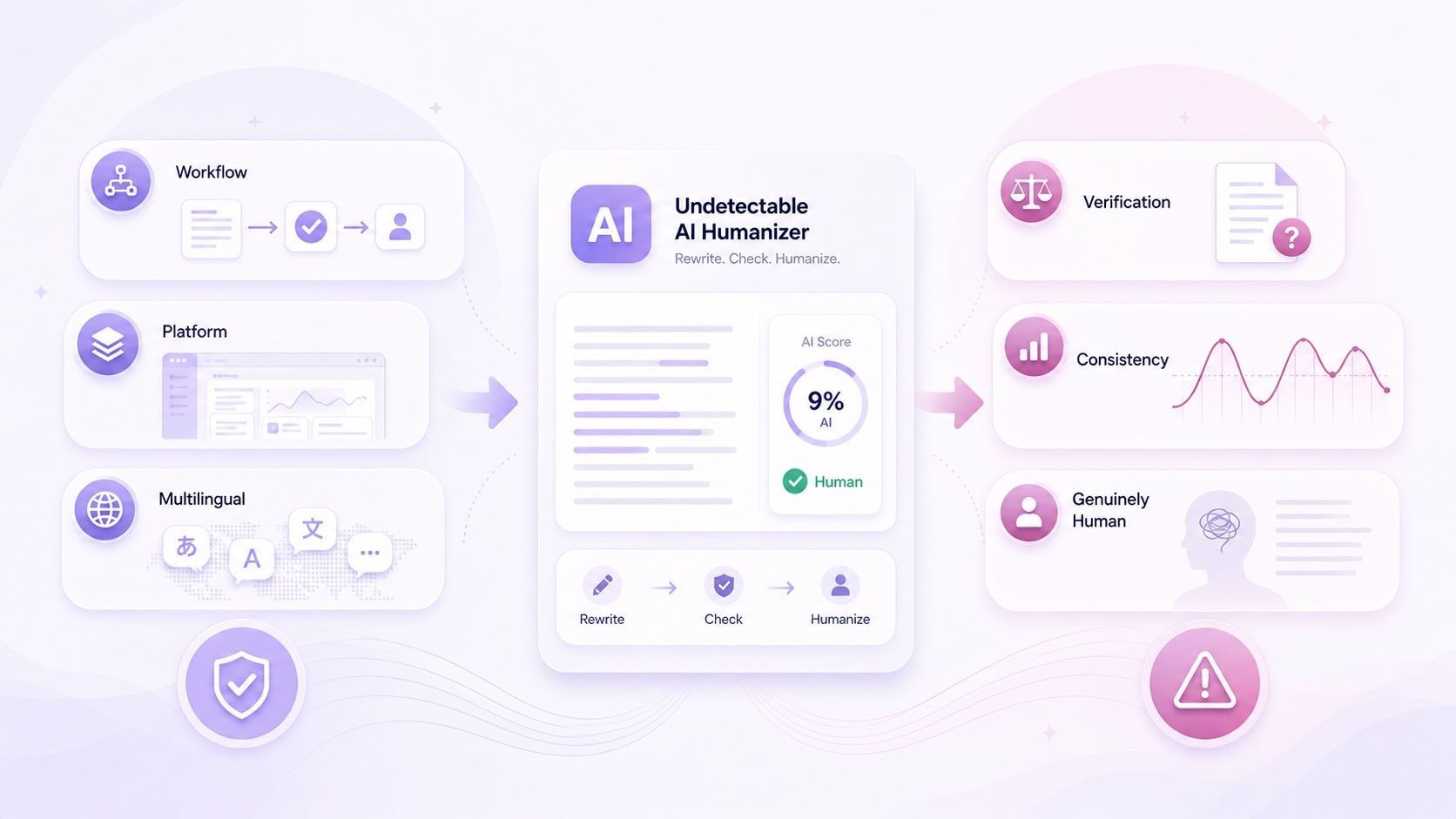
Main Strengths of Undetectable AI Humanizer
Clear detector-aware positioning
Undetectable is much more direct than many competitors. It openly markets itself around reducing AI detection risk rather than just improving wording.
Built-in rewrite-and-check workflow
This is one of its most useful advantages. Instead of forcing users to rewrite in one tool and test in another, Undetectable combines both steps into one product experience.
Broader platform maturity
Compared with many smaller AI humanizers, Undetectable looks more like a full platform than a single-feature tool. It offers detection, rewriting, API support, browser integrations, and business solutions.
Strong confidence in its own output
Undetectable’s public pages use very aggressive performance language, including refund-oriented guarantee messaging tied to detected output. That gives the platform a stronger confidence signal than many competitors.
Multilingual support
Although English appears to be its main focus, Undetectable publicly lists many additional supported languages. That is meaningful for users outside English-only workflows.
Main Limitations of Undetectable AI Humanizer
Strong product claims are not the same as independent verification
Undetectable publishes very strong anti-detection claims, but official product messaging is still not the same thing as neutral third-party testing across multiple detectors.
Detector performance is inherently unstable
Even a strong AI humanizer can perform differently depending on the detector, the content type, the length of the text, and changes in the detector’s underlying model.
Internal detection workflows can create a favorable ecosystem effect
When a product both rewrites text and helps evaluate the output inside the same ecosystem, the results may appear more favorable than harsher cross-platform testing would suggest.
Passing detectors is not the same as sounding genuinely human
Some tools reduce detection risk without producing especially strong writing quality. Users still need to judge whether the output feels natural, personal, and convincing to real readers.
So overall, Undetectable AI Humanizer looks more substantial than a simple paraphraser, but its strongest public claims still need to be read with appropriate caution.
Undetectable AI Detector Test: How It Performed Across Major Platforms
This is the most important question in the entire review.
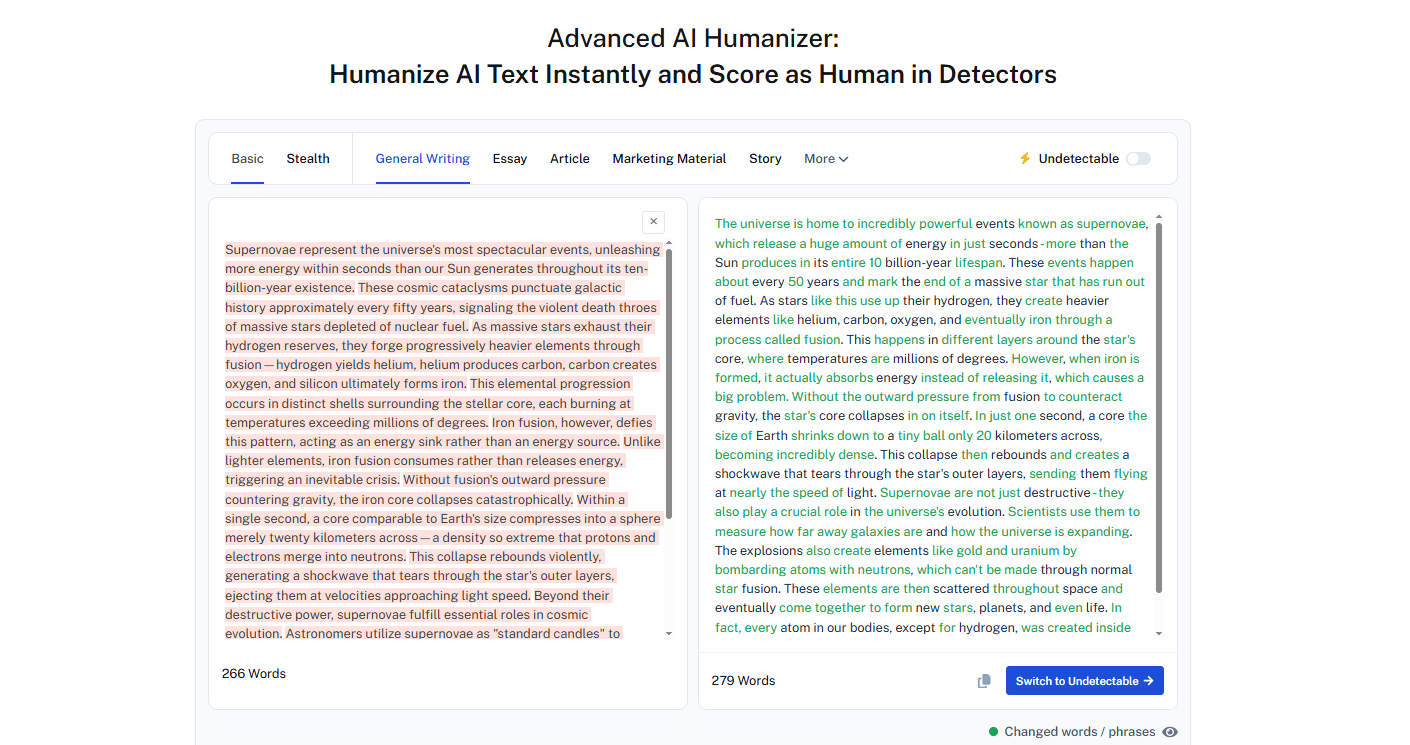
Undetectable AI Humanizer is marketed as a detector-aware rewriting tool. In theory, that means it should do more than simply rephrase AI-generated text. It should also reduce the kinds of structural and stylistic signals that major AI detectors use to identify machine-written content.
To test that claim, the same passage rewritten by Undetectable AI Humanizer was checked across five widely used AI detection tools: GPTZero, QuillBot, Originality.ai, Copyleaks, and a Turnitin-aligned detector.
Unfortunately, the overall result was not favorable.
Based on this round of real testing, Undetectable AI Humanizer did not successfully pass any of the five detector checks. While the exact severity varied from platform to platform, every detector still identified the rewritten sample as AI-generated to a meaningful degree.
That matters because it shows a clear gap between detector-aware marketing and real cross-platform performance.
GPTZero
The humanized text was tested using GPTZero.
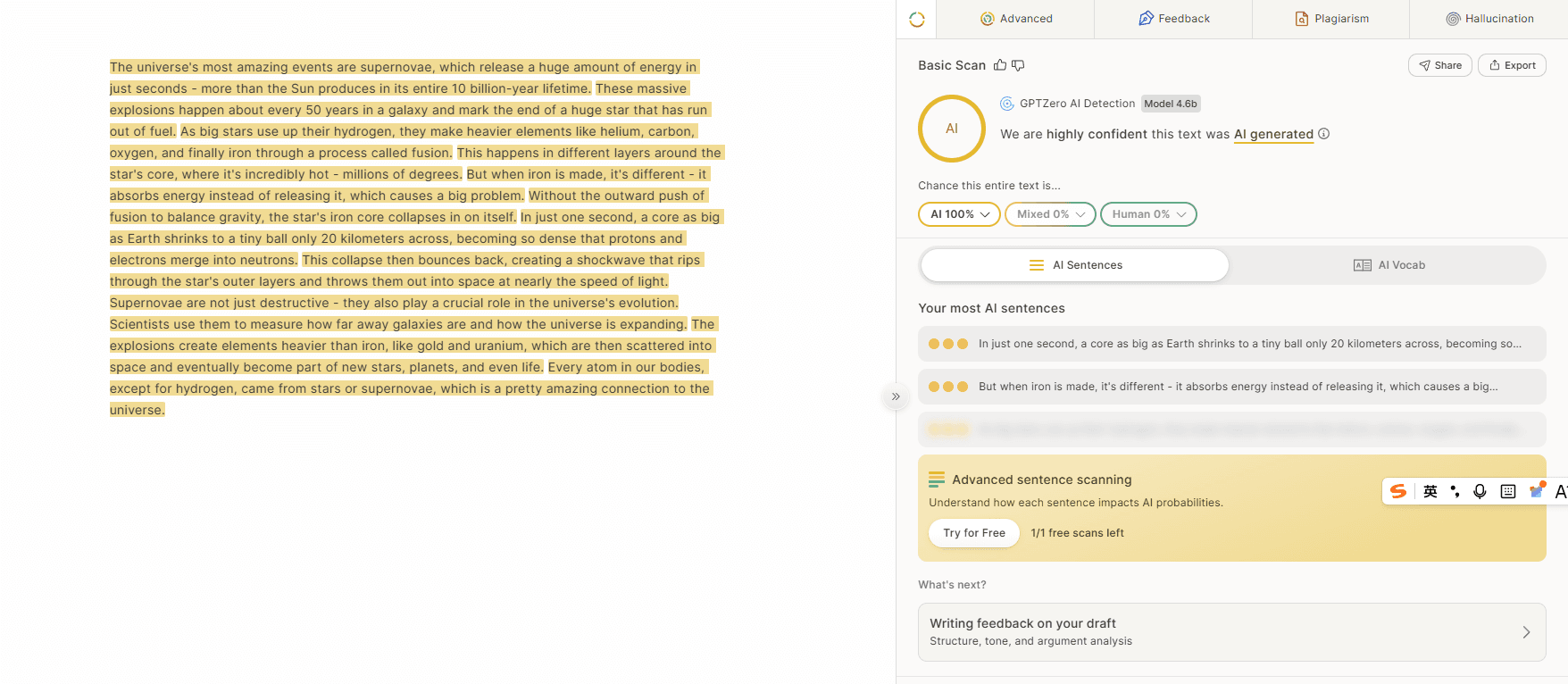
In this test, GPTZero gave one of the strongest possible negative results. It stated that it was “highly confident” the text was AI-generated and classified the sample as AI 100%, with Mixed 0% and Human 0%.
This is a very poor outcome for Undetectable AI Humanizer. It suggests that even after rewriting, the passage still retained enough structural signals for GPTZero to treat it as fully AI-written.
Since GPTZero is one of the best-known AI detectors in education and general AI-content review, this result significantly weakens Undetectable’s claim of reliable detector-aware humanization.
QuillBot
The same rewritten text was then tested using QuillBot AI Detector.
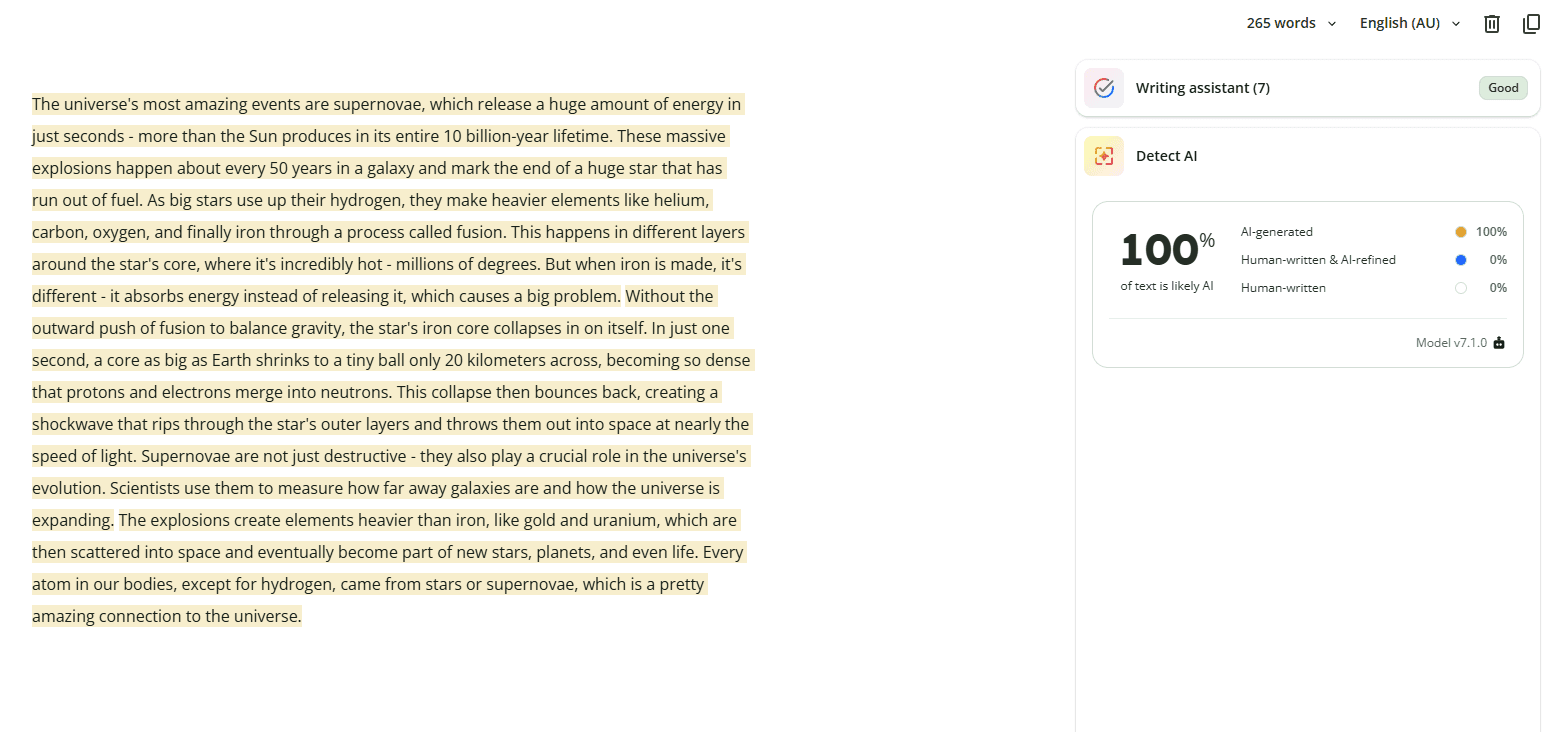
Here, the result was equally unfavorable. QuillBot reported that 100% of the text was likely AI-generated, with 0% classified as human-written and 0% as human-written and AI-refined.
This is especially notable because QuillBot is sometimes perceived as less aggressive than stricter enterprise-grade detectors. Even in that environment, Undetectable AI Humanizer still failed to produce a result that looked meaningfully human.
In practical terms, this means the rewritten text was not simply borderline suspicious. It was still read as clearly AI-generated.
Originality.ai
The rewritten sample was also tested using Originality.ai.
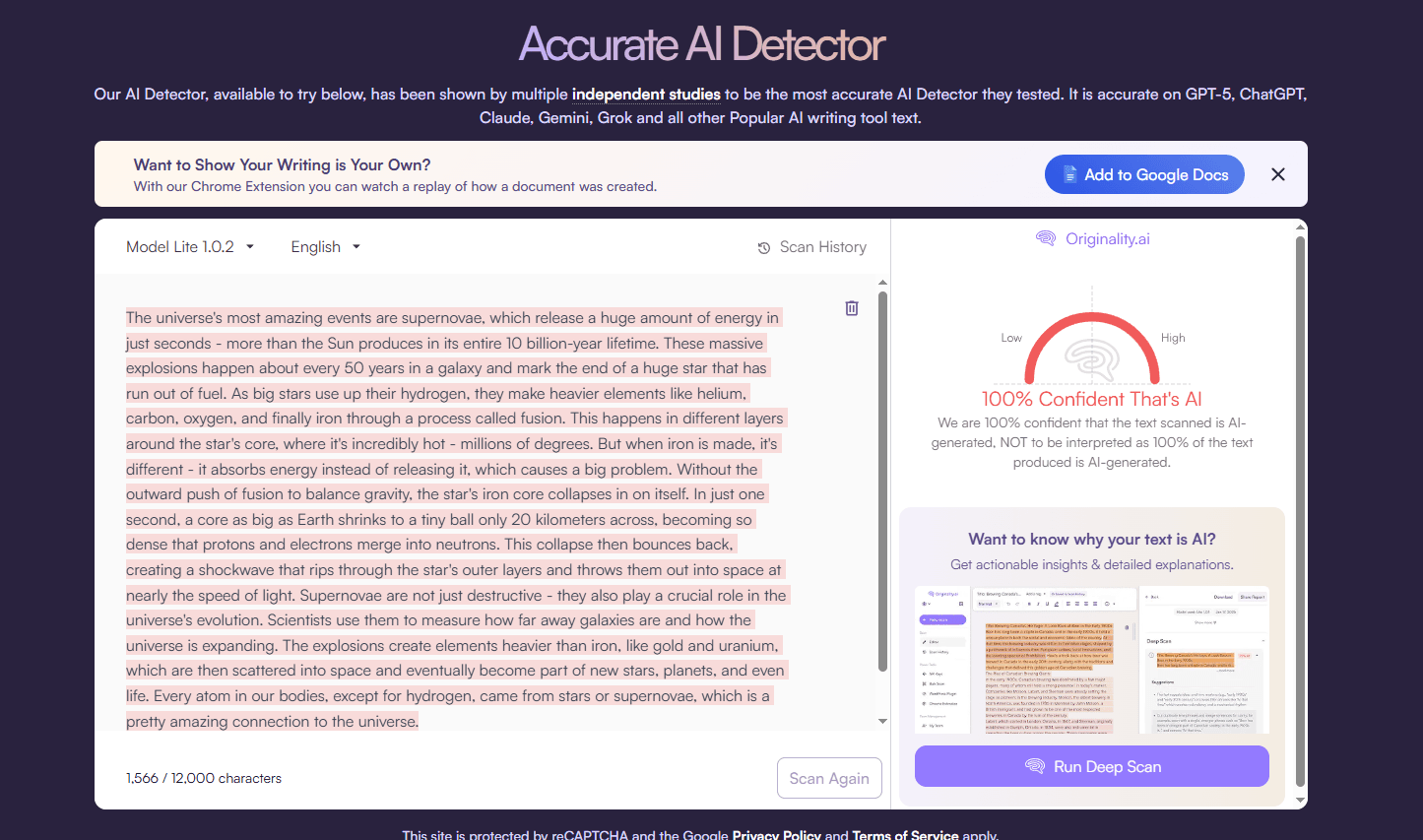
Originality.ai returned another extremely negative result. It marked the sample as 100% Confident That's AI.
This is one of the most damaging results in the entire test set because Originality.ai is widely used by bloggers, publishers, agencies, and SEO teams. If a humanized article still scores as fully AI-generated in Originality.ai, that creates a serious credibility problem for any tool claiming strong detector bypass performance.
Based on this test, Undetectable AI Humanizer did not perform convincingly at all in a professional publishing-oriented detector environment.
Copyleaks
Next, the humanized text was tested with Copyleaks AI Detector.
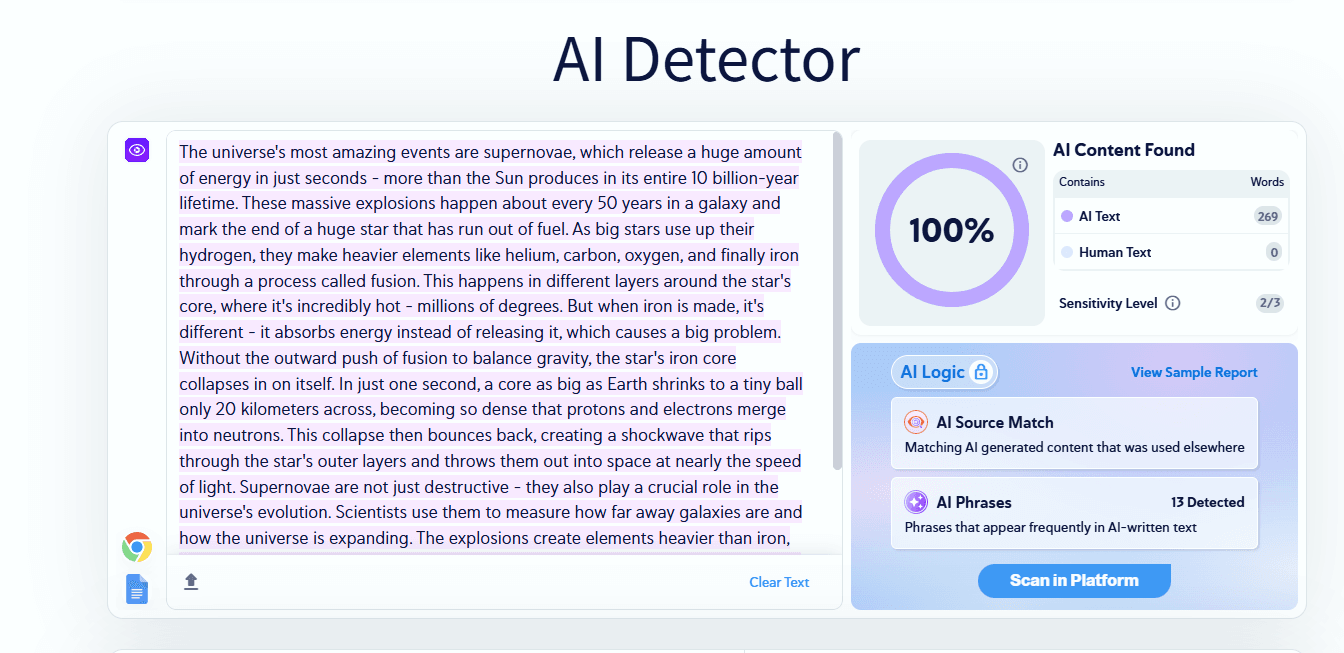
Copyleaks also returned a fully negative assessment. The platform reported AI Content Found and classified the text as 100% AI, with 269 words identified as AI text and 0 words identified as human text.
This is another strong indication that Undetectable AI Humanizer did not remove the deeper patterns that stricter detectors often look for. Rather than producing a mixed or uncertain result, the detector treated the passage as entirely AI-generated.
That makes the outcome especially difficult to defend, since Copyleaks is commonly seen as a serious benchmark in institutional and commercial AI detection workflows.
Turnitin
Finally, the rewritten sample was tested with Turnitin.
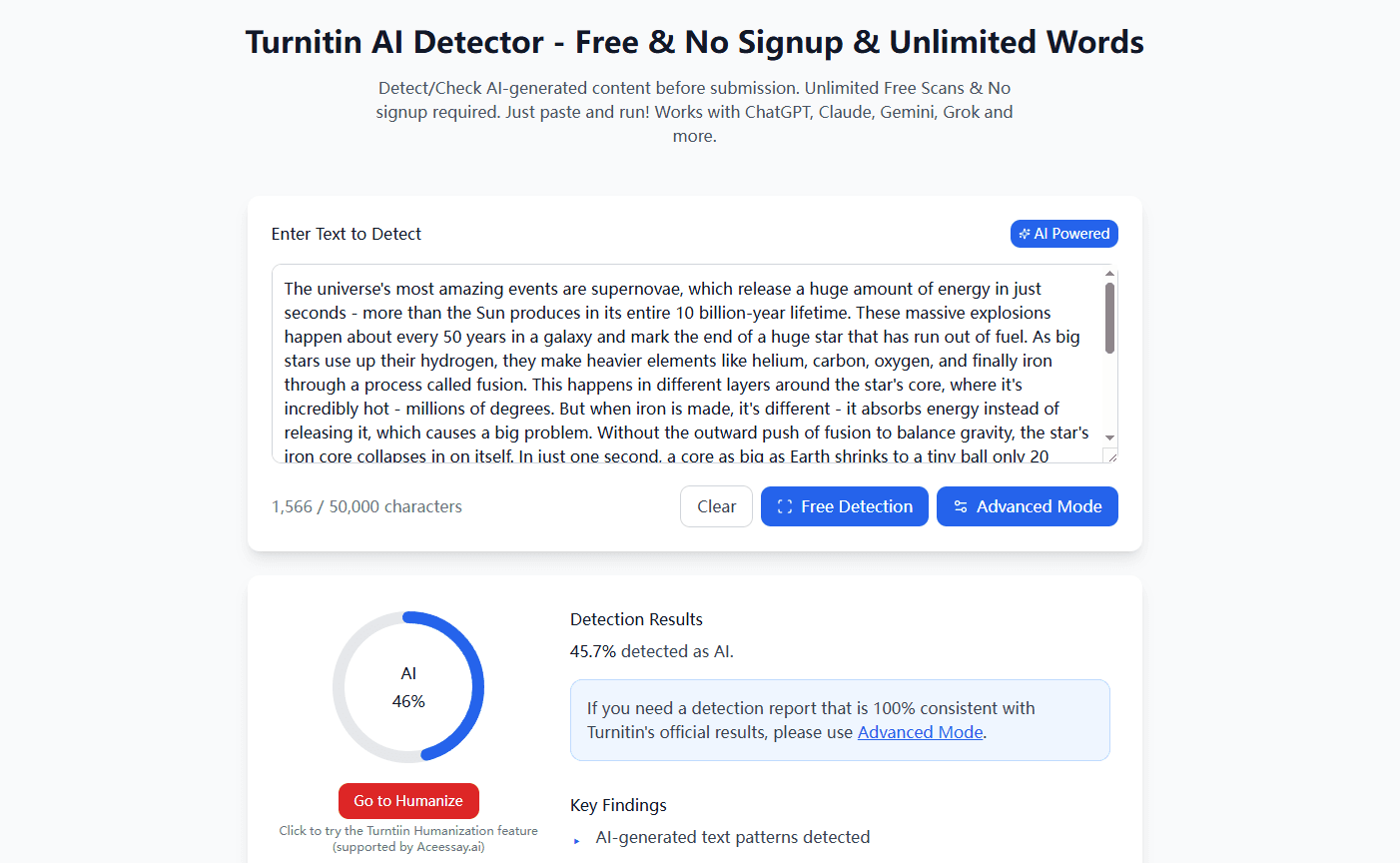
This result was somewhat less severe than the other four, but it was still a failure overall. The detector reported that 45.7% of the text was detected as AI, with the interface also showing an overall AI reading of approximately 46%.
That is still a clearly unfavorable outcome. Even though the result was not as extreme as the 100% scores returned by GPTZero, QuillBot, Originality.ai, and Copyleaks, it still shows that the rewritten passage was far from safely human in a Turnitin-style evaluation environment.
This result should also be interpreted carefully, since the screenshot appears to come from a third-party Turnitin-aligned detector rather than Turnitin’s official institutional interface. Even so, it still adds another negative signal to the overall test picture rather than improving it.
Why Undetectable AI Struggled in Cross-Detector Testing
aken together, these five test results paint a very clear picture: Undetectable AI Humanizer did not pass any of the detector checks in this round of testing.
The results were consistently negative across all five platforms:
- GPTZero labeled the text 100% AI-generated
- QuillBot labeled the text 100% AI-generated
- Originality.ai returned 100% AI-generated
- Copyleaks marked the sample as 100% AI-generated
- The Turnitin-aligned detector still flagged 46% of the text as AI
That consistency matters.
If only one strict detector had flagged the sample, it could be explained away as a platform-specific false positive or a detector sensitivity issue. But when all five detectors return unfavorable results, the broader conclusion becomes much harder to avoid.
Based on this test set, Undetectable AI Humanizer may still help with surface-level rewriting or readability improvements, but it did not demonstrate reliable detector-bypass performance. More importantly, it did not show evidence of being able to consistently humanize AI text strongly enough to pass major AI detection systems.
So the practical conclusion is simple:
Undetectable AI Humanizer may rewrite AI text into cleaner or smoother language, but in this test, it did not successfully bypass any of the five major AI detectors that were used.
Best Undetectable AI Alternative for More Natural Human-Like Writing
After reviewing Undetectable AI Humanizer’s workflow, positioning, and actual detector performance, the answer is yes.
Undetectable AI Humanizer is not a useless product. It has a polished interface, a detector-aware workflow, and stronger platform maturity than many smaller tools in this category. But based on the real test results in this review, its core promise is much less convincing than its branding suggests.
That distinction matters.
A humanizer does not need to be perfect to be useful. But if it is marketed around reducing AI detection risk, then real detector performance becomes one of the most important standards by which it should be judged. In this case, Undetectable AI Humanizer failed all five detector checks used in the review, including GPTZero, QuillBot, Originality.ai, Copyleaks, and a Turnitin-aligned detector.
That makes it difficult to recommend as the strongest option for users who care about reliable humanization.
If your goal is deeper rewriting, more natural writing texture, and stronger human-like variation, Lynote AI Humanizer is the better alternative.
The reason is simple.
Undetectable appears to focus heavily on detector-aware positioning and rewrite workflow convenience. Lynote AI Humanizer is the stronger option when the real goal is to make the writing itself feel less templated, less mechanical, and more genuinely authored by a human.
That is important because AI-generated text is often detectable for deeper reasons than wording alone. Common signals include:
- overly balanced rhythm
- generic transitions
- repeated paragraph logic
- safe but personality-light phrasing
- polished structure without real voice
A stronger humanizer has to do more than reword sentences. It has to break those deeper patterns in a way that still feels natural to human readers.
Why Lynote AI Humanizer Is Better
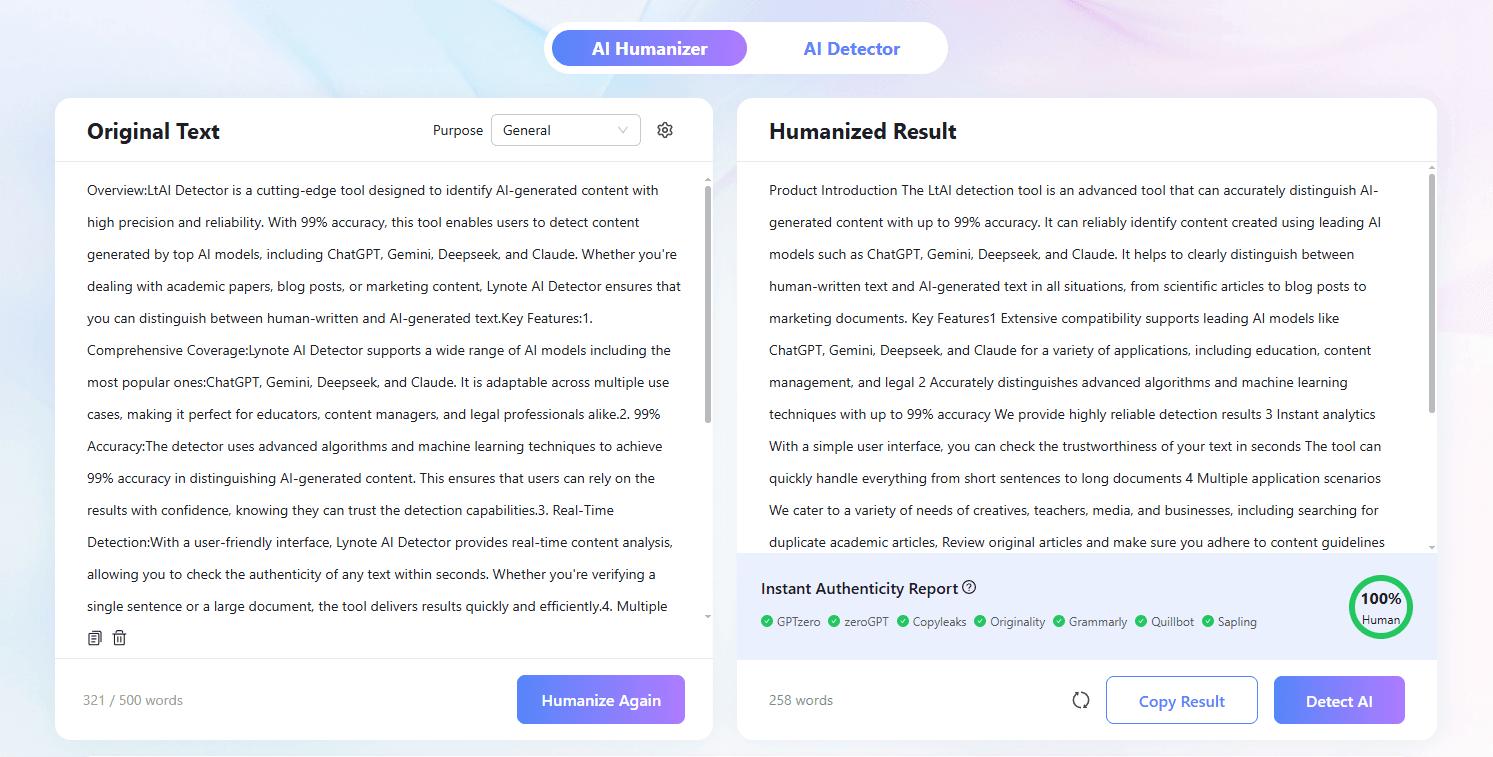
Lynote focuses more on authentic human writing feel
Undetectable is strong on detector-aware positioning. Lynote is stronger on producing writing that feels less templated and more naturally authored.
Lynote is better for long-form content
For essays, blogs, SEO articles, and longer content, deeper rewriting matters more than quick cleanup. Lynote is a stronger fit there.
Lynote is stronger for content-quality-first workflows
If your goal is not only passing detectors, but also publishing writing that feels more convincing to real readers, Lynote is the better choice overall.
So Undetectable AI Humanizer is a serious option, but Lynote AI Humanizer remains the stronger alternative for deeper rewriting and better natural writing quality.
Who Should Use Undetectable AI Humanizer and Who Should Skip It

Based on the actual detector results in this review, Undetectable AI Humanizer makes the most sense for users who want:
- a cleaner rewrite of AI-generated text
- a built-in rewrite-and-check workflow
- a more mature platform experience
- browser extension or API-oriented convenience
- multilingual support
However, it is much less suitable for users who need:
- reliable cross-detector performance
- stronger human-like writing texture
- long-form voice consistency
- better protection in high-risk workflows
- confidence that rewritten content will pass major AI detectors
That distinction is now much clearer after testing.
If you are working on blog drafts, product descriptions, or general marketing copy and simply want a smoother rewritten version of AI text, Undetectable may still be useful as a workflow tool.
But if your use case depends on stronger detector resilience, especially across platforms like GPTZero, Originality.ai, Copyleaks, QuillBot, or Turnitin-style checks, then this review does not support treating Undetectable AI Humanizer as a dependable solution.
In other words, Undetectable AI Humanizer may be acceptable for light rewriting, but it is not the right choice for users who need stronger detector-facing performance.
- content quality beyond detector performance alone
FAQs About Undetectable AI Humanizer
Is Undetectable AI Humanizer free?
Undetectable offers entry-level access and limited trial-style usage on some pages, but fuller use depends on credits or paid plans. Users should check the latest pricing details on the official site.
What does Undetectable AI Humanizer do?
It rewrites AI-generated text to make it sound more natural while trying to reduce patterns that AI detectors may flag.
Does Undetectable AI Humanizer support languages other than English?
Yes. English appears to be the main focus, but Undetectable publicly lists support for many additional languages.
Does Undetectable AI have a built-in AI detector?
Yes. One of its major selling points is that it combines humanization with an integrated AI detection workflow.
Can Undetectable AI Humanizer guarantee that text will bypass AI detectors?
No. Based on both general detector instability and the actual test results in this review, no such guarantee would be credible.
Did Undetectable AI Humanizer pass the detector tests in this review?
No. In this review, the rewritten sample did not pass any of the five detector checks. GPTZero, QuillBot, Originality.ai, Copyleaks, and the Turnitin-aligned detector all returned unfavorable results.
What is the best alternative to Undetectable AI Humanizer?
If your priority is deeper rewriting, more natural writing quality, and stronger human-like variation, Lynote AI Humanizer is the better alternative.
Final Verdict: Is Undetectable AI Humanizer Worth Trying in 2026?
Undetectable AI Humanizer is not a weak product in terms of presentation.
It has a polished platform, clear detector-aware messaging, built-in checking workflow, multilingual support, and a broader product ecosystem than many smaller competitors. On the surface, it looks like one of the more serious names in this category.
But the actual test results in this review tell a less favorable story.
When the humanized sample was tested across five major AI detectors, it failed all of them. GPTZero labeled it 100% AI. QuillBot also classified it as 100% AI-generated. Originality.ai returned 100% confident that the text was AI. Copyleaks marked it as 100% AI content found. Even the Turnitin-aligned detector still flagged a substantial portion of the text as AI.
That consistency is difficult to ignore.
It suggests that Undetectable AI Humanizer may improve the surface quality of AI writing, but it does not reliably remove the deeper structural patterns that major AI detectors still identify as machine-generated.
So is Undetectable AI Humanizer worth it?
If you want a convenient rewrite-and-check platform for light editing and workflow convenience, it may still be worth trying.
But if your goal is stronger detector-facing performance, deeper rewriting, and more naturally convincing humanization, the evidence in this review does not support Undetectable AI Humanizer as the best choice.
So the practical takeaway is simple:
Use Undetectable AI Humanizer if you mainly want workflow convenience and surface-level rewriting.
Choose Lynote AI Humanizer if you want deeper humanization, stronger writing quality, and a more convincing human-written feel.

Written by Danny
Product Marketing Manager
Danny explains how Lynote features fit real workflows, from everyday productivity to product-led writing use cases. View all articles →