


Many students and writers wonder can ai detectors detect paraphrasing when revising their drafts. The short answer is that changing a few words will not automatically hide AI-generated text. Detectors look beyond simple vocabulary to analyze the deeper structure of your writing. In this guide, we will explore what detection tools actually measure and how to revise your work for genuine originality.
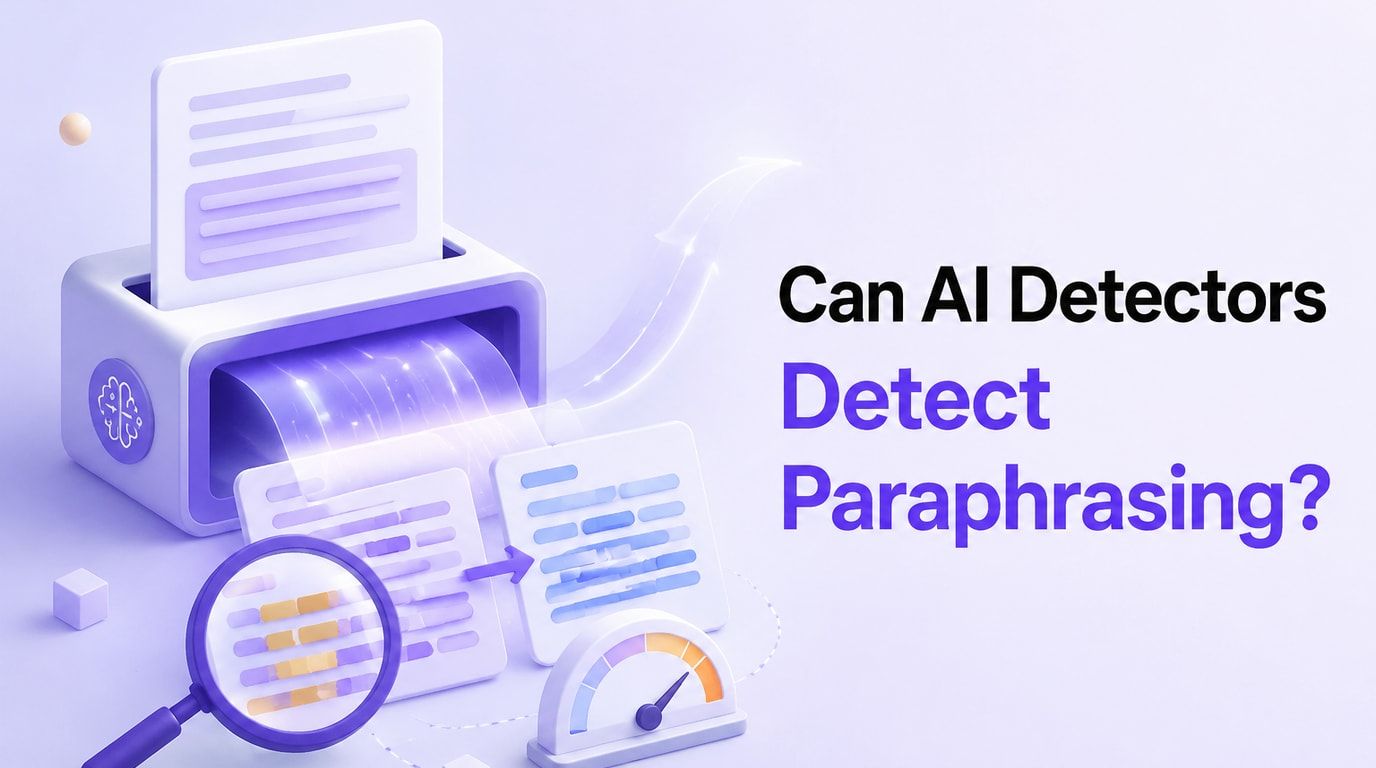
Quick Answer: Do AI Detectors Catch Paraphrased Text?
Yes, AI detectors can often flag paraphrased text if the underlying structure remains highly predictable. When you simply swap words for synonyms, the original AI-like sentence patterns and logic flow typically survive. Advanced detection models are specifically trained to recognize these automated rewriting techniques.
However, if you completely restructure the ideas and inject your own reasoning, the text becomes less predictable. True human revision changes the fundamental framework of the content, which usually lowers detection risk.
What AI Detectors Actually Analyze
Most detection tools do not look for specific copied phrases like traditional plagiarism checkers. Instead, they analyze text for probability and predictability, often referred to as perplexity and burstiness. Perplexity measures how predictable your word choices are, while burstiness looks at the variation in your sentence lengths.
AI models tend to write with low perplexity and low burstiness, meaning their sentences are uniform and highly predictable. If a paraphrasing tool maintains this consistent, rhythmic structure, the detector will likely still flag it.
Why Paraphrasing Changes Words but Not Always Patterns
Basic paraphrasing usually focuses on surface-level changes, like replacing "important" with "crucial." This approach leaves the core syntax, transitions, and reasoning steps completely untouched. Detectors rely heavily on these structural markers to estimate whether text feels automated.
For example, AI commonly uses predictable transition words like "furthermore" or "in conclusion" to connect overly balanced paragraphs. Unless a writer actively breaks up these rigid structures, the text will continue to trigger detection algorithms.
Human Paraphrasing vs AI Paraphrasing Tools
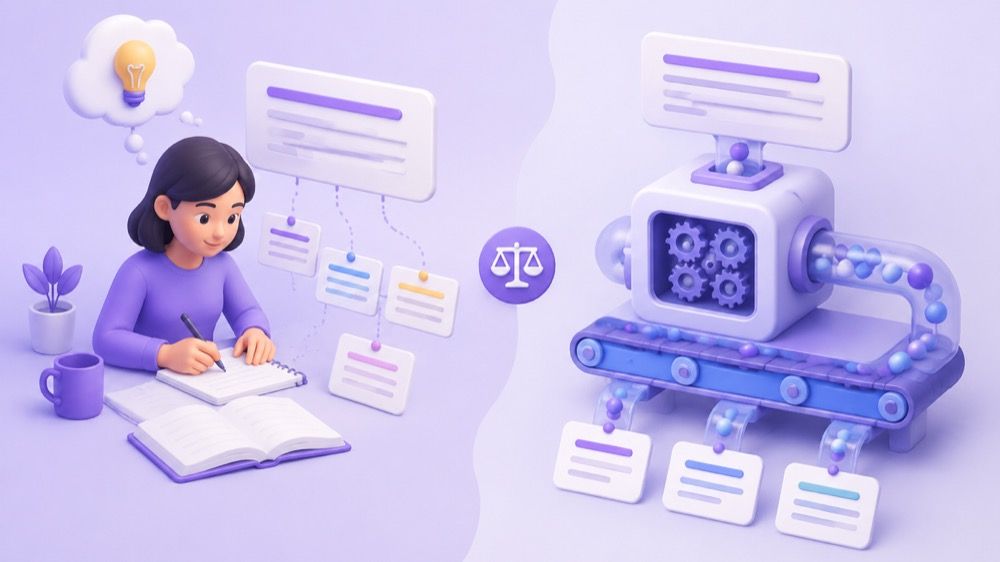
When humans paraphrase, they read the source material, comprehend the core meaning, and write it from scratch using their own voice. This process naturally introduces varied sentence lengths, unique phrasing, and personal insights. Human comprehension fundamentally alters the text's predictability.
In contrast, automated AI paraphrasing tools simply run the text through another algorithm to swap vocabulary. Because these tools operate on the same predictive language models as the original AI generator, they often produce the exact patterns detectors are built to catch.
Does Paraphrasing Remove AI Detection Scores?
Paraphrasing can change an AI detection score, but it rarely guarantees a fully human result. Minor edits might shift a score by a few percentage points, while a heavy rewrite could lower it significantly. However, these scores should always be treated as editorial estimates rather than absolute proof of authorship.
Many writers mistakenly believe that running text through a "humanizer" will erase all detection signals. In reality, no tool can promise a zero-percent AI score, and aggressive automated paraphrasing often makes the text read awkwardly.
The better question is not whether paraphrasing removes a score, but whether the revision changes the source of the writing. If the original AI draft still controls the order of ideas, examples, and transitions, the new version may remain easy to identify as AI-like. If the writer rebuilds the argument from understanding, the text becomes more original regardless of what a detector says.
Paraphrasing Methods and Detection Risk
Different approaches to rewriting carry different levels of risk when it comes to detection. Understanding these methods can help you focus on meaningful revision rather than superficial edits.
| Paraphrasing Method | What Changes | Detection Risk | Revision Value |
|---|---|---|---|
| Synonym Swapping | Individual words | High | Very low; leaves AI structure intact. |
| Automated AI Rewriting | Vocabulary and phrasing | High | Low; replaces one AI pattern with another. |
| Structural Rewriting | Sentence order and transitions | Moderate | Medium; improves flow but lacks new ideas. |
| Human Synthesis | Logic, voice, and evidence | Low | High; introduces genuine originality and varied syntax. |
When Paraphrased Text Is More Likely to Be Flagged
Paraphrased text is most vulnerable when the rewrite is mechanical. The warning signs usually appear in the rhythm of the paragraph, not in any single word. A detector may flag text that is polished, uniform, and generic, even when the vocabulary looks different from the original.
| Scenario | Why It Raises Risk | Better Revision Move |
|---|---|---|
| Same paragraph order | The original AI logic remains visible. | Rebuild the outline around your own thesis. |
| Same transition pattern | Repeated connectors create a machine-like rhythm. | Use fewer transitions and let the evidence create flow. |
| No concrete examples | Generic claims resemble common AI output. | Add examples from class, work, research, or lived context. |
| Overly polished tone | Every sentence sounds equally balanced and formal. | Mix sentence lengths and use direct, natural wording. |
| No source-level reasoning | The draft summarizes without explaining why evidence matters. | Add analysis after each source or quote. |
How to Make Rewritten Text More Original
The safest way to revise AI-assisted writing is to focus on clarity and originality rather than trying to beat a detector. Start by adding specific source evidence, real-world examples, or unique claims that an AI would not naturally generate. This introduces your own critical thinking into the draft.
Next, vary your sentence structures by breaking up long, predictable paragraphs into shorter, punchier statements. Remove repetitive transition words and ensure the text sounds like your natural speaking voice.
Before you stop editing, ask five diagnostic questions:
- Could I explain this paragraph without looking at it?
- Does the paragraph contain one specific example or source?
- Does the sentence rhythm vary naturally?
- Did I remove generic transitions that do not add meaning?
- Does the final version sound like my normal writing voice?
If the answer to any question is no, the draft probably needs more human revision.
Use Lynote AI Detector as a Review Signal
When revising your drafts, you can use the Lynote AI Detector to review your text for predictable patterns. Rather than treating the output as a definitive verdict, use its sentence-level highlights as a guide for where your writing might need more natural variation. False positives happen with any detector, so view the results as a helpful signal.
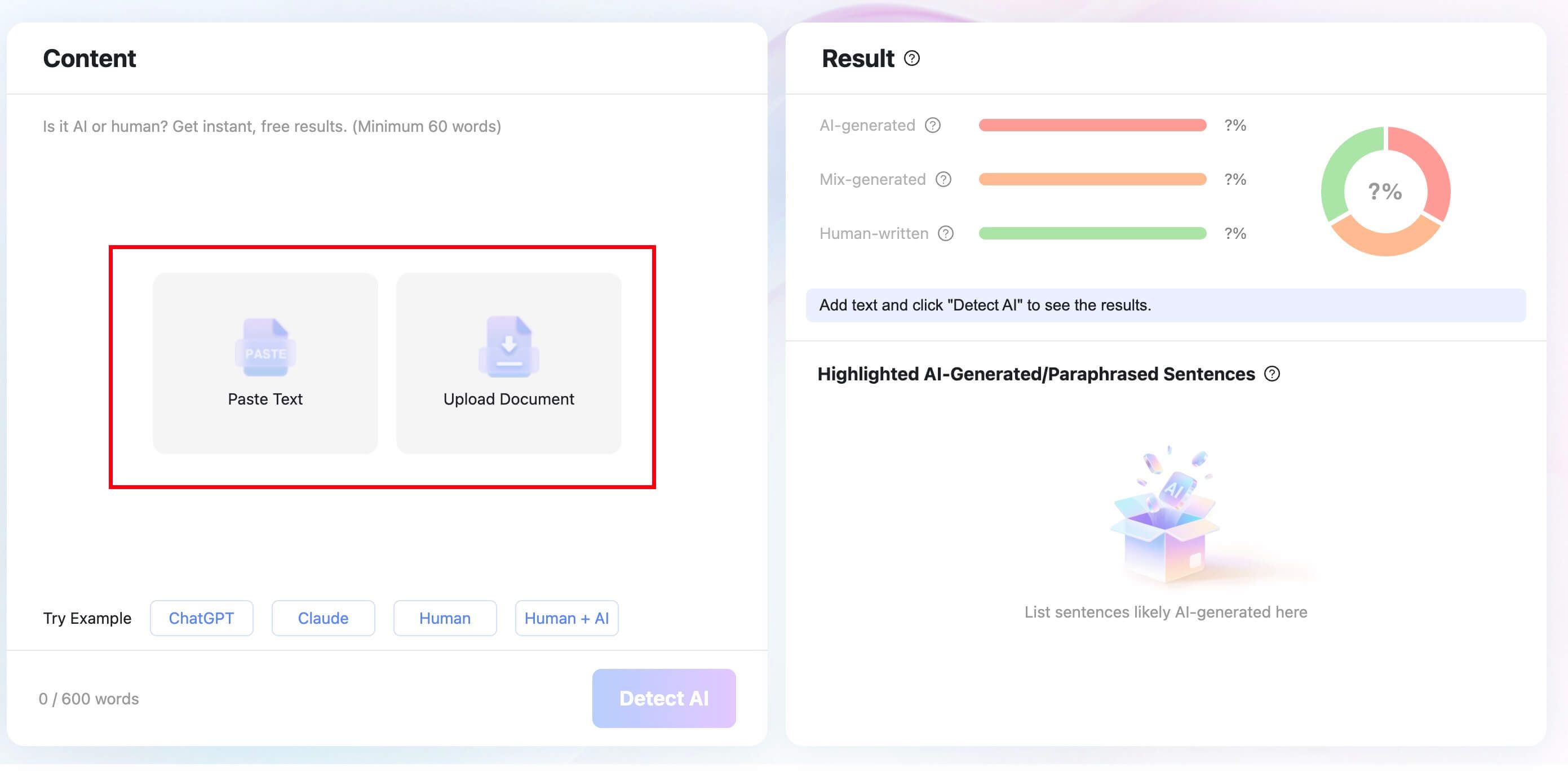
Step 1. Paste Text or Upload Document
Open the Lynote AI Detector and paste your text directly into the detection box. Alternatively, you can upload a supported file format, such as .docx, .pdf, or .txt, to initiate the analysis.
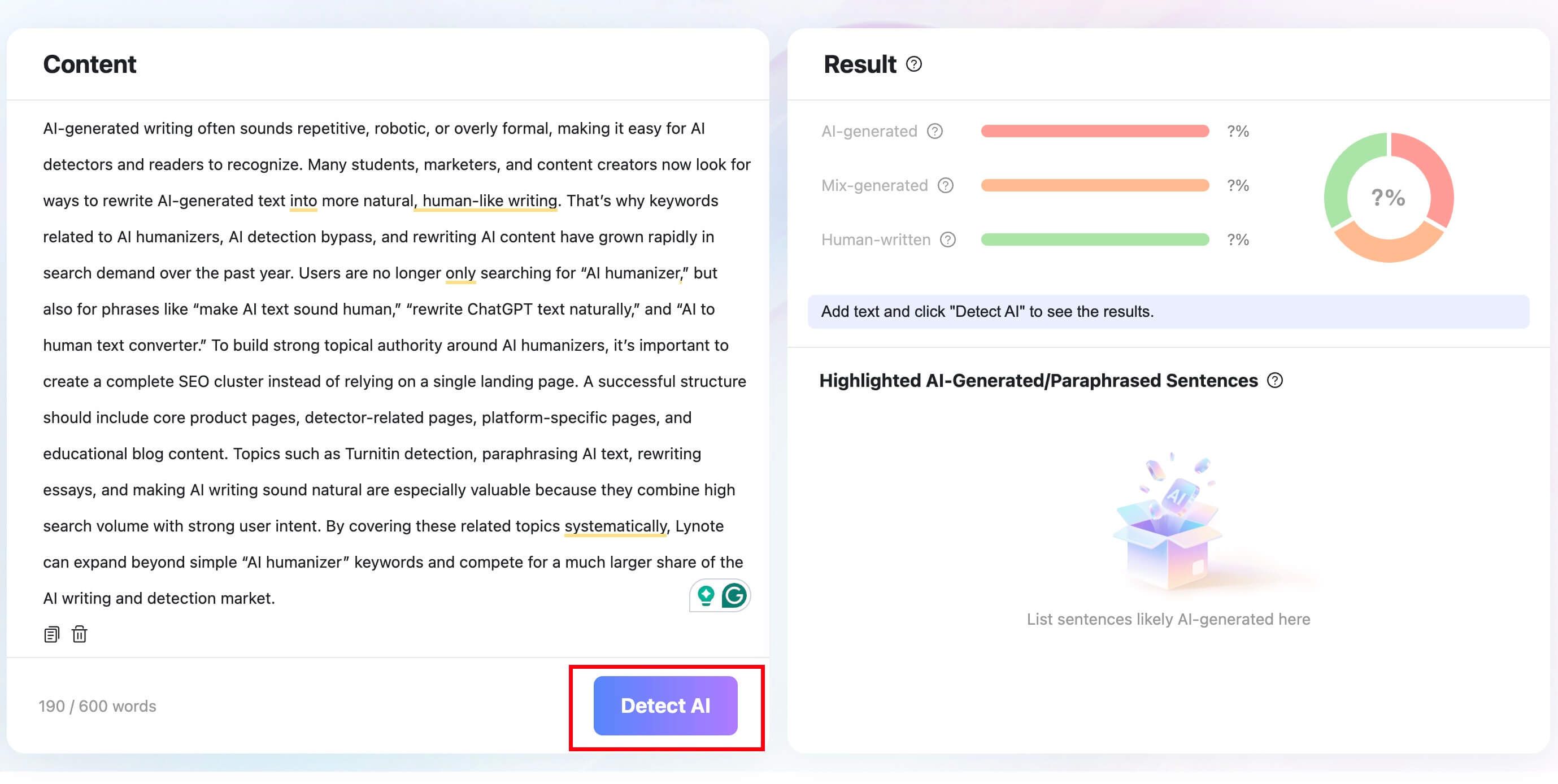
Step 2. Detect Your Content
Click the "Detect AI" button to begin the scan. The system will analyze linguistic patterns and text structures to estimate the predictability of the writing.
Step 3. Check the Result
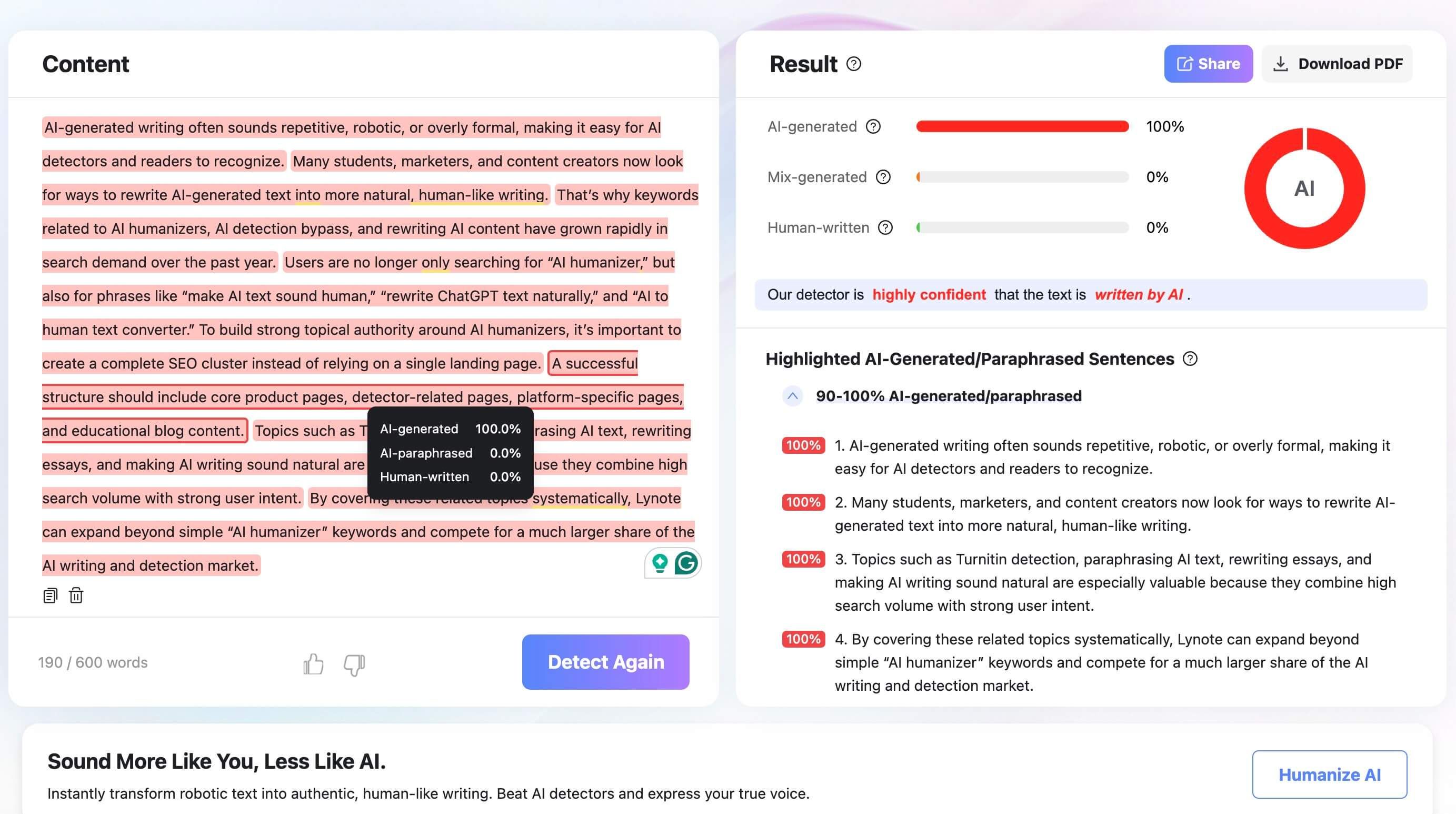
Review the detailed report showing the distribution of AI-generated, mixed, and human-written content. You can check the highlighted sentences to see which parts lack variation, copy or download the result, or use the Humanize AI button to send the text into the humanizer flow for rewriting.
FAQs About AI Detectors and Paraphrasing
What is the short answer for can AI detectors detect paraphrasing?
Yes, AI detectors can often detect paraphrased text, especially if it was rewritten using automated tools. While changing words alters the vocabulary, the underlying sentence structure and predictable logic usually remain intact.
Can paraphrasing or humanizing text avoid AI detection?
Paraphrasing or using humanizer tools may change the detection score, but they cannot promise a fully human result. These tools often replace one set of AI patterns with another, which modern detectors are trained to identify.
Can AI detectors be wrong?
Yes, AI detectors can produce false positives by flagging completely human-written text. Because they measure probability and predictability, highly structured human writing can sometimes trigger a false flag, which is why scores should be treated as signals, not proof.
What is a safer way to revise AI-like writing?
A safer approach is to rewrite the material from scratch based on your own understanding. Add unique evidence, vary your sentence lengths, and ensure your personal voice and reasoning guide the text.
How can Lynote help with this workflow?
The Lynote AI Detector provides a three-way split of AI, mixed, and human scores alongside sentence-level highlights. You can use these highlights to identify overly predictable sentences and manually revise them for better clarity and natural flow.
Final Verdict
While paraphrasing can improve the readability of an AI-generated draft, it is not a reliable way to remove detection signals. AI detectors analyze the deeper structural patterns of your writing, which simple synonym swaps fail to hide.
True originality requires critical thinking, unique evidence, and a natural human voice. By treating detector scores as editorial signals rather than absolute verdicts, you can focus on writing clearer, more authentic content.

Written by Janet L. Harris
AI Writing Specialist
Janet reviews AI detectors and humanization tools, with a focus on accuracy, limitations, and responsible use. View all articles →