




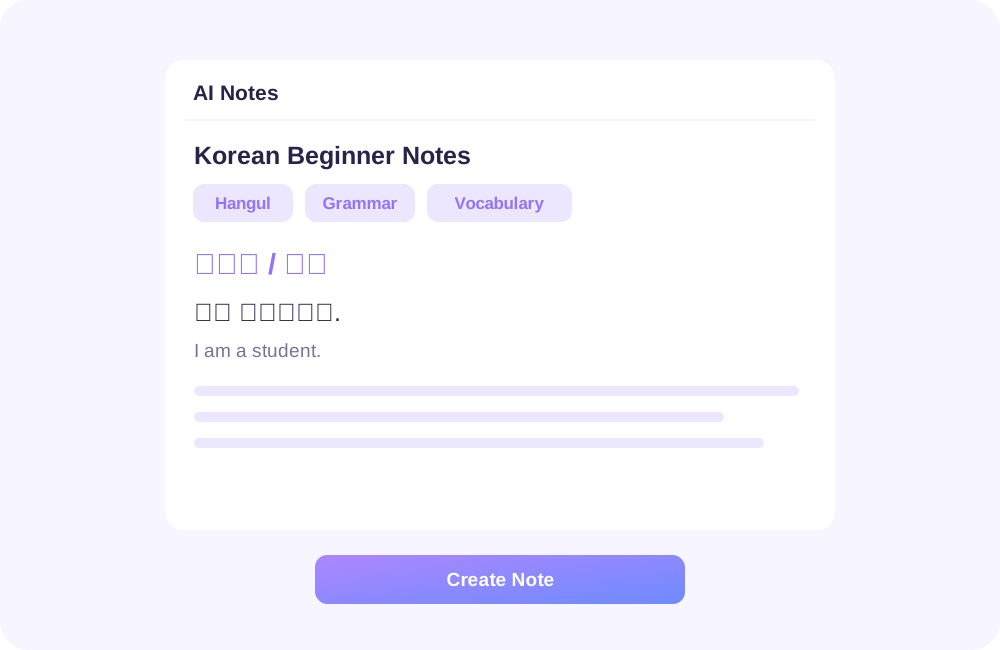
Korean Note Taker: Organize Korean Learning Notes

Turn Korean lessons, textbooks, audio recordings, and videos into clear, editable Korean notes with Lynote AI. Organize Hangul, grammar rules, vocabulary, and example sentences in one convenient study workflow.
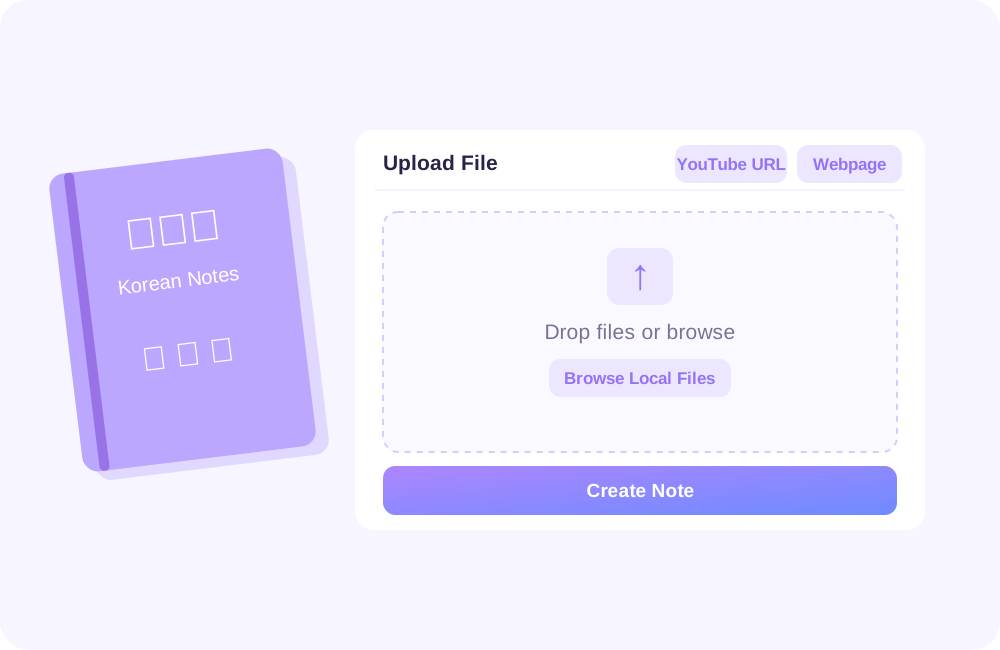
Upload File Paste a YouTube URL Paste a URL
upload

Drop files or browse

DocumentsPDF、DOCX、TXT、DOC...
ImagesPNG、JPG、WEBP、GIF...
AudioMP3、WAV、M4A...
VideoMP4、MOV...
Resource Library
library-icon

The list is empty.

Add study materials to enable the AI to extract and structure content.

korean note taker - generate AI Korean study notes

Whether you're learning Korean for the first time or reviewing advanced lessons, create structured study notes and revisit important concepts with AI Chat and Flashcards.

Icon of a rising AI note generator ranking in the top 3 tools
Top 3
Rising AI Note Taking Tool
Icon showing 560K+ AI notes generated monthly
560K+
AI Notes Generated Monthly
Icon representing a 4.9 user rating for AI note generation
4.9
User Rating

Why Choose Lynote for Korean Note Taking?

Learning Korean involves more than memorizing individual words. You need to understand Hangul, grammar patterns, pronunciation, sentence structures, and how expressions are used in context. Lynote helps organize information from your Korean learning materials into structured notes you can edit and review.

korean note - Turn Korean Lessons into Study Notes

Turn Korean Lessons into Study Notes

Upload Korean lesson PDFs, documents, audio recordings, or videos to generate structured notes. Capture important explanations and examples without manually rewriting every section.

korean note - Organize Hangul, Grammar, and Vocabulary

Organize Hangul, Grammar, and Vocabulary

Keep Korean alphabet notes, grammar explanations, and vocabulary together in a clearer structure. Use headings and bullet points to separate language rules, example sentences, and supporting details.

korean note - Edit and Personalize Your Korean Notes

Edit and Personalize Your Korean Notes

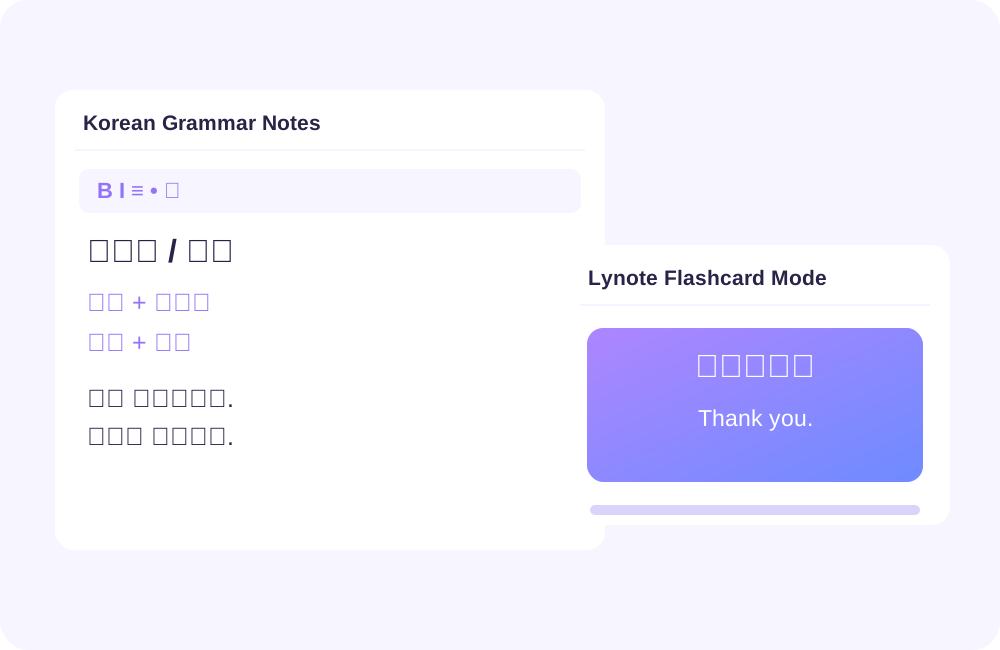
Refine AI-generated content to match what you're learning. Add translations, pronunciation reminders, personal observations, and extra examples using Lynote's built-in editor.

korean note - Create Notes from Audio and Video Lessons

Create Notes from Audio and Video Lessons

Turn supported Korean listening recordings and video lessons into organized notes. Review the generated content alongside the original audio to check pronunciation and context.

korean note - Ask AI About Your Korean Learning Materials

Ask AI About Your Korean Learning Materials

Use AI Chat to ask questions about grammar explanations, vocabulary, and examples included in your uploaded sources. Revisit difficult concepts without searching through an entire lesson again.

korean note - Review Korean Vocabulary with Flashcards

Review Korean Vocabulary with Flashcards

Turn important words, phrases, and grammar concepts into flashcards. Practice recalling Korean expressions, meanings, and usage examples.

korean note - Learn from Different Content Formats

Learn from Different Content Formats

Work with supported PDFs, documents, images, audio files, videos, YouTube links, and webpages. Organize Korean language learning notes from different educational resources in one workflow.

korean note - Study at Your Own Pace

Study at Your Own Pace

Build on your notes as you progress from Hangul to more complex Korean sentences. Edit old explanations, revisit vocabulary, and use flashcards for repeated review.

korean learning notes - turn lessons into AI notes

Turn Korean Lessons into Organized Notes

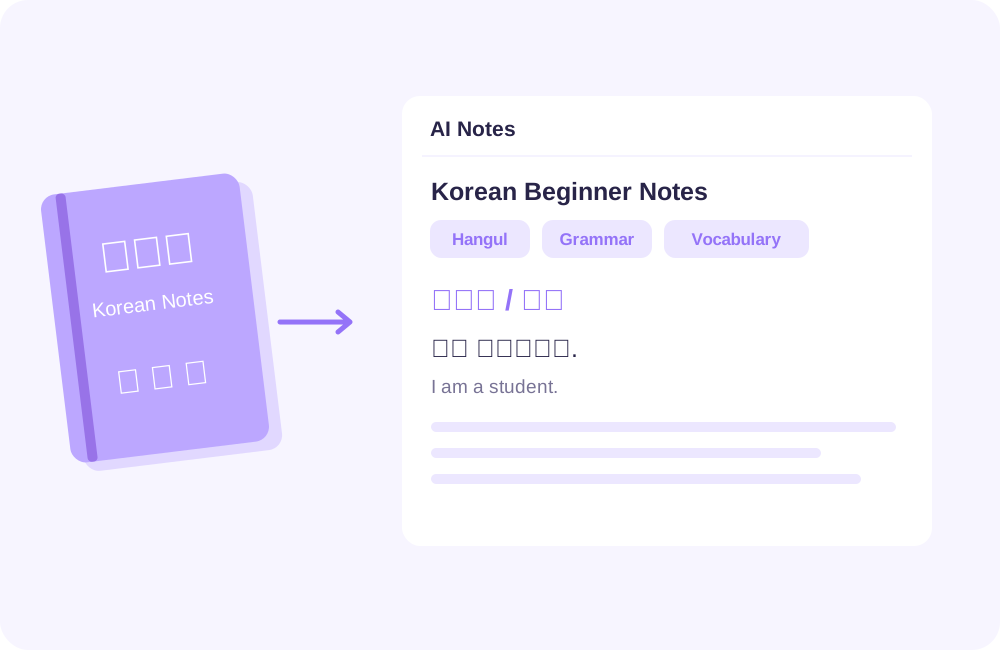
Korean lessons often introduce several types of information at once, including new words, grammar rules, pronunciation, and example conversations. Keeping everything organized can become difficult when you learn from videos, textbooks, and recorded lessons.

Lynote helps generate structured notes from supported learning materials. Important concepts and explanations are organized into readable sections that you can customize.

Instead of copying every sentence, use the generated notes as a starting point for understanding and reviewing your Korean lessons.

    Generate Korean Notes
    korean grammar notes - organize vocabulary and examples

    Keep Korean Grammar Rules and Vocabulary Together

    Memorizing Korean words without understanding their grammar and context can make it difficult to use them naturally. A structured notebook can connect vocabulary with sentence patterns, particles, and everyday expressions.

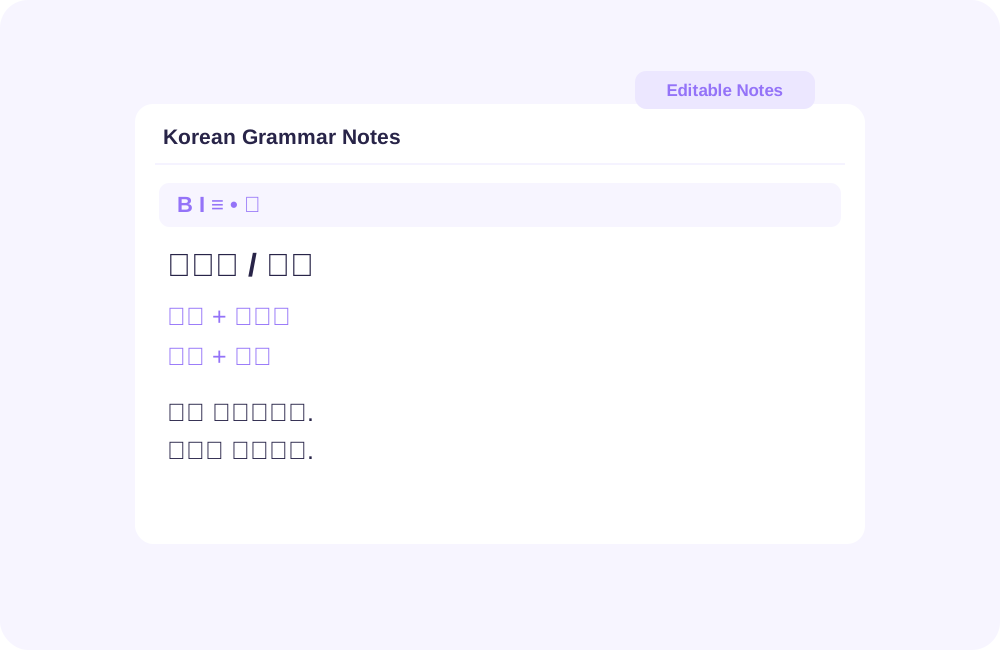
    With Lynote's editable notes, you can add Korean example sentences, English meanings, and usage reminders. Organize explanations by topic rather than leaving them scattered across multiple lessons.

    This makes your Korean grammar notes and vocabulary notes easier to revisit during review.

      Create Editable Korean Notes
      korean vocabulary notes - review with AI flashcards

      Review Your Korean Notes with AI Chat and Flashcards

      Learning a grammar rule once does not mean you'll remember how to use it. Regular review helps you identify what you understand and where more practice is needed.

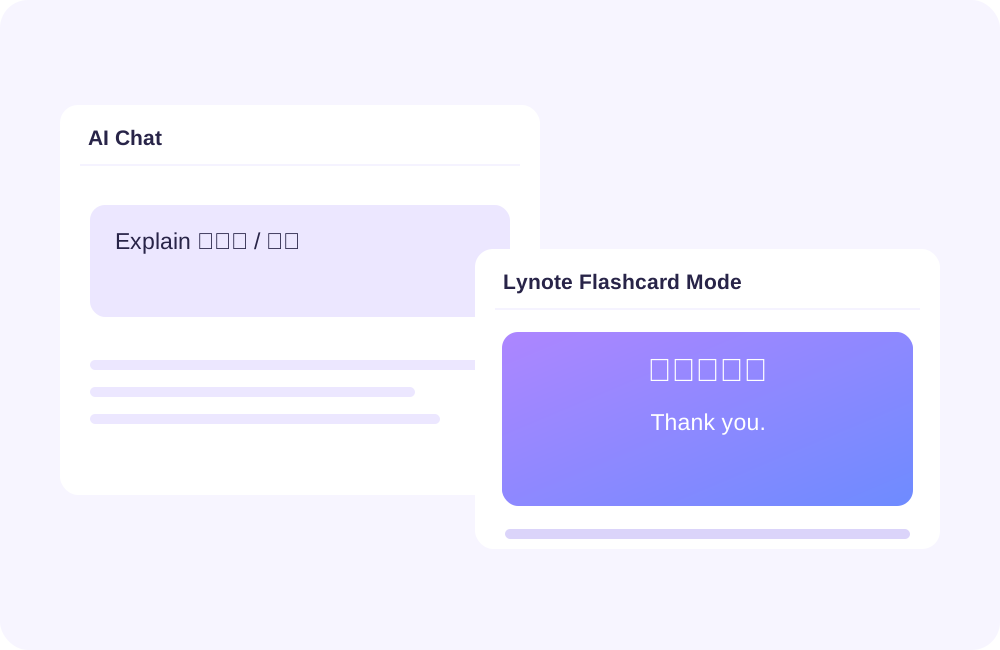
      Lynote connects AI Notes with source-based AI Chat and Flashcards. Ask questions about the learning materials you've uploaded, and generate flashcards to practice recalling important words and concepts.

      Check Korean spelling, grammar, and translations against reliable learning materials, especially when working with unfamiliar expressions.

        Review Your Korean Study Notes

        How to Create Korean Notes in 3 Steps

        korean note - upload Korean lesson PDFs and audio

        Step 1. Upload Your Korean Learning Materials

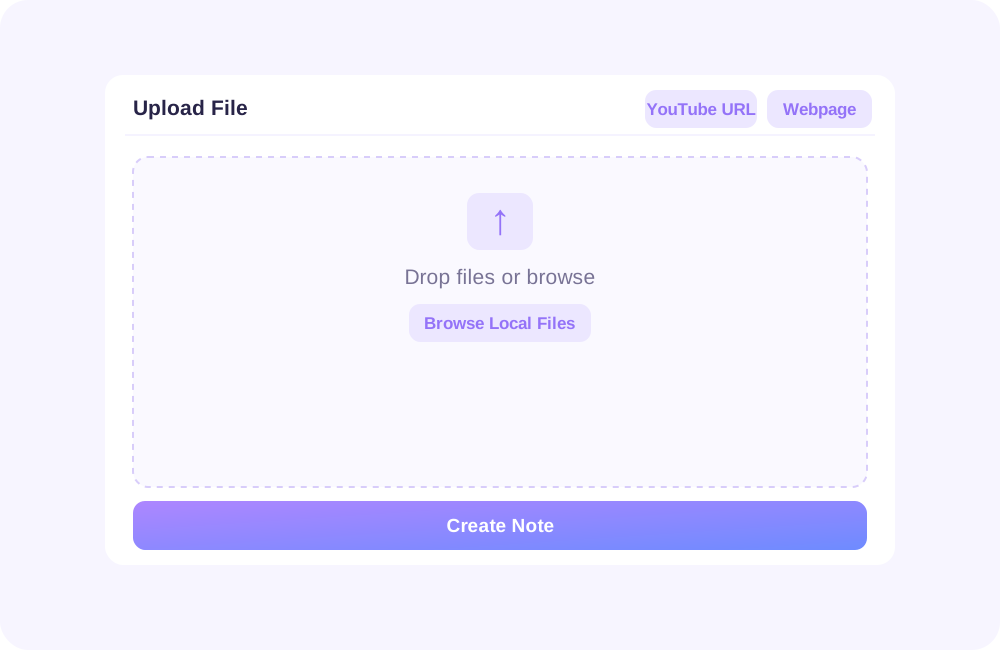
        Upload a supported Korean textbook PDF, lesson document, audio recording, or video. You can also paste a supported YouTube or webpage URL containing Korean learning content. Choose materials that match your current learning level, such as Hangul lessons, beginner grammar, or vocabulary practice.

        korean study notes - generate structured language notes

        Step 2. Generate and Customize Your Notes

        Click Create Note to generate structured AI notes based on your uploaded materials. Lynote organizes important explanations, key concepts, and supporting details. Review the content and add Korean examples, translations, vocabulary tables, or grammar reminders. Correct any inaccuracies before using the notes for further study.

        learning korean notes - edit and review study notes

        Step 3. Review with AI Chat and Flashcards

        Use AI Chat to explore concepts included in your learning materials. Turn important vocabulary and grammar patterns into flashcards for review. Practice recalling meanings and explanations before checking the answers. Return to the original lesson when you need additional context or pronunciation guidance.

        Korean Notes for Every Stage of Learning

        A useful Korean notebook should grow with your skills. Beginners may start with Hangul and everyday vocabulary, while more experienced learners may focus on grammar patterns, listening comprehension, and natural expressions.

        Korean Alphabet Notes: Learn Hangul

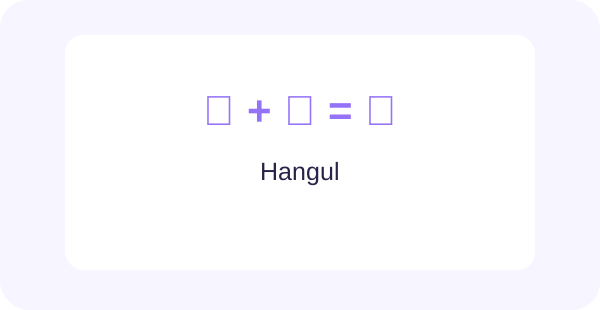
        Korean Hangul notes should organize consonants, vowels, syllable blocks, and pronunciation rules. Begin with the basic letters and practice combining them into written syllables. Include examples showing how Hangul is written and pronounced. Pay attention to sounds that do not match English letters exactly, rather than relying only on romanization.
        korean language notes - Hangul grammar vocabulary and listening

        Korean Grammar Notes: Understand Sentence Patterns

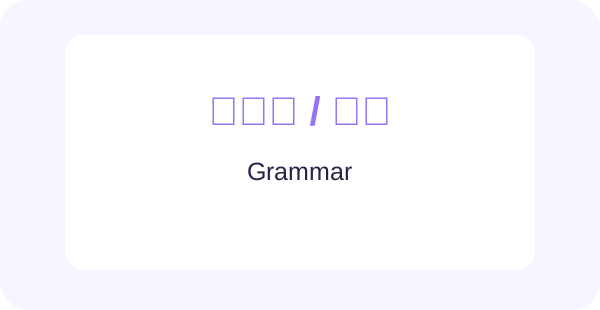
        Korean grammar notes help explain particles, verb endings, sentence order, and politeness levels. Organize each grammar point with a short explanation and at least one example sentence. For beginners, useful topics include 은/는, 이/가, 을/를, 이에요/예요, and common polite verb endings. Review how these forms work in sentences instead of memorizing isolated rules.

        korean language notes - Hangul grammar vocabulary and listening

        Korean Vocabulary Notes: Build Useful Word Lists

        Organize Korean vocabulary notes by themes such as greetings, food, school, travel, or everyday activities. Add Hangul spelling, meaning, and a simple example sentence for each word. Whenever possible, learn vocabulary in context. Knowing how a word appears in a sentence is often more useful than memorizing a translation alone.

        korean language notes - Hangul grammar vocabulary and listening

        Korean Beginner Notes: Start with the Essentials

        Korean notes for beginners should focus on a manageable set of concepts. Start with Hangul, basic greetings, common nouns, simple verbs, and introductory sentence patterns. Avoid collecting too many grammar explanations before practicing the basics. Use short notes and flashcards to revisit what you've already learned.

        korean language notes - Hangul grammar vocabulary and listening

        Korean Listening Notes: Learn from Spoken Korean

        Listening materials can help you recognize pronunciation, sentence rhythm, and everyday expressions. Create notes from supported audio or video lessons, then review the original recording to confirm what was said. Add vocabulary, grammar patterns, and example sentences that appear in the lesson. Don't assume AI transcription or translation is always accurate, particularly with fast speech or background noise.

        korean language notes - Hangul grammar vocabulary and listening

        Korean Reading and Writing Notes

        Reading notes can include new vocabulary, unfamiliar sentence patterns, and explanations from texts you're studying. Writing notes can focus on useful expressions and corrections from trusted learning materials. Keep examples short enough to review. As your knowledge grows, return to earlier notes and expand them with new context.

        korean language notes - Hangul grammar vocabulary and listening
        korean notes for beginners - vocabulary and grammar example

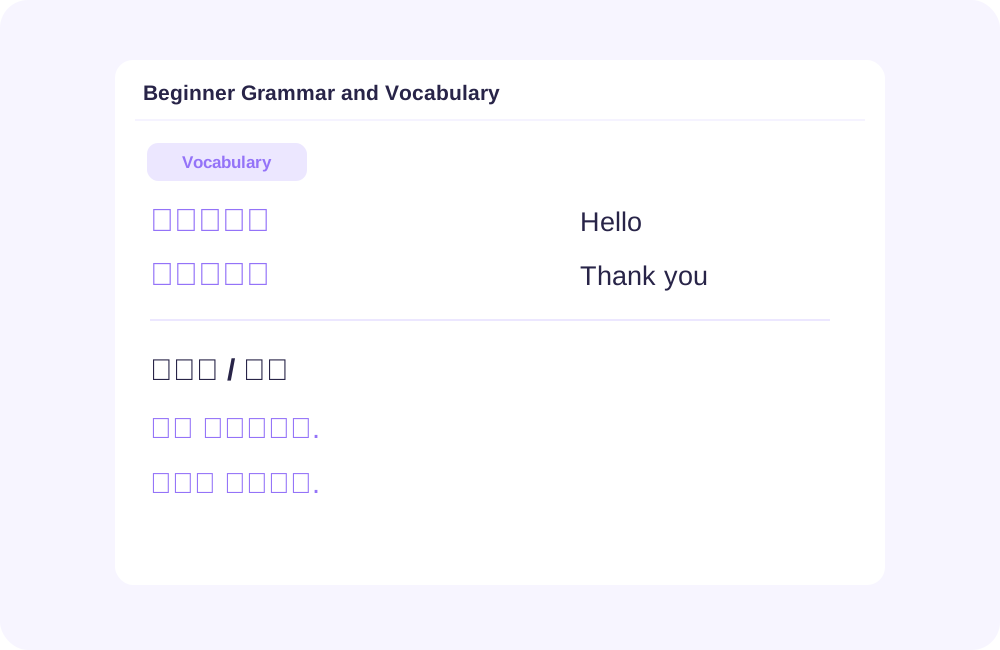
        Korean Notes Example: Beginner Grammar and Vocabulary

        Here's a simple example of how to organize Korean study notes from a beginner lesson. The examples below are illustrative rather than automatically generated from a particular course.

        Topic: Basic Korean Greetings and Sentence Patterns

        1. Essential Vocabulary

        KoreanEnglish MeaningNotes
        안녕하세요HelloCommon polite greeting
        감사합니다Thank youFormal polite expression
        네YesCommon affirmative response
        아니요NoPolite negative response
        학생StudentNoun
        책BookNoun

        2. Beginner Grammar: 이에요 / 예요

        Purpose: A common polite way to say that something is or identifies as something.

        • 이에요 follows a noun ending in a consonant.
        • 예요 follows a noun ending in a vowel.

        Examples:

        • 저는 학생이에요. — I am a student.
        • 이거는 커피예요. — This is coffee.

        3. Important Grammar Reminder

        Korean uses particles to mark grammatical roles and topics within sentences. For example, 은/는 commonly marks the topic, although its meaning and usage depend on context.

        Do not assume every Korean particle has a single direct English equivalent. Use examples from your lessons to understand how the meaning changes.

        4. Flashcard Preview

        Question: What does 감사합니다 mean?

        Answer: Thank you.

        Question: Which ending is commonly used after a noun ending in a vowel, 이에요 or 예요?

        Answer: 예요.

        5. Study Summary

        This beginner lesson introduces common polite expressions and a basic sentence ending used to identify people or things. Practice reading the Hangul, understanding the grammar, and speaking the example sentences aloud.

        Use a similar structure for other Korean grammar and vocabulary topics.

        study korean notes - organize and review Korean lessons

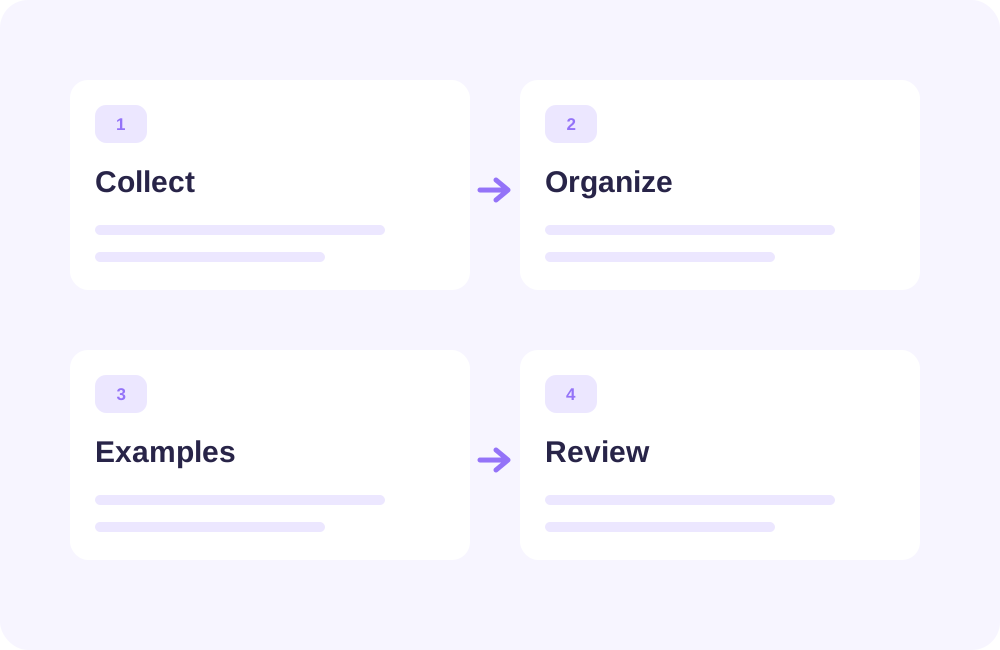
        A Simple Korean Note-Taking System for Better Review

        Good Korean learning notes should support more than recording information. They should help you understand language patterns, connect vocabulary with examples, and revisit concepts over time.

        Step 1. Collect Korean Learning Materials

        Choose lesson PDFs, textbooks, listening recordings, or videos that match your learning goals. Keep track of the lesson title and source so you can return to the original explanation.

        Step 2. Organize Notes by Topic

        Separate Hangul, grammar, vocabulary, and listening notes into clear sections. Include explanations and examples instead of collecting only word lists.

        Step 3. Add Personal Examples

        After studying a grammar pattern, try writing a short sentence using words you already know. Check the sentence against trusted learning resources or instructor feedback.

        Personal examples can reveal whether you understand a rule well enough to apply it.

        Step 4. Practice Recall with Flashcards

        Turn important vocabulary and concepts into flashcards. Review them regularly and focus on items that remain difficult.

        For pronunciation and listening, combine written review with actual Korean audio. Flashcards support recall but do not replace speaking and listening practice.

        Who Can Benefit from Korean Note Taker?

        korean note - Absolute Beginners

        Absolute Beginners

        Create Korean alphabet notes and introductory vocabulary lists from supported lessons. Organize basic expressions and grammar explanations as you learn to read Hangul.

        korean note - Korean Language Students

        Korean Language Students

        Turn course PDFs, recorded explanations, and classroom materials into structured Korean student notes. Add your own examples and review difficult concepts after class.

        korean note - Self-Study Learners

        Self-Study Learners

        Organize materials from online lessons, textbooks, and language learning videos. Keep explanations and vocabulary together while building your own Korean learning notebook.

        korean note - K-Drama and Korean Media Learners

        K-Drama and Korean Media Learners

        Use appropriately accessible and supported educational clips or language-learning materials to study expressions and vocabulary. Verify meanings and context before adding unfamiliar phrases to your notes.

        korean note - TOPIK Learners

        TOPIK Learners

        Organize grammar, vocabulary, and reading explanations from study materials you already have. Use official TOPIK resources to confirm current examination requirements.

        korean note - Multilingual Learners

        Multilingual Learners

        Create Korean notes from supported materials and review explanations in languages you understand. Check translations carefully, especially when studying grammar structures that have no direct equivalent in your native language.

        Korean Notes vs. Regular Language Notes: What Should You Include?

        Korean learning notes benefit from a structure that accounts for Hangul, pronunciation, particles, verb endings, and sentence context. Simply copying the format of an English vocabulary notebook may leave out information needed to understand how Korean works.

        A useful Korean note combines explanations with examples and practice questions.

        ElementBasic Language NotesStructured Korean Notes
        AlphabetLetters and pronunciationHangul consonants, vowels, and syllable blocks
        VocabularyWord and translationHangul, meaning, context, example sentence
        GrammarGeneral rulesParticles, verb endings, sentence patterns
        PronunciationSound remindersKorean audio examples and pronunciation notes
        PracticeVocabulary reviewGrammar examples, flashcards, listening review
        OrganizationGeneral lesson notesHangul, grammar, vocabulary, and reading sections

        Lynote helps prepare structured notes from supported Korean learning materials. You can then customize them to include pronunciation reminders, translations, and your own examples.

        How to Keep Your Korean Notes Neat

        Neat Korean notes for beginners should prioritize readable Hangul and consistent organization. Leave enough space between vocabulary, grammar explanations, and example sentences.

        Use bold headings or a limited color system to distinguish different categories. For example, you could mark grammar endings in purple, vocabulary in blue, and review questions in another color.

        Avoid adding so much decoration that your notes become difficult to edit or review. A simple system you use consistently is more useful than an elaborate layout you rarely revisit.

        Frequently Asked Questions About Korean Notes

        What Are Korean Notes?

        Korean notes are written study materials used to organize information about the Korean language. They may include Hangul, grammar rules, vocabulary, pronunciation reminders, translations, and example sentences.

        Lynote helps generate editable Korean study notes from supported learning materials. Users can personalize the content and create flashcards for review.

        How Can I Create Korean Notes Online?

        Start with a Korean lesson PDF, document, recording, or supported educational video. Upload or link the material to Lynote and generate structured AI notes.

        Review the results and organize the content into Hangul, vocabulary, grammar, and examples. Always check important translations and language rules against reliable sources.

        What Should Korean Beginner Notes Include?

        Korean beginner notes should cover Hangul consonants and vowels, basic pronunciation, common greetings, everyday vocabulary, and simple grammar patterns.

        Include short example sentences rather than only isolated words. You can expand your notes as you become more comfortable reading and understanding Korean.

        How Do I Make Korean Hangul Notes?

        Begin by separating basic consonants and vowels into clear tables. Add syllable block examples to show how letters combine in Korean writing.

        Include pronunciation reminders and practice reading real Korean words. Since romanization cannot represent every Korean sound precisely, use reliable audio examples alongside your written notes.

        What Is the Best Way to Organize Korean Grammar Notes?

        Organize each grammar point around its meaning, formation, and example sentences. For instance, a note about 은/는 should explain its common topic-marking role and show how it appears in context.

        Avoid memorizing rules without examples. Review similar particles and endings side by side to understand their differences.

        How Do I Create Korean Vocabulary Notes?

        Group new words by topic or lesson and include Hangul spelling, meaning, and an example sentence. Add pronunciation reminders only when they help you remember a word correctly.

        Use flashcards to test recall. Revisit unfamiliar words in actual sentences and listening materials.

        Can I Make Aesthetic or Neat Korean Notes for Beginners?

        Yes. Clear headings, consistent spacing, simple tables, and a limited color palette can make Korean notes easier to navigate.

        You can separate Hangul, vocabulary, grammar, and examples into visually distinct sections. Prioritize accurate spelling and understandable explanations over decorative formatting.

        Can Lynote Create Notes from Korean Audio Lessons?

        Yes. Lynote supports audio and video files as input sources for AI note generation. You can upload a supported Korean learning recording and generate structured notes from its content.

        Audio clarity, speaker speed, and recording quality can affect the result. Check Korean transcriptions, translations, and grammar explanations against the original lesson.

        Can I Use Talk To Me In Korean Notes with Lynote?

        Talk To Me In Korean is an independent Korean language education provider offering structured lessons and learning resources.

        If you have lesson materials that you are authorized to process, Lynote can help organize supported documents, recordings, or videos into personal study notes. Lynote does not provide official Talk To Me In Korean notes and is not affiliated with the provider.

        Are Free Talk To Me In Korean Lesson Notes Available?

        Talk To Me In Korean offers learning resources through its official platform, but access to particular lesson notes, downloads, and courses may depend on its current offerings and subscription rules.

        If you're searching for TalkToMeInKorean.com free Korean lesson notes, check the official website for current availability. Lynote cannot unlock paid lessons or provide copyrighted learning materials that you do not have permission to access.

        Can I Create Notes in Korean Language Instead of English?

        Lynote supports multilingual note generation, so you can work with Korean-language learning materials. The final language and output quality may depend on the source and available generation options.

        Review Hangul spelling, spacing, particles, and translations before relying on AI-generated Korean text. Use trusted Korean language resources to confirm unfamiliar expressions.

        Are Korean Notes Different for North Korean and South Korean Usage?

        The Korean language has regional differences in vocabulary, spelling conventions, pronunciation, and usage between North and South Korea. Most mainstream beginner Korean courses focus on the standard language used in South Korea.

        If you're studying North Korean Korean, use appropriate specialist materials and label regional differences clearly. Lynote can help organize supported source content but does not automatically validate regional language conventions.

        Can I Use Korean Notes to Prepare for TOPIK?

        Yes. You can organize grammar, vocabulary, reading, and listening materials relevant to your TOPIK preparation. Lynote can help turn supported study resources into editable notes and flashcards.

        However, Lynote does not guarantee coverage of TOPIK exam requirements or provide an official TOPIK question bank. Use authoritative exam information and practice resources alongside your notes.

        Can I Edit My Korean AI Notes?

        Yes. Lynote provides a rich-text editor for generated notes, allowing you to modify explanations, add vocabulary, and reorganize material.

        This is particularly important for language learning because translations and grammar explanations require context. Check your revisions against reliable lessons or instructor feedback.

        Study Smarter with Better Note-Taking Methods

        Explore practical guides to organizing language-learning materials, making useful notes, and reviewing important concepts.


        Turn Your Korean Lessons into Notes You Can Review

        Make Korean note taking easier with Lynote. Turn supported textbooks, grammar lessons, audio recordings, and videos into structured Korean notes that you can edit and personalize. Organize Hangul, vocabulary, and grammar explanations, then revisit important concepts with AI Chat and Flashcards. Start building a Korean learning notebook that grows with your skills.