

OpenAI models such as GPT-5.6 and GPT-5.5 can produce polished essays, reports, marketing copy, and technical explanations in seconds. Because newer model output often uses smoother transitions and more varied sentence structures, it may be harder to distinguish from human writing by reading alone. An OpenAI detector examines patterns such as token distribution, sentence rhythm, predictability, and semantic consistency to estimate whether a passage was generated by an AI model. The result should be reviewed as evidence rather than treated as a final judgment. Editors, educators, publishers, and compliance teams can use sentence-level probability reports to locate passages that need closer attention, compare the overall AI, mixed, and human-written scores, and decide whether additional verification or revision is necessary before the content is approved.
OpenAI AI Detector for GPT-5.6 & GPT-5.5
Recent History



Why Use This OpenAI Detector?

OpenAI-Focused Check
Review text for patterns associated with OpenAI-generated writing.
Version-Aware Detection
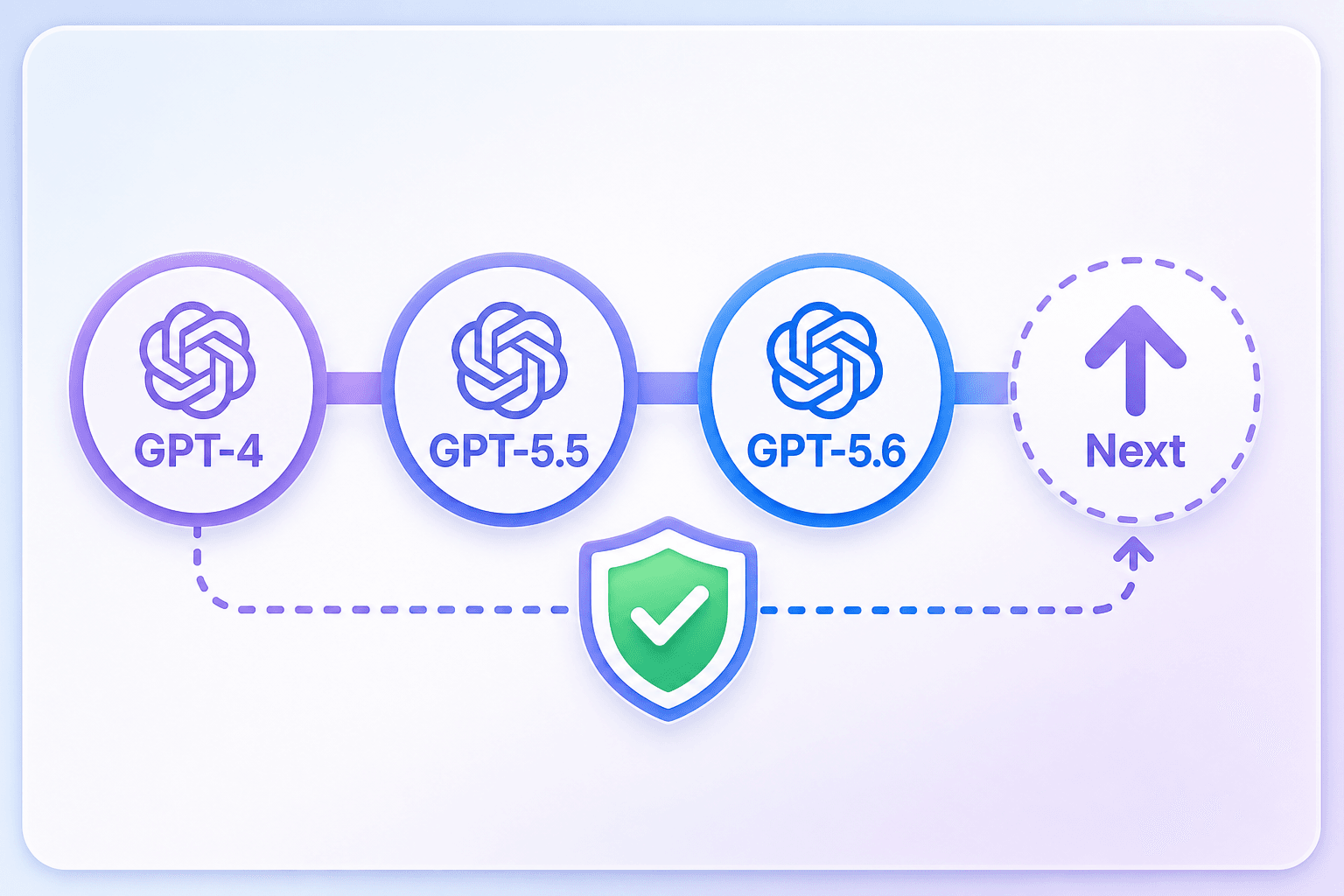
Distinguish current GPT-5.6 and GPT-5.5 output from earlier GPT-4, GPT-3.5, and o-series writing patterns.

Burstiness Analysis
Expose polished or AI-assisted drafts by analyzing shifts in sentence length, structure, and predictability.

50+ Language Coverage
Detect OpenAI-generated text across 50+ languages, including translated GPT output.

Enterprise-Grade Privacy
Analyze confidential academic or business text with encrypted processing. Your content is never used to train our models.

Probability Heatmaps
See color-coded probability scores that pinpoint where OpenAI-generated patterns are strongest.
Specialized OpenAI Detection
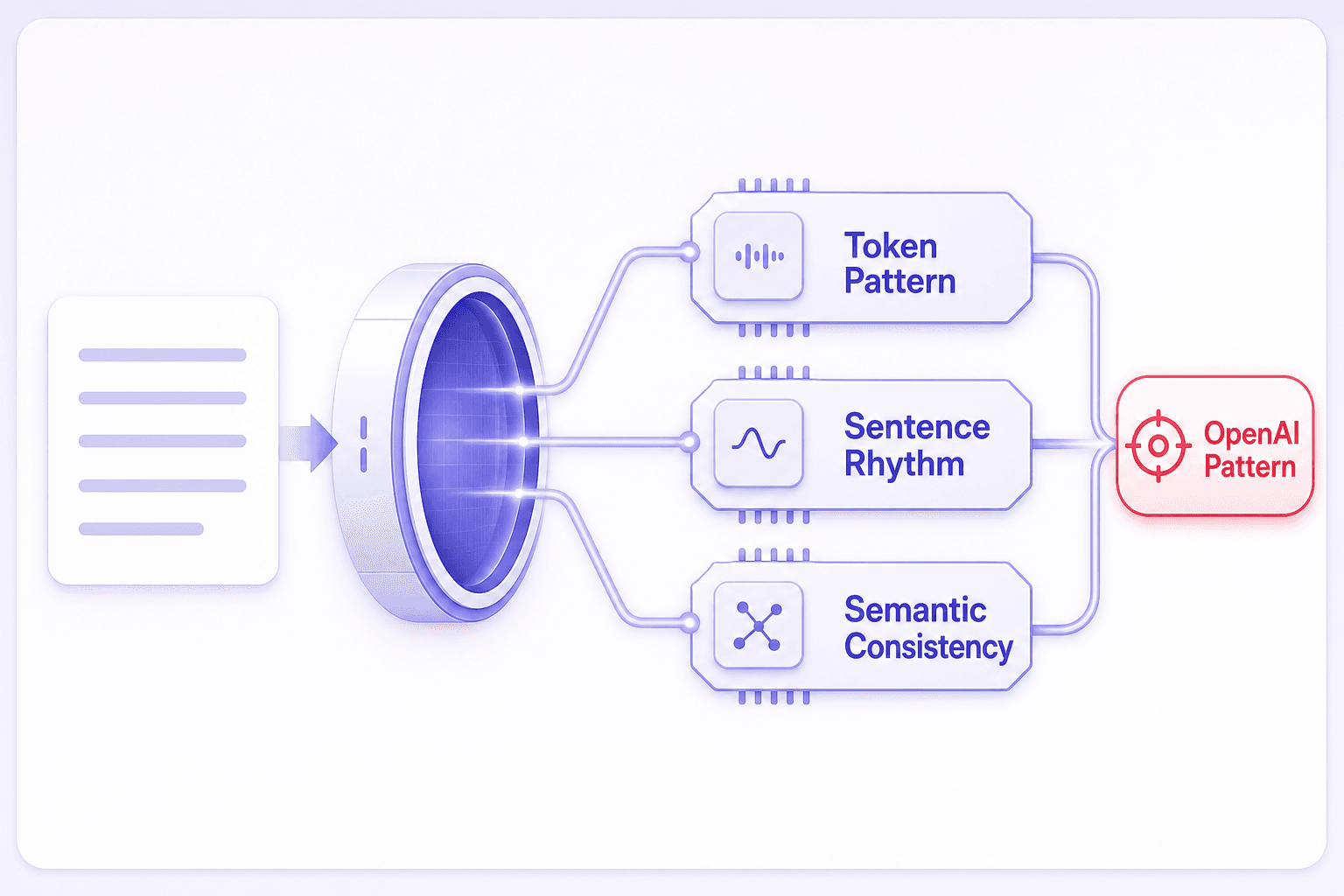
Generic AI checkers look for broad machine-written patterns. Lynote’s OpenAI detector is trained around the token distribution, semantic consistency, and writing signatures of GPT-5.6, GPT-5.5, and earlier OpenAI output, giving you a more focused verdict on OpenAI-generated content.
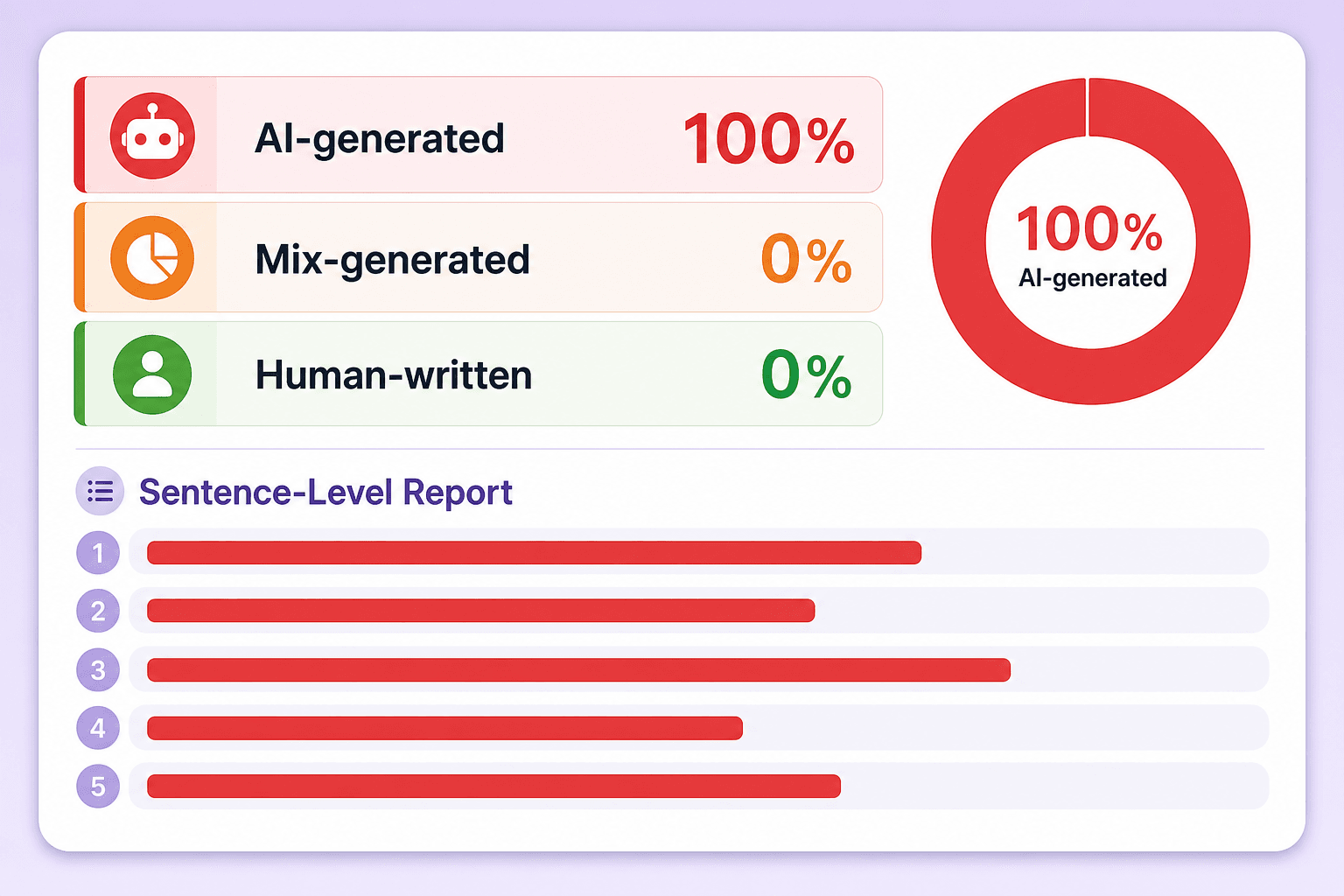
Sentence-Level Probability Reports for OpenAI-Generated Text
Ready for GPT-5.6 and Beyond
See OpenAI Detection in Action
Follow one GPT-5.6-generated sample from input to verdict. See its OpenAI probability score and the exact sentences Lynote flags, so you can review the evidence—not just a final number.

Our detector is highly confident that the text is written by AI.
- 100%The result should be reviewed as evidence rather than treated as a final judgment.
- 100%Editors, educators, publishers, and compliance teams can use sentence-level probability reports to locate passages that need closer attention, compare the overall AI, mixed, and human-written scores, and decide whether additional verification or revision is necessary before the content is approved.
- 100%Because newer model output often uses smoother transitions and more varied sentence structures, it may be harder to distinguish from human writing by reading alone.
- 100%An OpenAI detector examines patterns such as token distribution, sentence rhythm, predictability, and semantic consistency to estimate whether a passage was generated by an AI model.
- 100%OpenAI models such as GPT-5.6 and GPT-5.5 can produce polished essays, reports, marketing copy, and technical explanations in seconds.
How to Detect OpenAI Content
Paste or Upload Content
Paste the text you want to verify, or upload a .docx or .pdf file for analysis.

Run the OpenAI Scan
Click Detect AI to scan for linguistic patterns associated with GPT-5.6, GPT-5.5, and earlier OpenAI model output.
Review the Evidence
Check the OpenAI probability score, then use the highlighted passages to see exactly where AI-generated patterns appear.

Paste or Upload Content
Paste the text you want to verify, or upload a .docx or .pdf file for analysis.
Run the OpenAI Scan
Click Detect AI to scan for linguistic patterns associated with GPT-5.6, GPT-5.5, and earlier OpenAI model output.
Review the Evidence
Check the OpenAI probability score, then use the highlighted passages to see exactly where AI-generated patterns appear.
Where OpenAI Detection Matters Most

SEO Content Quality
Catch unedited GPT drafts before they reach your site. Protect originality, expert voice, and editorial standards across every page you publish.
Catch unedited GPT drafts before they reach your site. Protect originality, expert voice, and editorial standards across every page you publish.

For Academic Integrity
Check essays and assignments for GPT-5.6, GPT-5.5, or earlier OpenAI-generated passages before grading or submission.
Check essays and assignments for GPT-5.6, GPT-5.5, or earlier OpenAI-generated passages before grading or submission.

Legal & Compliance Review
Screen briefs, contracts, and reports for undisclosed OpenAI-generated text before they enter a high-stakes workflow.
Screen briefs, contracts, and reports for undisclosed OpenAI-generated text before they enter a high-stakes workflow.

For Publishing & Media
Spot generic GPT filler in pitches, articles, and freelance submissions while protecting your publication’s voice.
Spot generic GPT filler in pitches, articles, and freelance submissions while protecting your publication’s voice.
Who Relies on Our OpenAI Detector

Academic Leaders
Screen essays and department-wide submissions for undisclosed GPT use while protecting the standard of original student work.

Content Directors
Audit high-volume content before publication and catch GPT-written filler before it dilutes brand authority.

Technical Editors
Flag OpenAI-generated explanations or documentation that may sound polished but miss technical nuance.

Digital Marketers
Check landing pages, emails, and ad copy for predictable GPT phrasing before campaigns go live.

Legal & Compliance Teams
Screen briefs, reports, and regulated documents for undisclosed AI-generated passages before expert review.
Freelance Clients
Verify that paid writing matches the human-authorship or AI-disclosure terms in your brief.
Industry Feedback on OpenAI Detection

Senior SEO Strategist

This is the only tool that consistently catches GPT-4 content that other detectors miss. It’s essential for our agency’s quality control and ranking safety.

Dean of Academic Affairs
The ability to distinguish between different OpenAI versions is a game-changer. It allows us to have evidence-based discussions with students about their work.

Tech Blog Editor
Fast, accurate, and specifically tuned for the ‘OpenAI style.’ It has saved us from publishing dozens of generic, AI-spun articles this month alone.

Compliance Officer
In our industry, authenticity is a legal requirement. This detector provides the forensic proof we need to verify that our reports are human-authored.

AI Ethics Researcher
The heatmap feature is brilliant. It doesn’t just give a score; it shows you exactly where the OpenAI model’s logic takes over the narrative.

Professional Ghostwriter
I use this to prove to my high-ticket clients that my work is 100% human. It’s a badge of quality that builds immense trust in my services.
OpenAI Detector FAQ
Get clear answers about GPT model coverage, translated text, free access, probability scores, file uploads, and humanized OpenAI content.
Yes. Lynote’s OpenAI detector is updated to recognize the writing and reasoning patterns of GPT-5.6 and GPT-5.5, while continuing to check earlier GPT-4, GPT-3.5, and o-series output.
GPT-5.6 and GPT-5.5 produce more nuanced, context-aware writing than earlier GPT-4, GPT-3.5, and o-series models. Lynote analyzes complexity, predictability, sentence structure, and other model-specific patterns to identify the closest OpenAI generation profile.
Yes. The multilingual engine looks beyond surface vocabulary to the structural patterns left by OpenAI models, helping it identify translated GPT content across 30+ languages.
The detector analyzes the final prose, not the origin of your ideas. If <a href="/chatgpt-detector">ChatGPT</a> only helped with brainstorming and you wrote the sentences yourself, the result should reflect the human-written text.
Yes. You can check OpenAI-generated text online for free with no sign-up. Paste your text or upload a document, then click Detect AI.
Lynote is engineered to detect writing patterns from GPT-5.6, GPT-5.5, GPT-4, GPT-3.5, and o-series models. Its detection parameters are updated as OpenAI releases new generations.
The score estimates how strongly the text matches OpenAI-generated patterns. Use the paragraph breakdown and color-coded highlights to see where that probability is highest.
Yes. Upload a .pdf or .docx file, or paste the text directly into the detector. Lynote extracts the writing and runs the same OpenAI signature analysis.
Lynote is designed to identify OpenAI patterns even after AI text has been polished or <a href="/ai-humanizer">humanized</a>. Results can vary by how heavily the text was rewritten, so review the heatmap alongside the overall score.
Lynote reports 99.40% precision in its GPT-4 detection benchmark and updates its model coverage for GPT-5.6 and GPT-5.5. Review the overall probability, paragraph-level report, and highlighted sentences together for the clearest picture.


