

Japanese Audio To Text

Drop files or browse

Add study materials to enable the AI to extract and structure content.



Why Choose Our Japanese Audio to Text Tool?

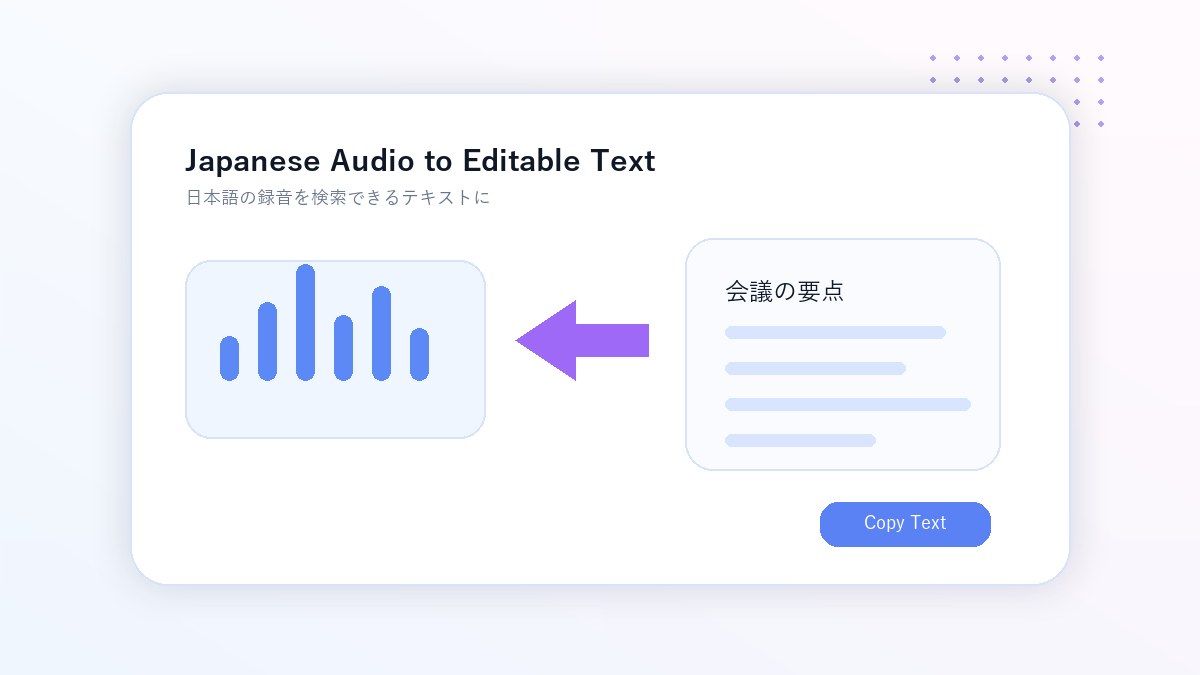
Japanese Audio Transcription
Convert Japanese audio into editable text for interviews, lectures, podcasts, meetings, voice memos, study recordings, and video audio.

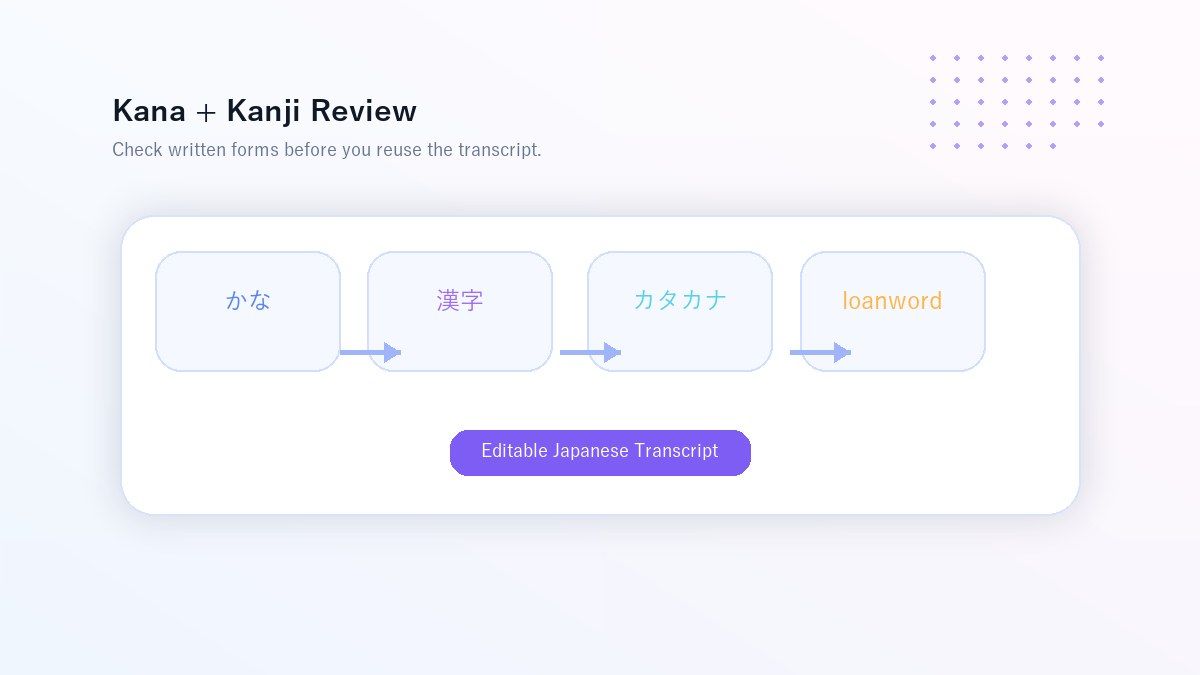
Kana and Kanji Review
Japanese speech may require careful review since words can be written in kanji, hiragana, katakana, or mixed. Lynote provides you with editable text for polishing the final transcript.

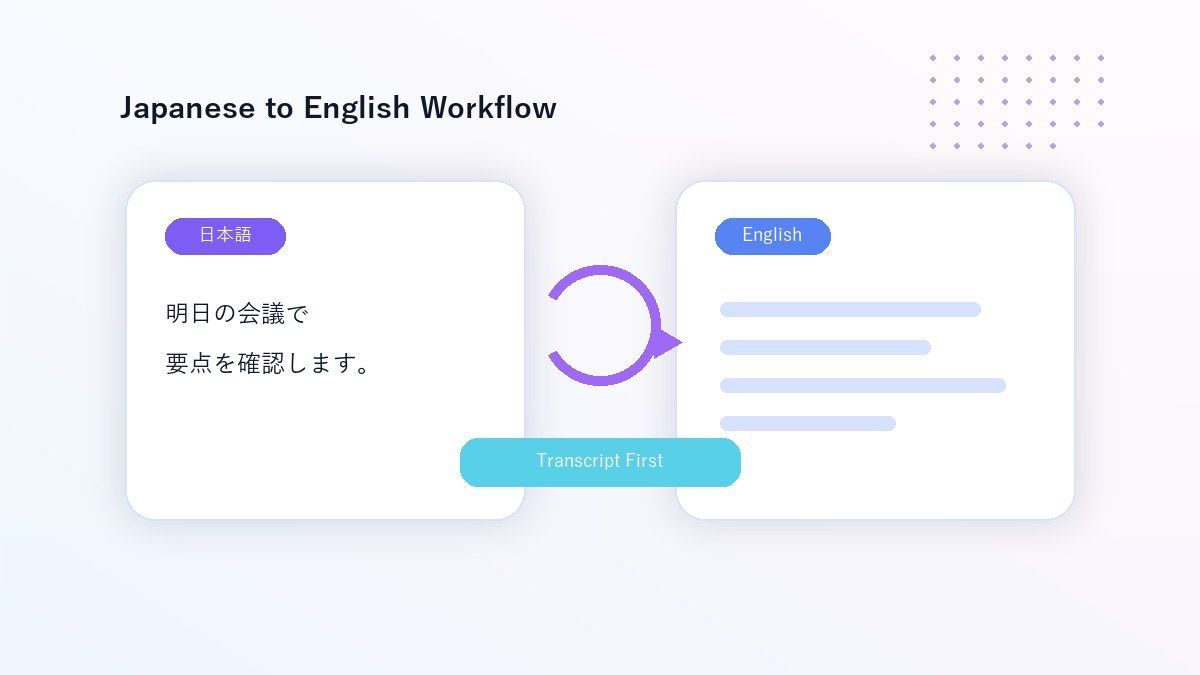
Japanese to English Workflow
Start from a reliable transcript if you need Japanese audio to English text for research, subtitles, summaries, or documentation.

Speech and Text Reuse
Transform spoken Japanese into text that you can search, copy, export, translate, summarize, or turn into structured notes.

Common Audio Format Support
Upload MP3, WAV, M4A, and other common audio files directly from your device without needing to convert the file.

Useful for Natural Japanese Speech
Lynote assists with Japanese speech text from real-world conversations, including pauses, names, loanwords, honorifics, and English terms.

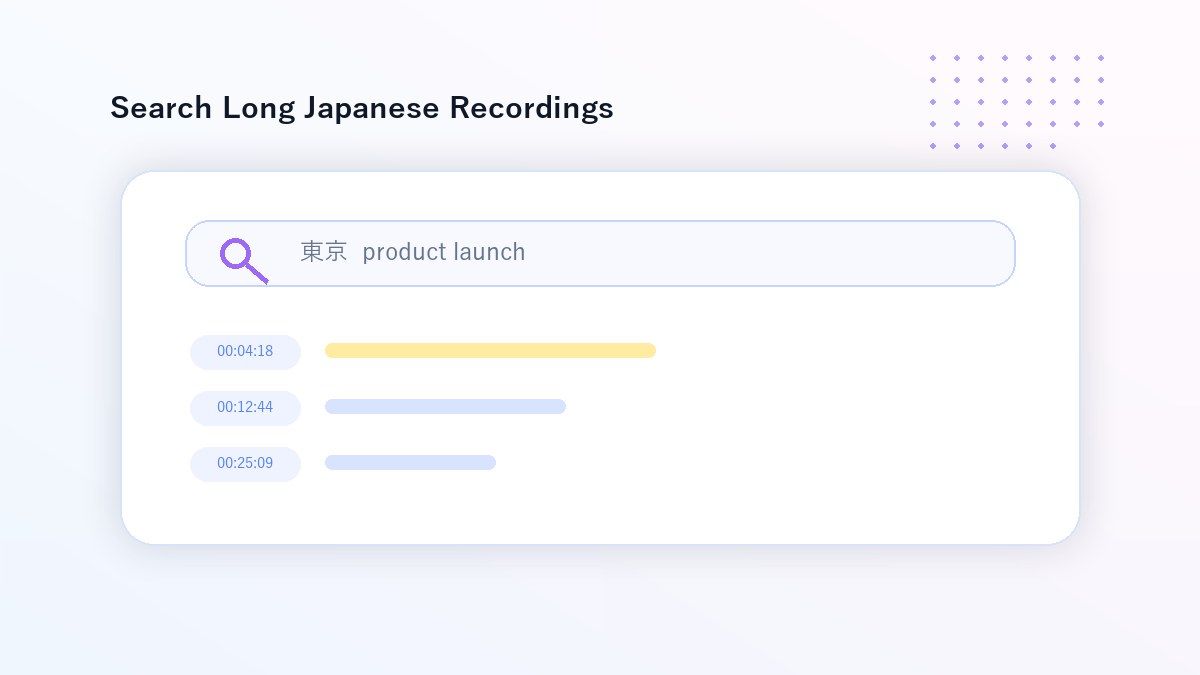
Searchable Japanese Transcript
Search names, timestamps, key phrases, vocabulary, quotes, topics, and decisions once you have converted Japanese audio to text.

Secure Processing
Uploaded audio is processed securely and will not be used to train AI models.
Convert Japanese Audio to Text Without Manual Typing
Easier to Review Kana, Kanji, and Loanwords
Japanese Audio to English Text Workflows
Make Japanese Recordings Searchable
How to Convert Japanese Audio to Text Online
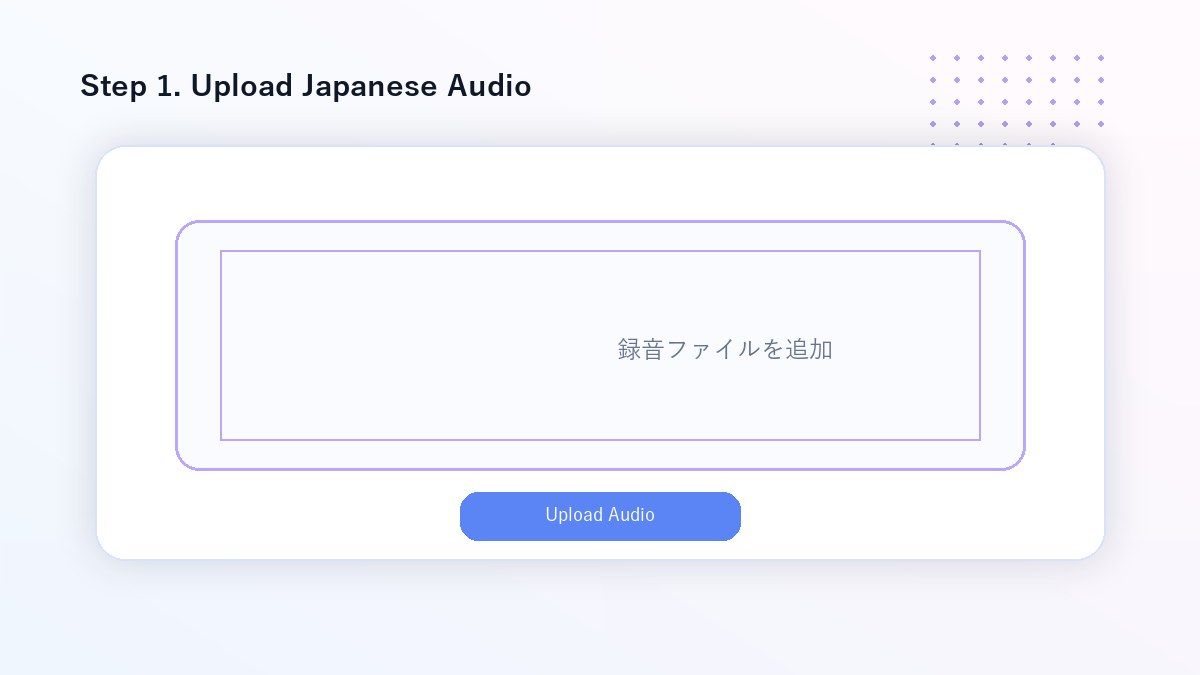
Step 1. Upload Japanese Audio
Upload your Japanese audio file from your device. Lynote supports common formats such as MP3, WAV, and M4A, and works best with clear speech, low background noise, and limited speaker overlap.
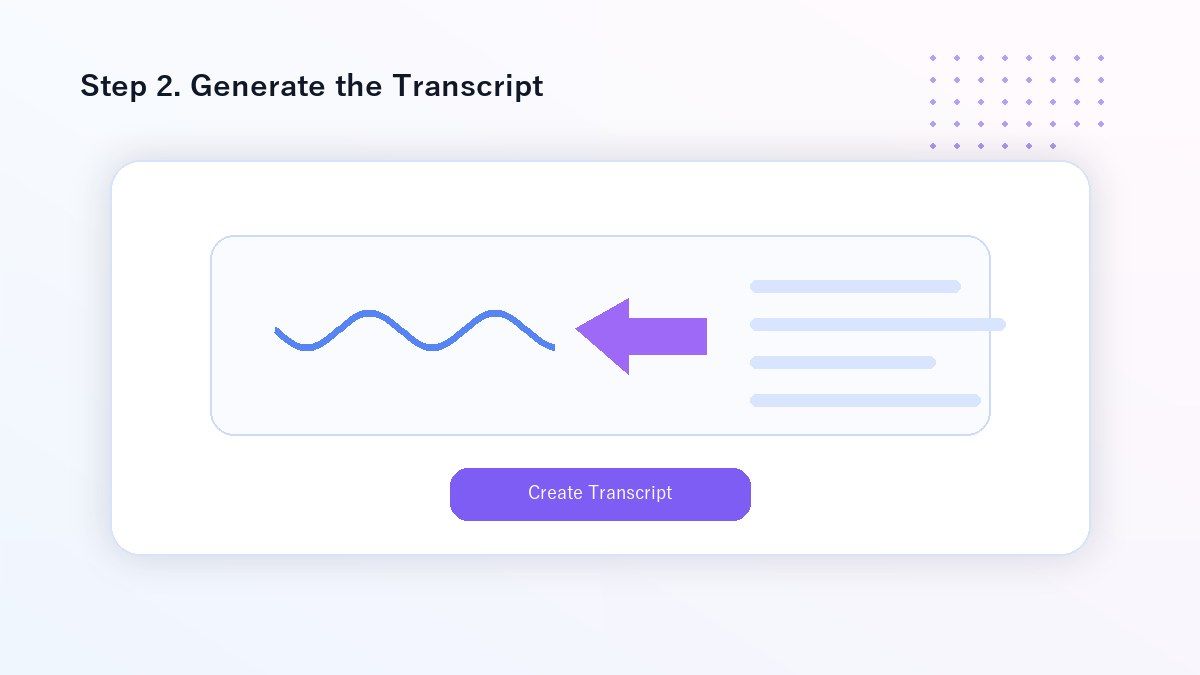
Step 2. Generate the Japanese Transcript
Start the transcription and Lynote will convert the Japanese speech into editable text. You can use it for lectures, interviews, meetings, podcasts, voice notes, video audio, study recordings, or translation preparation.
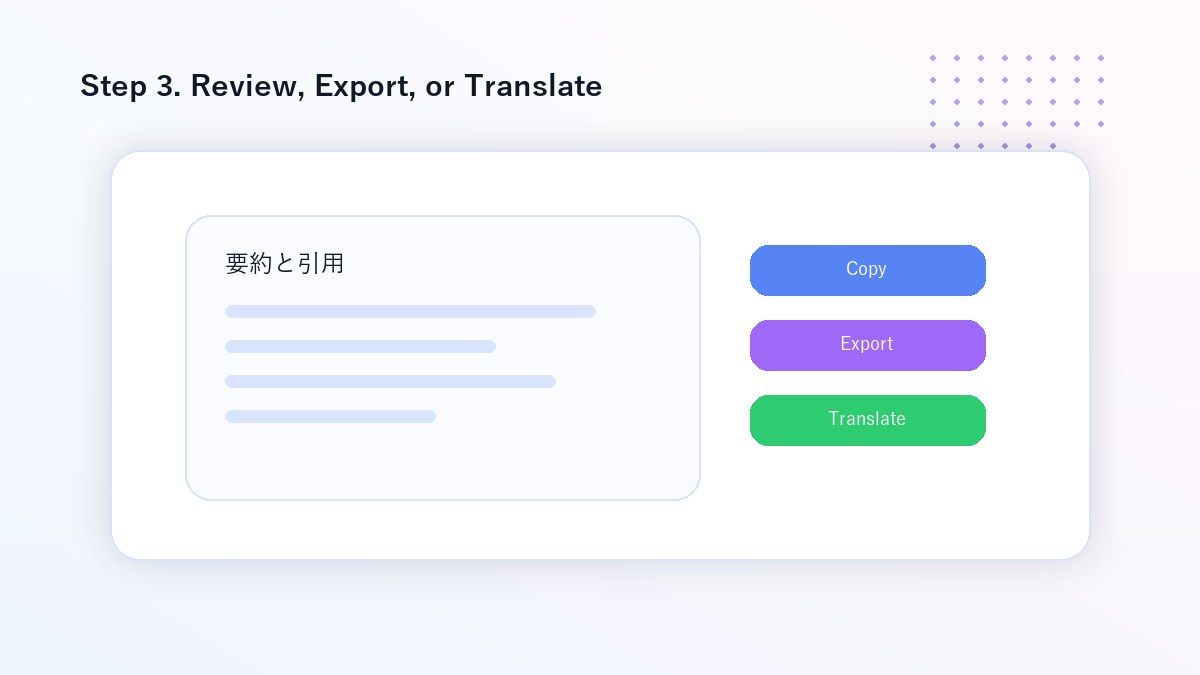
Step 3. Review, Export, or Translate
Read through the transcript, correct names, kanji, loanwords, or unclear phrases, and search for useful sections. Then copy, export, summarize, translate, or turn the Japanese transcript into structured notes.
Who Can Use This Japanese Audio to Text Tool?

Students
Convert Japanese lectures, listening practice, classroom recordings, and study sessions into text for easier review.

Researchers
Transcribe Japanese interviews, oral histories, field recordings, user research calls, and qualitative research audio.

Journalists
Turn Japanese interviews, press recordings, and voice memos into searchable text for quotes, names, and story details.

Content Creators
Convert Japanese podcasts, YouTube audio, voiceovers, short videos, and recorded ideas into captions, scripts, summaries, or posts.

Translators
Create a Japanese transcript first, then review it before translating Japanese audio to English text.

Business Teams
Document Japanese meetings, customer calls, training sessions, and internal discussions without manually typing every word.
What People Say About Lynote Japanese Transcription

Graduate Student

I use Lynote to transcribe Japanese interviews for research. It gives me a strong first draft, and I can quickly review names, kanji, and formal phrases.

Podcast Producer
Our Japanese podcast episodes are easier to repurpose now. I create the transcript, extract highlights, and use those highlights to write show notes.

Language Teacher
I use the Japanese transcript for listening exercises. Students can listen to the audio while reading along and learn the words more effectively.

Operations Manager
We record our Japanese team calls and take notes in Lynote. It's fast and helps us review meeting notes without having to take notes manually.

Content Creator
I use Lynote to create Japanese subtitles for my videos. I start with a transcript and then adjust the text as needed.

Translator
The Japanese transcript is the foundation of my translation work. I read the original transcript before translating it to English.
Frequently Asked Questions
A Japanese audio to text tool converts spoken Japanese in an audio file to written text. With Lynote, you can upload a Japanese audio file and get an editable transcript back. You can review the transcript, copy it, export it, translate it, summarize it, or take notes with it.
Yes. Lynote works online, so you can upload Japanese audio and convert it to text online.
You can use Lynote online to transcribe Japanese audio to text. Free access depends on your plan limits, the duration of the audio, and other factors.
Lynote helps you create a Japanese transcript. You can then use that transcript as a cleaner base for Japanese audio to English text translations, summaries, notes, or documentation.
Yes. Lynote can help you convert Japanese speech to text. You can use it for converting lectures, interviews, meetings, podcasts, videos, and voice recordings.
Lynote accepts MP3, WAV, M4A, and other audio formats. For best results, try to use clear audio files with less background noise.
Yes. Lynote can help you transcribe Japanese-English mixed audio files. However, you will need to proofread names, loanwords, jargon, and specific phrases yourself.
Yes. Lynote can be used for Japanese interviews, research, journalism, podcasting, classroom sessions, and business meetings.
The accuracy of the transcript depends on the clarity of the audio, the speaker's pace, their accent, the level of background noise, and whether multiple speakers talk at once. You can review and edit the transcript before using it.
Lynote processes audio securely. We do not use your audio or transcripts to train AI models.


