

AI Detector for Claude



Why Choose Our Claude AI Detector

Accurate Detection
Our Claude AI detector is built to identify patterns commonly found in AI-written text, helping you assess whether content may have been produced with Claude. It gives reviewers a practical signal set instead of a vague guess, which is useful for assignments, reports, and editorial checks.

Quick Results
Paste text and get a fast analysis without slowing down your review workflow. The AI detector for Claude scan is designed for teachers, editors, and reviewers who need to check multiple submissions in a short time and move from one document to the next efficiently.

Simple Workflow
The interface is straightforward: add text, run the scan, and review the output. You do not need a technical setup or training to use this Claude detector, which makes it practical for classrooms, academic offices, and routine content screening.

Multi-language Support
Lynote supports checks across multiple languages, which is helpful for international programs and multilingual review teams. This AI detector for Claude can be used on a wider range of submissions without forcing everything into a single-language workflow.

Private Checks
Text review often involves sensitive classroom or workplace material, so privacy matters. Lynote keeps the checking process focused and controlled, giving institutions and reviewers a safer way to evaluate content while handling essays, drafts, and internal documents.

No Account Needed
You can start checking text right away without creating an account first. That lowers friction for one-off reviews, urgent assignment checks, and quick comparisons when you need a Claude AI detector immediately, rather than another tool setup step.

Claude Pattern Analysis

Multilingual Claude Checks

Sentence-Level Highlights
How to Check Text With a Claude Detector

Paste Your Text
Copy the essay, article, report, or response you want to review and paste it into the tool. The Claude AI detector works best when you provide enough text for a meaningful scan, especially for longer academic or professional documents.

Start the Detection
Start the analysis and let Lynote evaluate the writing for likely AI-generated patterns. The AI detector Claude workflow is fast, so you can check individual submissions or move through multiple documents during a review session.
Check the Results
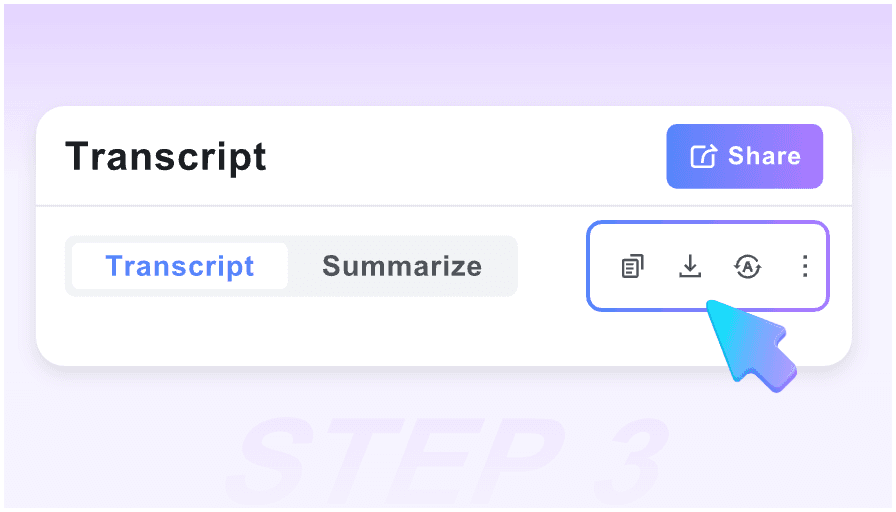
Read the output, inspect highlighted sections, and use the results as part of your broader judgment process. The AI detector for Claude is designed to support review decisions, not replace context, authorship history, or instructor evaluation.
Best For Reviewing Important Written Work

For Essays and Coursework
Check student essays, short responses, and take-home assignments for signs of AI-generated writing. A Claude AI detector is especially useful when you need a quick first-pass review before grading, feedback, or follow-up discussion.
Check student essays, short responses, and take-home assignments for signs of AI-generated writing. A Claude AI detector is especially useful when you need a quick first-pass review before grading, feedback, or follow-up discussion.

For Research Papers
Use the tool to review research drafts, literature summaries, and formal academic submissions. The Claude detector helps flag passages that may need closer inspection, especially when tone, structure, or phrasing appears unusually uniform or machine-assisted.
Use the tool to review research drafts, literature summaries, and formal academic submissions. The Claude detector helps flag passages that may need closer inspection, especially when tone, structure, or phrasing appears unusually uniform or machine-assisted.

For Blog and Article Reviews
Editorial teams can use the AI detector Claude workflow to examine blog posts, guest submissions, and web copy before publication. It helps maintain authorship standards and gives reviewers a faster way to inspect questionable sections.
Editorial teams can use the AI detector Claude workflow to examine blog posts, guest submissions, and web copy before publication. It helps maintain authorship standards and gives reviewers a faster way to inspect questionable sections.

For Business Documents
Review internal reports, proposals, and external-facing documents when originality and disclosure matter. This AI detector for Claude supports teams that need an added check before approving content for clients, management, or public release.
Review internal reports, proposals, and external-facing documents when originality and disclosure matter. This AI detector for Claude supports teams that need an added check before approving content for clients, management, or public release.
Who Benefits From This Claude Detector

Academic Review Teams
This tool is useful for teachers, academic staff, institutions, and content reviewers who need a practical way to screen writing for likely AI generation. Whether you are checking classroom submissions, reviewing research-related material, or validating professional drafts, Lynote provides a Claude AI detector workflow that is fast, readable, and easy to apply in real review settings. It supports better judgment by making suspicious patterns easier to identify and inspect.

Teachers
Teachers can use the Claude AI detector to review essays, discussion posts, and short-answer assignments before grading. Instead of relying on guesswork, they get a fast signal that helps identify text patterns commonly linked to AI writing. This makes it easier to flag submissions for closer review, support academic integrity policies, and keep classroom decisions grounded in consistent evidence rather than suspicion alone.

Students
Students can use an AI detector for Claude to check their own drafts before submitting coursework, scholarship essays, or application materials. It helps them spot passages that may read as overly machine-generated after heavy editing or AI assistance. That extra review step is useful for improving authenticity, adjusting tone, and making sure their final writing better reflects their own thinking and voice.

Academic Institutions
Academic institutions need scalable review tools when handling large volumes of student writing across departments. A Claude detector can support integrity workflows by giving staff a quick way to screen submissions, investigate edge cases, and document review decisions. Whether used in writing centers, faculty review teams, or misconduct processes, it adds a practical layer of analysis without replacing human judgment.

Content Reviewers
Content reviewers can use the AI detector Claude workflow to assess reports, articles, and external submissions quickly. It helps teams identify text that may require deeper verification before publication, approval, or compliance review.

Admissions Teams
Admissions teams can use a Claude AI detector when reviewing personal statements and written responses at scale. It provides an extra checkpoint for evaluating originality and deciding which applications need a closer manual read.
What Users Say About This Claude AI Detector

High School Teacher

"I use it to review essays that feel unusually polished for the assignment level. The Claude AI detector gives me a quick starting point, and that saves time when I need to decide which papers deserve a closer look."

University Lecturer
"The scan is fast, and the results are easy to interpret without a lot of extra setup. It fits well into my grading workflow when I am checking multiple submissions in one sitting."

Academic Coordinator
"We needed an AI detector for Claude that staff could use without technical training. This one is straightforward, and it helps us keep reviews consistent across different courses."

Admissions Officer
"I like that it gives us another data point when we review written application materials. It does not replace human judgment, but it helps us prioritize what to examine more carefully."

Content Reviewer
"The Claude detector is useful when we need to screen contributed content before it moves to editing. It catches patterns we might otherwise miss during a quick manual pass."

Graduate Student
"I ran my draft through the AI detector Claude check before submitting it. It helped me revise sections that sounded too generic and make the writing feel more like my own work."
Frequently Asked Questions
Get clear answers about how this Claude AI detector reviews text and flags writing that may have been generated by Claude.
An AI detector for Claude is a tool that analyzes text and estimates whether it shows patterns commonly associated with Claude-generated writing. It looks at signals such as phrasing consistency, sentence structure, and predictability. The goal is to support review decisions, especially in academic or editorial settings, not to make a final judgment on its own.
This Claude AI detector scans pasted text and evaluates language patterns that may indicate AI generation. It compares structural and stylistic signals often found in machine-written content, then returns a result that helps you decide whether the text needs closer review. The process is designed to be fast, so educators and reviewers can check multiple submissions efficiently.
Yes, you can use a Claude detector to evaluate whether a passage appears likely to have been written by Claude. The tool does not prove authorship with absolute certainty, but it can highlight text that matches common AI-writing characteristics. That makes it useful for triage, follow-up review, and integrity checks.
The tool is built to detect AI-generated patterns that may appear across different Claude outputs rather than relying on one exact model signature. That means it can be useful for reviewing text produced by a range of Claude-style responses. Like any AI detector for Claude, results should be interpreted alongside context, source information, and human review.
Yes, a Claude AI detector can help you estimate whether a passage was likely written by Claude, but it works by probability rather than absolute proof. Lynote analyzes language patterns, structure, and predictability signals to flag text that appears AI-generated, giving teachers, editors, and reviewers a practical way to support manual review.
An AI detector for Claude can often detect writing patterns associated with multiple Claude model outputs, including newer and older versions, but results may vary by prompt style and editing level. Our AI detector Claude workflow is designed to evaluate the text itself, so it can still be useful even when you do not know which Claude model may have been used.