

If you are wondering can professors detect ChatGPT, the short answer is that they often notice the signs, even if they cannot prove it with complete certainty. Educators look for sudden shifts in writing style, generic vocabulary, and a lack of deep critical thinking. While automated detection tools exist, teachers usually rely on their own familiarity with your past work.

Many students use AI to brainstorm, outline, or check grammar. However, submitting an unedited, AI-generated draft carries significant risks. This guide explains what signals educators look for and how to use AI responsibly as a revision tool.
Quick Answer: Can Professors Tell If You Used ChatGPT?
Yes, professors can often tell if you used ChatGPT to write an entire assignment. They recognize robotic phrasing, repetitive sentence structures, and a distinct lack of personal voice. While they may not know exactly which tool you used, they can spot when a paper does not sound like a student.
When asking whether can colleges detect ChatGPT, it is important to understand how institutions handle academic integrity. Many schools use software like Turnitin, which flags text that matches known AI patterns. However, these scores are generally treated as a signal for further review, rather than absolute proof of a violation.
Ultimately, can teachers detect ChatGPT simply by reading? In many cases, yes. A sudden leap from struggling with basic thesis statements to producing flawless, highly formal academic prose is a major red flag for any instructor.
How Professors Notice AI-Like Writing
So, how do professors detect AI writing without relying entirely on software? The most common method is comparing your current submission to your previous work. If your vocabulary suddenly includes overly complex words or your sentence structure changes dramatically, instructors will take notice.
AI models also tend to write in a very safe, predictable manner. They often use transitional phrases like "in conclusion" or "it is important to note" excessively. This creates a generic tone that lacks the specific, nuanced arguments professors expect from a college-level paper.
Finally, AI struggles to integrate course-specific materials or recent class discussions. If your essay summarizes a topic smoothly but fails to mention the specific text your class analyzed all week, your professor will likely suspect that you did not write it yourself.
What AI Detectors Can and Cannot Prove
Software tools are frequently used by schools, but they have significant limitations. AI detectors analyze text for predictability and patterns, assigning a probability score to the content. They cannot definitively prove who wrote a document, which is why their results should be viewed as an editorial heuristic rather than a legal guarantee.
False positives are a known issue with these tools. Students who write in a highly formulaic manner or who are learning English as a second language may sometimes trigger an AI flag. Because of this, many universities caution professors against failing a student based solely on a detector's percentage score.
Despite these flaws, a high AI score usually prompts a conversation between the student and the teacher. The detector acts as an initial warning system, but the professor's final judgment often relies on analyzing the actual content and the student's ability to explain their work.
Writing Signals Teachers Often Look For
When evaluating a suspicious paper, instructors look for specific discrepancies. These human evaluations often catch things that automated software misses.
| Professor Signals | Detector Signals |
|---|---|
| Inconsistent Voice: Sudden shifts from casual to highly formal academic tone. | Low Perplexity: Text uses highly predictable word choices. |
| Fake or Missing Citations: AI often hallucinates sources or uses outdated links. | Low Burstiness: Sentence lengths and structures lack natural variation. |
| Generic Analysis: Broad statements that lack specific ties to course lectures. | Pattern Matching: High similarity to known AI training data structures. |
| Lack of Process: No drafts, outlines, or version history available upon request. | Watermarks: Some models may embed subtle linguistic markers (rare). |
Tip: Keeping your early drafts, notes, and outlines is the best way to prove your authorship if a professor ever questions your work.

Can Professors Detect ChatGPT After Editing or Paraphrasing?
Many students wonder, can professors tell if you used ChatGPT if you change a few words? The answer depends on how deeply you edit the text. Simple paraphrasing or swapping synonyms might lower an automated detector score, but it rarely fixes the underlying structural issues.
If the original AI draft lacked deep reasoning or failed to address the specific prompt, changing the vocabulary will not hide those flaws. Professors often notice when a paper uses complex words but says very little of substance. This is a common hallmark of hastily paraphrased AI content.
To truly make a draft your own, you must engage with the material. This means rewriting sections to include your own opinions, adding specific quotes from your syllabus, and ensuring the final paper reflects your actual understanding of the topic.
What Usually Happens After a Suspicious AI Flag?
The exact process depends on the school, course, and instructor, but most reviews are not based on a detector score alone. A professor may compare the paper with previous submissions, review citations, ask for draft history, or invite the student to discuss the assignment. The goal is usually to understand authorship, not simply to punish a number on a report.
| Review Step | What the Instructor May Check | Why It Matters |
|---|---|---|
| Read the Paper Closely | Voice, argument depth, citation quality, and prompt alignment. | Human judgment often catches issues a detector cannot explain. |
| Compare Past Work | Vocabulary level, sentence style, and typical mistakes. | A sudden style change can raise questions even with a low detector score. |
| Ask for Process Evidence | Notes, outlines, source annotations, and document history. | Real writing usually leaves a trail of decisions and revisions. |
| Discuss the Argument | Whether the student can explain claims, sources, and terms. | Authorship is easier to trust when the student understands the work. |
| Apply Course Policy | The syllabus rules for AI brainstorming, drafting, and disclosure. | Acceptable AI use varies by instructor and institution. |
This is why process evidence is so important. If you drafted the work yourself, keep the messy materials that show how your thinking developed. They are often more persuasive than trying to debate whether an AI percentage is reliable.
Can Professors Tell If You Used ChatGPT Only for Help?
Using AI for brainstorming, outlining, or grammar checks is widely accepted in many professional and academic settings. If you use ChatGPT to generate a list of potential essay topics, your professor will likely not know, nor will they mind, as long as the final writing is yours.
However, the line between acceptable help and academic dishonesty varies by school. Some colleges encourage using AI as a research assistant, while others strictly forbid it. It is crucial to read your specific course syllabus to understand what level of AI assistance is permitted.
If you use AI to correct grammar or suggest structural improvements, the final voice should still sound like you. When the core arguments, evidence, and conclusions come from your own thinking, the resulting paper is less likely to carry the generic signals that instructors look for.
How to Use AI Without Losing Your Own Voice
The safest way to use AI is to treat it as a sounding board rather than a ghostwriter. Start by writing your own thesis statement and outlining your main arguments before you ever open an AI tool. This ensures your unique perspective anchors the entire assignment.
If you use AI to help draft a difficult section, manually rewrite the output. Inject your own experiences, reference specific class discussions, and adjust the tone to match your usual writing style. Never copy and paste unedited text directly into your final document.
Finally, always handle your own citations and research. AI models are notorious for inventing sources or misunderstanding complex academic texts. By manually verifying your evidence, you protect your academic integrity and ensure your paper is factually accurate.
A Safer AI-Assisted Writing Workflow
Use this sequence when your course allows limited AI support:
- Write your own thesis and bullet outline before using AI.
- Use AI only to pressure-test organization, identify gaps, or simplify confusing sentences.
- Add course-specific evidence from readings, lectures, and your own notes.
- Rewrite any AI-assisted language in your normal voice.
- Save your outline, notes, and revision history before submitting.
This approach keeps the intellectual work under your control. It also gives you a clear explanation if a professor asks how the final paper was created.
Lynote Workflow for Checking AI-Like Signals
If you want to review your own writing for robotic phrasing or clarity issues, you can use AI tools as a final check. The Lynote AI Detector helps you identify sentences that may sound overly formulaic, while the Lynote AI Humanizer offers suggestions to improve natural flow.
Here is how to use these tools to review and revise your drafts:
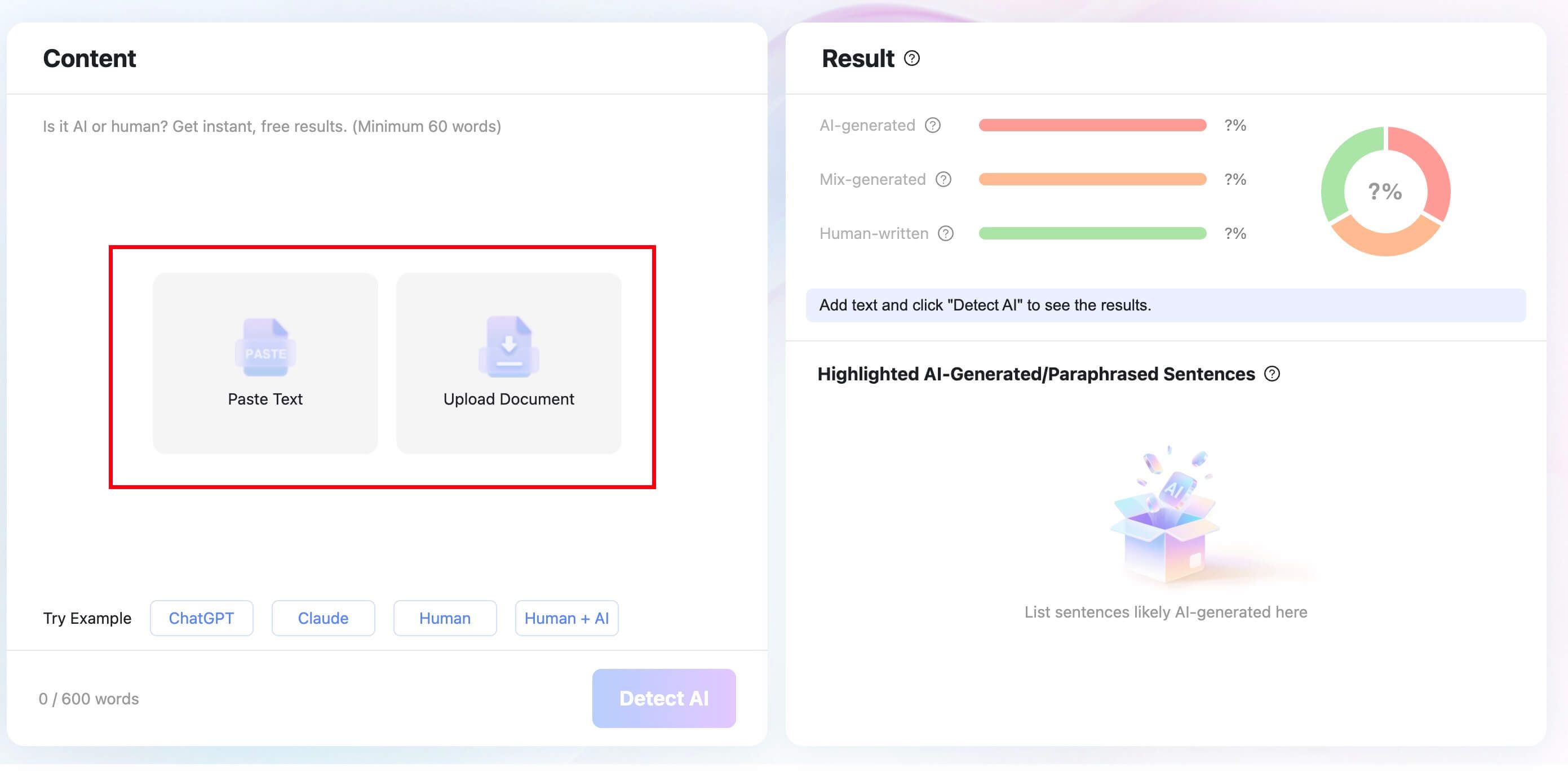
Step 1. Paste Text or Upload Document
Open the Lynote AI Detector and paste your draft into the box. You can also upload a supported document, such as a .docx, .pdf, or .txt file, to initiate the analysis.
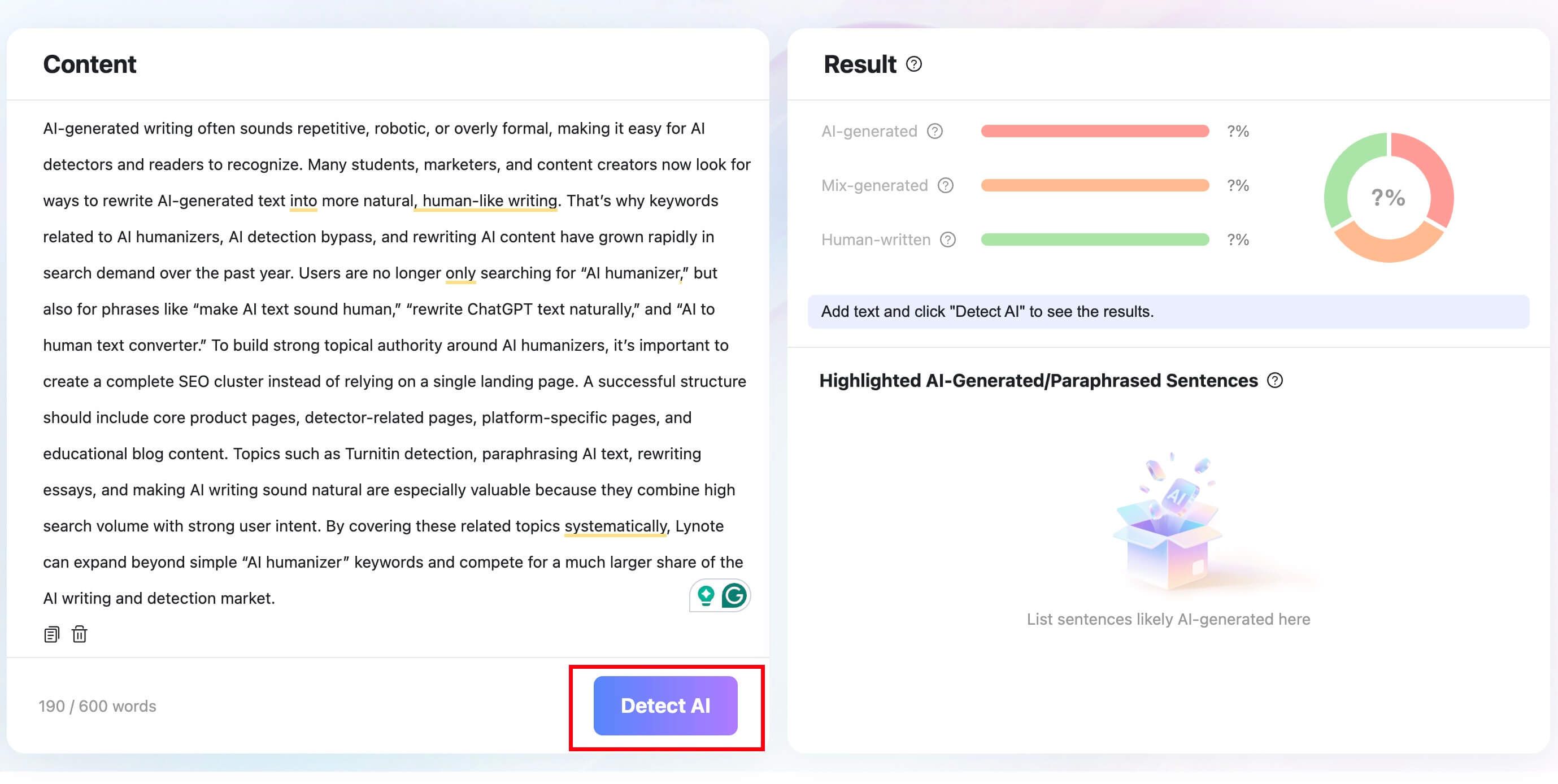
Step 2. Detect Your Content
Click the "Detect AI" button. The system will perform a comprehensive scan of the text, analyzing linguistic patterns to highlight sentences that read like AI or paraphrased content.
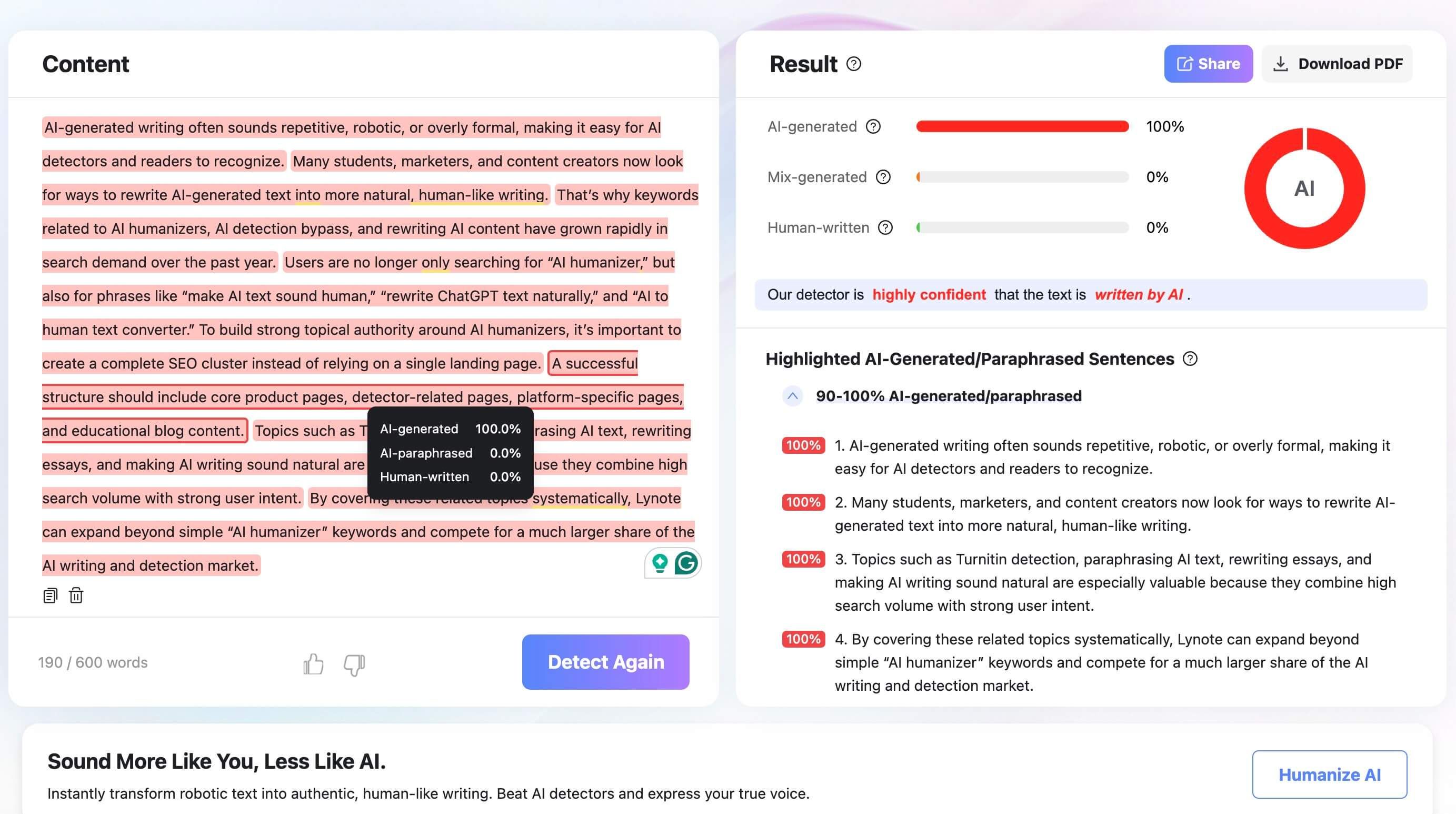
Step 3. Review the Result and Refine If Needed
Check the AI, mixed, and human-written score breakdown, then review the highlighted sentences. The result screen includes Copy and Download buttons, plus a Humanize AI button that can send the text into the humanizer flow for rewriting.
If your draft feels stiff or triggers high AI signals, move the text to the Lynote AI Humanizer. Select a rewriting mode, such as Balanced for a standard quality-focused rewrite, to transform your text into a more natural, human-like style while preserving your original meaning.
Important: Treat AI detector results as signals, not proof of authorship. Use these tools to improve clarity and flow, not to misrepresent your own understanding of the material.
FAQs About Professors and ChatGPT Detection
What is the short answer for can professors detect chatgpt?
Yes, professors can often detect ChatGPT by noticing sudden changes in your writing style, generic vocabulary, and a lack of specific course references. While they may not have absolute proof, these human signals are usually enough to prompt a serious conversation.
Can paraphrasing or humanizing text avoid AI detection?
Paraphrasing or using humanizer tools may change the linguistic patterns that automated detectors look for, but they cannot guarantee a specific score. Furthermore, basic paraphrasing does not fix the generic reasoning or missing citations that human teachers easily spot.
Can AI detectors be wrong?
Yes, AI detectors frequently produce false positives, especially with formulaic writing or content from non-native English speakers. Because of this uncertainty, universities generally advise treating detector scores as an initial signal rather than definitive proof of cheating.
What is a safer way to revise AI-like writing?
The safest approach is to manually rewrite the text to include your original reasoning, specific course evidence, and personal voice. Ensure your thesis and structure are your own, and always verify your citations manually.
How can Lynote help with this workflow?
You can use the Lynote AI Detector to check your draft for robotic or highly predictable phrasing. If sections feel unnatural, the Lynote AI Humanizer can help you explore clearer, more conversational ways to phrase your ideas during the revision process.
Final Verdict
When asking can professors detect ChatGPT, the reality is that educators are highly skilled at spotting inconsistencies in student work. They do not always need sophisticated software to notice when a paper lacks a student's authentic voice, struggles with specific course concepts, or relies on generic filler.
While AI detection tools provide mathematical signals, the most reliable detector is often the professor's own judgment. By using AI responsibly—as a brainstorming or revision aid rather than a replacement for critical thinking—you can improve your writing process without compromising your academic integrity.

Written by Janet L. Harris
AI Writing Specialist
Janet reviews AI detectors and humanization tools, with a focus on accuracy, limitations, and responsible use. View all articles →