

Les meilleures alternatives à Copyleaks dépendent de ce que vous essayez de remplacer. Si vous souhaitez une vérification d'IA accessible gratuitement, commencez par Lynote AI Detector ou ZeroGPT.
Si vous avez besoin d'une révision SEO et de publication, Originality.ai est généralement le plus adapté. Si vous avez besoin d'une infrastructure d'intégrité académique, Turnitin appartient à une catégorie différente des vérificateurs occasionnels.
Pour les flux de travail axés sur le plagiat, Quetext et Scribbr sont plus faciles à évaluer que les plateformes de détection d'IA généralistes. Pour les flux de travail d'écriture en équipe, Grammarly Business peut être plus utile qu'un outil de détection uniquement, car il est plus proche du processus d'écriture.
C'est la vraie réponse : il n'y a pas une seule meilleure alternative à Copyleaks pour tout le monde. Le bon choix dépend de si vous avez besoin de détection d'IA, de vérification de plagiat, de rapports institutionnels, de révision SEO, de scans gratuits ou d'un flux de travail d'écriture quotidien.
Réponse directe : Meilleures alternatives à Copyleaks par besoin
Si vous comparez rapidement des outils, utilisez d'abord cette liste restreinte.
| Besoin | Meilleure alternative à Copyleaks | Pourquoi il est adapté |
|---|---|---|
| Vérification d'IA accessible gratuitement | Lynote AI Detector | Flux de travail simple de copier-coller ou de téléchargement avec des signaux de pourcentage d'IA, mixtes et humains |
| Scan rapide d'IA gratuit | ZeroGPT | Option à faible friction pour des vérifications rapides |
| Révision SEO et de publication | Originality.ai | Conçu pour les équipes de contenu, le scan de sites web et les flux de travail éditoriaux |
| Détection d'IA en libre-service | GPTZero | Détecteur d'IA reconnaissable avec des rapports orientés éducation |
| Rapports de détection détaillés | Winston AI | Mieux adapté lorsque les rapports et le contexte de révision sont importants |
| Système d'intégrité académique | Turnitin | Mieux pour les institutions que pour les vérifications individuelles occasionnelles |
| Soutien au plagiat étudiant | Scribbr | Plus facile pour la rédaction académique, les citations et la révision du plagiat |
| Équipes de rédaction | Grammarly Business | Combine l'amélioration de l'écriture avec des flux de travail axés sur l'originalité |
| Vérification axée sur le plagiat | Quetext | Axé sur la correspondance des sources et la révision du plagiat |
| Détecteur et outils d'écriture adjacents | Detect.ai | Utile pour les utilisateurs comparant les flux de travail de vérification d'IA avec des outils de texte connexes |
Ma brève recommandation : ne choisissez pas un remplacement de Copyleaks uniquement par la reconnaissance de la marque. Choisissez-le en fonction de la tâche exacte que l'outil doit accomplir.
Ce que les gens entendent généralement par alternative à Copyleaks
Copyleaks n'est pas seulement un vérificateur d'IA par copier-coller. Il comprend également la vérification du plagiat, la correspondance des sources, les flux de travail d'authenticité du contenu, l'accès API, les intégrations et les cas d'utilisation pour l'éducation ou les entreprises.
Cela crée un problème de recherche courant. Deux personnes peuvent rechercher « alternative à Copyleaks » et signifier des choses complètement différentes.
Une personne peut vouloir un détecteur d'IA gratuit pour un court essai. Une autre peut avoir besoin d'un vérificateur de plagiat pour les sources.
Une école peut avoir besoin de rapports, de flux de travail LMS et de politiques de révision. Un éditeur peut vouloir scanner les brouillons de blog assistés par l'IA avant l'édition.
Avant de choisir un outil, demandez quelle partie de Copyleaks vous remplacez :
- Détection d'IA uniquement
- Vérification du plagiat et comparaison des sources
- Flux de travail d'intégrité académique
- Révision SEO ou de publication
- Rapports d'équipe et pistes d'audit
- API ou intégration de plateforme
- Un deuxième avis rapide et gratuit avant de réviser
C'est pourquoi les meilleures alternatives ne sont pas toutes le même type de produit. Certains sont des outils axés sur la détection. Certains sont des outils axés sur le plagiat.
Certains sont des plateformes d'écriture qui n'ont de sens que si votre équipe y travaille tous les jours.
Alternatives à Copyleaks comparées en un coup d'œil
| Outil | Idéal pour | Option gratuite | Détection d'IA | Adapté au plagiat | Adapté aux équipes ou institutions | Principal compromis |
|---|---|---|---|---|---|---|
| Lynote AI Detector | Révision rapide d'IA | Fort | Fort | Pas l'objectif principal | Léger | Pas un LMS ou une base de données de plagiat |
| Originality.ai | Équipes SEO et de publication | Limité | Fort | Fort | Fort | Mieux pour les équipes que pour les utilisateurs occasionnels |
| GPTZero | Détection d'IA en libre-service | Bon | Fort | Limité ou dépendant du plan | Moyen | Pas une plateforme complète axée sur le plagiat |
| Winston AI | Rapports de détection détaillés | Limité | Fort | Disponible selon le plan | Moyen | Plus structuré que les vérificateurs rapides et gratuits |
| Turnitin | Institutions académiques | Faible pour les individus | Fort | Fort | Très fort | Généralement accessible via les institutions |
| Scribbr | Soutien au plagiat étudiant | Moyen | Limité par le flux de travail | Fort | Léger | Pas une plateforme d'intégrité d'entreprise |
| Grammarly Business | Flux de travail d'écriture en équipe | Faible pour l'utilisation professionnelle | Pas l'objectif principal | Disponible dans un flux de travail d'écriture plus large | Fort | Pas axé sur la détection |
| Quetext | Vérification axée sur le plagiat | Moyen | Pas l'objectif principal | Fort | Moyen | Moins axé sur la profondeur de la détection d'IA |
| ZeroGPT | Vérifications rapides d'IA gratuites | Fort | Bon pour les vérifications rapides | Limité | Léger | Flux de travail léger pour une révision à enjeux élevés |
| Detect.ai | Flux de travail centré sur le détecteur d'IA | Moyen | Fort | Varie selon le flux de travail | Léger à moyen | Moins établi pour l'utilisation institutionnelle |
Utilisez ce tableau comme un filtre, pas comme un classement final. Un outil gratuit peut être la bonne réponse pour un paragraphe et la mauvaise réponse pour une école, une agence ou un éditeur.
Une carte de décision rapide avant de choisir
Commencez par le niveau de risque et le flux de travail, pas par le nom de l'outil.
Si vous avez besoin d'une vérification rapide d'IA pour un court passage, utilisez Lynote AI Detector ou ZeroGPT. L'objectif n'est pas de prouver la paternité ; c'est de voir si un passage mérite une révision plus approfondie.
Si vous gérez du contenu SEO, comparez d'abord Originality.ai. Il est plus aligné avec le scan de sites web, les équipes de publication et la révision de contenu que les systèmes d'intégrité académique.
Si vous travaillez dans une école ou une université, Turnitin est l'option institutionnelle. Ce n'est pas une alternative gratuite occasionnelle, mais il est conçu autour des flux de travail éducatifs.
Si votre principale préoccupation est le plagiat, commencez par Scribbr ou Quetext. La détection d'IA et la vérification du plagiat sont liées, mais ce ne sont pas le même problème.
Si votre équipe écrit dans des flux de travail professionnels partagés, Grammarly Business peut être plus pratique qu'une plateforme de détection uniquement. Il aide avant la vérification de l'originalité, pas seulement après que le texte est terminé.
1. Lynote AI Detector : Meilleure alternative à Copyleaks accessible gratuitement pour des vérifications rapides d'IA
Lynote AI Detector est le plus adapté lorsque vous voulez un moyen simple et accessible gratuitement de vérifier si un texte semble généré par l'IA. Il n'essaie pas de remplacer toutes les fonctionnalités de Copyleaks. Il est utile lorsque vous avez besoin d'un deuxième signal rapide avant de réviser un brouillon.
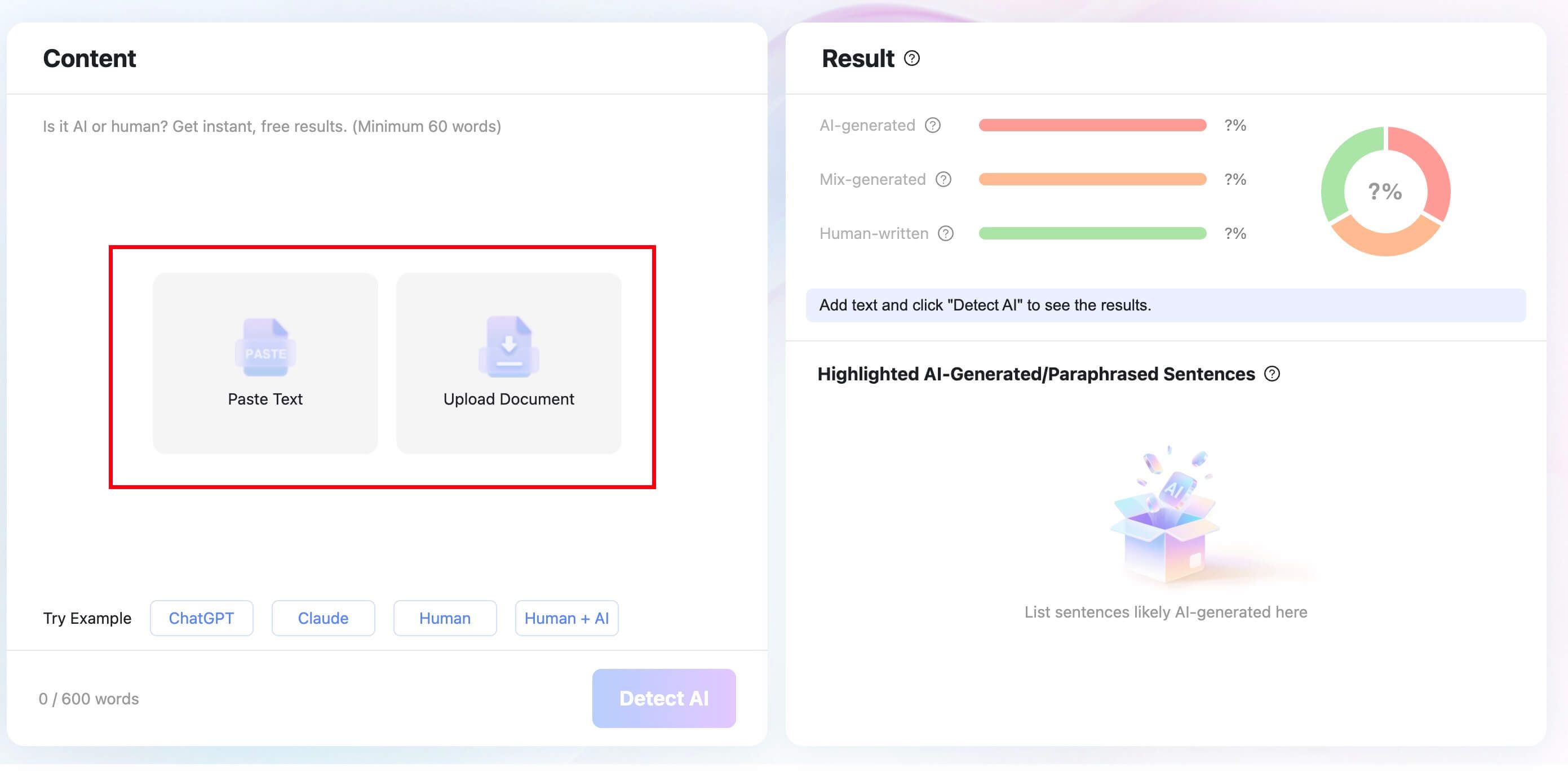
Le flux de travail est simple : collez le texte ou téléchargez un document pris en charge, exécutez la vérification et examinez les pourcentages générés par l'IA, mixtes et écrits par des humains. Les surlignages au niveau des phrases vous aident à voir quelles parties peuvent nécessiter une attention particulière au lieu de vous forcer à ne compter que sur un score global.

Fonctionnalités
- Collez le texte directement dans le détecteur.
- Téléchargez des fichiers DOCX, PDF ou TXT pris en charge.
- Examinez les signaux de pourcentage générés par l'IA, mixtes et écrits par des humains.
- Vérifiez les phrases surlignées qui pourraient nécessiter une révision plus approfondie.
Avantages
- Facile pour les vérifications ponctuelles.
- Bonne adéquation pour l'intention de recherche « alternative gratuite à Copyleaks ».
- Utile lorsque vous voulez un deuxième signal rapide avant de réviser.
Inconvénients
- Pas une base de données de plagiat.
- Pas un système LMS ou d'intégrité académique institutionnel.
- Comme tout détecteur d'IA, il doit être utilisé comme un signal, pas comme un verdict.
Idéal pour : les étudiants, les rédacteurs, les éditeurs et les réviseurs de contenu qui souhaitent un flux de travail simple de détection d'IA avant de réviser les passages signalés.
2. Originality.ai : Idéal pour les équipes SEO et les éditeurs
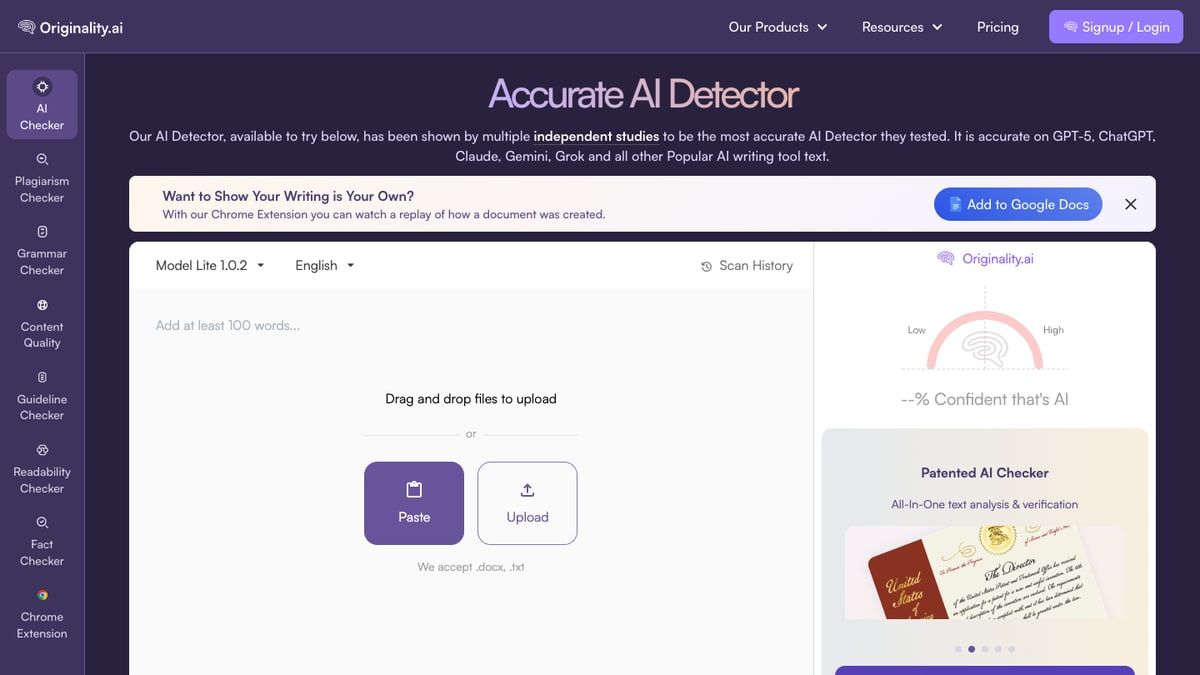
Originality.ai est l'une des alternatives les plus solides à Copyleaks pour les équipes SEO, les agences, les éditeurs et les responsables éditoriaux. Son attrait ne réside pas seulement dans la détection d'IA ; c'est le flux de travail de révision de contenu autour de la détection.
Pour les équipes publiant de grandes quantités de contenu web, la question pratique n'est pas « quel outil donne un score ? » C'est « quel outil aide les éditeurs à vérifier le risque d'IA, le plagiat, la lisibilité et la qualité du contenu avant que la page ne soit mise en ligne ? »
Fonctionnalités
- Détection d'IA pour la révision éditoriale.
- Vérification du plagiat pour les flux de travail d'originalité.
- Fonctionnalités de scan de site web ou de contenu pour les équipes de publication.
- Fonctionnalités de révision axées sur la lisibilité et la qualité selon le plan.
Avantages
- Forte adéquation pour les équipes SEO et de publication.
- Plus orienté vers les équipes de contenu que les outils purement académiques.
- Utile lorsque plusieurs éditeurs ont besoin d'un processus de révision partagé.
Inconvénients
- Moins attrayant si vous n'avez besoin que de scans gratuits occasionnels.
- Peut sembler plus large que nécessaire pour une utilisation étudiante ponctuelle.
- Les équipes ont toujours besoin d'un jugement éditorial humain après le score.
Idéal pour : les agences SEO, les éditeurs, les équipes d'affiliation, les gestionnaires de contenu et les éditeurs qui révisent l'écriture assistée par l'IA à grande échelle.
3. GPTZero : Meilleure alternative de détection d'IA en libre-service
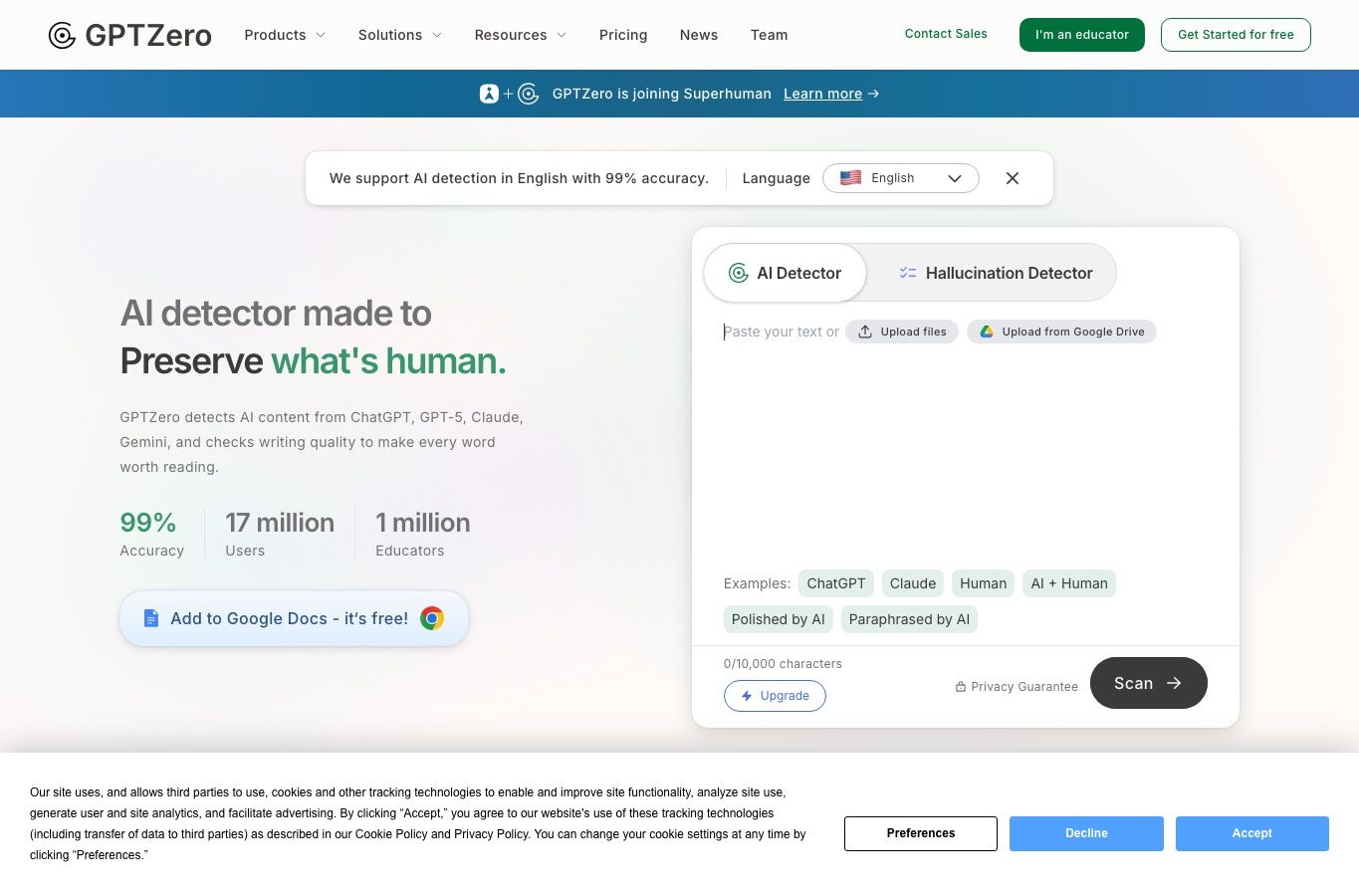
GPTZero est une alternative solide à Copyleaks lorsque vous voulez un détecteur d'IA reconnaissable et en libre-service avec un positionnement axé sur l'éducation. Il est plus facile à aborder que de nombreuses plateformes d'entreprise et fait souvent partie de la conversation lorsque les étudiants, les enseignants et les rédacteurs comparent les outils de détection d'IA.
Sa principale valeur est la révision simple de l'IA. Il fonctionne mieux lorsque vous voulez un outil axé sur la détection plutôt qu'une plateforme complète d'infrastructure de plagiat ou institutionnelle.
Fonctionnalités
- Détection d'IA pour les flux de travail de texte collé ou téléchargé selon le plan.
- Rapports conçus autour de la révision de l'écriture d'IA.
- Utile pour les contextes d'éducation et d'écriture individuelle.
- Fonctionnalités dépendantes du plan pour une utilisation plus intensive.
Avantages
- Forte reconnaissance de la marque en détection d'IA.
- Bonne adéquation pour les vérifications en libre-service.
- Plus facile à comprendre que les outils axés sur l'entreprise.
Inconvénients
- Pas le meilleur remplacement si le plagiat est le besoin principal.
- Les résultats du détecteur nécessitent toujours une interprétation.
- Les besoins de l'équipe ou de l'institution peuvent nécessiter un plan supérieur ou une adéquation de produit différente.
Idéal pour : les étudiants, les éducateurs, les rédacteurs et les réviseurs individuels qui veulent une alternative à Copyleaks axée sur la détection.
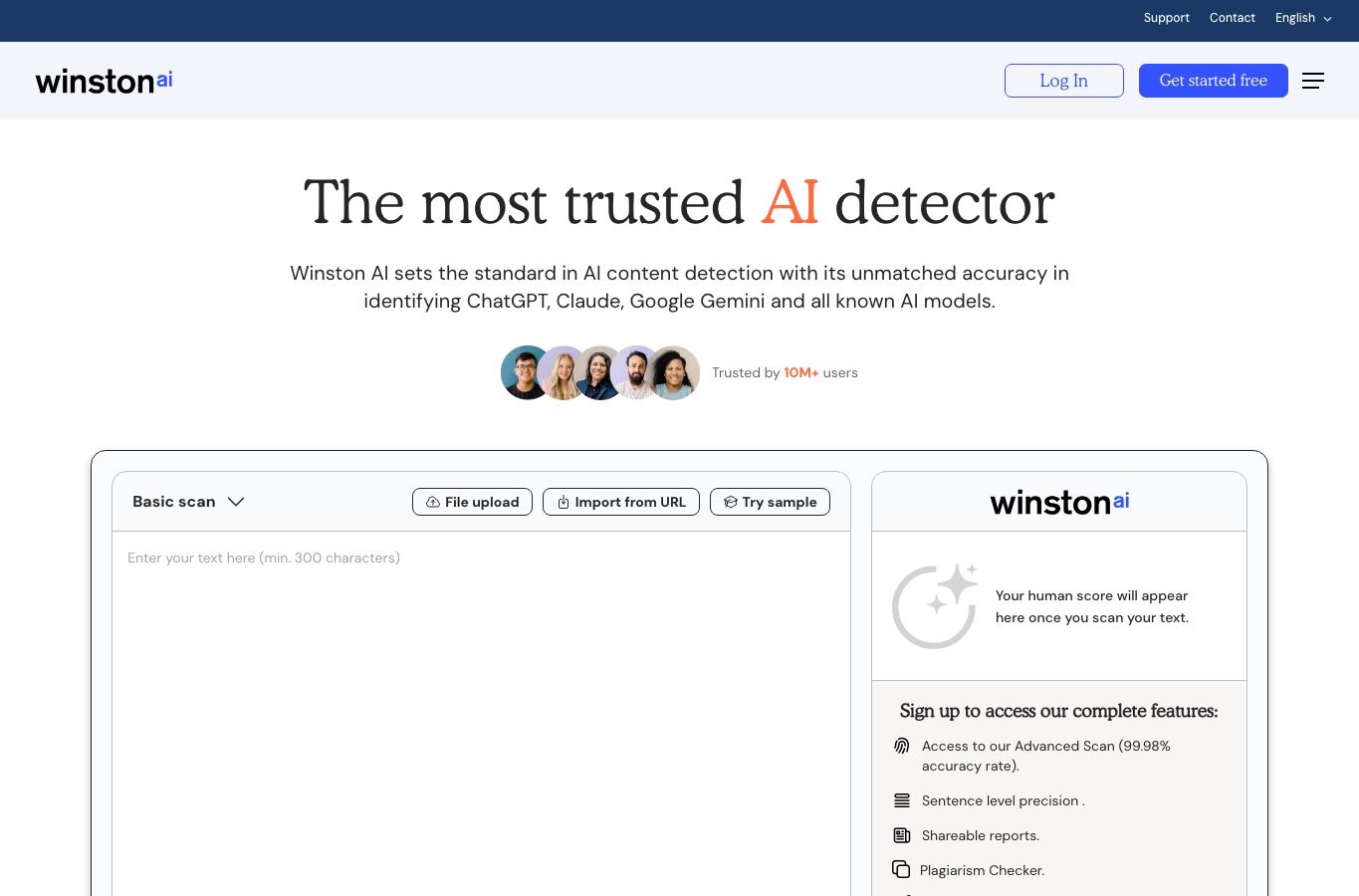
4. Winston AI : Idéal pour les rapports de détection d'IA détaillés
Winston AI est une bonne option lorsque vous vous souciez de la clarté des rapports. Certains utilisateurs n'ont pas seulement besoin d'un score ; ils ont besoin d'un artefact de révision qui peut être discuté avec un rédacteur, un éditeur, un client ou une équipe interne.
Cela rend Winston AI plus utile qu'un simple vérificateur gratuit pour les flux de travail répétitifs. C'est particulièrement pertinent lorsque les parties prenantes ont besoin d'une explication plus claire de ce qui a été examiné.
Fonctionnalités
- Flux de travail de détection d'IA pour la révision de texte.
- Sortie orientée rapport.
- Fonctionnalités liées au plagiat ou à l'originalité selon le plan.
- Utile pour les contextes d'éducation, de contenu et de révision commerciale.
Avantages
- Des rapports plus élaborés que les vérificateurs de base.
- Utile pour réviser les brouillons avec d'autres personnes.
- Bonne adéquation pour les éditeurs qui ont besoin de contexte, pas seulement d'un chiffre.
Inconvénients
- Pas l'option la plus légère pour des vérifications rapides et gratuites.
- Peut être un outil plus complexe que ce dont un utilisateur occasionnel a besoin.
- Les rapports doivent toujours être lus comme des signaux, pas des jugements finaux.
Idéal pour : les équipes de contenu, les enseignants, les éditeurs et les réviseurs qui ont besoin de rapports de détection d'IA partageables.
5. Turnitin : Idéal pour les institutions académiques
Turnitin est l'alternative la plus sérieuse à Copyleaks pour les institutions académiques, mais ce n'est pas un substitut consommateur normal. Les étudiants ne choisissent généralement pas Turnitin comme vérificateur personnel gratuit ; les écoles et les universités l'adoptent dans le cadre de systèmes d'intégrité académique.
Cette distinction est importante. Turnitin est le plus fort lorsque le flux de travail comprend les soumissions, les rapports de similarité, la révision par l'instructeur, la politique et la cohérence institutionnelle.

Fonctionnalités
- Flux de travail d'intégrité académique.
- Révision de similarité et d'originalité.
- Détection d'écriture d'IA dans les contextes éducatifs.
- Processus de rapport et de révision centré sur l'institution.
Avantages
- Forte adéquation pour les écoles et les universités.
- Conçu autour des flux de travail d'intégrité académique.
- Utile lorsque la révision doit avoir lieu au sein des systèmes de cours.
Inconvénients
- Pas une alternative gratuite occasionnelle à Copyleaks.
- Généralement accessible via une institution.
- Les étudiants ne devraient pas traiter un score de détecteur comme l'ensemble des preuves.
Idéal pour : les collèges, les universités, les écoles, les équipes d'intégrité académique et les instructeurs qui révisent les soumissions des étudiants.
6. Scribbr : Meilleure alternative au plagiat adaptée aux étudiants
Scribbr est une meilleure alternative à Copyleaks lorsque le besoin principal de l'utilisateur est le soutien à la rédaction académique, la vérification du plagiat et la confiance dans les citations. Il semble plus adapté aux étudiants que les plateformes d'entreprise.
Si vous rédigez un essai, une thèse, un article de recherche ou un devoir, votre problème n'est peut-être pas du tout la détection d'IA. Vous pourriez avoir besoin de vérifier les chevauchements, les citations, la qualité du paraphrasage et l'utilisation des sources.
Fonctionnalités
- Vérification du plagiat pour la rédaction académique.
- Soutien à la rédaction et aux citations orienté étudiant.
- Services de relecture et d'édition dans l'écosystème plus large.
- Utile pour les essais, les thèses et les documents de recherche.
Avantages
- Plus facile à comprendre pour les étudiants.
- Meilleure adéquation pour les flux de travail de plagiat et de citation.
- Moins orienté entreprise que Copyleaks.
Inconvénients
- Pas un système LMS institutionnel complet.
- Pas le premier choix si la détection d'IA est la seule tâche.
- Le prix et l'accès peuvent dépendre du service exact utilisé.
Idéal pour : les étudiants, les rédacteurs de thèses, les chercheurs et les rédacteurs académiques qui se soucient le plus du plagiat, des citations et du soutien à la rédaction.
7. Grammarly Business : Idéal pour les équipes de rédaction qui ont besoin de plagiat et d'édition
Grammarly Business n'est pas un détecteur d'IA pur, c'est pourquoi il peut être une alternative plus intelligente à Copyleaks pour certaines équipes. Si le véritable objectif est d'améliorer l'écriture avant qu'elle n'atteigne l'étape de vérification de l'originalité, Grammarly se rapproche du processus d'écriture quotidien.
Il est utile pour les équipes qui ont besoin de suggestions de grammaire, de ton, de clarté, de cohérence et de révision axée sur le plagiat dans les flux de travail d'écriture normaux. Pour de nombreuses équipes commerciales, c'est plus précieux que de vérifier le texte fini dans un détecteur séparé.
Fonctionnalités
- Suggestions de grammaire, d'orthographe, de clarté et de ton.
- Soutien à la rédaction en équipe.
- Vérification du plagiat dans les plans et flux de travail pris en charge.
- Fonctionnalités de style et de cohérence pour les organisations.
Avantages
- Aide à améliorer l'écriture avant la révision finale.
- Forte adéquation pour les équipes commerciales.
- Utile pour les e-mails, les documents et l'écriture en milieu de travail.
Inconvénients
- Pas axé sur la détection.
- Pas un remplacement pour l'infrastructure d'intégrité académique.
- Moins utile si le seul besoin est le score de probabilité d'IA.
Idéal pour : les équipes marketing, les équipes de support, les équipes d'opérations et les entreprises qui ont besoin d'une écriture plus claire et d'un soutien axé sur l'originalité.
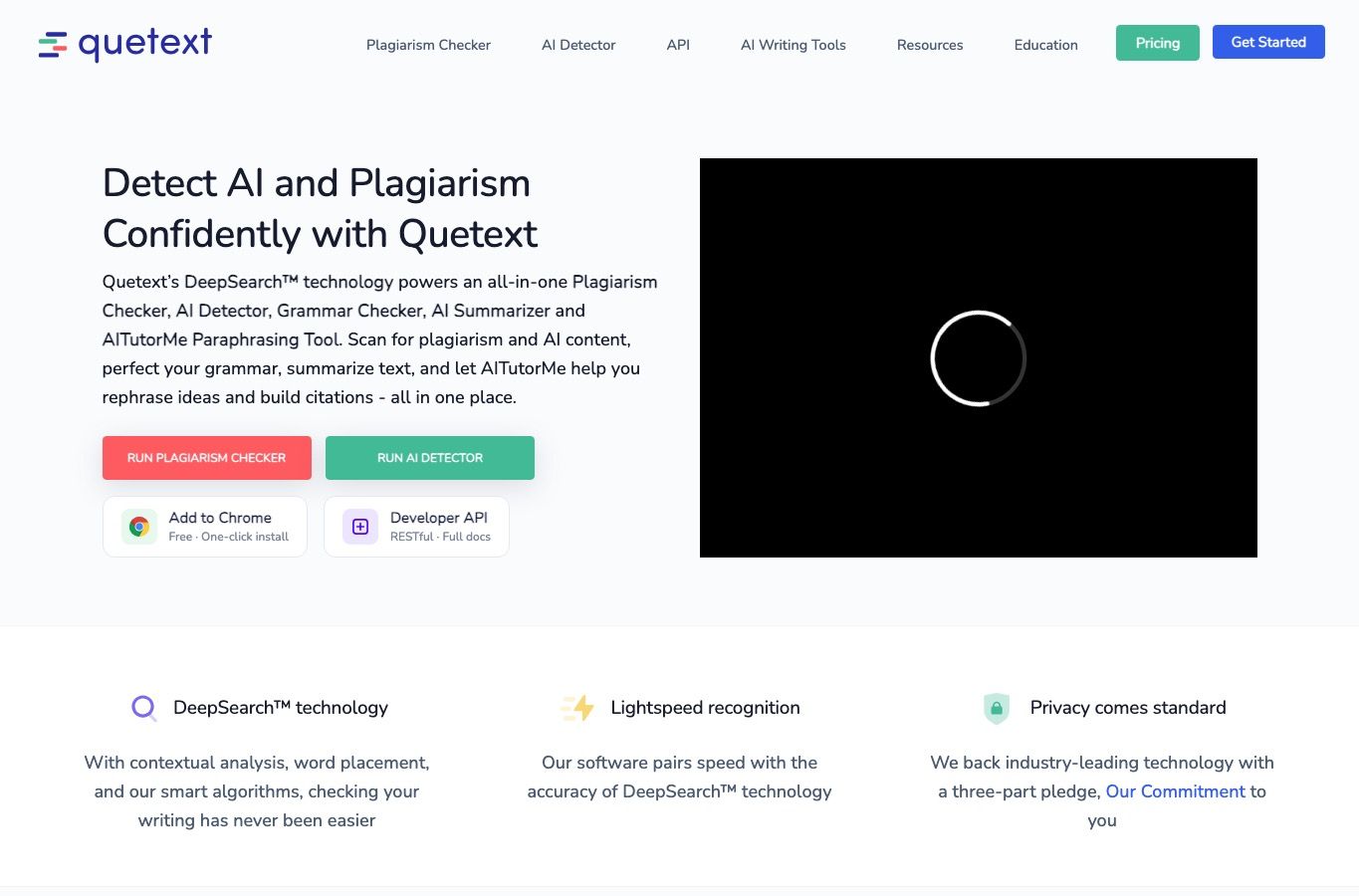
8. Quetext : Meilleure alternative à Copyleaks axée sur le plagiat
Quetext est une option solide lorsque la vérification du plagiat est plus importante que la détection d'IA. C'est une distinction importante car de nombreux utilisateurs recherchant des alternatives à Copyleaks essaient en réalité de résoudre un problème de chevauchement de sources.
Si la question est « ce texte réutilise-t-il trop étroitement le matériel source ? », un outil axé sur le plagiat peut être plus pertinent qu'un détecteur axé sur l'IA. Quetext s'inscrit bien dans cette voie.
Fonctionnalités
- Vérification du plagiat et correspondance des sources.
- Révision de l'originalité de l'écriture.
- Soutien au flux de travail axé sur les citations selon le plan.
- Utile pour les étudiants, les rédacteurs et les éducateurs.
Avantages
- Axé sur la révision du plagiat.
- Plus facile à évaluer pour le chevauchement de sources que les outils d'IA généralistes.
- Bonne adéquation lorsque les citations et l'originalité sont les plus importantes.
Inconvénients
- Pas le meilleur choix si la détection d'IA est le besoin principal.
- Les fonctionnalités d'équipe et d'institution peuvent ne pas correspondre aux plateformes plus grandes.
- Les résultats nécessitent toujours un jugement source par source.
Idéal pour : la vérification du plagiat, la révision des sources, le nettoyage des citations et la révision de l'originalité dans l'écriture académique ou professionnelle.
9. ZeroGPT : Meilleure alternative de détecteur d'IA rapide et gratuite
ZeroGPT est utile lorsque vous voulez une vérification d'IA rapide et à faible friction sans un flux de travail lourd. C'est l'un des choix les plus évidents pour les personnes recherchant « alternative gratuite à Copyleaks » ou « meilleures alternatives gratuites à Copyleaks ».
L'inconvénient est la profondeur. Les détecteurs gratuits rapides peuvent vous aider à filtrer le texte, mais ils ne remplacent généralement pas les rapports détaillés, les bases de données de plagiat, les contrôles d'équipe ou un processus de révision équitable.
Fonctionnalités
- Flux de travail de détection d'IA rapide.
- Accès gratuit pour une utilisation de base.
- Expérience simple de copier-coller et de vérification.
- Outils de texte connexes selon l'expérience de la plateforme.
Avantages
- Rapide à essayer.
- Bonne adéquation pour les scans à faible enjeu.
- Assez simple pour les utilisateurs occasionnels.
Inconvénients
- La profondeur des rapports peut être limitée.
- Pas idéal pour les accusations académiques ou les décisions éditoriales.
- Pas un remplacement complet de Copyleaks pour le plagiat ou les flux de travail d'équipe.
Idéal pour : les vérifications personnelles rapides, le filtrage d'IA à faible enjeu et les utilisateurs qui veulent une alternative gratuite simple.
10. Detect.ai : Meilleure alternative centrée sur le détecteur avec des outils d'écriture adjacents
Detect.ai est pertinent car de nombreuses recherches d'alternatives à Copyleaks sont centrées sur le détecteur plutôt que sur le plagiat. Les utilisateurs veulent coller du contenu, évaluer le risque d'IA et parfois passer à des flux de travail de texte adjacents.
Cela le rend intéressant à comparer si vous recherchez une expérience de vérification d'IA moderne plutôt qu'une plateforme d'intégrité académique. Il est moins susceptible d'être le bon choix si votre organisation a besoin de flux de travail LMS formels ou de contrôles de plagiat à grande échelle.
Fonctionnalités
- Flux de travail centré sur la détection d'IA.
- Outils de contenu adjacents selon l'expérience produit actuelle.
- Utile pour une révision et une comparaison rapides.
- Conçu pour les utilisateurs qui veulent que la détection soit proche des outils d'écriture ou de révision.
Avantages
- Pertinent pour le cas d'utilisation de l'alternative au détecteur d'IA.
- Plus moderne et léger que de nombreux systèmes institutionnels.
- Utile pour les utilisateurs comparant les plateformes axées sur le détecteur.
Inconvénients
- Moins établi pour l'infrastructure académique que Turnitin ou Copyleaks.
- Peut ne pas remplacer les flux de travail axés sur le plagiat.
- Nécessite la même interprétation prudente que tout détecteur d'IA.
Idéal pour : les utilisateurs qui veulent une alternative à Copyleaks centrée sur le détecteur avec des outils de révision de contenu adjacents.
Alternatives gratuites à Copyleaks : Ce que vous pouvez réellement remplacer gratuitement
Les outils gratuits peuvent remplacer les vérifications rapides. Ils sont utiles lorsque vous voulez scanner un court passage, comparer un deuxième signal de détecteur ou voir si un brouillon semble inhabituellement générique.
Les outils gratuits ne peuvent généralement pas remplacer les parties de Copyleaks qui importent pour les équipes : rapports institutionnels, bases de données de plagiat, flux de travail LMS, accès API, pistes d'audit, contrôles administratifs et gestion cohérente des politiques.
Pour une détection d'IA accessible gratuitement, Lynote AI Detector est un bon premier arrêt car il offre un flux de travail de révision simple avec des surlignages au niveau des phrases. ZeroGPT est utile pour des vérifications rapides à faible friction. Scribbr et Quetext sont mieux à évaluer lorsque le plagiat est la principale préoccupation, bien que le meilleur choix dépende des limites actuelles du plan et du type de document que vous vérifiez.
La clé est de faire correspondre l'outil gratuit à une tâche à faible risque. Si un résultat affectera une note, un emploi, une décision client ou une accusation formelle, un score gratuit seul ne suffit pas.
Précision, faux positifs et désaccord des détecteurs
Les détecteurs d'IA sont des systèmes probabilistes. Ils peuvent aider à identifier le texte qui mérite d'être examiné, mais ils ne peuvent pas reconstruire le processus d'écriture complet par eux-mêmes.
Le désaccord des détecteurs est normal car chaque outil utilise des modèles, des seuils, des hypothèses d'entraînement et des méthodes de rapport différents. Un outil peut signaler un paragraphe comme probablement généré par l'IA tandis qu'un autre le traite comme mixte ou incertain.
Les faux positifs sont également possibles. Un texte court, un langage académique formulé, des brouillons fortement édités, des modèles, une écriture commerciale générique et des tournures anglaises non natives peuvent tous compliquer l'interprétation.
C'est pourquoi la meilleure alternative à Copyleaks n'est pas seulement celle qui a le score le plus propre. C'est celle qui correspond à votre processus de révision.
Pour les étudiants, cela signifie conserver les plans, les brouillons, les notes, les sources et l'historique des versions. Pour les éditeurs, cela signifie lire les passages signalés et vérifier si l'écriture est mince, répétitive, non étayée ou trop générique. Pour les institutions, cela signifie utiliser les résultats du détecteur dans le cadre d'un processus de révision équitable, et non comme un verdict automatique.
Comment utiliser Lynote AI Detector comme alternative à Copyleaks
Utilisez ce flux de travail lorsque vous voulez un deuxième signal rapide avant de réviser un texte de type IA ou suspectement générique.
- Collez votre texte ou téléchargez un document pris en charge. Lynote AI Detector prend en charge le texte collé et les téléchargements de DOCX, PDF ou TXT pris en charge.
- Cliquez sur Detect AI pour lancer l'analyse.
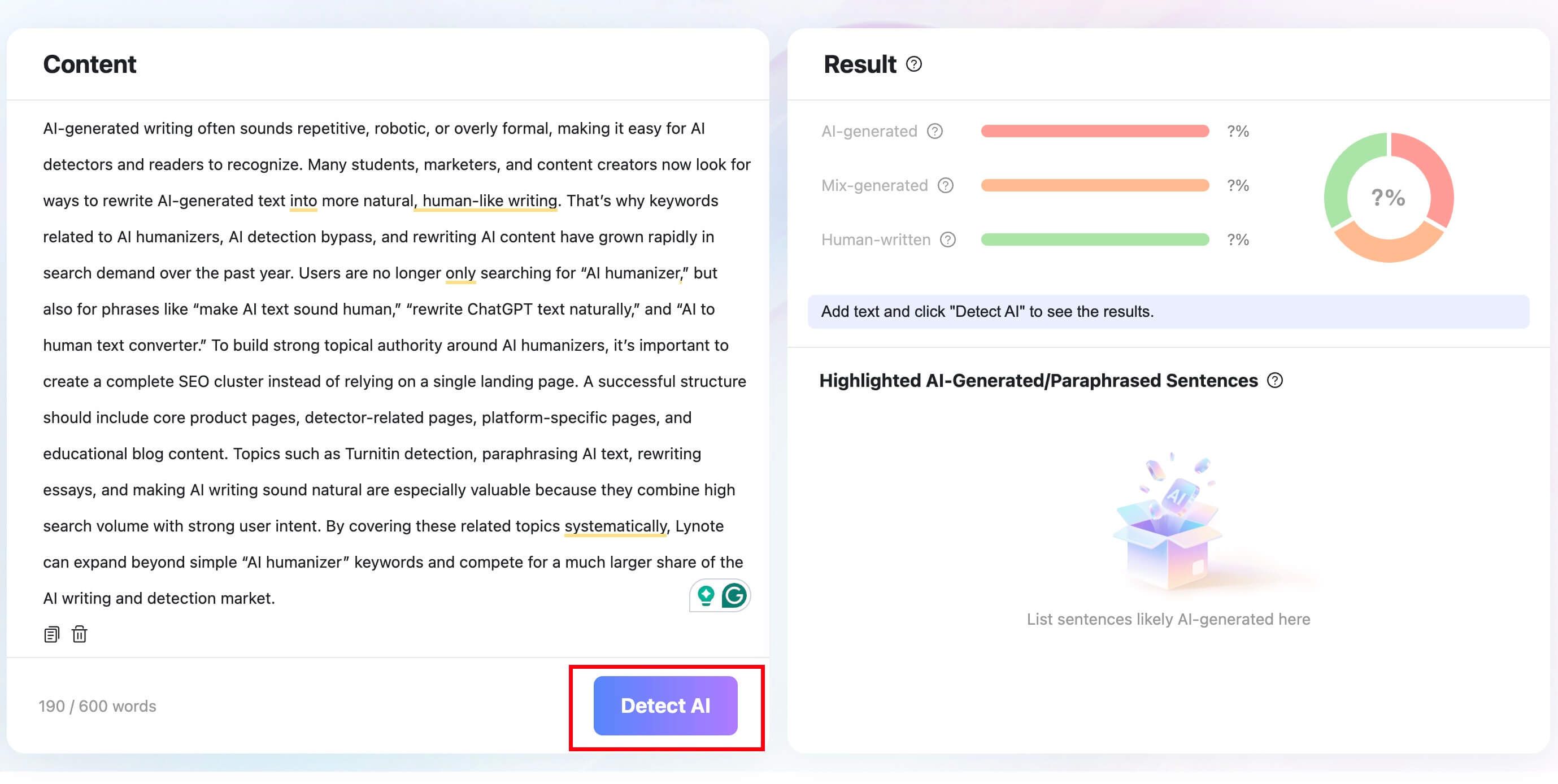
- Examinez les pourcentages générés par l'IA, mixtes et écrits par des humains.
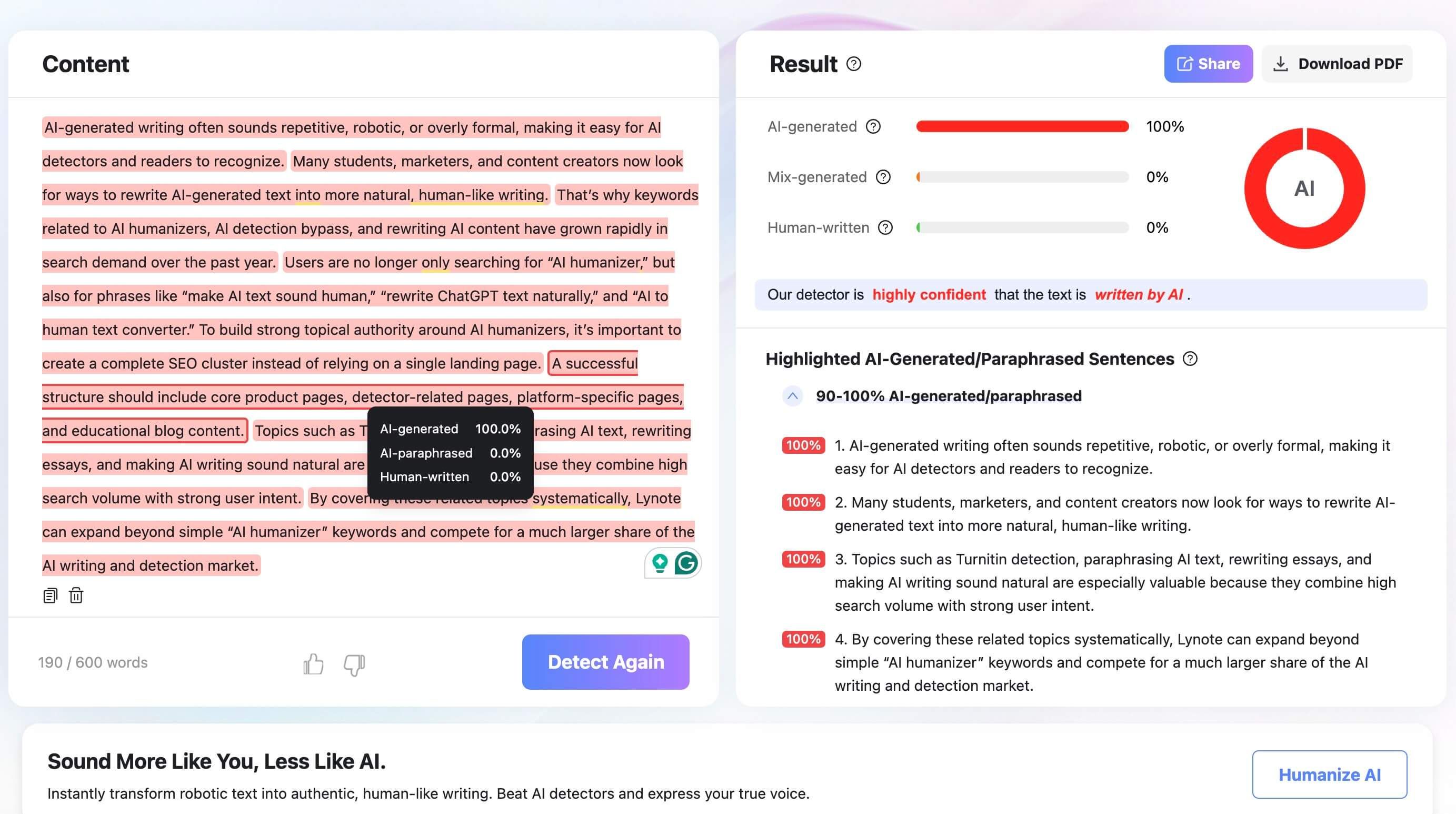
- Vérifiez les phrases surlignées et révisez d'abord le fond : ajoutez des preuves spécifiques, clarifiez les affirmations, supprimez les formulations génériques et faites en sorte que l'écriture reflète le contexte réel.
L'objectif n'est pas de courir après un score. L'objectif est d'identifier les passages faibles et d'améliorer l'écriture de manière plus claire, plus spécifique et plus facile à défendre.

Liste de contrôle de migration avant de quitter Copyleaks
Si vous êtes un utilisateur individuel, changer d'outil est simple. Si vous êtes une équipe, une école ou un éditeur, le passage de Copyleaks mérite une liste de contrôle.
Avant de choisir une alternative à Copyleaks, demandez-vous :
- Avez-vous besoin de détection d'IA, de vérification du plagiat, ou des deux ?
- Avez-vous besoin de vérifier du texte collé, des documents téléchargés, des PDF ou des pages web ?
- Avez-vous besoin de rapports partageables pour les rédacteurs, les étudiants, les éditeurs ou les clients ?
- Avez-vous besoin d'intégrations de navigateur, Google Docs, LMS, API ou d'équipe ?
- Avez-vous besoin d'un historique de scan enregistré, de pistes d'audit ou de contrôles administratifs ?
- Avez-vous besoin d'un support multilingue ?
- Les limites du plan gratuit interrompront-elles votre flux de travail réel ?
- Qui examine les faux positifs et les scores contestés ?
- Quelles preuves, en dehors de la sortie du détecteur, votre équipe prendra-t-elle en compte ?
Cette liste de contrôle évite l'erreur la plus courante : remplacer une plateforme étendue par un simple vérificateur et ne découvrir le flux de travail manquant qu'après que les gens s'y soient fiés.
FAQ sur les alternatives à Copyleaks
Quelle est la meilleure alternative à Copyleaks ?
La meilleure alternative à Copyleaks dépend de votre cas d'utilisation. Lynote AI Detector et ZeroGPT sont bons pour les vérifications rapides d'IA, Originality.ai est solide pour les équipes SEO et de publication, Turnitin convient aux institutions académiques, et Scribbr ou Quetext sont meilleurs lorsque la vérification du plagiat est le besoin principal.
Quelle est la meilleure alternative gratuite à Copyleaks ?
Pour un flux de travail de détection d'IA accessible gratuitement, Lynote AI Detector est une option solide car il prend en charge les vérifications rapides avec des signaux de pourcentage et des surlignages au niveau des phrases. ZeroGPT est également utile pour des scans rapides à faible enjeu.
Existe-t-il une alternative gratuite à Copyleaks pour la détection d'IA ?
Oui. Des outils tels que Lynote AI Detector et ZeroGPT peuvent aider avec des vérifications rapides d'IA. La limitation importante est que les détecteurs d'IA gratuits doivent être traités comme des signaux de révision, et non comme une preuve finale de qui a écrit un texte.
Quelle alternative à Copyleaks est la meilleure pour la vérification du plagiat ?
Quetext et Scribbr sont de meilleurs choix lorsque la vérification du plagiat est la principale préoccupation. Ils sont plus axés sur le chevauchement des sources, le soutien aux citations et les flux de travail d'écriture académique que de nombreux produits axés sur la détection.
Turnitin est-il meilleur que Copyleaks ?
Turnitin est meilleur pour de nombreux flux de travail d'intégrité académique institutionnelle car il est conçu autour des écoles, des universités, des soumissions et de la révision par l'instructeur. Copyleaks peut être un meilleur choix pour les utilisateurs qui ont besoin d'une plateforme plus large d'authenticité de contenu, de flux de travail API ou d'un outil combiné de révision d'IA et de plagiat en dehors d'un cadre académique traditionnel.
Originality.ai est-il meilleur que Copyleaks pour le SEO ?
Originality.ai est souvent un meilleur choix pour les équipes SEO et les éditeurs car il est plus aligné avec la révision éditoriale, le contenu de site web et les flux de travail de publication. Copyleaks peut toujours être utile, mais le meilleur choix dépend de si votre équipe se soucie plus des opérations de contenu ou d'une infrastructure d'intégrité plus large.
Les alternatives à Copyleaks peuvent-elles se tromper ?
Oui. Tout détecteur d'IA peut produire des résultats incertains ou incorrects. Les scores peuvent varier d'un outil à l'autre, en particulier avec des passages courts, des brouillons mixtes humain-IA, des textes fortement édités, une écriture formulée et un anglais non natif.
Les étudiants devraient-ils se fier aux détecteurs d'IA avant de soumettre leur travail ?
Les étudiants peuvent utiliser les détecteurs d'IA comme signal de révision, mais ils ne devraient pas se fier à un score de détecteur comme protection finale. Une approche plus solide consiste à conserver les brouillons, les notes, les plans, les citations et l'historique des versions, puis à réviser les passages vagues ou génériques pour plus de clarté et d'originalité.
Verdict final : Choisissez l'alternative qui correspond à la tâche
La meilleure alternative à Copyleaks est celle qui correspond à la tâche que vous avez devant vous. Lynote AI Detector et ZeroGPT sont utiles pour des vérifications rapides d'IA. Originality.ai est solide pour les équipes SEO et de publication.
Turnitin est conçu pour les institutions académiques. Scribbr et Quetext conviennent aux flux de travail centrés sur le plagiat. Grammarly Business est meilleur lorsque les équipes veulent une amélioration de l'écriture et un soutien à l'originalité.
Si la décision est à faible enjeu, un simple outil gratuit peut suffire. Si la décision affecte un étudiant, un rédacteur, un client ou une organisation, ne vous fiez pas à un seul score d'un détecteur.
Utilisez la détection d'IA comme point de départ pour la révision. Ensuite, examinez l'écriture réelle, les sources, l'historique des révisions et le jugement humain autour du texte.

Écrit par Janet L. Harris
Spécialiste en rédaction IA
Janet évalue les détecteurs d'IA et les outils d'humanisation, en se concentrant sur leur précision, leurs limites et leur utilisation responsable. Voir tous les articles →