

is gptzero ai detector accurate? GPTZero can be accurate enough to be useful as a review signal, but no AI detector should be treated as final proof of authorship. Accuracy depends on the sample, the writing style, the type of AI assistance, and how the result is interpreted.
The practical question is not whether GPTZero is good or bad in the abstract. The question is whether the result gives you enough evidence to review the text fairly.
Quick Verdict
GPTZero is a serious AI detector with public claims about strong performance and sentence-level detection. It is still a probabilistic tool, so it can produce false positives, false negatives, and uncertain results on mixed or heavily edited writing.
Use it when you need a signal. Do not use it as the only basis for a high-stakes decision.
Source note: GPTZero’s advanced sentence scanning documentation says highlighted sentences are the passages that disproportionately affect an overall AI or human probability score. That is useful for review, but it also means the score is a model judgment about text patterns, not a complete record of authorship.
What GPTZero Claims to Detect
GPTZero positions its detector around AI-generated content from major language models and shows results at both document and sentence level. That combination is useful because it helps reviewers move from a broad score to specific passages.
Still, a polished interface does not remove uncertainty. The score should be paired with the text itself, the writing context, and any available process evidence.
Why Accuracy Claims Differ From Real Use
Benchmark performance often uses known datasets. Real writing is messier: students edit drafts, professionals use templates, writers combine human and AI assistance, and some samples are too short to analyze well.
A detector may perform well in a benchmark and still struggle with a specific essay, cover letter, or technical summary. That is why accuracy claims should be interpreted as context, not as a promise about every individual document.
| Accuracy factor | Why it matters | Practical takeaway |
|---|---|---|
| Sample length | Short text gives fewer signals | Avoid judging tiny samples |
| Mixed writing | Human and AI passages can blend | Read highlighted sentences |
| Editing level | Heavy editing changes patterns | Compare drafts when possible |
| Domain style | Formal writing can sound generic | Check source quality and reasoning |
| Thresholds | Tools choose different cutoffs | Expect some disagreement |
Accuracy Terms That Actually Matter
Accuracy is not one simple number. When people ask whether GPTZero is accurate, they are usually mixing several different questions.
| Term | What it asks | Why it matters in real review |
|---|---|---|
| False positive | Was human writing labeled AI-like? | This can unfairly pressure a writer |
| False negative | Was AI-assisted writing missed? | This can create false confidence |
| Precision | When the tool flags text, how often is it right? | Important for accusations or escalations |
| Recall | How much AI-like writing does the tool catch? | Important for screening large batches |
| Threshold | Where the tool draws the line | Different tools can disagree on the same draft |
For a student or writer, false positives usually matter most because the result can affect trust. For a reviewer, precision and context matter because a confident-looking score still needs evidence.

False Positives and False Negatives
A false positive happens when human writing is labeled as AI-like. A false negative happens when AI-assisted writing is not flagged.
Both errors matter. False positives can unfairly pressure writers, while false negatives can create misplaced confidence. A fair workflow makes room for both possibilities.
How to Interpret a GPTZero Score
Look at the highlighted sentences first. If the highlighted text is vague, repetitive, or unsupported, revise it because the writing needs improvement regardless of the score.
If the highlighted text is accurate, sourced, and clearly connected to your own reasoning, keep a record of your process. The review conversation should include evidence beyond the detector.
When GPTZero Is Most Useful
GPTZero is most useful when the reviewer wants to find passages that deserve attention. Sentence-level signals can turn a vague concern into a focused editing task.
For example, a highlighted paragraph may need a clearer citation, a less generic topic sentence, or a stronger explanation of why the evidence matters. Those changes improve the writing even if the score is not the final goal.
It is less useful when someone wants one number to settle a dispute. Authorship is a process question, and process questions need drafts, notes, sources, and context.
How to Compare GPTZero With Other Signals
If GPTZero flags a draft, compare the result with the text itself. Read the highlighted lines aloud and ask whether they sound like a person making a specific argument or like a generic summary.
You can also compare the result with another detector, but do that carefully. Agreement between tools can justify closer review, while disagreement should make you slower and more cautious.
The strongest signal is still the writing record. A clear draft history can explain why a polished final paragraph looks different from a rough first version.
A Practical Accuracy Checklist
Before trusting any AI detector result, ask five questions. Was the sample long enough? Was the writing heavily edited? Does the result highlight specific passages? Do those passages actually sound generic? Is there process evidence that supports the writer's authorship?
If the answer to several questions is unclear, slow down. The result may still be useful, but it needs more context before anyone relies on it.
This checklist is especially important for mixed documents. A draft may include human notes, AI-assisted brainstorming, grammar edits, quoted source material, and original analysis in the same file. A single score can blur those differences.
Accuracy is not only about the tool. It is also about whether the reviewer uses the tool in a fair and careful way.
When to Be More Cautious
Be more cautious when the text is very short, heavily templated, or written in a field that naturally uses repeated phrasing. Lab reports, policy summaries, scholarship essays, and product descriptions can all sound structured even when written by a person.
Also be cautious when the result will affect a grade, job, or publication decision. In those cases, the detector should be one part of a wider review that includes the writing process and the writer's ability to explain the work.
How to Check AI-Like Text With Lynote AI Detector
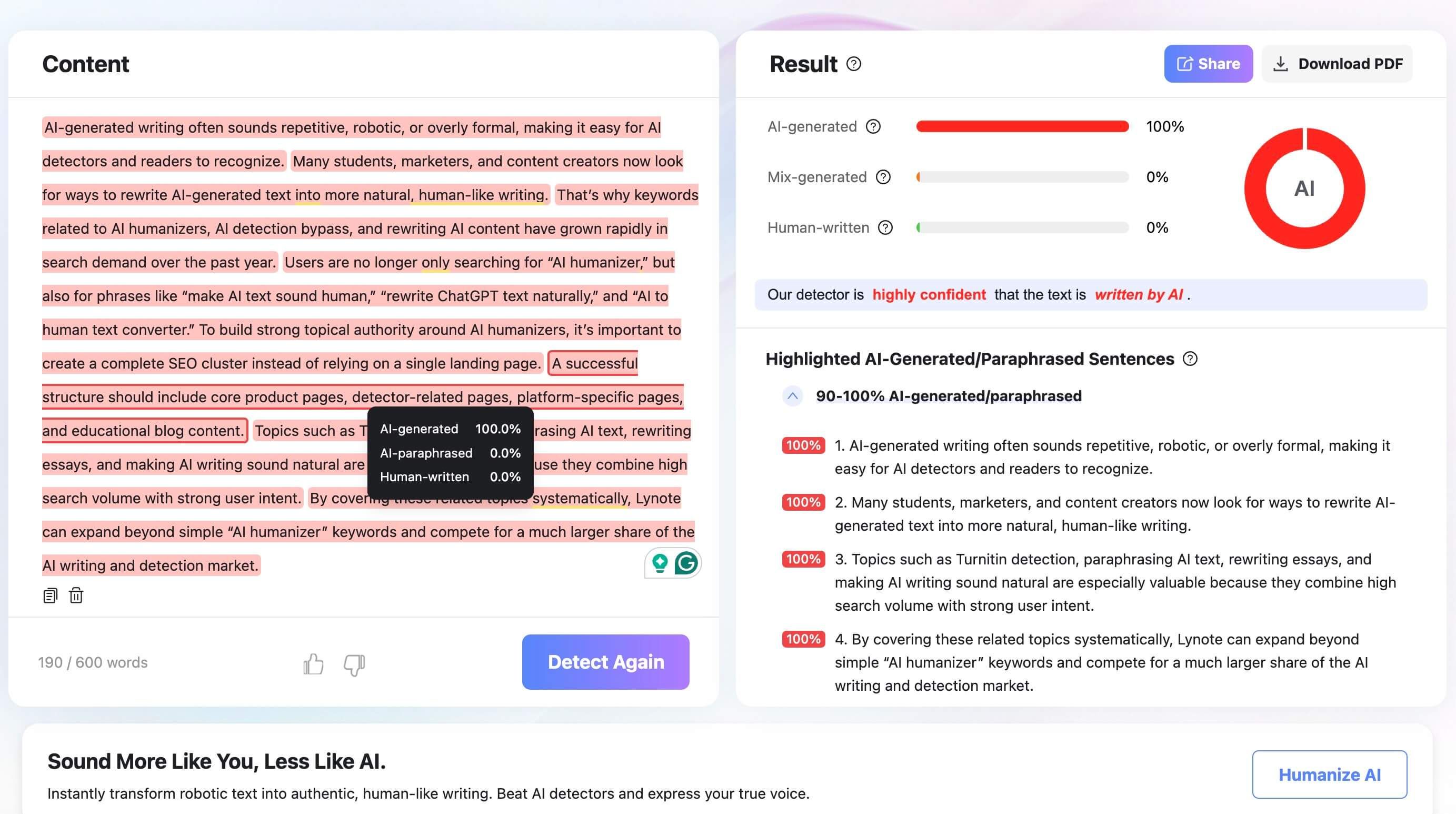
A detector result should be treated as a review signal, not a final verdict. You can use Lynote AI Detector to check another signal and identify sentences that may need clearer sourcing, more specific examples, or a more natural voice.
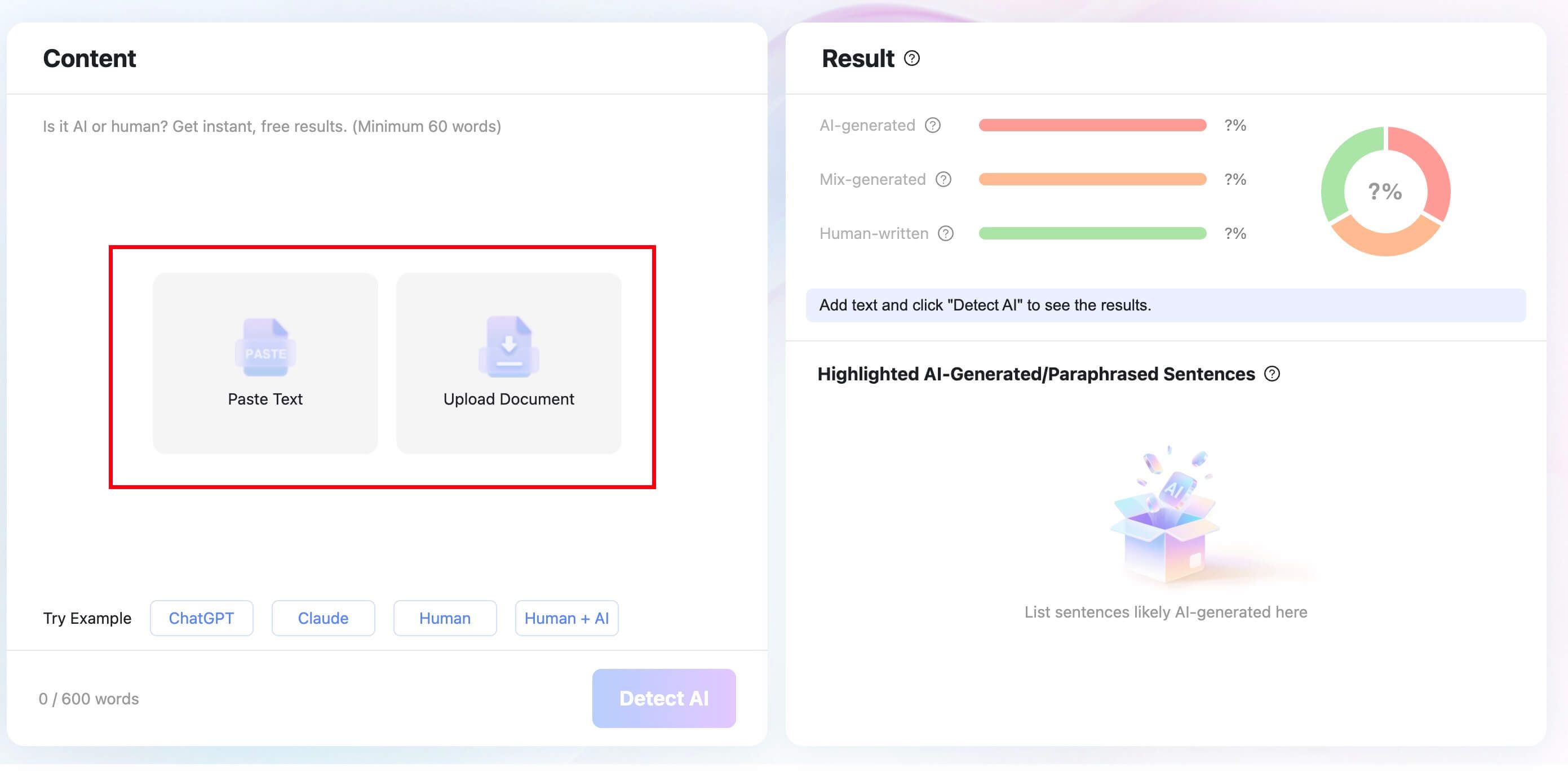
Step 1. Paste Text or Upload a Document
Paste the text you want to review, or upload a supported document. For best results, check the final draft rather than an early outline or a very short fragment.
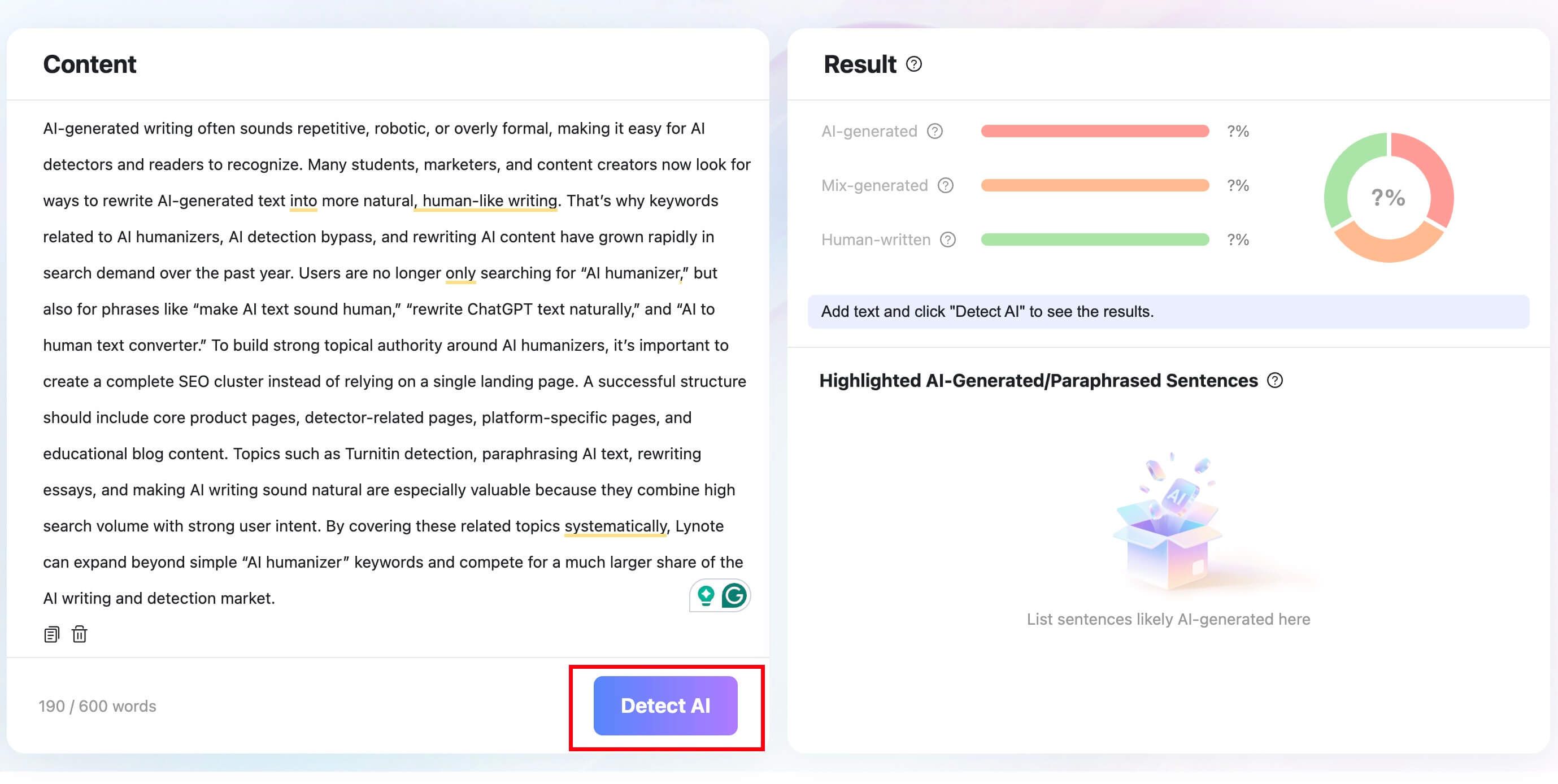
Step 2. Click Detect AI
Run the detector to get a breakdown of AI-generated, mixed, and human-written signals. Use the result to guide review, not to make a final authorship judgment.
Step 3. Review the Highlighted Sentences
Look at the highlighted sentences and decide whether they need clearer sourcing, more specific evidence, or a more natural rhythm. Revise the writing, then check again only if another signal would help.

FAQs About Is GPTZero AI Detector Accurate?
How accurate is GPTZero?
GPTZero can be useful for identifying AI-like writing patterns, especially when the result includes sentence-level clues. Accuracy still depends on sample length, writing style, editing history, and how the result is used.
Can GPTZero detect Gemini or Claude?
It may flag text that resembles output from major AI models, including Gemini-like or Claude-like writing. That does not mean it can reliably name the exact model behind a passage.
What is a false positive?
A false positive is when human-written text is labeled as AI-like. It can happen when writing is short, generic, heavily polished, or written in a formal pattern that resembles generated text.
Is GPTZero enough for academic decisions?
No detector should be the only evidence in a high-stakes academic decision. A fair review should include drafts, sources, assignment rules, and the writer’s explanation of their process.
Should I use multiple AI detectors?
A second detector can be useful as another signal, but it should not become score shopping. If tools disagree, slow down and review the actual writing more carefully.
Final Verdict
GPTZero can be useful for AI writing review, especially when paired with sentence-level reading and context. It is not a replacement for human judgment, documentation, or a fair review process.

Written by Janet L. Harris
AI Writing Specialist
Janet reviews AI detectors and humanization tools, with a focus on accuracy, limitations, and responsible use. View all articles →