

La scrittura generata dall'IA è veloce, comoda e onnipresente. Ma in molti casi, suona ancora troppo raffinata, troppo prevedibile o troppo ovviamente scritta da una macchina. Questo è esattamente il motivo per cui strumenti come ZeroGPT AI Humanizer stanno attirando l'attenzione.
ZeroGPT è già ampiamente conosciuto per il suo rilevatore di IA, quindi il suo AI Humanizer attira naturalmente gli utenti che desiderano riscrivere testi generati dall'IA in qualcosa che suoni più naturale e più umano. In superficie, questo sembra promettente.
ZeroGPT AI Humanizer può davvero rendere il testo IA abbastanza umano da evitare i comuni schemi di rilevamento dell'IA?
In questa recensione, esaminiamo più da vicino cosa fa ZeroGPT AI Humanizer, dove si comporta bene, dove fallisce e se esiste un'alternativa migliore per gli utenti che necessitano di una umanizzazione più profonda.
Se stai confrontando strumenti di umanizzazione IA per saggi, post di blog, contenuti SEO o testi sensibili al rilevamento, questa guida ti aiuterà a decidere se ZeroGPT è sufficiente o se un'opzione più forte come Lynote AI Humanizer ha più senso.
ZeroGPT AI Humanizer Spiegato
ZeroGPT AI Humanizer è uno strumento di riscrittura progettato per trasformare il testo generato dall'IA in una scrittura che suoni più naturale, più leggibile e più simile a quella umana. Secondo il posizionamento ufficiale di ZeroGPT, lo strumento mira a preservare il significato originale riducendo al contempo la sensazione robotica che spesso appare nei contenuti scritti dall'IA.
Questo lo rende uno strumento di post-elaborazione piuttosto che una piattaforma di scrittura completa.
Nell'uso pratico, il flusso di lavoro è semplice:
- genera contenuti con ChatGPT o un altro scrittore IA
- incollali in ZeroGPT AI Humanizer
- riscrivi il testo per un tono più naturale
- usa la versione rivista per saggi, post di blog, email o testi di marketing
Questo tipo di strumento attrae una vasta gamma di utenti, inclusi studenti, esperti di marketing, blogger, liberi professionisti e scrittori SEO.
La promessa principale è chiara: umanizzare il testo IA senza cambiare ciò che il testo sta cercando di dire.
Questo è utile in teoria. Il vero problema è se la riscrittura è abbastanza profonda da far sentire l'output genuinamente umano, piuttosto che solo leggermente meno robotico.
Come ZeroGPT AI Humanizer Cambia la Scrittura Generata dall'IA
Basandosi sulla messaggistica pubblica del prodotto di ZeroGPT, l'AI Humanizer sembra concentrarsi sulla riscrittura controllata piuttosto che sulla rigenerazione completa del contenuto.
Ciò probabilmente significa che cerca di migliorare diverse debolezze comuni riscontrate nel testo generato dall'IA.
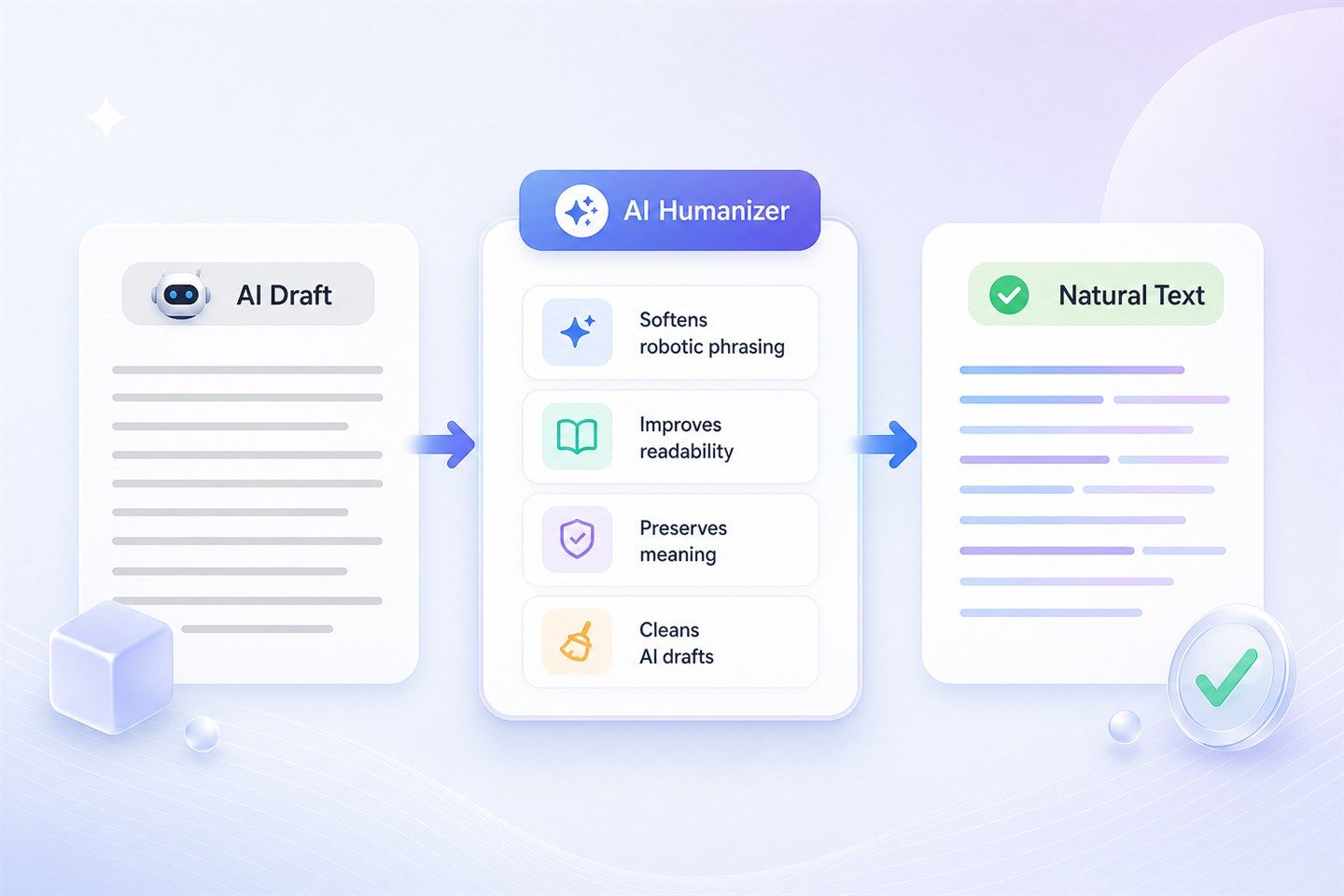
1. Ammorbidisce la fraseologia robotica
La scrittura IA spesso suona troppo simmetrica e troppo pulita. Le frasi possono essere tecnicamente corrette, ma spesso sembrano schematiche. Un umanizzatore cerca di ridurre questo aspetto modificando le strutture di frase prevedibili e le transizioni abusate.
2. Migliora la leggibilità
Uno dei punti di forza più chiari di ZeroGPT è che rende il contenuto più leggibile. Ciò significa che lo strumento non sta solo cercando di riformulare il testo, ma anche di farlo fluire meglio per i lettori umani.
3. Preserva il significato originale
ZeroGPT enfatizza la conservazione del significato nella sua messaggistica di prodotto. Questo è importante perché alcuni strumenti di riscrittura fanno suonare il contenuto in modo diverso cambiando troppo. Un umanizzatore IA migliore dovrebbe migliorare il tono e il flusso senza danneggiare il punto originale.
4. Agisce come uno strato di pulizia per le bozze IA
Invece di sostituire gli strumenti di scrittura IA, ZeroGPT AI Humanizer sembra progettato per posizionarsi dopo di essi nel flusso di lavoro. Gli utenti possono redigere con un modello IA, quindi utilizzare l'umanizzatore per rendere il testo meno meccanico.
Quindi, in termini semplici, ZeroGPT AI Humanizer sembra funzionare come uno strumento di naturalizzazione. Ha lo scopo di levigare il testo generato dall'IA, migliorare la leggibilità e ridurre alcuni ovvi schemi simili a quelli delle macchine.
Punti di Forza e Debolezze di ZeroGPT AI Humanizer
Come la maggior parte degli strumenti di riscrittura IA, ZeroGPT AI Humanizer ha alcuni chiari punti di forza. Ma una volta che lo si valuta come un serio umanizzatore consapevole del rilevamento dell'IA piuttosto che un semplice strumento di riscrittura, le sue limitazioni diventano più evidenti.
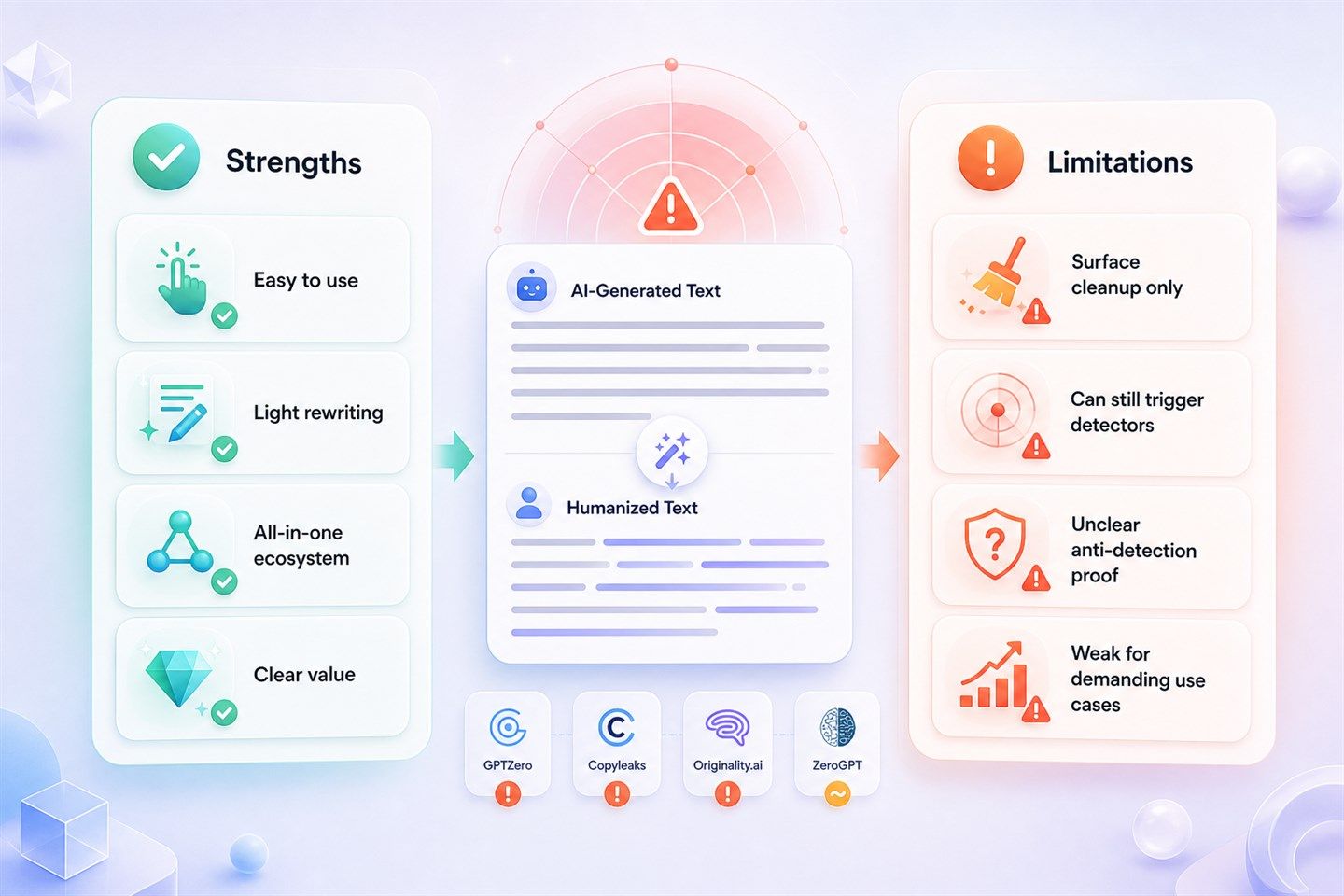
Principali Punti di Forza di ZeroGPT AI Humanizer
Facile da usare
Uno dei maggiori punti di forza di ZeroGPT è la comodità. Il prodotto è facile da capire, facile da provare e facile da integrare in un flusso di lavoro di scrittura IA esistente.
Buono per riscritture leggere
Se la tua bozza necessita solo di piccoli miglioramenti, come una fraseologia più fluida o meno rigidità, ZeroGPT AI Humanizer potrebbe essere sufficiente. Sembra particolarmente utile per passaggi brevi, paragrafi semplici e lavori di pulizia generale.
Parte di un ecosistema di scrittura più ampio
ZeroGPT offre già strumenti come il rilevamento dell'IA, la parafrasi, la sintesi, l'aiuto grammaticale e utilità correlate. Questo rende il suo Humanizer attraente per gli utenti che preferiscono una piattaforma all-in-one.
Chiara proposta di valore
ZeroGPT non complica eccessivamente la proposta. Promette semplicemente di far suonare la scrittura generata dall'IA più naturale preservandone il significato. Questo è facile da capire per gli utenti.
Principali Limitazioni di ZeroGPT AI Humanizer
Sembra più forte nella pulizia superficiale che nell'umanizzazione profonda
Questo è il problema più grande. C'è una differenza significativa tra rendere il testo più fluido e far sentire il testo genuinamente umano. Molti strumenti possono fare il primo. Molti meno fanno bene il secondo.
Il testo dal suono naturale può comunque attivare i rilevatori di IA
Un testo può suonare meglio a un lettore umano e conservare comunque i segnali strutturali che i rilevatori di IA cercano. Ciò include ritmo ripetitivo, fraseologia eccessivamente equilibrata, transizioni generiche e un tono raffinato ma sintetico.
Il posizionamento pubblico non dimostra chiaramente prestazioni anti-rilevamento di alto livello
ZeroGPT enfatizza la leggibilità e la naturalezza, ma la sua messaggistica pubblica non stabilisce chiaramente che l'umanizzatore standard si comporti costantemente in modo forte su più importanti rilevatori di IA.
Potrebbe non essere sufficiente per casi d'uso più esigenti
Per saggi, contenuti SEO, articoli di affiliazione, blog a lungo termine e altri testi sensibili al rilevamento, gli utenti spesso necessitano di una riscrittura più profonda rispetto a una semplice riformulazione a livello superficiale.
Quindi, nel complesso, ZeroGPT AI Humanizer sembra utile per la comodità e il rapido miglioramento della leggibilità, ma meno chiaramente provato come strumento migliore della categoria per l'umanizzazione profonda dell'IA.
Test del Rilevatore ZeroGPT AI Humanizer: Cosa è Successo con i Principali Controllori IA
Questa è la domanda che la maggior parte degli utenti si pone davvero.
ZeroGPT AI Humanizer è progettato per far suonare il testo generato dall'IA più naturale, ma suonare meglio e superare i rilevatori di IA non sono la stessa cosa. Un paragrafo può essere letto più fluidamente da un essere umano e conservare comunque abbastanza schemi strutturali da attivare i sistemi di rilevamento dell'IA.
Ecco perché i test reali contano.
Per valutare ZeroGPT AI Humanizer in modo più equo, ha senso controllare il testo riscritto su diversi rilevatori IA mainstream invece di affidarsi a una singola piattaforma. Per questa recensione, gli strumenti più rilevanti da testare sono:
- ZeroGPT AI Detector
- GPTZero
- Copyleaks AI Detector
- Originality.ai
- QuillBot AI Detector
- Turnitin AI Detector
Questo tipo di revisione multi-rilevatore è importante perché strumenti diversi cercano segnali diversi. Alcuni sono più sensibili al ritmo ripetitivo delle frasi, alcuni si concentrano sulla prevedibilità e sulla fraseologia, e altri sono più severi riguardo agli schemi strutturali in un intero paragrafo o saggio.
Quindi la vera domanda non è solo se ZeroGPT AI Humanizer migliora la leggibilità.
La vera domanda è se può ridurre costantemente il sospetto di IA su più importanti sistemi di rilevamento.
ZeroGPT AI Humanizer vs GPTZero, Copyleaks, Originality.ai, QuillBot e Turnitin
Per rendere il confronto più pratico, l'approccio migliore è utilizzare lo stesso testo sorgente su tutti i rilevatori:
- Inizia con un esempio ovviamente generato dall'IA.
- Riscrivilo usando ZeroGPT AI Humanizer.
- Incolla la versione riscritta in ogni rilevatore.
- Confronta se l'output è contrassegnato come IA, misto o scritto da un essere umano.
Questo è importante perché alcuni umanizzatori sono bravi nella pulizia superficiale ma lasciano comunque dietro di sé schemi che i rilevatori avanzati possono riconoscere.
Risultato del Rilevatore ZeroGPT AI
Dopo aver elaborato il campione tramite ZeroGPT AI Humanizer, il testo riscritto è stato nuovamente testato utilizzando il rilevatore AI di ZeroGPT.
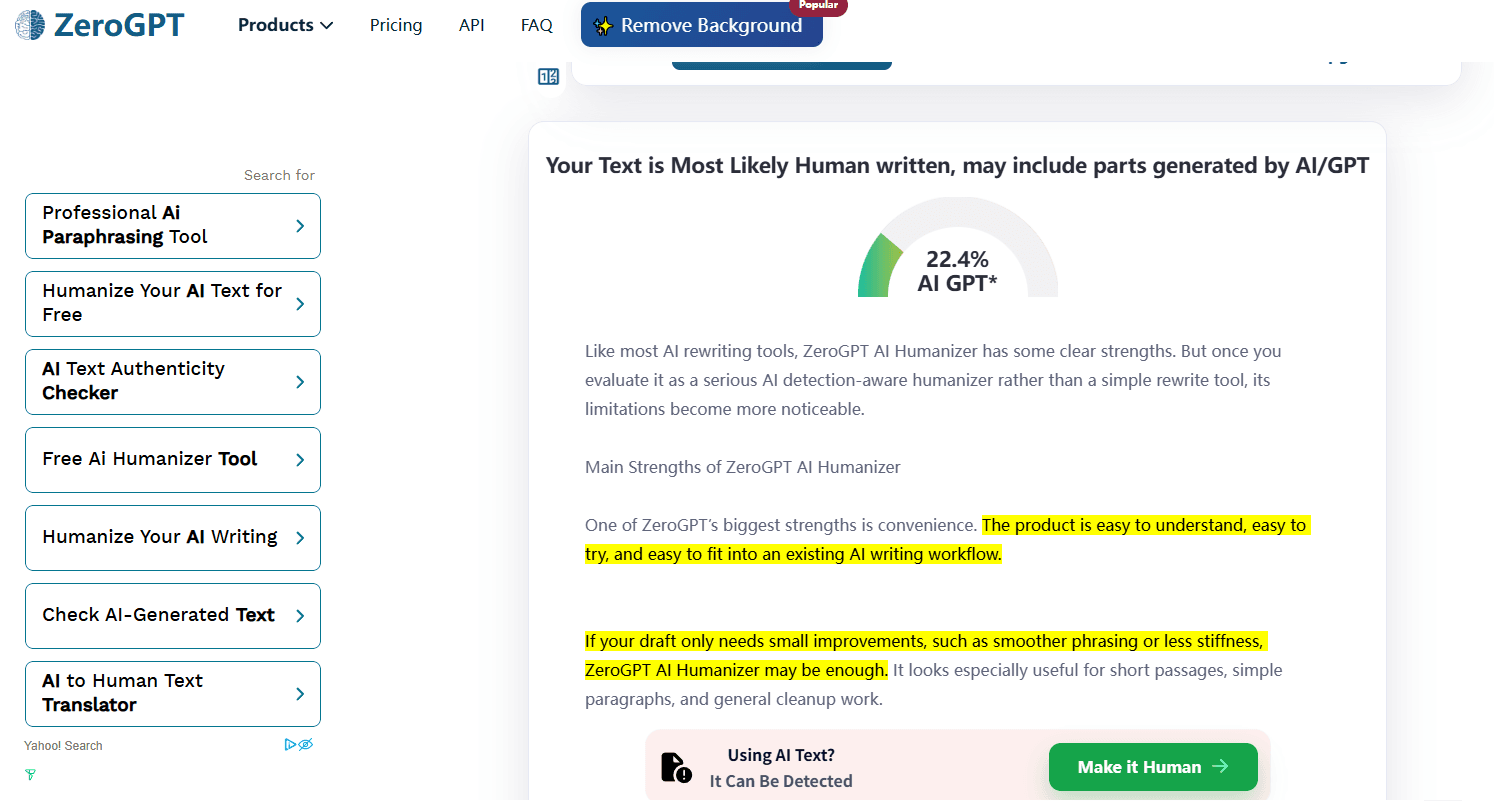
In questo test, ZeroGPT ha dato al risultato una valutazione relativamente favorevole. La piattaforma ha affermato che il testo era “molto probabilmente scritto da un essere umano” pur notando che “potrebbe includere parti generate da AI/GPT”. Il punteggio AI visualizzato era 22.4%.
Ciò suggerisce che ZeroGPT AI Humanizer può ridurre alcuni ovvi segnali simili all'IA all'interno dell'ambiente di rilevamento di ZeroGPT. Almeno in base a questo campione, lo strumento ha funzionato ragionevolmente bene quando valutato dalla propria piattaforma.
Risultato GPTZero
Lo stesso testo riscritto è stato quindi testato in GPTZero.
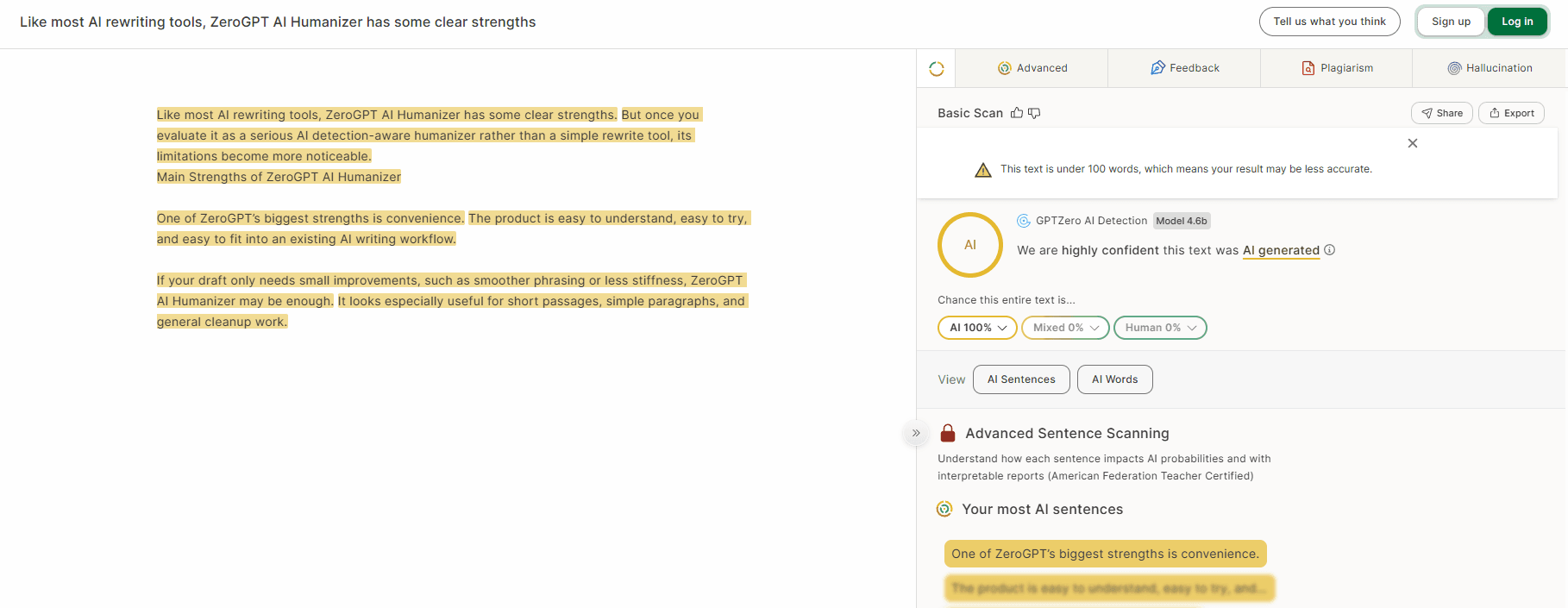
Qui, il risultato è stato molto meno favorevole. GPTZero ha dichiarato di essere “altamente fiducioso” che il testo fosse generato dall'IA e ha etichettato il campione come 100% AI, con 0% misto e 0% umano.
Questo è un contrasto importante con il risultato di ZeroGPT. Suggerisce che anche dopo l'umanizzazione, il testo riscritto ha comunque mantenuto abbastanza schemi strutturali affinché GPTZero lo classificasse come interamente generato dall'IA.
Risultato Copyleaks
Successivamente, il testo umanizzato è stato controllato utilizzando Copyleaks AI Detector.
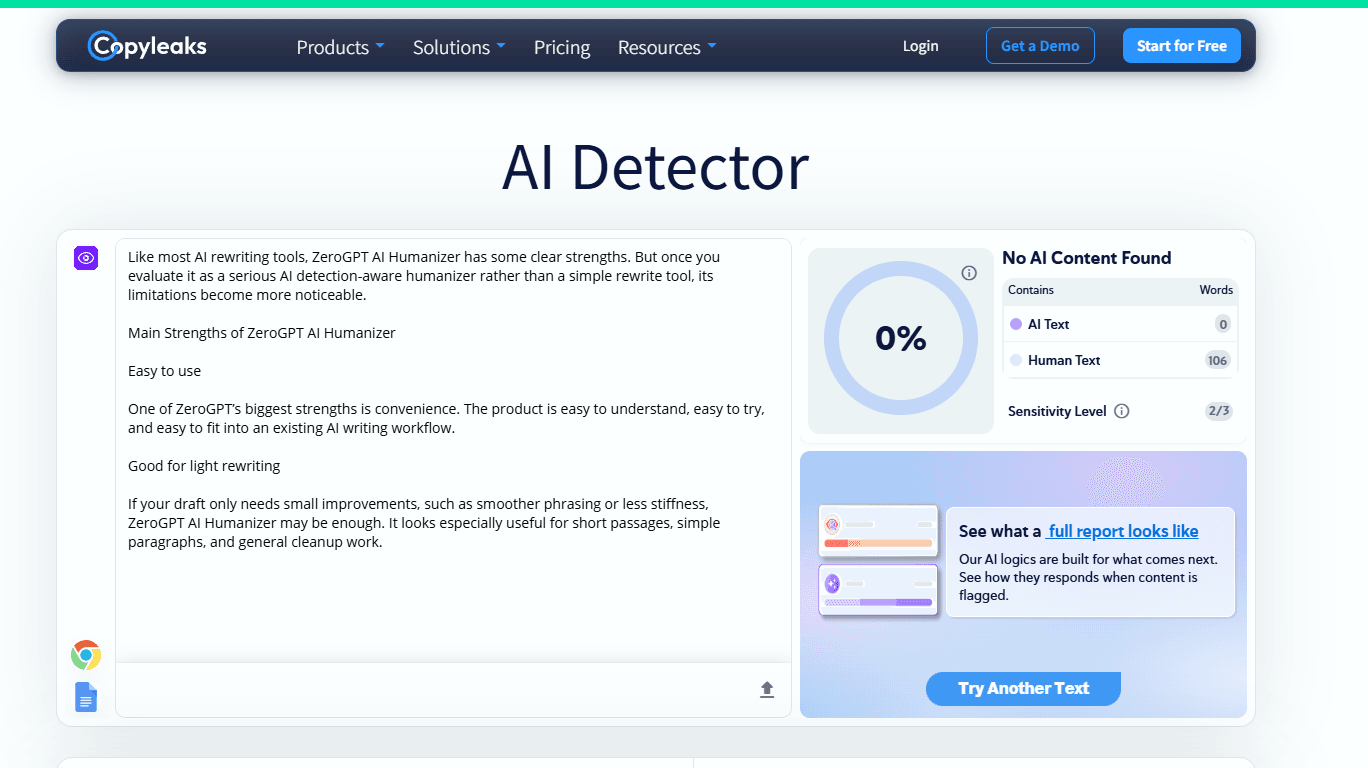
In questo test, Copyleaks ha riportato Nessun Contenuto IA Trovato e ha assegnato al campione 0% testo IA, con tutte le parole rilevate trattate come testo umano.
Questo è uno dei risultati positivi più forti nel confronto. Suggerisce che ZeroGPT AI Humanizer può funzionare bene con alcuni sistemi di rilevamento, anche se le sue prestazioni non sono coerenti su tutte le piattaforme.
Risultato Originality.ai
Il testo riscritto è stato testato anche con Originality.ai.
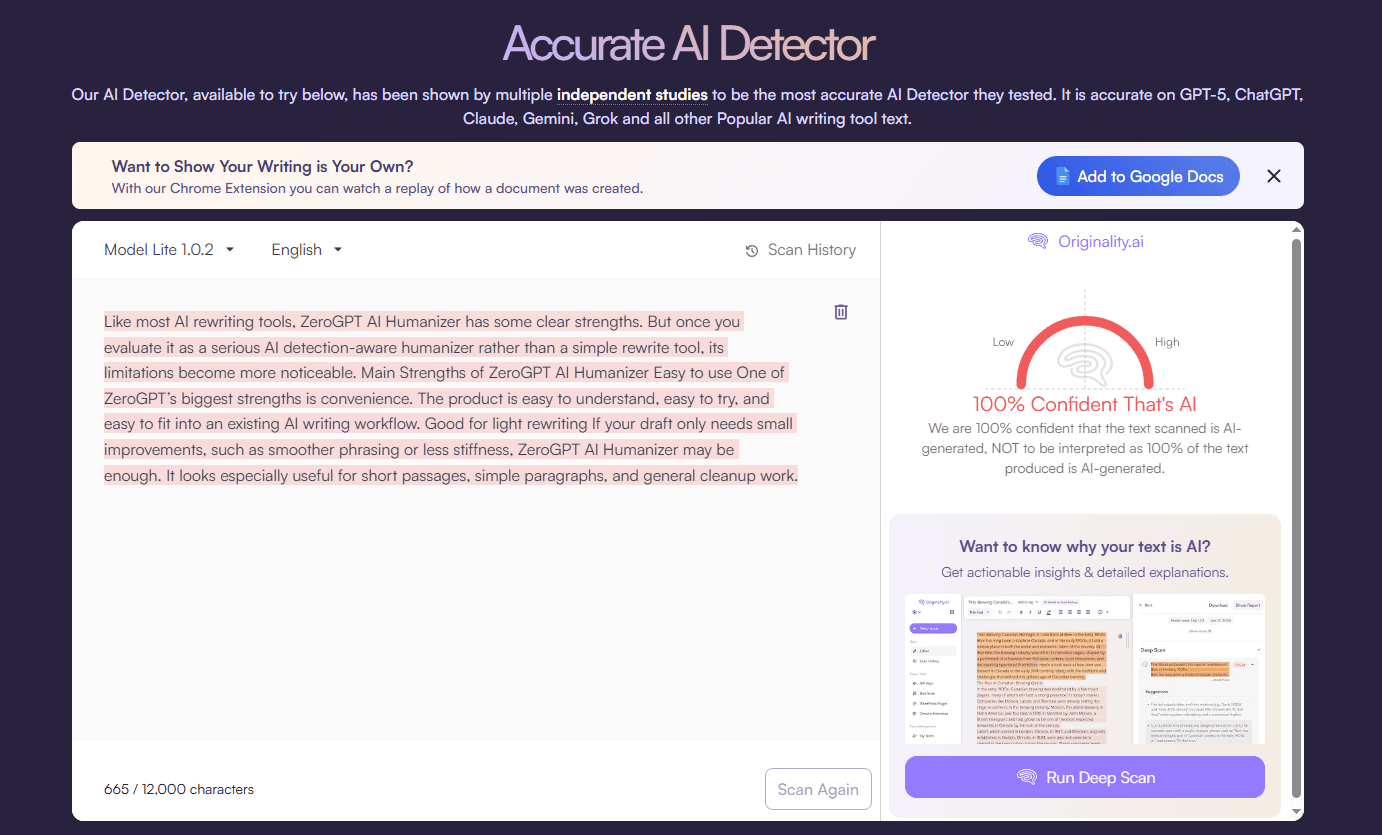
Originality.ai ha prodotto uno dei risultati più severi. Ha contrassegnato il campione come 100% fiducioso che sia IA, indicando che il rilevatore ha comunque trovato segnali molto forti legati all'IA nel passaggio riscritto.
Questo risultato è particolarmente importante per blogger, editori e scrittori SEO, poiché Originality.ai è comunemente utilizzato nei flussi di lavoro di contenuti professionali. In base a questo campione, ZeroGPT AI Humanizer non ha funzionato in modo convincente in questo ambiente.
Risultato del Rilevatore AI QuillBot
Lo stesso campione è stato quindi testato utilizzando QuillBot AI Detector.
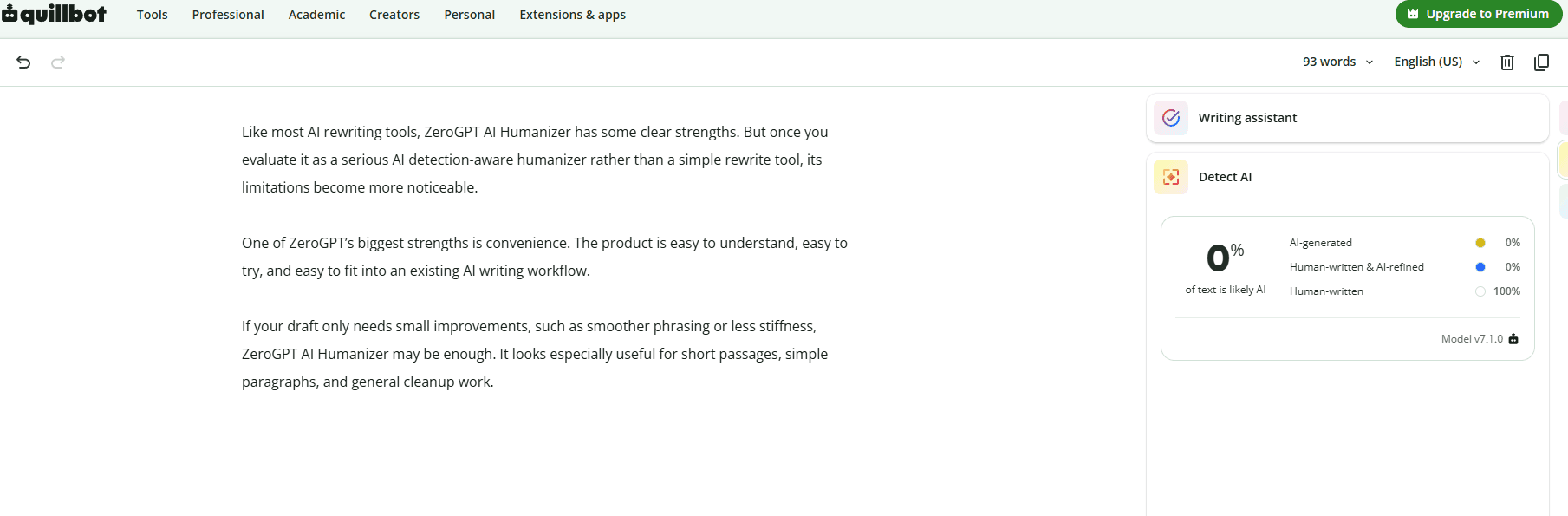
QuillBot ha dato al testo riscritto un risultato pulito. Ha riportato 0% del passaggio come probabilmente generato dall'IA e ha classificato il contenuto come 100% scritto da un essere umano.
Questo colloca QuillBot molto più vicino a Copyleaks che a GPTZero o Originality.ai. In altre parole, ZeroGPT AI Humanizer appare in grado di superare alcuni rilevatori abbastanza bene, ma non tutti.
Risultato del Rilevatore AI Turnitin
Infine, il testo riscritto dovrebbe essere testato anche con Turnitin AI Detector.
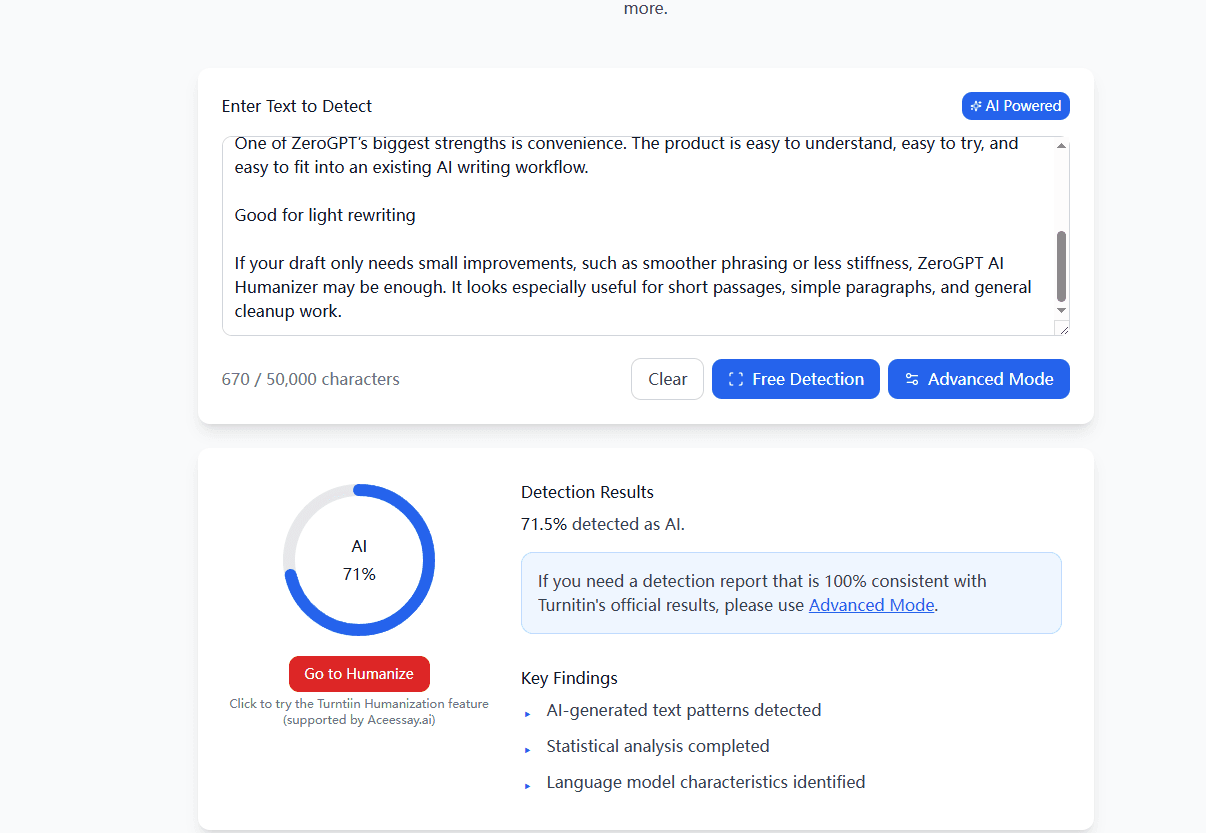
In questo caso, il risultato ha mostrato che il 71.5% del testo è stato rilevato come IA. Questo è un risultato chiaramente sfavorevole e suggerisce che il passaggio riscritto ha comunque mantenuto una quantità significativa di struttura simile all'IA sotto questo stile di valutazione.
Questo risultato dovrebbe essere interpretato con una certa cautela, poiché lo screenshot sembra provenire da un rilevatore di terze parti allineato con Turnitin piuttosto che dall'interfaccia istituzionale ufficiale di Turnitin. Anche così, aggiunge comunque un altro segnale negativo al quadro generale del test.
Perché ZeroGPT AI Humanizer Fornisce Risultati Misti nei Test di Rilevamento IA
Presi insieme, questi risultati mostrano che ZeroGPT AI Humanizer non si comporta in modo coerente su tutti i principali rilevatori di IA.
Sul lato positivo:
- ZeroGPT ha restituito un punteggio IA relativamente basso del
22.4% - Copyleaks ha trovato
0% IA - QuillBot ha anche riportato
0% IA
Sul lato negativo:
- GPTZero ha etichettato il testo
100% IA - Originality.ai lo ha contrassegnato come
100% fiducioso che sia IA - il rilevatore allineato a Turnitin ha riportato
71.5% IA
Questo risultato diviso è importante.
Suggerisce che ZeroGPT AI Humanizer potrebbe essere bravo a migliorare la leggibilità e a ridurre la fraseologia robotica ovvia, ma non è costantemente abbastanza forte da rimuovere schemi di scrittura IA più profondi su tutti i sistemi di rilevamento.
Quindi, se l'obiettivo è una semplice pulizia, ZeroGPT AI Humanizer potrebbe essere sufficiente.
Ma se l'obiettivo è un'umanizzazione più affidabile e consapevole del rilevamento su più piattaforme, questi risultati suggeriscono che le sue prestazioni sono ancora irregolari.
La Migliore Alternativa a ZeroGPT AI Humanizer per una Riscrittura Più Naturale e Consapevole del Rilevamento
Sì. Se il tuo obiettivo è una seria umanizzazione dell'IA, Lynote AI Humanizer è l'alternativa migliore.
La differenza si riduce al focus del prodotto.
ZeroGPT AI Humanizer è meglio inteso come uno strumento di riscrittura conveniente che rende il testo IA più pulito e leggibile.
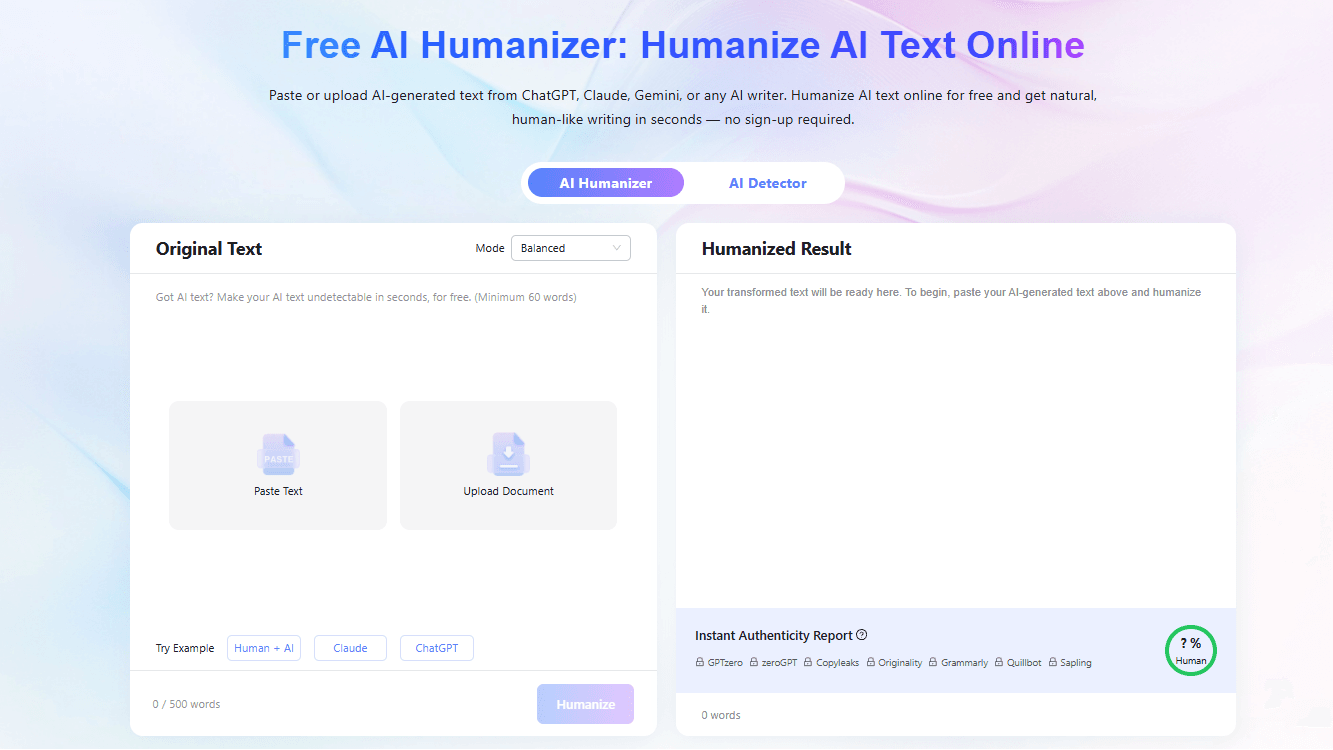
Lynote AI Humanizer è posizionato molto più direttamente come un umanizzatore IA consapevole del rilevamento. Il suo messaggio non riguarda solo l'ammorbidimento delle frasi. Riguarda la rimozione di schemi simili all'IA, il miglioramento della variazione strutturale e l'aiuto ai contenuti a ottenere prestazioni migliori contro i rilevatori IA mainstream.
Questo è importante perché il testo generato dall'IA di solito viene segnalato per ragioni più profonde rispetto a una fraseologia goffa. I segnali IA comuni includono:
- ritmo delle frasi eccessivamente uniforme
- transizioni prevedibili
- schemi strutturali ripetuti
- scelte di vocabolario generiche
- consegna raffinata ma emotivamente piatta
Un umanizzatore IA più forte deve affrontare questi segnali più profondi, non solo sostituire alcune frasi.
Perché Lynote AI Humanizer è Migliore di ZeroGPT
Lynote è più esplicito sulle prestazioni del rilevatore IA
Lynote inquadra pubblicamente il suo AI Humanizer attorno alle prestazioni contro i principali rilevatori IA, inclusi nomi come GPTZero, Copyleaks, Originality.ai, Sapling, ZeroGPT, Grammarly e QuillBot. Questa è una promessa molto più mirata rispetto al posizionamento più ampio di ZeroGPT incentrato sulla leggibilità.
Lynote si concentra su una riscrittura più profonda
Invece di una semplice pulizia, Lynote enfatizza la riscrittura consapevole del contesto, una maggiore variazione e la riduzione di schemi IA prevedibili. Questo lo rende più adatto per contenuti che devono sembrare genuinamente umani piuttosto che solo leggermente modificati.
Lynote è più adatto per contenuti ad alto rischio
Per post di blog, pagine SEO, saggi, scritti accademici, testi di marketing e contenuti di affiliazione, una riscrittura superficiale spesso non è sufficiente. Lynote è l'opzione più forte quando hai bisogno di una texture umana più credibile.
Lynote offre un migliore flusso di lavoro di riscrittura e controllo
Lynote fornisce anche un'esperienza di rilevamento IA che aiuta gli utenti a identificare quali parti di un testo sono ancora probabilmente scritte dall'IA. Questo rende l'iterazione più pratica e precisa.
In breve:
ZeroGPT AI Humanizerè buono per la naturalizzazione di baseLynote AI Humanizerè migliore per una riscrittura più profonda e un intento anti-rilevamento più forte
ZeroGPT AI Humanizer è Adatto per Saggi, Contenuti SEO e Scrittura di Blog?
ZeroGPT AI Humanizer può essere una scelta ragionevole per gli utenti che desiderano:
- pulizia rapida di bozze generate dall'IA
- un semplice flusso di lavoro di riscrittura
- maggiore leggibilità
- leggera umanizzazione all'interno dell'ecosistema ZeroGPT
Potrebbe essere meno adatto per gli utenti che necessitano di:
- maggiore resistenza al rilevatore IA
- riscrittura di contenuti a lungo termine
- maggiore variazione del tono umano
- trasformazione strutturale più profonda
- migliori risultati per SEO o scrittura accademica
Se il tuo caso d'uso è casuale, ZeroGPT potrebbe essere sufficiente.
Se il tuo caso d'uso è più esigente, Lynote è lo strumento più convincente.
FAQ ZeroGPT AI Humanizer: Prezzi, Funzionalità, Casi d'Uso e Affermazioni sul Rilevamento
ZeroGPT AI Humanizer è gratuito?
ZeroGPT presenta l'Humanizer come uno strumento online accessibile, ma i limiti effettivi e le funzionalità avanzate potrebbero dipendere dal livello del piano. Gli utenti dovrebbero controllare gli ultimi dettagli sulla pagina ufficiale dei prezzi di ZeroGPT.
Cosa fa ZeroGPT AI Humanizer?
Riscrittura il testo generato dall'IA per farlo suonare più naturale, leggibile e simile a quello umano, cercando di preservare il significato originale.
ZeroGPT AI Humanizer è lo stesso di uno strumento di parafrasi?
Non esattamente. Un parafrasatore cambia principalmente la formulazione. Un umanizzatore IA dovrebbe andare oltre riducendo il tono robotico e migliorando gli schemi di scrittura simili a quelli umani.
ZeroGPT AI Humanizer può aiutare con saggi e post di blog?
Sì, può aiutare a migliorare la leggibilità e a ridurre la rigidità nelle bozze generate dall'IA. Ma per contenuti più esigenti, potrebbe essere comunque necessaria una riscrittura più profonda.
ZeroGPT AI Humanizer garantisce che il contenuto eviterà il rilevamento dell'IA?
No. Nessuno strumento responsabile dovrebbe garantirlo. I risultati del rilevatore variano a seconda dell'input, della qualità della riscrittura e della specifica piattaforma di rilevamento.
Qual è la migliore alternativa a ZeroGPT AI Humanizer?
Se desideri un'umanizzazione più forte e un approccio di riscrittura più consapevole del rilevamento, Lynote AI Humanizer è l'alternativa più forte.

Scritto da Danny
Responsabile Marketing di Prodotto
Danny spiega come le funzionalità di Lynote si adattano a flussi di lavoro reali, dalla produttività quotidiana ai casi d'uso di scrittura basati sul prodotto. Vedi tutti gli articoli →