

how does gptzero detect ai? GPTZero detects AI by looking for patterns that are more common in machine-generated writing than in human writing. In practice, that means it studies predictability, sentence variation, repetition, style consistency, and document-level signals before showing an AI likelihood score.

That score can be useful, but it is not a complete authorship record. A detector can tell you that text looks AI-like; it cannot fully explain how a person planned, drafted, edited, or cited the work.
Quick Answer
GPTZero’s current AI detection system is based on deep learning rather than the original perplexity-and-burstiness approach associated with its early versions. GPTZero says it moved to a deep-learning-based architecture in autumn 2023 and provides sentence-level classification to show which parts of a document influence the result. The output is still probabilistic and should be used as a review signal, not proof of authorship.
Perplexity and Burstiness: Useful Historical Context
GPTZero became well known for explaining AI-like writing through perplexity and burstiness. These concepts can still help readers understand predictability and sentence variation, but they should not be presented as the complete description of GPTZero’s current detector. GPTZero says it moved its AI-detection architecture to deep learning in autumn 2023.

What the Current Model Learns
A deep-learning detector learns combinations of patterns from human and AI-generated examples; it is not a checklist where one repeated transition or one smooth sentence proves AI use. Sentence-level highlights help show which passages influence the result, but reviewers should compare them with sources, drafts, context, and the writer’s explanation.
How GPTZero Presents Results
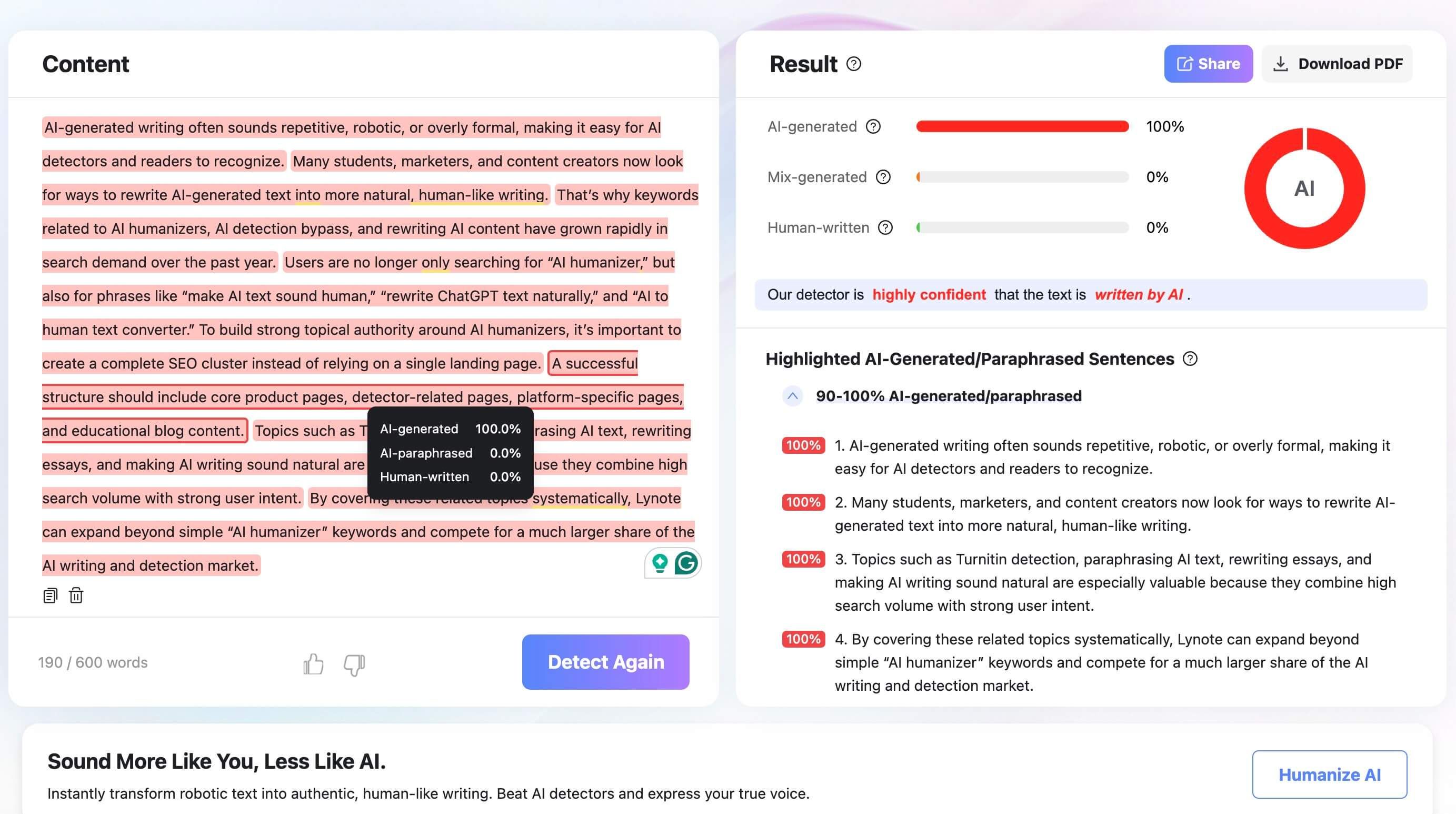
A useful detector does more than give a single number. Sentence highlights matter because they let you inspect the parts that may be driving the score.
If only a few sentences are highlighted, the best next step is to read those lines in context. They may need more specific evidence, a clearer source, or a less formulaic transition.
Why Results Can Change After Editing
Detector scores can move after normal editing. Adding concrete examples, restoring personal reasoning, shortening repetitive transitions, or changing the sample length can alter the statistical pattern.
That does not mean the detector was useless. It means the result is sensitive to the actual text you submit, so the same idea can receive a different score after it is revised.
What GPTZero Can and Cannot Prove
GPTZero can help identify writing that resembles AI-generated text. It can also help reviewers notice which passages deserve closer attention.
It cannot prove the full writing process by itself. If authorship matters, drafts, notes, version history, sources, and a conversation about the writer’s reasoning are more meaningful than one score alone.
A Safer Way to Read a GPTZero Result
Start with the flagged passages, not the headline score. A document-level result can tell you where to look, but the sentences themselves tell you whether the issue is vague wording, repeated structure, weak sourcing, or something else.
Then ask what evidence the writing gives to a human reader. A paragraph with a specific source, a clear reason for using it, and a visible connection to the writer's argument will usually be easier to defend than a smooth paragraph that says very little.
It also helps to compare the result with earlier drafts. If the final version became more polished after editing, the change may reflect normal revision rather than AI authorship.
Common Misreadings of AI Detection
The first misreading is treating a score as a verdict. Detection tools estimate patterns; they do not interview the writer, see the research notes, or know the assignment history.
The second misreading is assuming every highlighted sentence is bad. A highlighted line may simply be generic, overly neat, or similar to common explanatory language. Some lines need rewriting, while others only need context.
The third misreading is expecting a detector to identify a named model. In normal review, the practical question is whether the writing needs closer inspection, not whether the exact source can be named from the text alone.
Examples of Text That May Look AI-Like
A paragraph can look AI-like when it explains a topic in a smooth but empty way. For example, it may define a problem, list general benefits, and end with a neat conclusion without showing a source, a decision, or a specific observation.
Another common pattern is repeated balance. If every sentence has the same calm structure and every paragraph uses the same transition, the writing may feel generated even when a human wrote it.
The fix is not to make the writing messy. The fix is to make it more grounded: add the source behind the claim, explain why the example matters, and keep the sentences that show your actual reasoning.
A strong human revision often has a little more texture. It may include a narrower claim, a concrete detail, or a sentence that connects the evidence to the writer's purpose.
Review AI-Like Text in Lynote
Lynote presents sentence-level Human, AI, and Mixed-content signals through a workflow powered by GPTZero’s third-party API. Use the highlighted passages to guide review; do not treat a second scan in Lynote as an independent model confirmation of GPTZero.
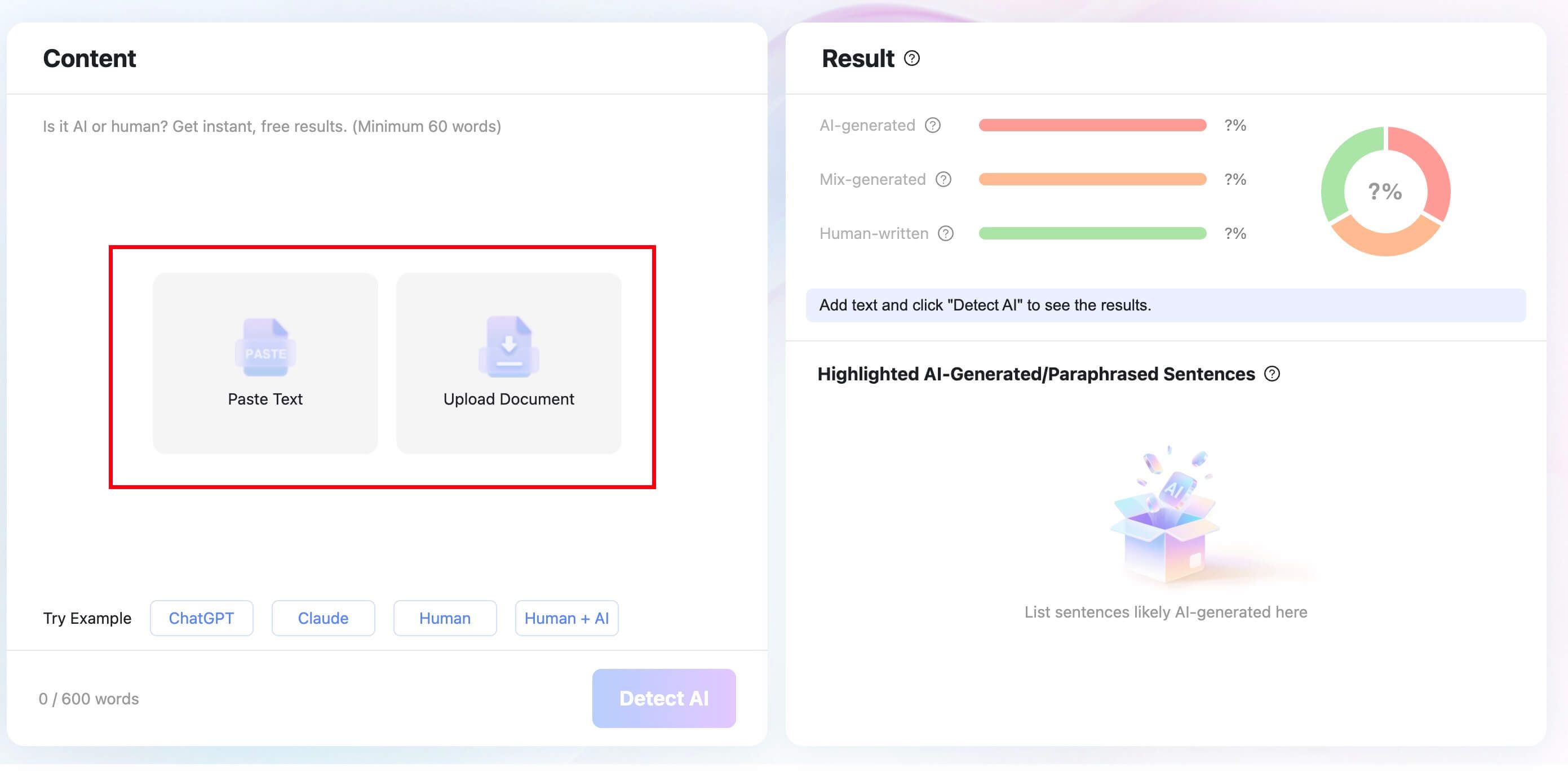
- Paste text or upload a supported document.
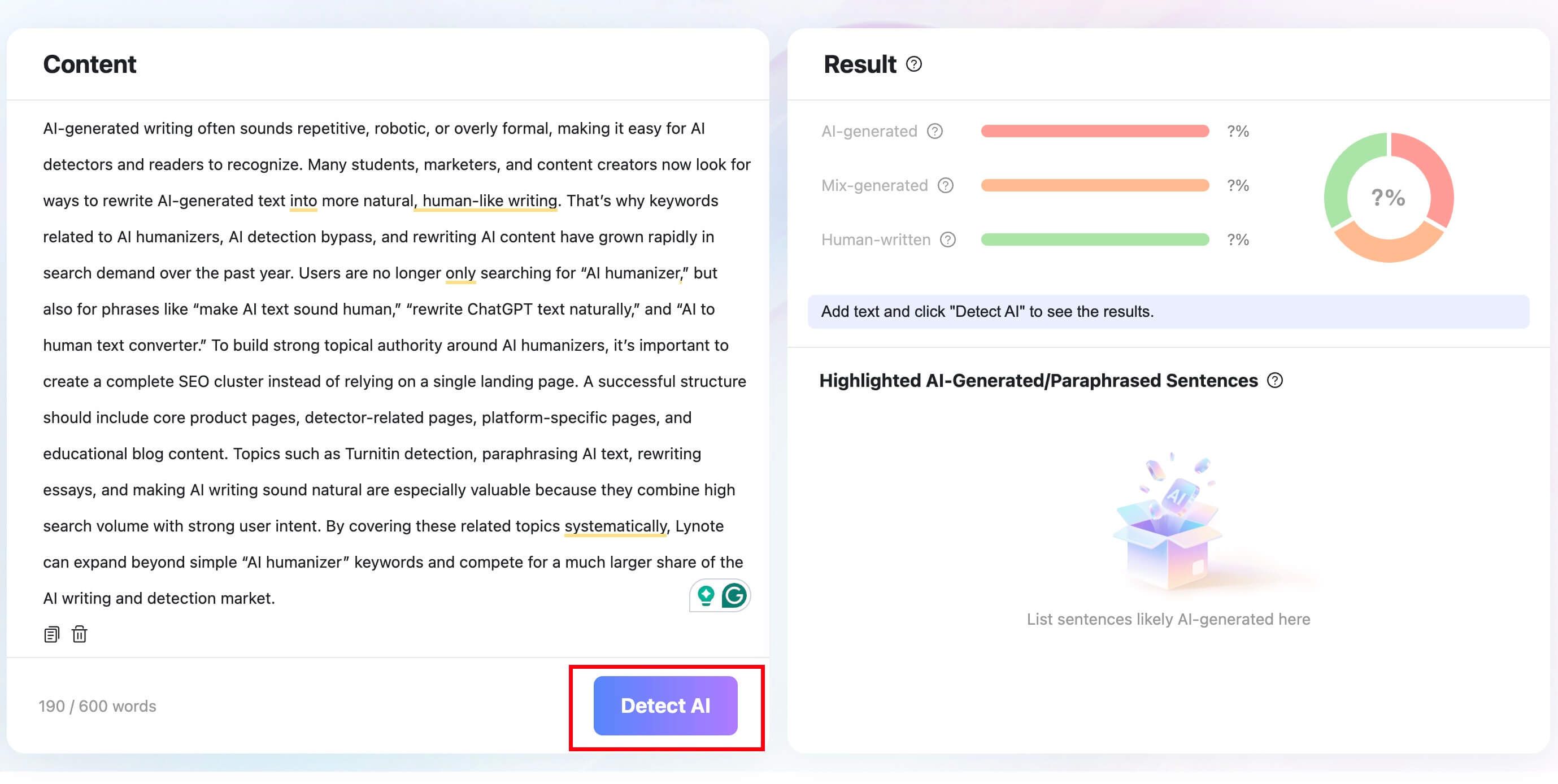
- Run the detector and review the highlighted sentences in context.
- Check sources, specificity, and your writing evidence before revising.
FAQs About How GPTZero Detects AI
Does GPTZero still use perplexity and burstiness?
GPTZero says it stopped using them for AI detection after migrating to a deep-learning-based architecture in autumn 2023.
Can GPTZero identify the exact AI model?
A detector may estimate AI-likeness, but exact model attribution is a different and more difficult problem.
Can GPTZero flag human writing?
Yes. Any probabilistic detector can make errors, especially on unusual, short, or highly formulaic text.
Sources
Related Reading
Final Verdict
GPTZero detects AI by looking for patterns that often appear in machine-generated writing. Those signals can be helpful, but the result should guide careful revision rather than act as complete proof.

Written by Janet L. Harris
AI Writing Specialist
Janet reviews AI detectors and humanization tools, with a focus on accuracy, limitations, and responsible use. View all articles →