

gptzero vs zerogpt is not a simple winner-takes-all comparison. GPTZero is usually the stronger fit for detailed writing review, while ZeroGPT can be useful when someone wants a quick AI check with a simple workflow.
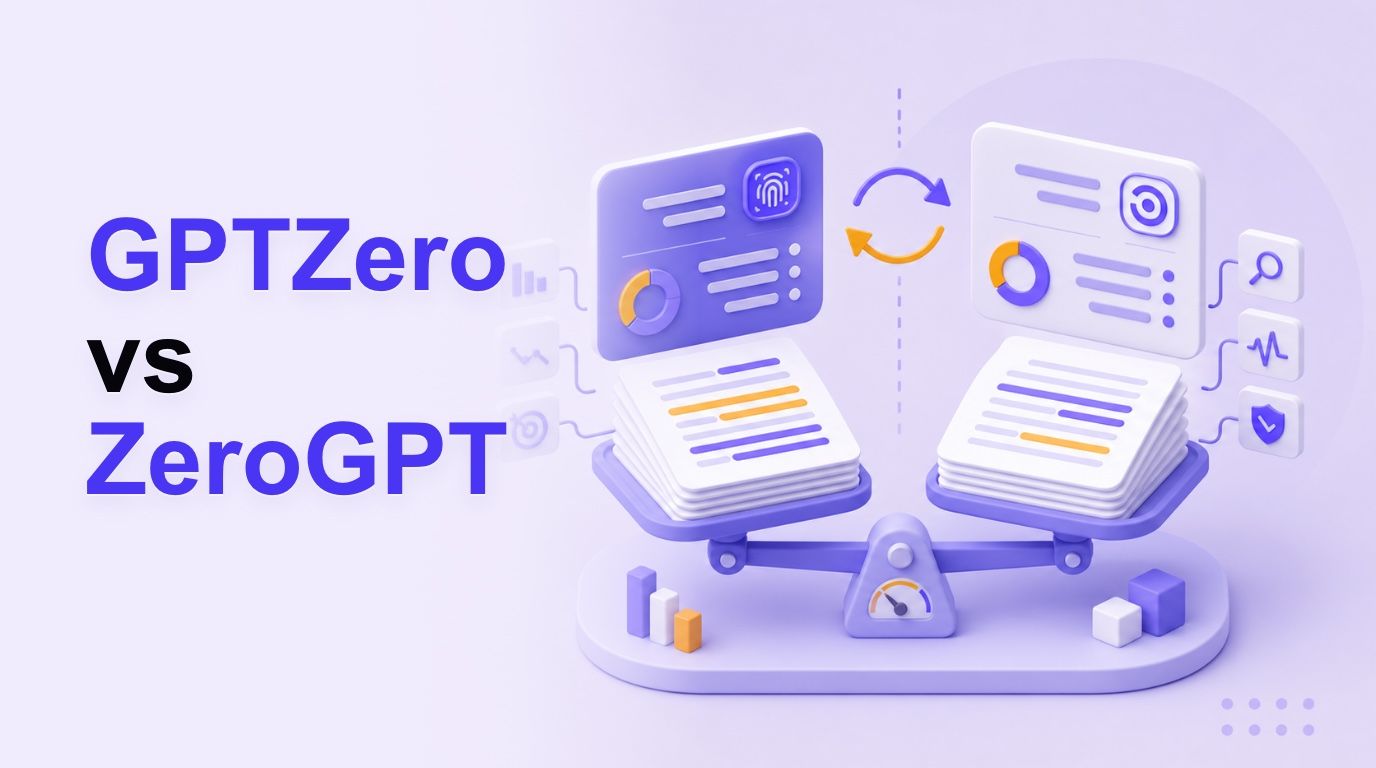
The better tool depends on what you need to do after the score appears. If you need to explain, revise, or discuss a result, clarity matters more than speed.
Quick Verdict
Choose GPTZero when you want a more developed review workflow, sentence-level interpretation, and education-oriented features. Choose ZeroGPT when you want a quick web check and are comfortable treating the result as a light signal.
For important writing, neither tool should be your only evidence. Read the text, check the highlighted passages, and consider the writer’s process.
Source note: GPTZero publishes support material on sentence scanning, while ZeroGPT positions its web tool around quick AI text checks. Because the public materials emphasize different workflows, this comparison focuses on use case, review depth, and decision risk rather than declaring one universal accuracy winner.
What GPTZero Does Well
GPTZero’s public product pages emphasize AI detection across major language models, overall scoring, and sentence-by-sentence detection. That makes it useful when the reader needs to inspect the parts of the text that triggered concern.
It is also positioned around education, reports, and integrations. Those details matter for schools or teams that need a repeatable review process.
What ZeroGPT Does Well
ZeroGPT is often attractive because it feels fast and simple. A user can paste text, run a check, and get a result without thinking through a larger workflow.
That simplicity is useful for a first pass. It becomes less useful when the result needs to be explained in detail or used in a sensitive decision.
GPTZero vs ZeroGPT Comparison
| Need | GPTZero | ZeroGPT | Better fit |
|---|---|---|---|
| Quick paste-and-check | Works, but has more workflow depth | Strong quick-check feel | ZeroGPT |
| Sentence-level review | Publicly emphasizes advanced sentence detection | May be simpler depending on workflow | GPTZero |
| Education workflow | Stronger education positioning | More general checking | GPTZero |
| Sensitive decisions | Still needs human review | Still needs human review | Neither alone |
| Revision guidance | Highlights can guide edits | Score can prompt review | GPTZero |
How to Test GPTZero and ZeroGPT Fairly
If you compare the tools yourself, use the same text, the same version of the draft, and the same review goal. Do not paste one paragraph into one tool and a different section into another.
Record the date, the text length, the score, and any highlighted passages. AI detectors can change over time, so a one-time score is less useful than a clear comparison record.
Most importantly, compare the explanation, not only the percentage. A tool that points to the exact sentences needing review is often more useful than a tool that gives a simple score with little context.
When Neither Tool Is Enough
Neither GPTZero nor ZeroGPT is enough when the result could affect a grade, job, publication decision, or formal accusation. In those situations, the detector should only tell you where to look next.
You still need the writing context. That may include drafts, notes, source annotations, assignment rules, revision history, or a conversation with the writer. If those materials contradict the detector score, the review should slow down.
The more serious the consequence, the less you should rely on a single tool. A fair process is usually stronger than a faster score.
For teams, the fairest approach is to pick a review policy before there is a dispute. Decide which detector is used for first checks, when a second signal is needed, who reviews highlighted passages, and what evidence writers can provide.
That policy makes the comparison more useful because everyone knows what the tool is supposed to decide and what it is not allowed to decide.
Accuracy and Reliability Caveats
GPTZero and ZeroGPT can disagree because detectors use different models, thresholds, and training assumptions. That disagreement does not automatically tell you which one is right.
When tools disagree, read the text. Look for generic phrasing, unsupported claims, repeated transitions, and sentences that do not sound like the writer’s normal voice.
Which One Should You Use?
Use GPTZero if your main goal is to understand the result and talk about the writing. Use ZeroGPT if your main goal is a quick first check and you do not need much explanation.
For school, hiring, publishing, or client work, use detector results as signals. The final decision should include context, drafts, sources, and human review.
Decision Guide: Which Tool Fits Your Situation?
If you are checking a short piece of text for personal awareness, ZeroGPT may be enough for a quick first look. Its value is speed and simplicity.
If you need to explain why a passage looks AI-like, GPTZero is usually the more practical starting point because the workflow is more review-oriented. Sentence-level signals and reporting features are useful when you need to discuss the text with someone else.
For school or client work, do not treat either tool as the only answer. Use the output to decide which sentences need better sourcing, clearer reasoning, or a more natural voice.
Why Two Detectors Can Give Different Results
Different tools use different models, thresholds, and training assumptions. One detector may react strongly to predictable structure, while another may react more to vocabulary or sentence rhythm.
That is why a disagreement does not automatically prove one tool is broken. It shows that the text sits in a gray area where human review is especially important.
When results conflict, make the writing stronger instead of chasing the friendlier score. A clearer draft is useful no matter which detector you run next.
Best Use Cases for Each Tool
Use GPTZero when the result needs to be discussed with a student, writer, editor, or teammate. The value is not only the score but the ability to inspect the text and decide what to revise.
Use ZeroGPT when the task is lighter. If you only want a quick indication before doing your own review, a simple detector can be enough.
Use neither tool as a standalone decision-maker. The more serious the consequence, the more you need process evidence, source review, and human judgment.
A useful comparison is not “which score do I like better?” The better question is “which tool helps me make the writing clearer and the review fairer?”
How to Check AI-Like Text With Lynote AI Detector
A detector result should be treated as a review signal, not a final verdict. You can use Lynote AI Detector to check another signal and identify sentences that may need clearer sourcing, more specific examples, or a more natural voice.
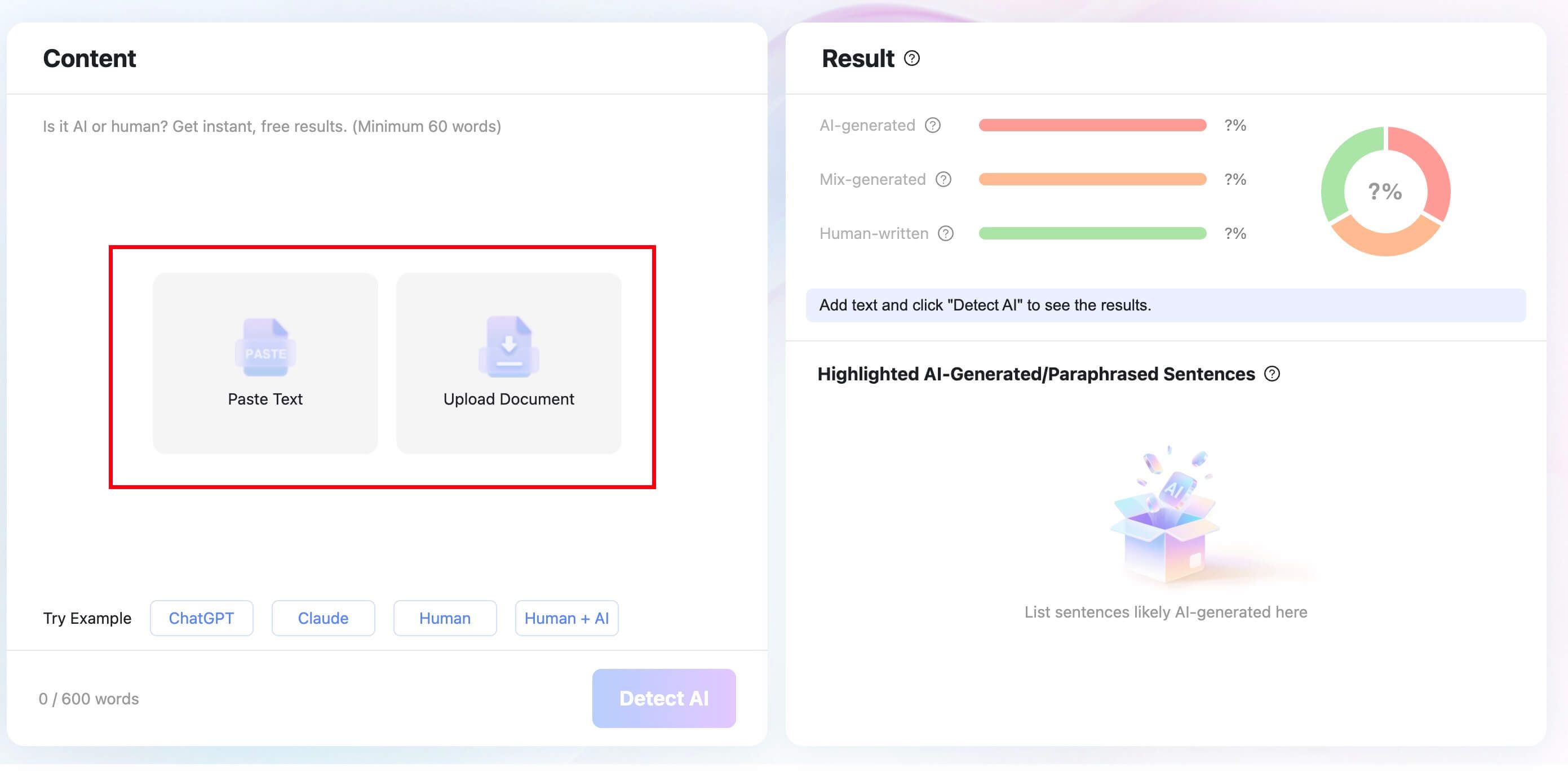
Step 1. Paste Text or Upload a Document
Paste the text you want to review, or upload a supported document. For best results, check the final draft rather than an early outline or a very short fragment.
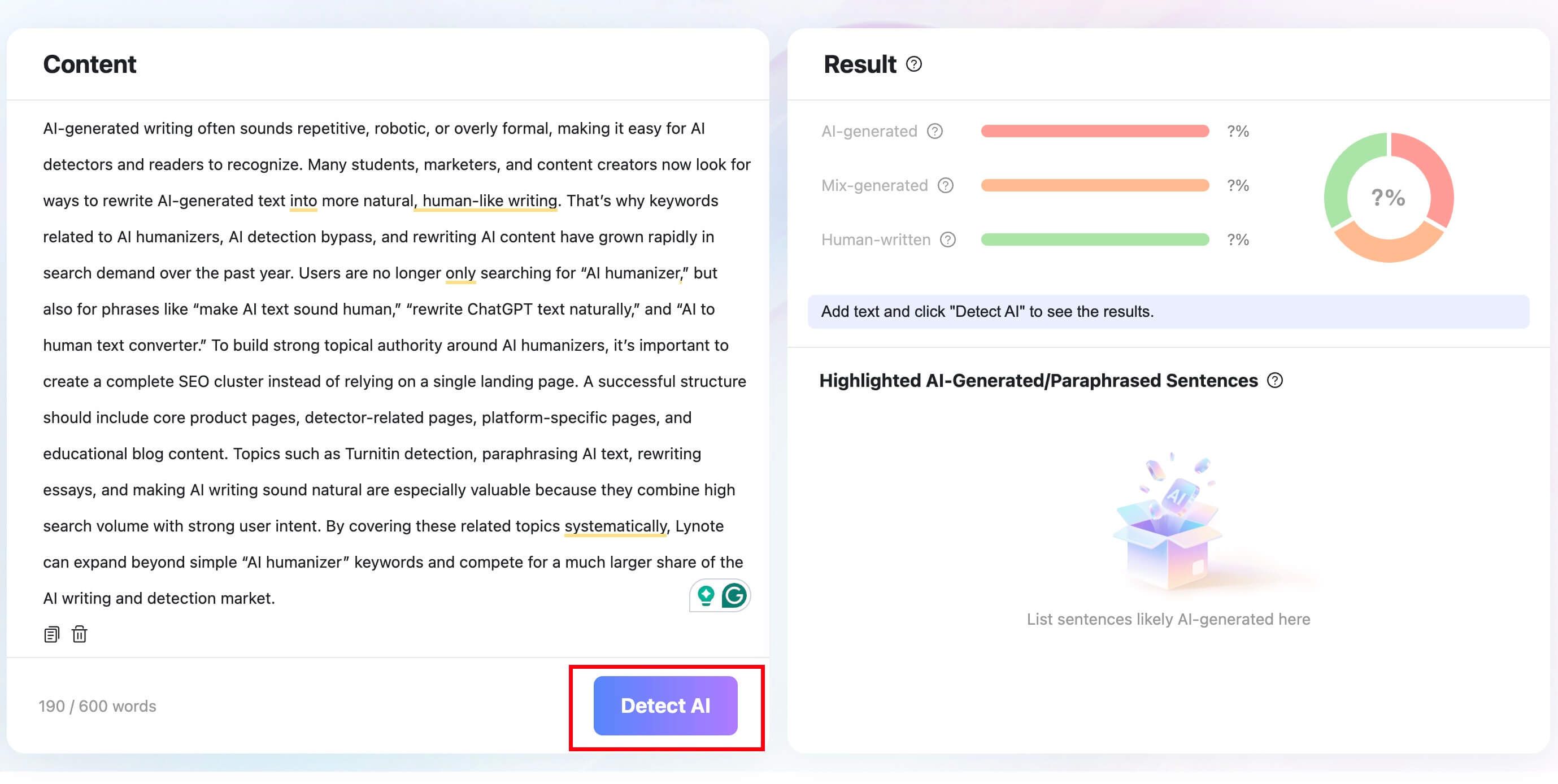
Step 2. Click Detect AI
Run the detector to get a breakdown of AI-generated, mixed, and human-written signals. Use the result to guide review, not to make a final authorship judgment.
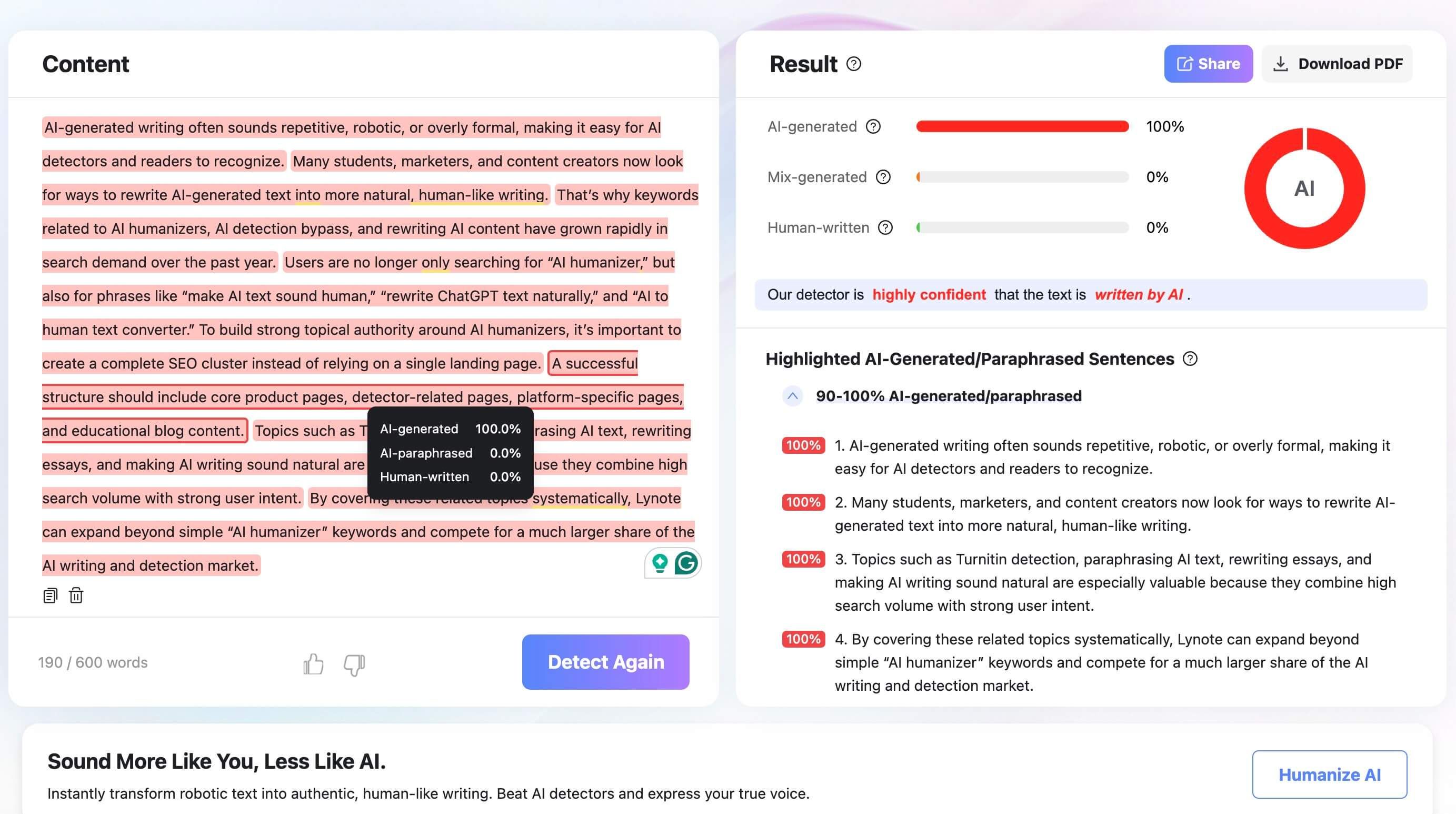
Step 3. Review the Highlighted Sentences
Look at the highlighted sentences and decide whether they need clearer sourcing, more specific evidence, or a more natural rhythm. Revise the writing, then check again only if another signal would help.

FAQs About GPTZero vs ZeroGPT
Is GPTZero better than ZeroGPT?
GPTZero is usually a better fit when you need a more detailed review workflow. ZeroGPT may be enough when you only want a fast first-pass check.
Can GPTZero and ZeroGPT disagree?
Yes. Different detectors use different models, thresholds, training data, and presentation methods. Disagreement means the text deserves closer reading.
Is ZeroGPT accurate?
ZeroGPT can be useful as a quick signal, but no detector should be treated as proof by itself. Review the text, sources, and writing history before making a serious decision.
Should I trust one AI detector?
For low-stakes self-review, one detector may be enough to prompt editing. For school, work, or publication decisions, use more context than one score.
Which detector is better for students?
Students usually benefit more from a tool that explains which passages need review. A quick score can help, but sentence-level feedback is more useful for revision.
Final Verdict
GPTZero is usually the better fit for detailed review, while ZeroGPT can work for quick checks. The safest approach is to compare signals, read the highlighted text, and make revisions based on evidence rather than treating one score as proof.

Written by Janet L. Harris
AI Writing Specialist
Janet reviews AI detectors and humanization tools, with a focus on accuracy, limitations, and responsible use. View all articles →