
7 Praktische Methoden: Hoe je aantekeningen maakt uit een studieboek

De beste manier om aantekeningen te maken uit een studieboek is door een kort gedeelte te lezen om het te begrijpen, het boek te sluiten, het hoofdidee in je eigen woorden te herinneren, en vervolgens de bron opnieuw te openen om details te verifiëren. Dit lees-herinner-verifieer-proces voorkomt dat je aantekeningen een tweede kopie van het hoofdstuk worden. Het levert je ook materiaal op dat je kunt gebruiken voor zelfstudie in plaats van nog een document om opnieuw te lezen.
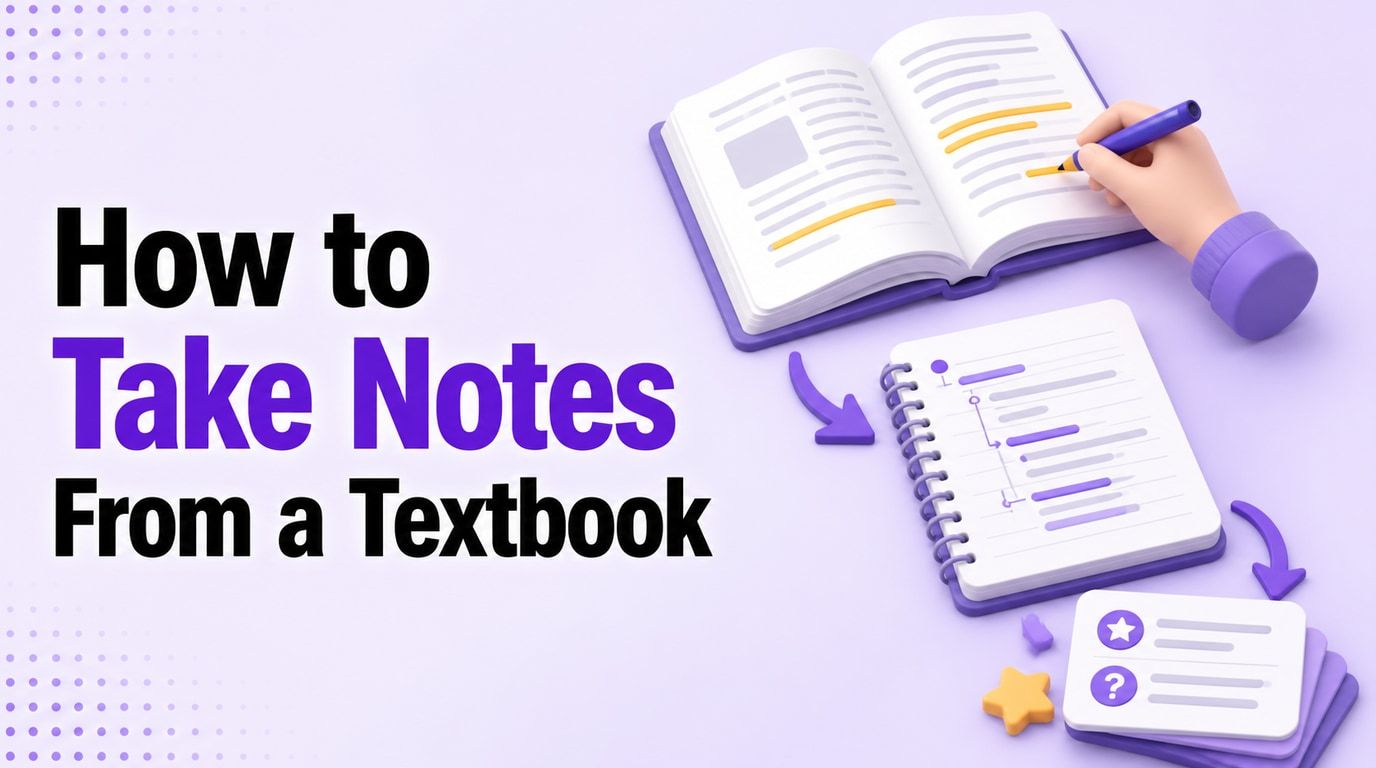
Het formaat kan veranderen met het onderwerp. Een overzicht werkt goed voor een hoofdstuk met duidelijke koppen, een conceptmap onthult relaties, Cornell-aantekeningen bouwen vragen in, en een AI-tekstboek-naar-aantekeningen-converter kan een eerste structuur creëren wanneer de leeslast zwaar is. Het nuttige deel is niet het formaat zelf; het is het denkwerk dat je verricht tijdens het selecteren, uitleggen, controleren en ophalen van de informatie.
1. Het korte antwoord: Lezen, herinneren, dan verifiëren
Gebruik deze zesstapsversie wanneer je direct wilt beginnen met het maken van aantekeningen uit studieboeken:
- Bekijk het hoofdstuk vooraf. Scan de titel, leerdoelen, koppen, vetgedrukte termen, diagrammen, samenvatting en vragen aan het einde van het hoofdstuk.
- Zet koppen om in vragen. Verander “Cellulaire Ademhaling” in “Wat gebeurt er tijdens cellulaire ademhaling, en waarom is het belangrijk?”
- Lees één behapbaar gedeelte. Concentreer je op begrip voordat je probeert volledige aantekeningen te maken.
- Sluit of verberg het studieboek. Schrijf het hoofdidee, de ondersteunende logica en alles wat je uit je geheugen kunt uitleggen.
- Heropen de bron en verifieer. Corrigeer fouten en voeg precieze termen, formules, datums, uitzonderingen of paginareferenties toe.
- Creëer herhalingsvragen. Sluit het gedeelte af met vragen die je later zonder te kijken zou moeten kunnen beantwoorden.
Je studieboek bevat al de volledige uitleg. Je aantekeningen moeten een andere taak vervullen: de structuur onthullen, details bewaren die precisie vereisen, en je aanzetten om de belangrijke ideeën later te reconstrueren.
2. Hoe je een studieboek omzet in aantekeningen met Lynote AI
Handmatig aantekeningen maken geeft je directe controle over wat je verwerkt, maar het kan traag zijn wanneer een cursus meerdere dichte hoofdstukken tegelijk toewijst. De Lynote AI Studieboek Samenvatter biedt een sneller startpunt door studiemateriaal om te zetten in een gestructureerde studiegids die je kunt bekijken en verfijnen.
Het sterkste gebruik van een AI-studieboek-naar-aantekeningen-tool is niet “uploaden en vergeten.” Gebruik het om de initiële structuur te creëren en vergelijk die structuur vervolgens met het hoofdstuk, je syllabus en de onderwerpen die in de les zijn benadrukt.
Stap 1. Importeer het studieboekhoofdstuk of de educatieve link
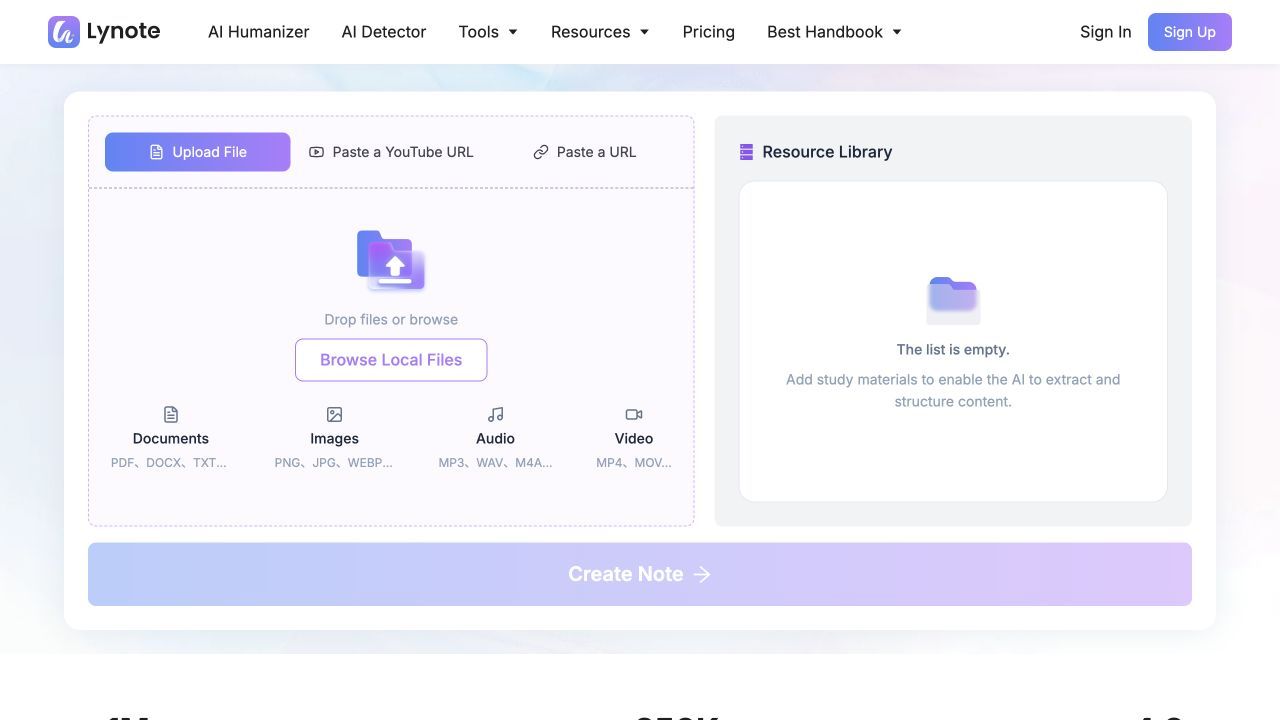
Upload een ondersteund studieboekbestand, zoals een PDF of document, of voeg een link toe naar online educatief materiaal. Een gericht hoofdstuk of toegewezen sectie is meestal gemakkelijker te inspecteren dan een heel boek, omdat je de uitvoer kunt vergelijken met één duidelijke set leerdoelen.
Gebruik alleen studieboekbestanden en digitaal materiaal waartoe je toegang hebt en dat je mag verwerken. Als het hoofdstuk privé-aantekeningen of identificerende informatie bevat, verwijder dan alles wat je niet nodig hebt voordat je het uploadt.
Stap 2. Genereer een gestructureerde studiegids
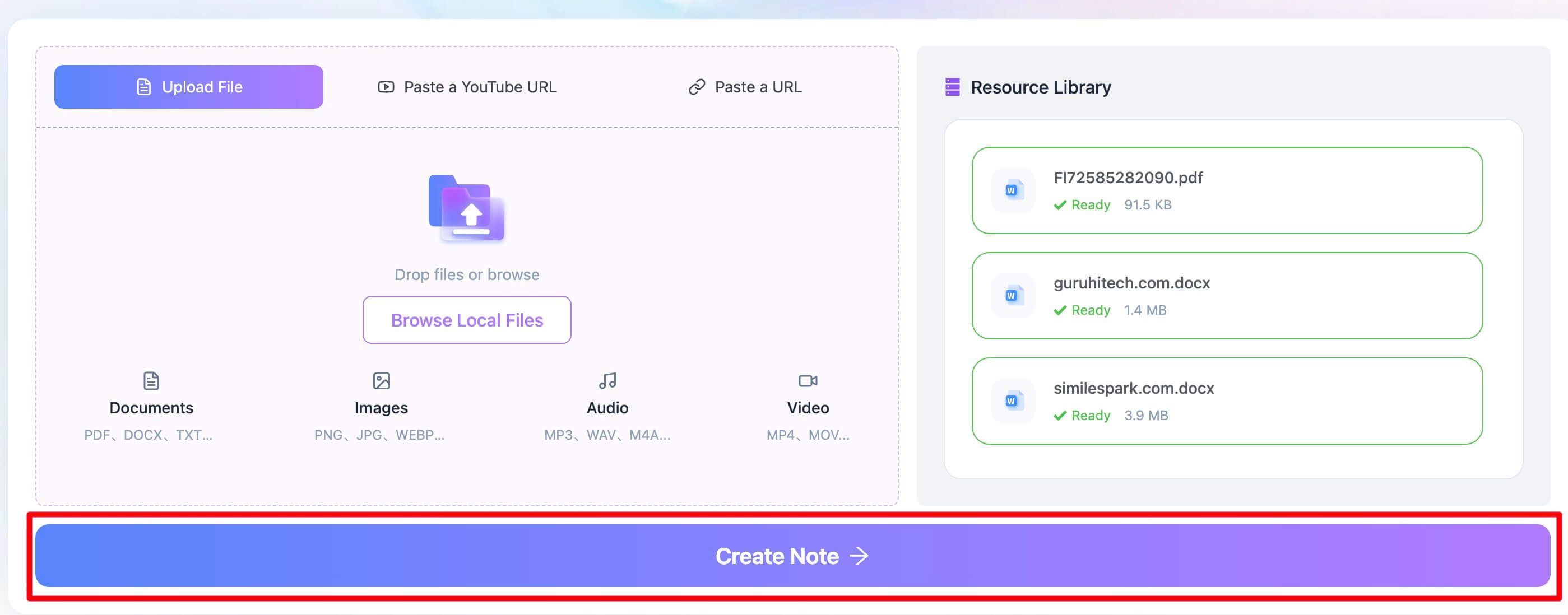
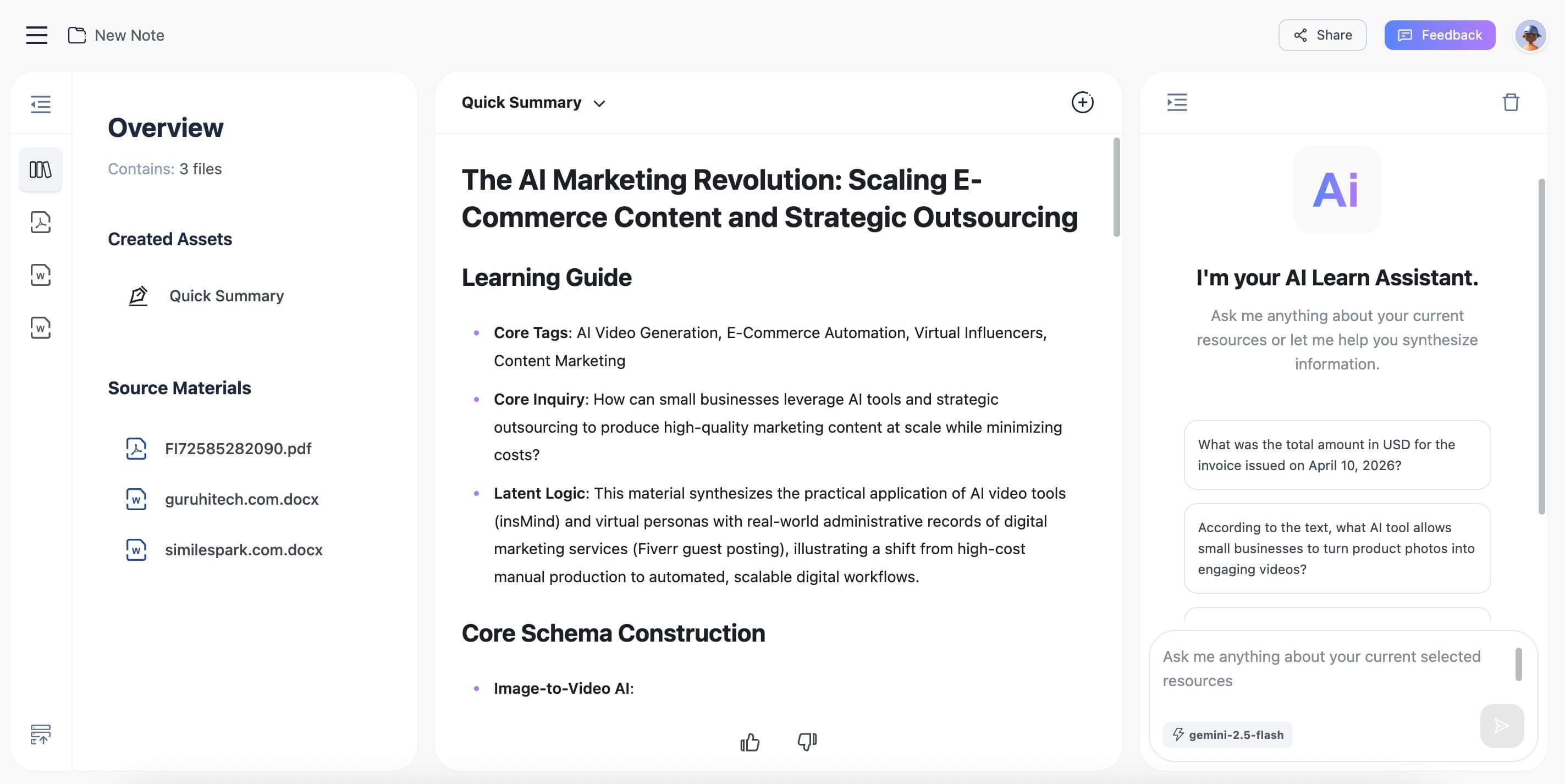
Maak de notitie en voer de workflow voor studieboeksamenvatting uit. De uitvoer organiseert belangrijke academische punten, argumenten, concepten en terminologie met koppen en opsommingstekens, waardoor je een navigeerbaar eerste concept krijgt in plaats van een lege pagina.
Beoordeel het resultaat niet alleen op hoe kort of gepolijst het eruitziet. Een nuttige studiegids moet de conceptuele hiërarchie van het hoofdstuk bewaren en het gemakkelijk maken om een idee terug te traceren naar de relevante sectie.
Stap 3. Bekijk, bevraag en exporteer de aantekeningen
Lees de gegenereerde aantekeningen naast de bron en stel vervolgvragen over ideeën die onduidelijk blijven. Controleer definities, vergelijkingen, datums, casusnamen, geciteerde taal, diagramlabels en elke bewering die van betekenis kan veranderen als één woord verkeerd is.
Na het bekijken van de uitvoer, exporteer of hergebruik je deze in je voorkeursstudiesysteem. Bewaar paginareferenties naast visueel materiaal, directe citaten, technische beweringen en alles wat je later mogelijk moet citeren.
Stap 4. Voeg je cursusprioriteiten toe
AI weet niet precies wat je instructeur in de les heeft herhaald, op een overzichtsblad heeft geplaatst, of wat je op een examen moet toepassen. Voeg die prioriteiten zelf toe, samen met je eigen vragen, verwarrende punten en verbanden met eerdere hoofdstukken.
Het resultaat moet minder aanvoelen als een generieke hoofdstuksamenvatting en meer als een studiedocument dat is opgebouwd voor jouw cursus. Als je een opsommingsteken niet kunt uitleggen zonder het studieboek opnieuw te openen, verander dat opsommingsteken dan in een vraag en onderzoek het voordat je verdergaat.
Praktische regel: Laat AI het extractiewerk verminderen. Houd het begrip, de verificatie en het ophaalwerk voor jezelf.
3. Een herhaalbare 7-stappen workflow voor aantekeningen uit studieboeken
De volgende workflow werkt met handgeschreven aantekeningen, een leeg document, een tablet of een door AI gegenereerd eerste concept. Het scheidt lezen van vastleggen, zodat je minder snel zinnen kopieert voordat je besluit wat ze betekenen.
Stap 1. Bepaal wat de aantekeningen je moeten helpen doen
Begin met de opdracht, leerdoelen en de waarschijnlijke beoordeling. Aantekeningen voor een anatomie-examen met meerkeuzevragen vereisen precieze terminologie en contrasten, terwijl aantekeningen voor een geschiedenisessay argumenten, bewijsmateriaal, chronologie en concurrerende interpretaties nodig hebben.
Schrijf het doel bovenaan de pagina: “Leg het proces uit,” “Vergelijk deze theorieën,” “Los dit type probleem op,” of “Gebruik dit bewijs in een essay.” Dit geeft je een filter om te beslissen wat in de aantekeningen thuishoort.
Stap 2. Overzicht van het hoofdstuk vóór het lezen
Scan de inleiding, koppen, samenvatting, diagrammen, vetgedrukte termen en herhalingsvragen. Je bouwt een kaart, je probeert niet alles te leren tijdens het voorproefje.
Kopieer alleen de hoofdkopjes naar je aantekeningenpagina en laat er ruimte onder. Dit creëert een structuur voordat details om je aandacht beginnen te strijden.
Stap 3. Zet koppen om in vragen
Vragen geven je lezen een doel. “De oorzaken van inflatie” kan “Wat veroorzaakt inflatie, en hoe verschillen de oorzaken?” worden, terwijl “De Tweede Wet van Newton” kan worden “Hoe verhouden kracht, massa en versnelling zich onder het model?”
Plaats elke vraag boven het betreffende aantekeningengedeelte. Als het studieboek leerdoelen bevat, herschrijf deze dan als taken die je moet uitvoeren in plaats van beweringen die je alleen maar herkent.
Stap 4. Lees één gedeelte voor begrip
Lees een kort gedeelte van begin tot eind zonder elke zin te proberen vast te leggen. Volg de bewering, uitleg, bewijsmateriaal, voorbeelden en visueel materiaal.
Als het gedeelte moeilijk is, pauzeer dan om het exacte punt van verwarring te identificeren. Markeer het met een vraag in plaats van onzekerheid te bedekken met een gekopieerde paragraaf.
Stap 5. Herinner het gedeelte met het boek gesloten
Sluit het boek, verberg de PDF of scroll de bron uit het zicht. Schrijf het hoofdidee en de redenering die het ondersteunt op, met behulp van taal die je zou gebruiken om het aan een klasgenoot uit te leggen.
Deze stap legt het verschil bloot tussen bekendheid en herinnering. Als je alleen geïsoleerde termen onthoudt, heropen dan het gedeelte, lees opnieuw met je vraag in gedachten en probeer het opnieuw.
Stap 6. Verifieer feiten en voeg paginareferenties toe
Vergelijk je herinnerde uitleg met de bron. Corrigeer misvattingen en voeg details toe die exact moeten blijven, inclusief formules, definities, datums, eenheden, uitzonderingen, citaten en labels.
Voeg paginanummers toe voor diagrammen, voorbeelden en passages die je mogelijk opnieuw moet vinden. Verificatie is geen uitnodiging om het hele gedeelte te kopiëren; het is een gerichte nauwkeurigheidscontrole.
Stap 7. Zet de aantekeningen om in herhalingsvragen
Sluit elk gedeelte af met twee of drie vragen. Voeg ten minste één uitlegvraag, één vergelijkings- of toepassingsvraag en een oefenprobleem toe wanneer het onderwerp procedures vereist.
Stel je bijvoorbeeld een biologisch gedeelte voor met de titel “Diffusie over celmembranen.” Je herinnerde aantekening zou kunnen uitleggen dat deeltjes langs een concentratiegradiënt bewegen en dat membraaneigenschappen de beweging beïnvloeden. Na het controleren van het hoofdstuk, zou je een paginareferentie naar het membraandiagram kunnen toevoegen en vragen: “Wat bepaalt de richting van de netto diffusie?” en “Hoe zou het veranderen van de membraanpermeabiliteit het proces beïnvloeden?”
4. Zeven methoden voor het maken van aantekeningen uit studieboeken en wanneer je ze moet gebruiken
Alle zeven onderstaande benaderingen kunnen helpen, maar ze lossen verschillende problemen op. De zes handmatige formaten zijn gratis, en de AI-ondersteunde aanpak kan de tijd die nodig is voor het creëren van een initiële structuur verminderen.
| Methode | Het beste voor | Minder geschikt voor | Afgewerkte aantekeningen zien eruit als |
|---|---|---|---|
| Overzicht | Duidelijk gestructureerde hoofdstukken | Sterk onderling verbonden ideeën | Geneste koppen en beknopte opsommingstekens |
| Cornell | Herhaling en zelf-toetsing | Grote diagrammen of niet-lineaire lay-outs | Aantekeningen, geheugensteunvragen en een samenvatting |
| SQ3R of S-RUN | Dichte, belangrijke lezingen | Snel aanvullend lezen | Vragen, sectieaantekeningen en herhalingsvragen |
| Conceptmap | Systemen en relaties | Lange sequenties en precieze details | Verbonden knooppunten, pijlen en labels |
| Strategische annotatie | Snel lezen met bron toegang | Een gehuurd fysiek boek dat je niet kunt markeren | Geselecteerde markeringen plus kanttekeningen |
| Samenvatting zonder boek | Conceptueel begrip | Detailrijk referentiemateriaal op zichzelf | Korte uitleg uit het geheugen geschreven |
| AI-ondersteunde aantekeningen | Zware leeslasten en digitale bronnen | Ongecontroleerde technische of cursusspecifieke details | Gestructureerde eerste-pass aantekeningen voor verificatie |
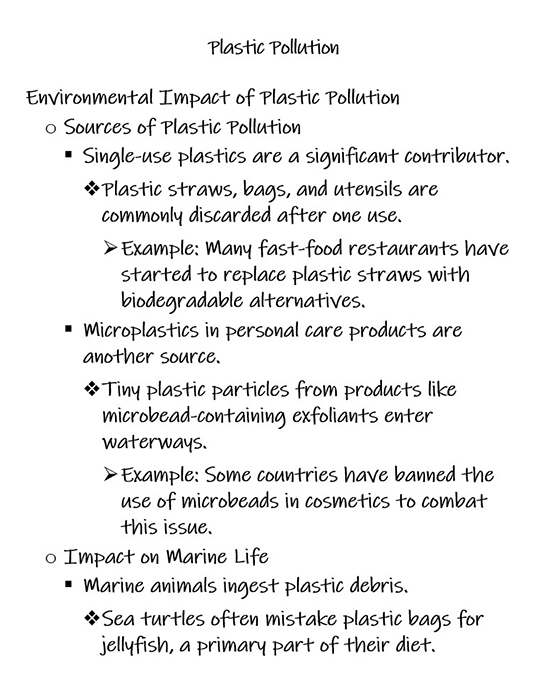
Methode 1. De overzichtsmethode
Spiegel de hiërarchie van het studieboek met hoofdonderwerpen, subonderwerpen en ondersteunende details. Houd elk opsommingsteken kort genoeg om te scannen, en inspringen alleen wanneer het detail echt onder het idee erboven hoort.
Deze methode past bij geschiedenis, biologie, bedrijfskunde en andere boeken met een zichtbare sectiestructuur. Het grootste risico is ongecontroleerde uitbreiding: als elke zin een opsommingsteken wordt, heb je het studieboek geherformateerd in plaats van samengevat.
Methode 2. Cornell-aantekeningen
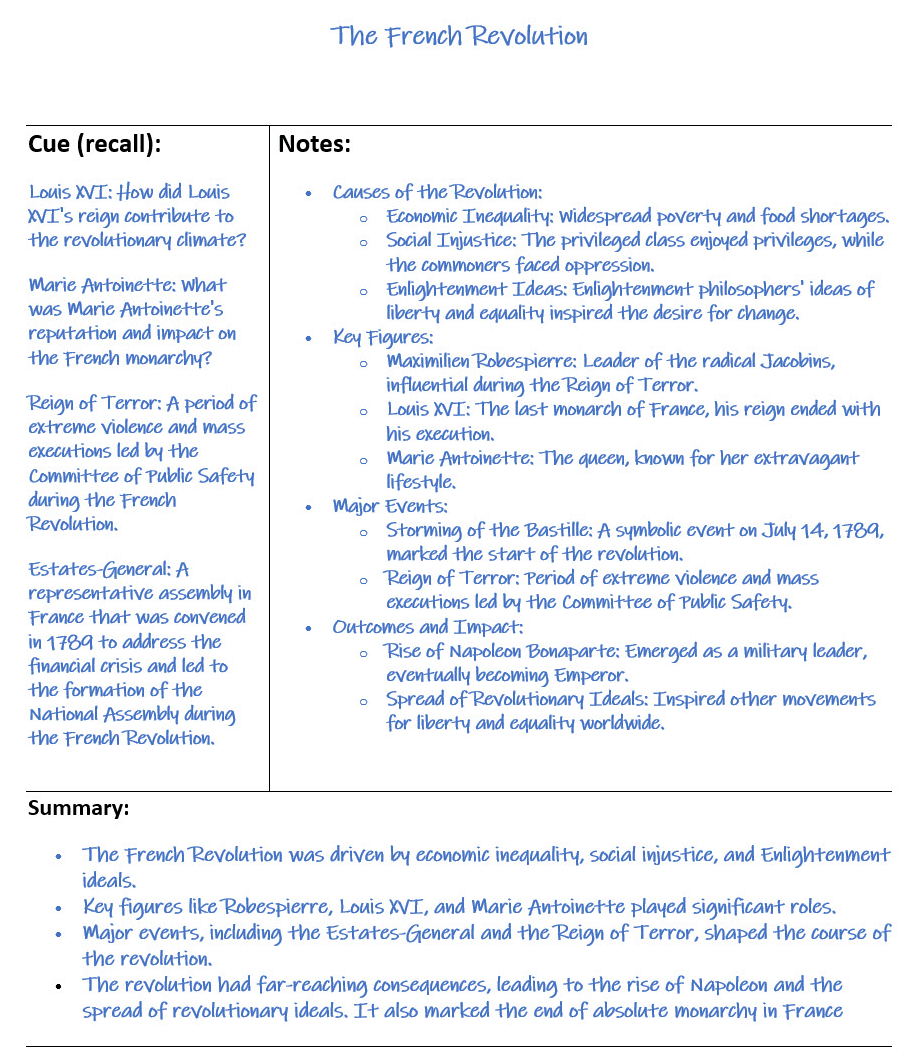
Verdeel de pagina in een groot aantekeningengebied, een smalle aanwijzingskolom en een samenvattingsgebied. Noteer beknopte aantekeningen aan de rechterkant, voeg vervolgens trefwoorden en vragen toe aan de linkerkant na het lezen; gebruik het onderste gedeelte om het centrale argument of proces samen te vatten.
De aanwijzingskolom verandert de pagina in een zelf-toetsinstrument, omdat je de aantekeningen kunt bedekken en de vragen kunt beantwoorden. Cornell-aantekeningen zijn minder handig wanneer het hoofdstuk afhankelijk is van brede vergelijkingen, paginagrote diagrammen of veel kruisverbanden.
Methode 3. SQ3R of S-RUN
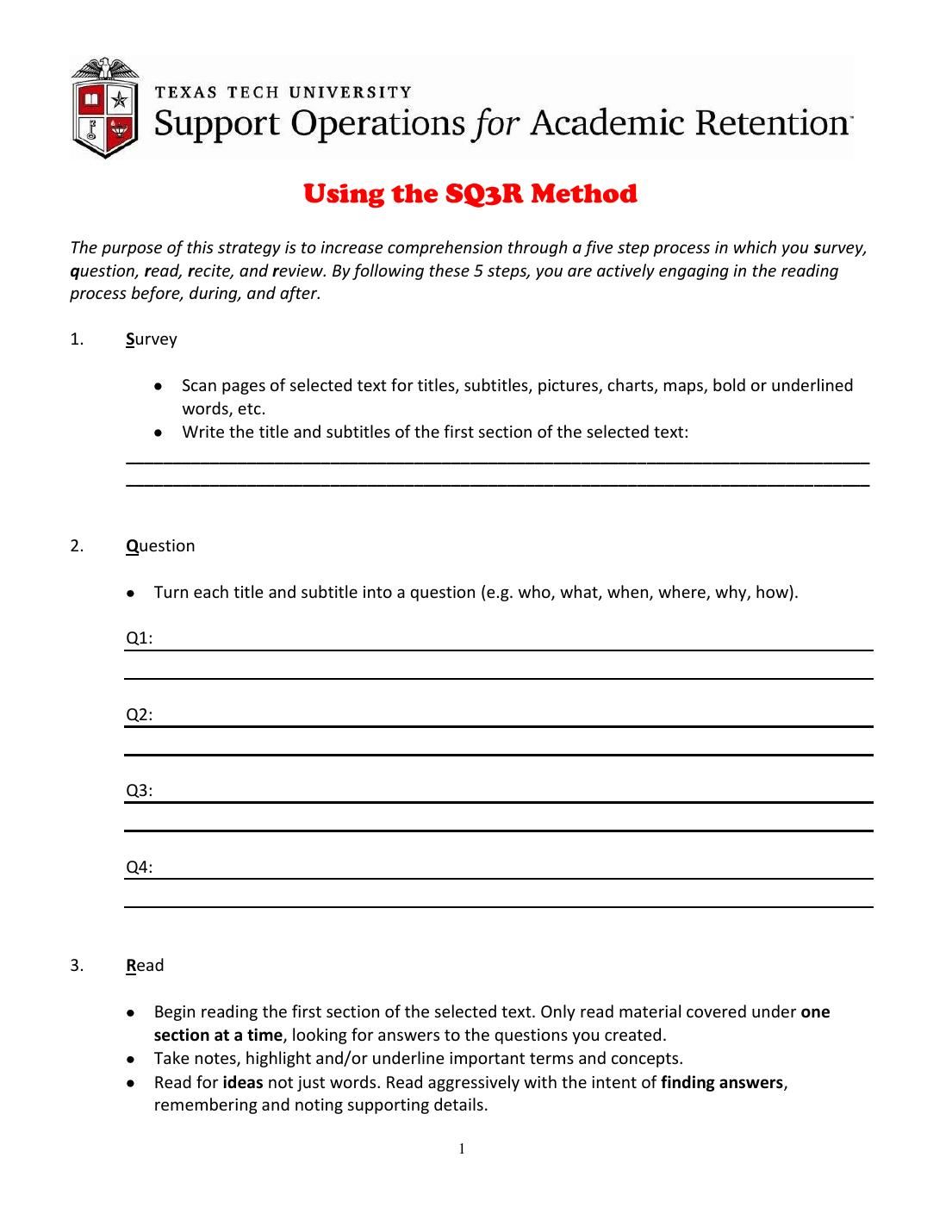
SQ3R organiseert lezen in Survey (Overzicht), Question (Vraag), Read (Lezen), Recite (Opzeggen) en Review (Herhalen). S-RUN gebruikt een gerelateerde volgorde: Survey (Overzicht), Read (Lezen), Underline selectively (Selectief onderstrepen) en take Notes (Aantekeningen maken) na begrip van het gedeelte.
Beide systemen voorkomen doelloos lezen en stellen volledige aantekeningen uit totdat je context hebt. Gebruik het volledige proces voor dichte of hoog-prioritaire hoofdstukken en een lichtere versie voor materiaal dat de cursus ondersteunt, in plaats van verankert.
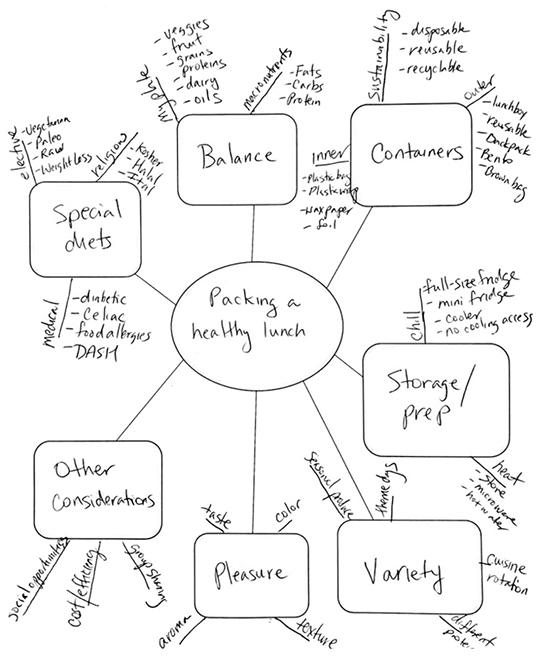
Methode 4. Conceptmaps
Plaats een centraal concept op de pagina en verbind gerelateerde processen, oorzaken, voorbeelden en contrasten met gelabelde pijlen. De labels zijn belangrijk omdat “oorzaken,” “remt,” en “is een voorbeeld van” verschillende relaties communiceren.
Conceptmaps werken goed voor fysiologie, ecologie, filosofie en theorievergelijking. Ze kunnen decoratief worden in plaats van nuttig als je te veel knooppunten toevoegt voordat je besluit welke relaties belangrijk zijn.
Methode 5. Strategische annotatie
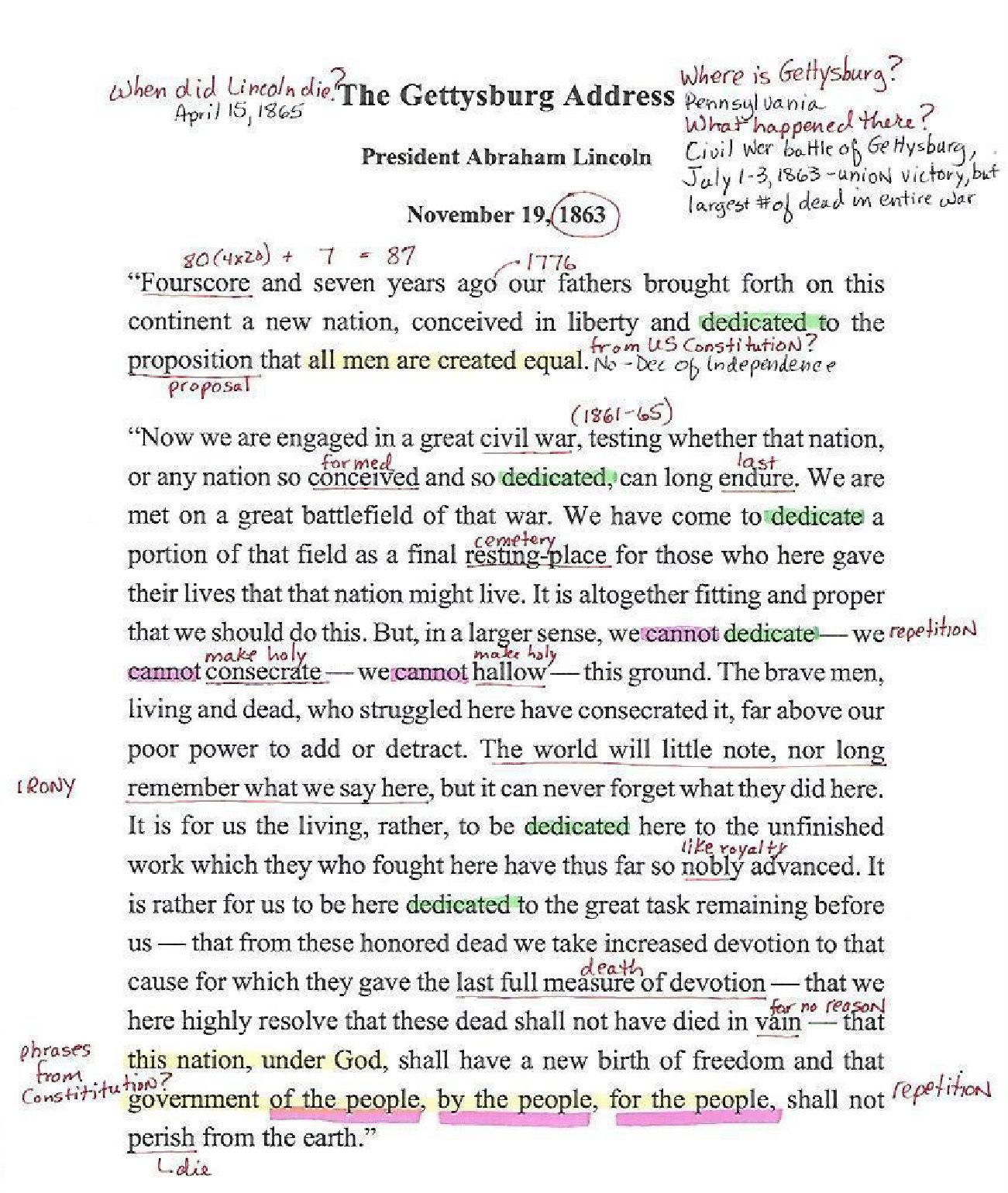
Markeer spaarzaam en voeg een kanttekening toe die uitlegt waarom de passage belangrijk is. Nuttige annotaties identificeren een bewering, verbinden deze met een ander hoofdstuk, bevragen een aanname, markeren een examenrelevant contrast, of registreren een punt van verwarring.
Alleen markeren geeft je herkenningsaanwijzingen, maar weinig oefening in het ophalen van informatie. Zet de belangrijkste annotaties om in vragen of een korte samenvatting na het voltooien van het gedeelte.
Methode 6. Samenvattingen zonder boek
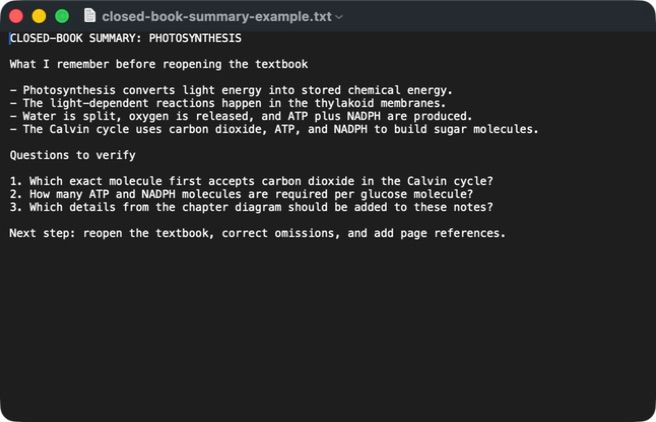
Lees een gedeelte, sluit de bron en leg het argument of proces uit het geheugen uit. Vergelijk vervolgens je samenvatting met de tekst en corrigeer alleen de delen die onvolledig of onnauwkeurig zijn.
Dit is nuttig voor conceptuele hoofdstukken omdat het synthese afdwingt. Het heeft ondersteuning nodig van exacte referentienotities wanneer het onderwerp formules, juridische taal, datums of definities bevat die niet veilig kunnen worden benaderd.
Methode 7. AI-ondersteunde studieboekaantekeningen
Gebruik een AI-tool voor studieboek-naar-aantekeningen om koppen, kernpunten en een initiële studiegids te maken van een digitale bron. Voeg vervolgens paginareferenties, prioriteiten van de instructeur, je eigen uitleg en vragen toe die de toepassing testen.
Deze methode is het meest nuttig wanneer extractie de bottleneck is. Het is minder geschikt wanneer je van plan bent de uitvoer te accepteren zonder brondetails te controleren of je met het hoofdstuk bezig te houden.
5. Wat moet je eigenlijk opschrijven?
Gebruik een eenvoudige beslissing voor elk stukje studieboekinhoud: Vastleggen, Transformeren of Overslaan. Het doel is niet om zo min mogelijk aantekeningen te maken; het is om de informatie te bewaren die je later zal helpen het hoofdstuk uit te leggen, op te halen of toe te passen.
| Studieboekelement | Actie | Waarom |
|---|---|---|
| Leerdoel of sectiekop | Leg het vast als een vraag | Het definieert wat de sectie je moet helpen beantwoorden |
| Definitie, formule, regel of datum | Leg precies vast, leg het dan uit | Precisie is belangrijk, maar uitleg toont begrip |
| Oorzaak-gevolgrelatie | Transformeer het in een keten of pijlen | De relatie is belangrijker dan de oorspronkelijke zin |
| Diagram, grafiek of tabel | Leg de kern en het paginanummer vast | Alles opnieuw tekenen kan tijd verspillen, maar het verliezen van de visuele context is riskant |
| Uitgewerkt voorbeeld | Leg de beslissingspunten vast | Het nuttige deel is waarom elke stap is gekozen |
| Herhaalde uitleg | Sla het over of verkort het | Herhaling hoort in de bron, tenzij het verwarring oplost |
| Interessant maar niet-toegewezen detail | Markeer lichtjes of sla het over | Relevantie hangt af van je cursusdoel |
Sommige informatie moet exact blijven. Houd formules, eenheden, terminologie, citaten, juridische regels, datums en geciteerde beweringen trouw aan de bron, en plaats vervolgens je uitleg ernaast.
Conceptueel materiaal moet meestal worden getransformeerd. Als het studieboek drie paragrafen gebruikt om een relatie uit te leggen, kunnen je aantekeningen één bewering, twee pijlen, een voorbeeld en een vraag gebruiken die je vraagt de redenering te reconstrueren.
6. Pas je aantekeningen aan het onderwerp aan
Het beste formaat hangt af van wat de discipline van je vraagt. Een mooie algemene samenvatting kan nog steeds een slechte voorbereiding zijn als het examen berekeningen, analyse van bewijsmateriaal of precieze casusredenering vereist.
Wetenschap en Geneeskunde
Organiseer aantekeningen rond mechanismen, structuren, functies, inputs, outputs, regulatie en uitzonderingen. Houd de terminologie precies, maar verbind termen via processen in plaats van geïsoleerde woordenlijsten op te bouwen.
Gebruik diagrammen wanneer ruimtelijke relaties belangrijk zijn. Nadat je een diagram hebt getekend of ernaar hebt verwezen, verberg je het en leg je uit wat er verandert wanneer een component wordt verwijderd, geblokkeerd, verhoogd of beschadigd.
Wiskunde, Natuurkunde en Techniek
Vat een hoofdstuk over probleemoplossing niet alleen samen als proza. Noteer definities, aannames, eenheden, voorwaarden voor het gebruik van een formule en de beslissingen die een probleem van de ene stap naar de volgende brengen.
Vermijd bij uitgewerkte voorbeelden het kopiëren van elke algebraïsche regel. Schrijf op wat het voorbeeld test, waarom de gekozen methode van toepassing is, waar een veelvoorkomende fout kan optreden, en één variatie die je zelfstandig moet oplossen.
Geschiedenis en Sociale Wetenschappen
Houd chronologie, oorzaken, gevolgen, actoren, bewijsmateriaal en concurrerende interpretaties bij. Een tabel of causale keten kan onthullen of twee gebeurtenissen tegelijkertijd plaatsvonden, of de ene bijdroeg aan de andere, of dat de auteur alleen een verband claimt.
Houd voorbeelden verbonden met het argument dat ze ondersteunen. Een datum zonder betekenis is moeilijk te gebruiken in een essay, terwijl een argument zonder bewijs moeilijk te verdedigen is.
Literatuur en Filosofie
Noteer beweringen, thema's, tekstueel bewijsmateriaal, bezwaren en veranderingen in het argument. Paginareferenties zijn bijzonder nuttig omdat je de exacte bewoording of context mogelijk opnieuw moet bekijken.
Vermijd het reduceren van een complexe passage tot een vaag themalabel. Noteer wat de passage doet, hoe het je interpretatie ondersteunt en wat een alternatieve lezing zou kunnen zeggen.
Recht en Casusboeken
Scheid de feiten, kwestie, regel, redenering, uitspraak en belangrijke uitzonderingen. Een korte casusbeschrijving moet de beslissingslogica bewaren, niet alleen de uitkomst.
Markeer of een bewering de regel van de rechtbank is, het argument van een partij, een afwijkende mening of je eigen interpretatie. Die categorieën kunnen in een gecomprimeerde samenvatting op elkaar lijken, maar spelen heel verschillende rollen.
Taalstudieboeken
Vang contrasten, voorbeeldpatronen, veelvoorkomende fouten en aanwijzingen op die vereisen dat je de taal produceert. Een grammatica-uitleg wordt nuttiger wanneer deze wordt gekoppeld aan één correct voorbeeld, één contrast en een zin die je zonder te kijken moet voltooien.
Woordenschatnotities moeten voldoende context bevatten om het gebruik te begeleiden. Een vertaling alleen toont mogelijk geen register, collocatie, verbuiging of de situatie waarin het woord natuurlijk klinkt.
7. Zet studieboekaantekeningen om in een actief studiesysteem
Aantekeningen zijn niet klaar wanneer de pagina er georganiseerd uitziet. Ze worden nuttig wanneer ze je helpen het materiaal op te halen en toe te passen zonder het studieboek open te hebben.
Zet koppen om in vragen die je zonder boek beantwoordt
Gebruik hoofdstukkoppen, Cornell-aanwijzingen en je eigen verwarringspunten als vragen. Meng feitelijke vragen met “waarom,” “hoe,” “vergelijk,” “voorspel” en “pas toe” vragen, zodat de herhaling niet beperkt blijft tot herkenning.
Antwoord hardop of op een lege pagina voordat je de aantekeningen controleert. Noteer fouten in een lijst met zwakke punten in plaats van elke keer het hele hoofdstuk opnieuw te lezen.
Maak selectieve flashcards
Flashcards passen bij definities, contrasten, geordende stappen, labels, symbolen en compacte oorzaak-gevolgrelaties. Houd elke kaart voldoende gefocust, zodat je kunt zien of het antwoord correct was.
Dwing een lang argument of uitgewerkt bewijs niet op één kaart. Gebruik een uitlegvraag, oefenprobleem of reconstructie op een lege pagina voor materiaal dat verbonden redeneren vereist.
Gebruik oefenproblemen voor procedurele onderwerpen
Voor wiskunde, natuurkunde, boekhouding, scheikunde en programmeren moeten de aantekeningen gericht zijn op doen. Bouw een kleine set problemen op die verschillende beslissingen vereisen, en annoteer vervolgens fouten met de regel of aanname die je hebt gemist.
Het bekijken van een opgelost voorbeeld kan bekend aanvoelen zonder te bewijzen dat je de methode zelfstandig kunt kiezen. Begin waar mogelijk met een leeg probleem.
Herhaal over meerdere dagen
Keer terug naar de vragen nadat er enige tijd is verstreken, niet alleen direct na het opschrijven ervan. Korte herhalingssessies verspreid over meerdere dagen onthullen wat er overblijft na de oorspronkelijke leessessie.
Snoei aantekeningen naarmate je leert. Verwijder overbodige uitleg, houd terugkerende fouten zichtbaar en voeg verbanden toe die pas duidelijk werden na colleges of latere hoofdstukken.
8. Veelvoorkomende fouten bij het maken van aantekeningen uit studieboeken
Zinnen woord voor woord kopiëren
Kopiëren kan de nauwkeurigheid bewaren, terwijl het een gebrek aan begrip verbergt. Houd de exacte bewoording alleen waar precisie belangrijk is, en plaats je uitleg, voorbeeld of vraag ernaast.
Aantekeningen maken voordat je het gedeelte begrijpt
Als je schrijft tijdens de eerste zin van een onbekend onderwerp, weet je nog niet wat aan het einde belangrijk zal zijn. Lees eerst een behapbaar gedeelte, herinner en verifieer dan.
Markeren zonder na te denken
Een markering identificeert een locatie, geen leerresultaat. Voeg een kanttekening toe of verander de markering in een vraag die herinnering vereist.
Elke pagina visueel uitgebreid maken
Kleur, pictogrammen en lay-out kunnen de navigatie verbeteren, maar ze kunnen ook de tijd opslokken die bedoeld is voor leren. Gebruik een klein, consistent visueel systeem en voeg alleen decoratie toe wanneer het betekenis communiceert.
AI-uitvoer als automatisch compleet beschouwen
Door AI gegenereerde aantekeningen kunnen nuances weglaten, een slecht gescande pagina verkeerd interpreteren of missen wat je instructeur belangrijk vindt. Vergelijk de uitvoer met de bron en cursusdoelen voordat je erop vertrouwt.
Paginareferenties verwijderen
Compressie maakt aantekeningen gemakkelijker te bekijken, maar moeilijker te traceren. Houd paginanummers bij citaten, diagrammen, uitgewerkte voorbeelden, technische beweringen en materiaal dat je mogelijk moet citeren.
Aantekeningen maken maar nooit het herinneren testen
Het herlezen van georganiseerde aantekeningen kan productief aanvoelen omdat alles bekend lijkt. Sluit de aantekeningen en beantwoord vragen, reconstrueer een diagram, leg een proces uit of los een probleem op.
Eén formaat gebruiken voor elk onderwerp
Een overzicht is niet automatisch de juiste plek voor een netwerk van relaties, en een mindmap is niet ideaal voor elke precieze sequentie. Stem de methode af op de structuur van het materiaal en de prestatie die de cursus verwacht.
9. Praktische tips voor snellere, nuttigere studieboekaantekeningen
- Prioriteer met de syllabus. Besteed meer moeite aan toegewezen hoofdstukken, leerdoelen, overlap met colleges en onderwerpen die verband houden met beoordelingen.
- Werk sectie voor sectie. Kleinere cycli maken het herinneren en verifiëren beter beheersbaar dan het lezen van een heel hoofdstuk voordat je iets opschrijft.
- Gebruik consistente symbolen. Markeer bijvoorbeeld definities, voorbeelden, vragen, uitzonderingen en onopgeloste punten met een kleine vaste set aanwijzingen.
- Bewaar paginareferenties. Ze stellen je in staat beknopt te blijven zonder het pad terug naar de volledige uitleg te verliezen.
- Laat witruimte over. Voeg later collegevoorbeelden, correcties en verbanden toe in plaats van de pagina opnieuw op te bouwen.
- Leg beslissingen vast in uitgewerkte voorbeelden. Schrijf op waarom een methode is gekozen en waar de redenering is veranderd, niet elke zichtbare regel.
- Stop wanneer het doel beantwoordbaar is. Meer aantekeningen zijn niet automatisch betere aantekeningen.
- Snoei na zelf-toetsing. Verkort wat je al begrijpt en breid alleen de zwakke punten uit die fouten blijven veroorzaken.
- Scheid vastleggen van herhalen. Maak eerst bruikbare aantekeningen; plan dan vragen, problemen en herhalingssessies.
- Houd een vragenlijst bij. Breng onopgeloste items mee naar de les, spreekuren, een studiegroep of een bron-gebaseerd vervolggesprek.
Veelgestelde vragen over aantekeningen maken uit een studieboek
Wat is de beste manier om aantekeningen te maken uit een studieboek?
Voor de meeste studenten is een lees-herinner-verifieer-cyclus een sterke standaard. Bekijk het gedeelte vooraf, lees voor begrip, sluit de bron, leg het hoofdidee uit het geheugen uit en heropen het om details te corrigeren voordat je zelf-toetsvragen maakt.
Het aantekeningenformaat kan variëren. Gebruik een overzicht voor hiërarchie, Cornell-aantekeningen voor ingebouwde aanwijzingen, een conceptmap voor relaties, of AI-ondersteunde aantekeningen wanneer de initiële extractie de belangrijkste bottleneck is.
Moet ik eerst het studieboek lezen of aantekeningen maken tijdens het lezen?
Lees een kort gedeelte voordat je volledige aantekeningen maakt. Je kunt een vraag of onbekende term markeren tijdens de eerste keer lezen, maar wacht tot je de richting van het gedeelte begrijpt voordat je beslist wat een plaats in de aantekeningen verdient.
Dit vereist niet dat je eerst het hele hoofdstuk leest. Een sectie-voor-sectie cyclus balanceert context met beheersbare herinnering.
Hoeveel moet ik schrijven voor elke studieboekpagina?
Er is geen betrouwbare pagina-naar-aantekeningen-verhouding die bij elk onderwerp past. Een pagina met één herhaalde uitleg heeft mogelijk één regel nodig, terwijl een pagina met een kernvergelijking, diagram en uitzondering meer nodig heeft.
Beoordeel de aantekeningen op functie: kunnen ze je helpen het doel uit te leggen, precieze details te vinden en jezelf later te testen? Stop met het toevoegen van materiaal wanneer die taken zijn afgedekt.
Is handschrift beter dan typen voor studieboekaantekeningen?
Beide media kunnen werken. Handschrift kan je van nature vertragen en selectie aanmoedigen, terwijl typen gemakkelijker is om te reorganiseren, te zoeken, te linken en te combineren met digitale bronnen.
Het grotere risico is letterlijke transcriptie. Kies het medium dat je helpt te parafraseren, te bevragen, op te halen en te herhalen, in plaats van het medium dat alleen de meeste woorden vastlegt.
Kan AI een studieboek omzetten in aantekeningen?
Ja, een AI-studieboek-naar-aantekeningen-converter kan belangrijke ideeën extraheren en organiseren in een gestructureerd eerste concept. Het resultaat heeft nog steeds een controle nodig, omdat bronopmaak, diagrammen, technische notatie en cursusspecifieke prioriteiten van invloed kunnen zijn op wat wordt vastgelegd.
Gebruik de gegenereerde aantekeningen als een raamwerk. Voeg je eigen uitleg, paginareferenties, vragen en de nadruk van de instructeur toe voordat je ermee gaat studeren.
Hoe maak ik aantekeningen uit een studieboek-PDF?
Gebruik hetzelfde voorbereidings-, vraag-, lees-, herinner- en verificatieproces dat je zou gebruiken met een fysiek boek. Een gesplitst scherm kan de PDF en aantekeningen zichtbaar houden, maar verberg of minimaliseer de bron tijdens de herinneringsstap.
Gebruik zoeken en bladwijzers om termen te vinden, niet om begrip te vervangen. Bewaar paginareferenties, want PDF-nummering en gedrukte paginanummers kunnen verschillen.
Hoe kan ik aantekeningen maken zonder het studieboek te kopiëren?
Lees een gedeelte, sluit het en leg het idee uit het geheugen uit voordat je de definitieve aantekening schrijft. Heropen de bron alleen om fouten te corrigeren en details vast te leggen die exact moeten blijven.
Vragen, diagrammen, vergelijkingen en oorzaak-gevolgketens dwingen ook transformatie af. Als een aantekening de zinsstructuur van de bron behoudt, vraag dan of je hetzelfde idee aan een klasgenoot zou kunnen uitleggen zonder te kijken.
Moet ik flashcards rechtstreeks uit een studieboek maken?
Maak flashcards voor compacte informatie zoals definities, contrasten, labels, symbolen en geordende stappen. Voor argumenten, mechanismen, bewijzen en berekeningen, gebruik bredere uitlegvragen of oefenproblemen.
Bekijk de hoofdstukstructuur voordat je een grote stapel genereert. Anders onthoud je mogelijk losstaande feiten zonder te begrijpen hoe ze samenhangen.
Laatste conclusie
Leren hoe je aantekeningen maakt uit een studieboek gaat minder over het vinden van één ideale paginalay-out en meer over het scheiden van begrip van kopiëren. Gebruik lezen-herinneren-verifiëren als het standaardproces, en kies vervolgens het aantekeningenformaat dat past bij het materiaal en de manier waarop je wordt beoordeeld.
AI kan de tijd verminderen die wordt besteed aan het extraheren en organiseren van een hoofdstuk, terwijl overzichten, Cornell-aantekeningen, conceptmaps, annotaties en samenvattingen zonder boek je verschillende manieren bieden om het te verwerken. Welke methode je ook kiest, eindig door de aantekeningen om te zetten in vragen, uitleg en oefeningen die vereisen dat je het materiaal zonder te kijken ophaalt.

Geschreven door Danny
Productmarketingmanager
Danny legt uit hoe de functies van Lynote passen bij echte workflows, van dagelijkse productiviteit tot productgerichte schrijfgebruiksscenario's. Alle artikelen bekijken →